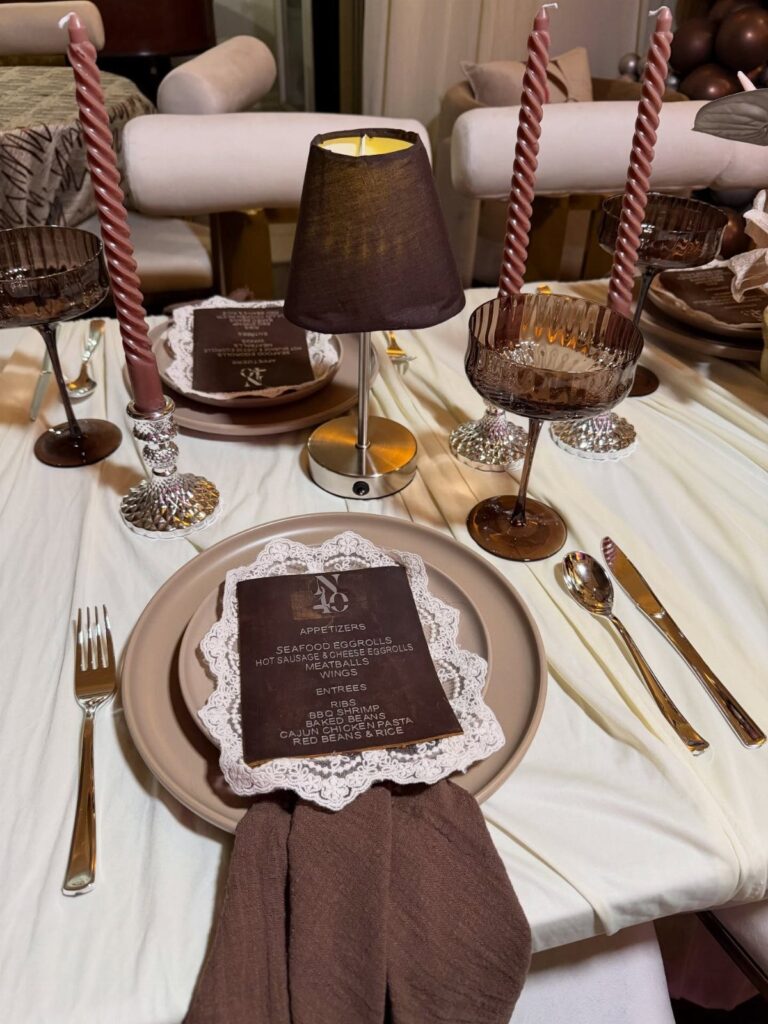
Brown table settings run from a roll of kraft paper and a marker to hand-painted ceramic plates with brass flatware that costs more than some venue deposits.
The deciding factor is not budget alone but whether your reception needs the brown to absorb light and enclose the space, as a dark banquet cloth does under a white tent, or to warm an already bright room without weighing it down.
3 distinct heights minimum show up in every successful tablescape here: candles, centerpieces, and place settings layered so the eye travels upward instead of sliding flat across the surface.
1. Hand-Painted Ceramic Brown Dinner Plates
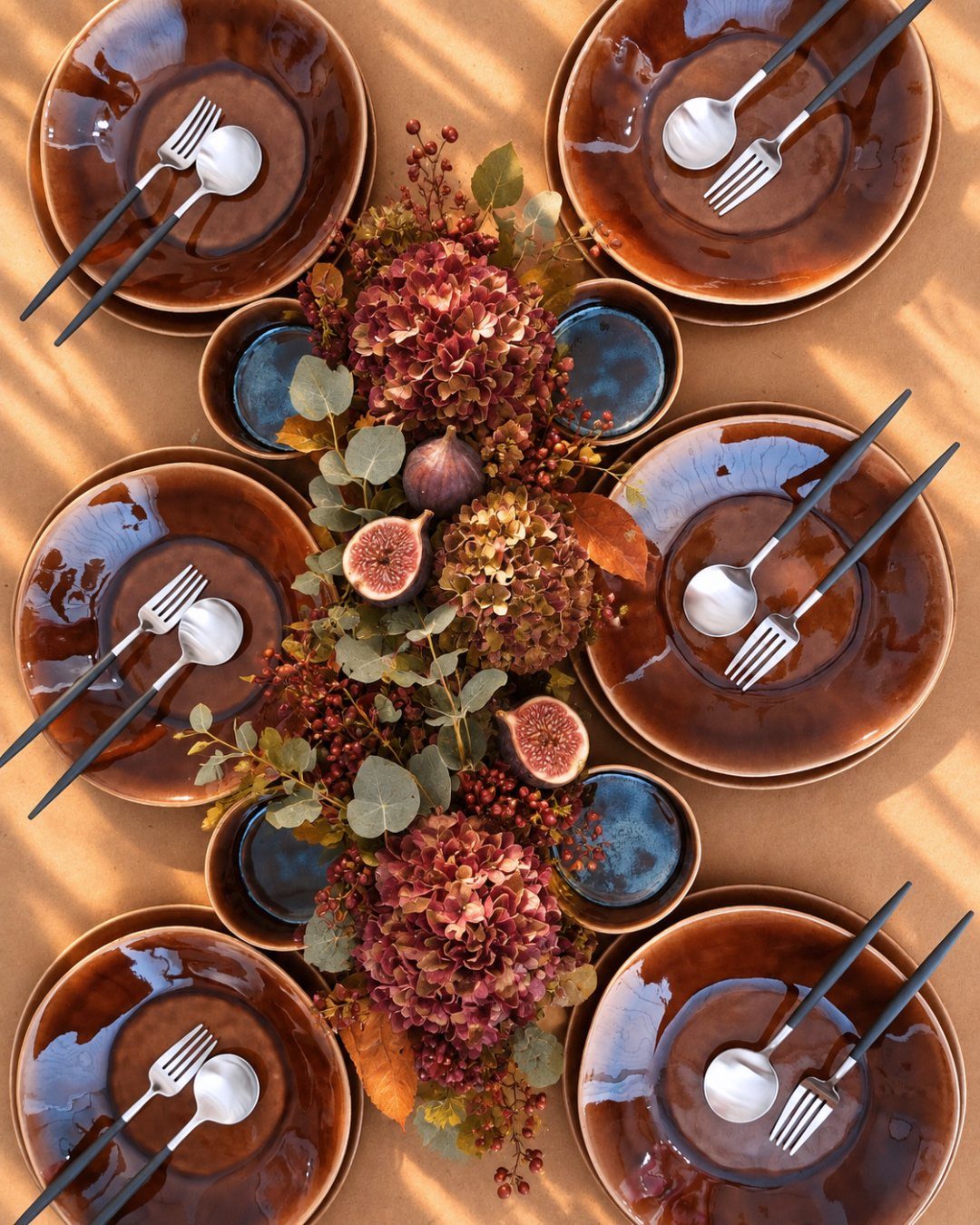
Hand-painted brown ceramic plates carry the kind of irregular glaze lines and slight rim variation that factory sets cannot replicate.
The warmth comes from those imperfections, and pairing them with simple silver cutlery keeps the overall mood intentional rather than rustic by accident. Neutral linens underneath let the plates read as the feature without competing for attention.
Matte glazes lean modern; glossy or reactive finishes grab the candlelight and give the table more dimension. I would choose matte for a lunch gathering and save the shine for evening, when the extra reflection matters.
2. Autumn Pumpkins and Eucalyptus Garlands
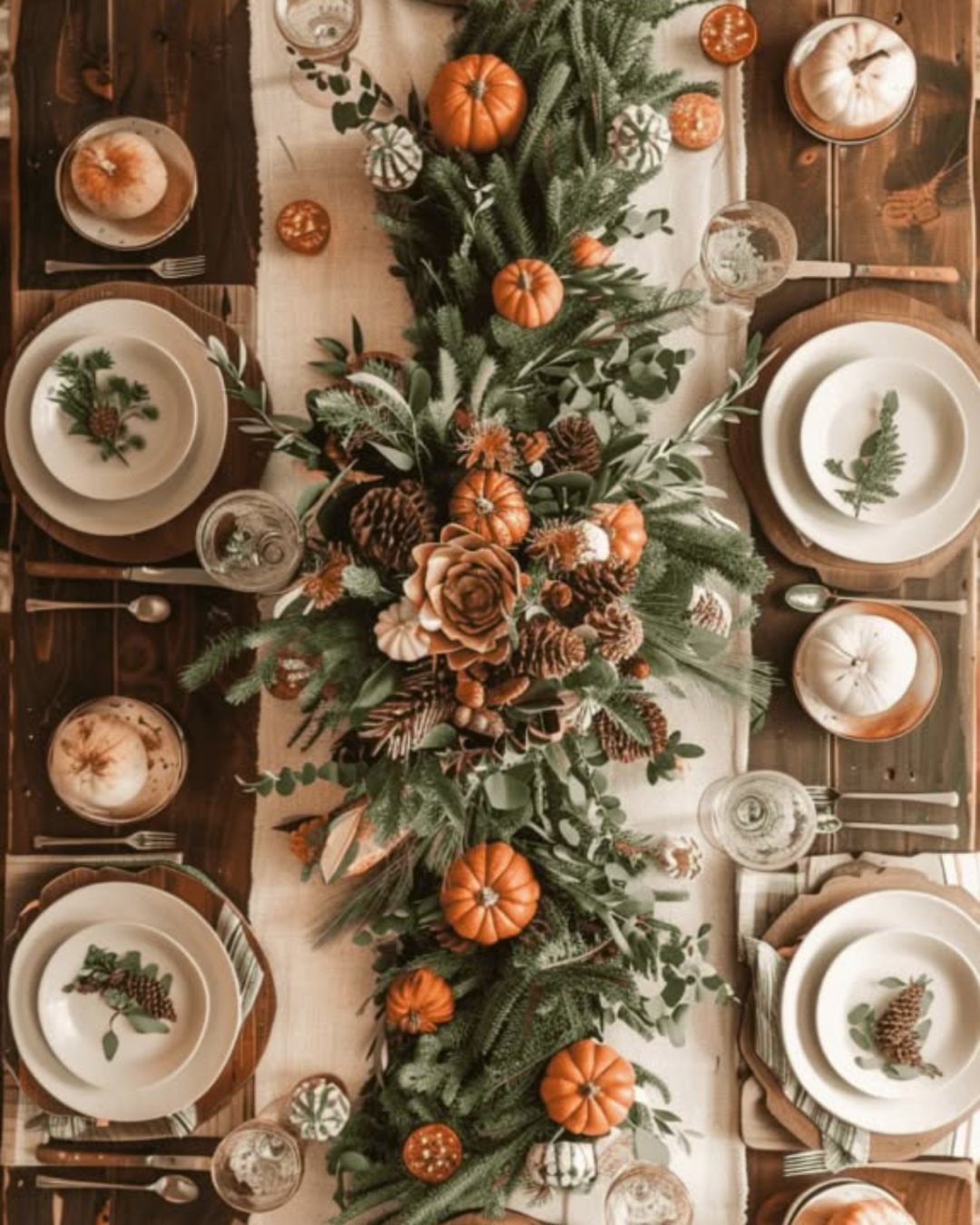
Small pumpkins and eucalyptus garlands work because they depend on what is already in season, not on a single investment piece you store year-round.
Mini pumpkins, acorns, pine sprigs, and dried flowers scattered across brown linens build a table that feels gathered rather than purchased.
The trick to keeping it from looking scattered is repetition: return to the same color or material 3 times across the surface, whether that is the orange of the pumpkins, the matte brown of clay napkin rings, or the kraft tone of handwritten place cards.
Winter shifts easily to eucalyptus and pinecones using the same logic.
3. Earthy Elegance in Natural Tones
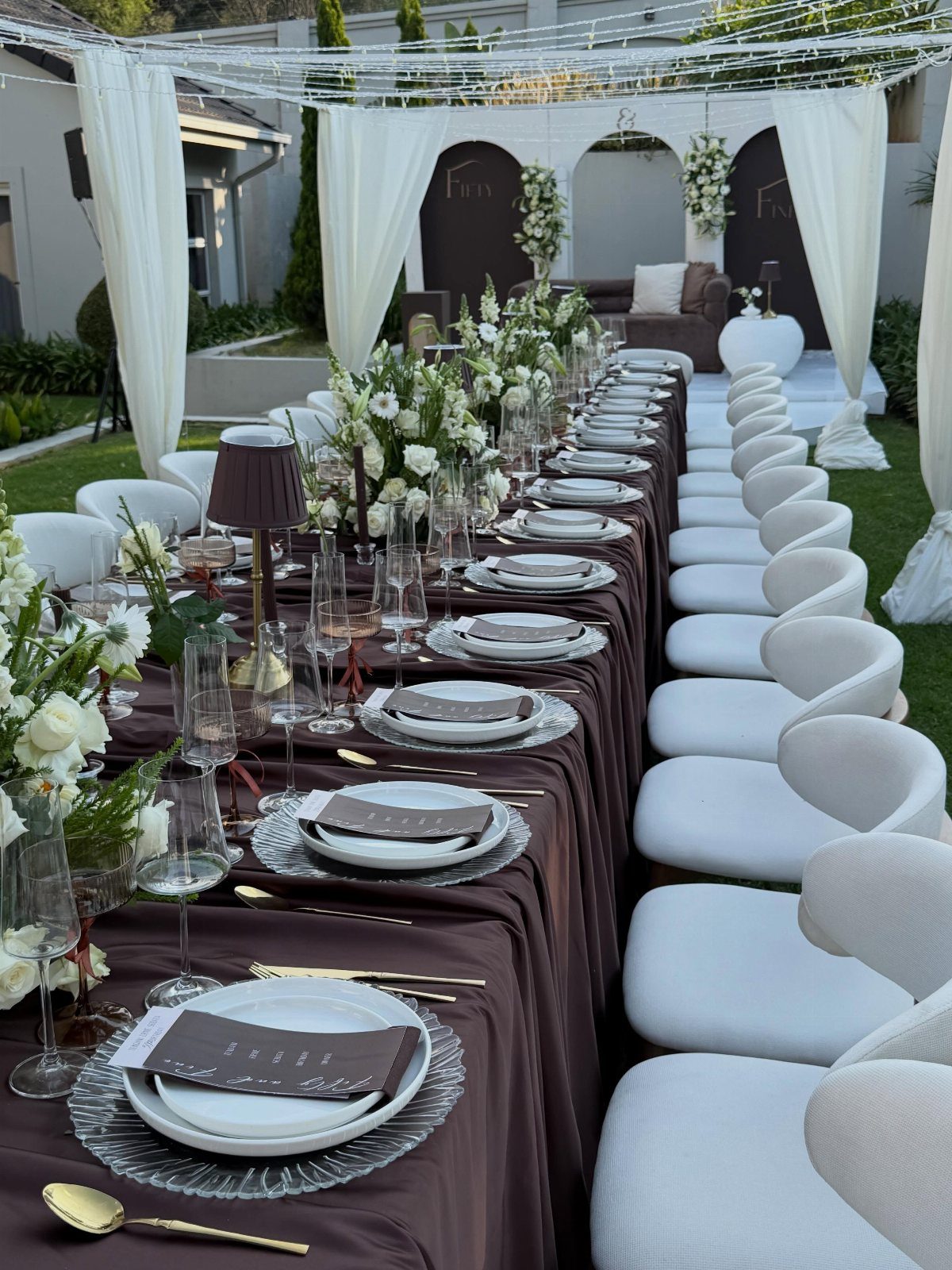
Brown dinnerware with golden cutlery creates a particular kind of warmth: grounded enough for an outdoor setting, polished enough that the occasion registers as special.
The brown layer sits against the table, the gold lifts against the plate, and the white florals provide the necessary breathing room so neither tone overwhelms.
Cool-toned accessories prevent the whole arrangement from sliding into too much warmth. Gray or blue napkins, a white runner, or silver flatware instead of gold would shift the balance if your venue already runs warm with wood or brick.
Green plants or dried flowers add the living element that keeps earth tones from feeling static.
4. Classic Wooden Candle Tablescape
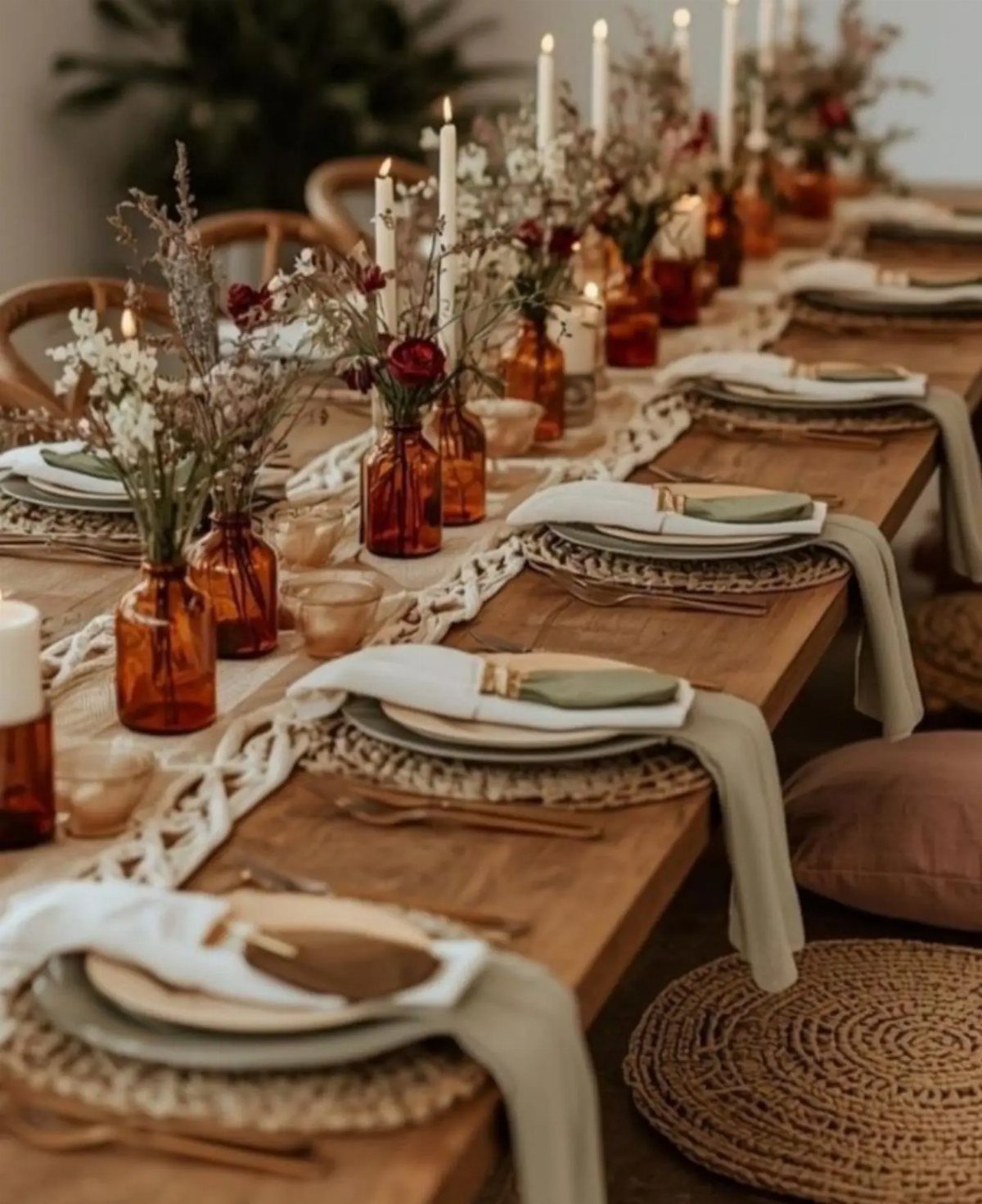
Wooden candlesticks frame a table with vertical lines that draw the eye upward, which matters more than most hosts realize; without that height, long tables flatten into a single plane of plates and elbows.
Tall tapers in cream and chocolate against warm wood tones create a rhythm that repeats down the length without demanding identical arrangements at every seat.
Amber glass bud vases and dried florals fill the spaces between candles at a lower height, so the light stays unobstructed.
Macramé runners add texture but stay thin enough that glasses sit flat. I would keep the runner narrow; wide ones shift and bunch when guests lean in.

- TOUCH OF BEAUTY: Elegantly contoured with an exquisite crackled mosaic design, this set of two candle holders makes for perfect brown table decorations and blends beautifully with any home decor. ★Candles and other decor accents shown are not included★

Amber Votive Candle Holders Set: total 12 count, each is 2'' W x 1.4'' H, perfectly fits for standard tea light candles, small votive candles, little LED candle(Candles not included). The brown color warms the light from the flames without blocking too much light, for small tealights
5. Moss and Neutral Floral Tablescape
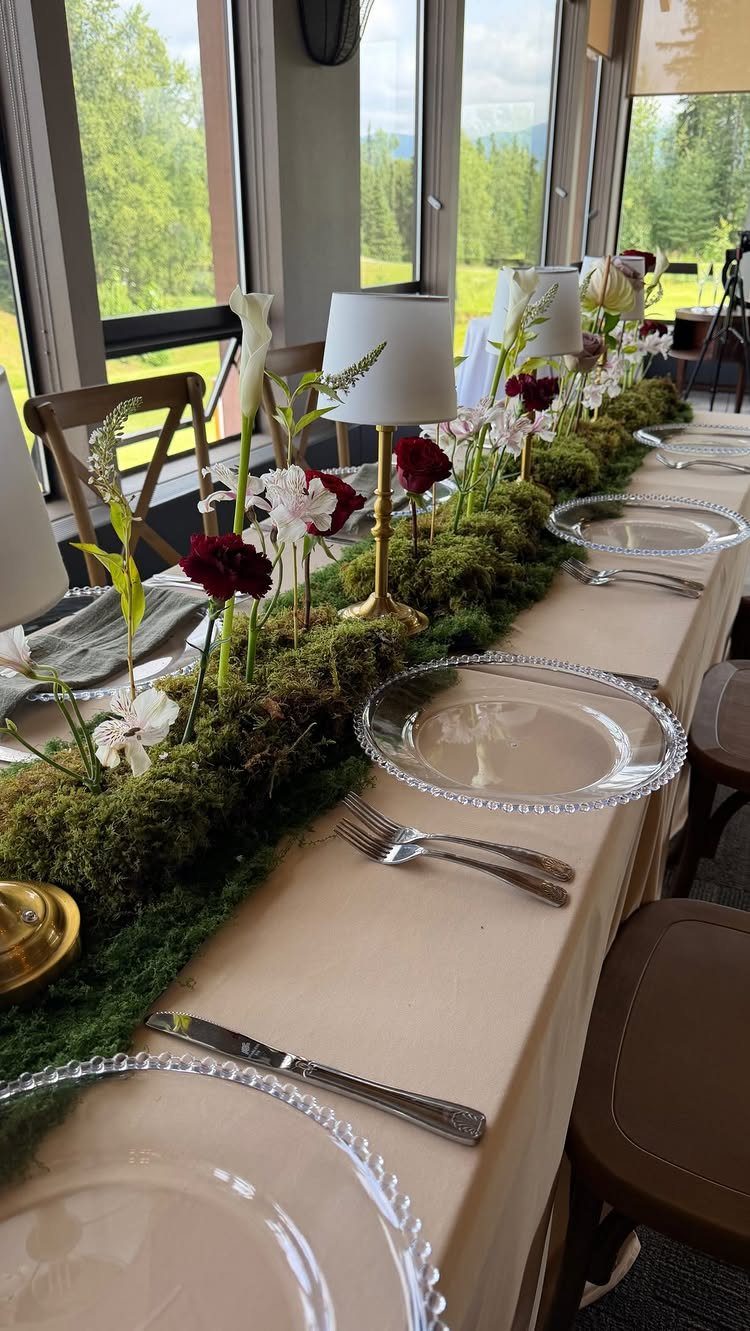
A moss runner brings something live or living-adjacent to the center of the table, and the texture reads as lush even when the flowers themselves are spare.
Caramel-toned blooms arranged directly into the moss, rather than in vases above it, keep the line low and the conversation across the table unobstructed.
Glass votives tucked into the moss add points of light at table level, which flatters faces more than overhead fixtures.
Brown and cream tableware around the perimeter keeps the palette from drifting into pure garden-party green. The lamps visible in the setting suggest this works for evening receptions where you need more than candlelight alone.

Quantity: Package includes 6' long Artificial Silver Dollar Eucalyptus Leaves Garland with white pumpkins, pinecones and berries. Each White Pumpkin Garland has a loop at one of the ends for easy hanging.

Quantity: Package includes a 5.9' long artificial eucalyptus and pumpkin garland. This fall garland is exceedingly full with mixed artificial eucalyptus leaves and fall accents. Nestled throughout the faux greenery are 6 white foam pumpkins, 5 natural pinecones, and 5 creamy white berry clusters. There is 1 loop on one end of the garland for easy hanging. Use this artificial white pumpkin garland to create a welcoming statement in your home or bring a natural look to your fall wedding!

Convenient Packaging: the package contains 2 pieces of beautiful fall pumpkin garland door decorations; This not only increases your choices, but also enhances the decoration effect, whether it is in the same area or scattered in different places in your environment, it can bring double decorative effect
6. Warm Neutrals and Dried Floral Tablescape
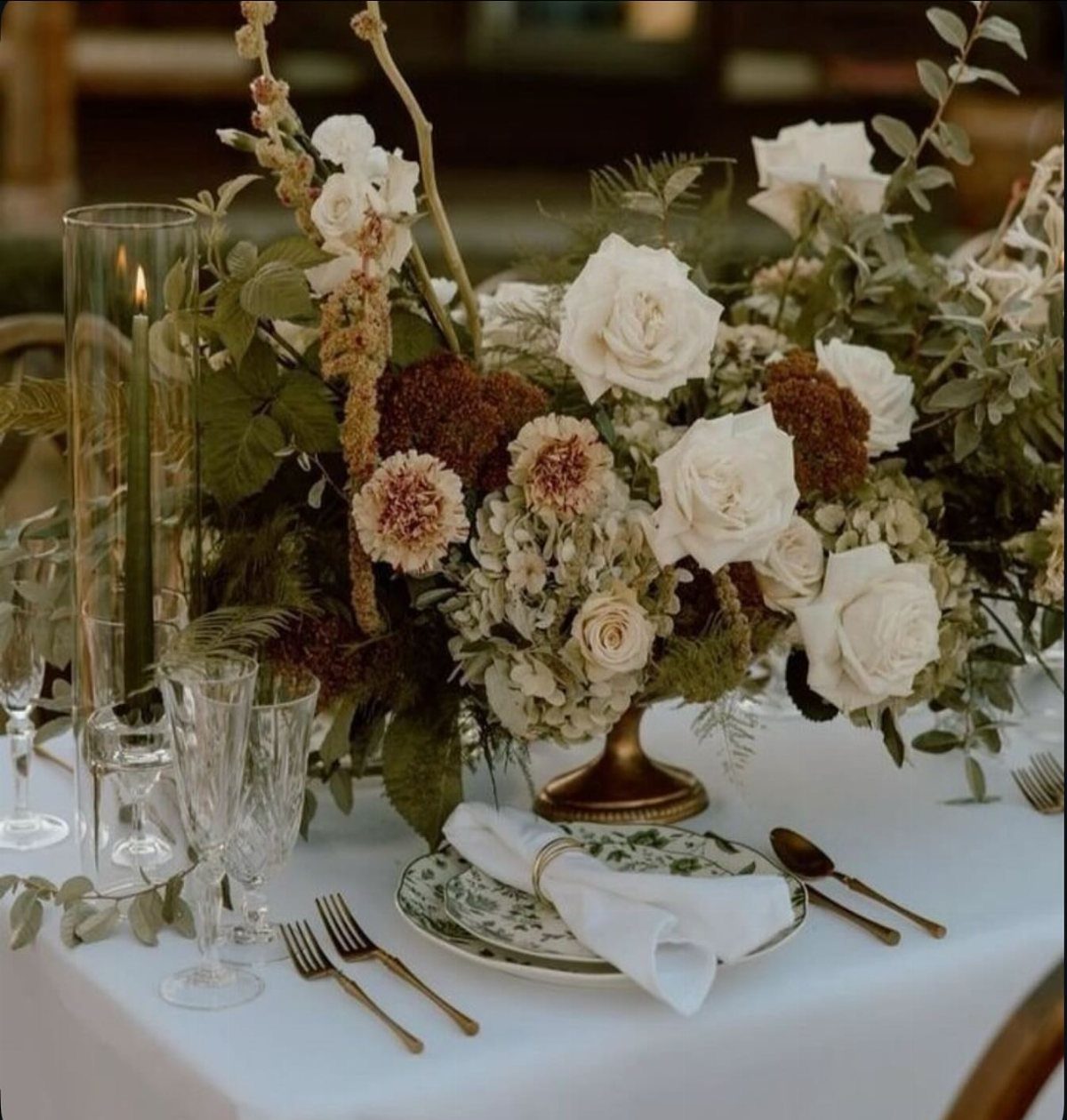
Dried florals solve a problem fresh arrangements create: they do not wilt, they do not need water, and they travel without damage.
A tall candle hurricane among the dried palms and greenery adds the warmth that dried materials sometimes lack on their own.
Patterned green-and-white china and linen napkins layer in color, though the centerpiece is where a budget-conscious host should start. Small pumpkins in fall or pinecones in winter keep the table feeling current without starting over.

CUTE ROUND SERVING TRAY: The only thing breezier than a cool cocktail on a summer night is one served on a MacKenzie-Childs Enamel Round Tray. Handy as it is handsome, this cute serving tray is ideal for year-round use and indoor and outdoor entertaining.

SET CONTENTS: This 12‑piece set for four includes 10.25" dinner plates, 8" salad plates, and 5.5" cereal bowls. It suits everyday family meals, party gatherings, and works as a thoughtful gift for weddings, housewarmings, or special celebrations.

Artisan Hand‑crafted Stoneware Build: Made of premium durable stoneware with unique hand‑painted brown dot details. Every plate features subtle texture variations, delivering rustic vintage charm for your table setting.
7. Gingham and Neutral Floral Tablescape
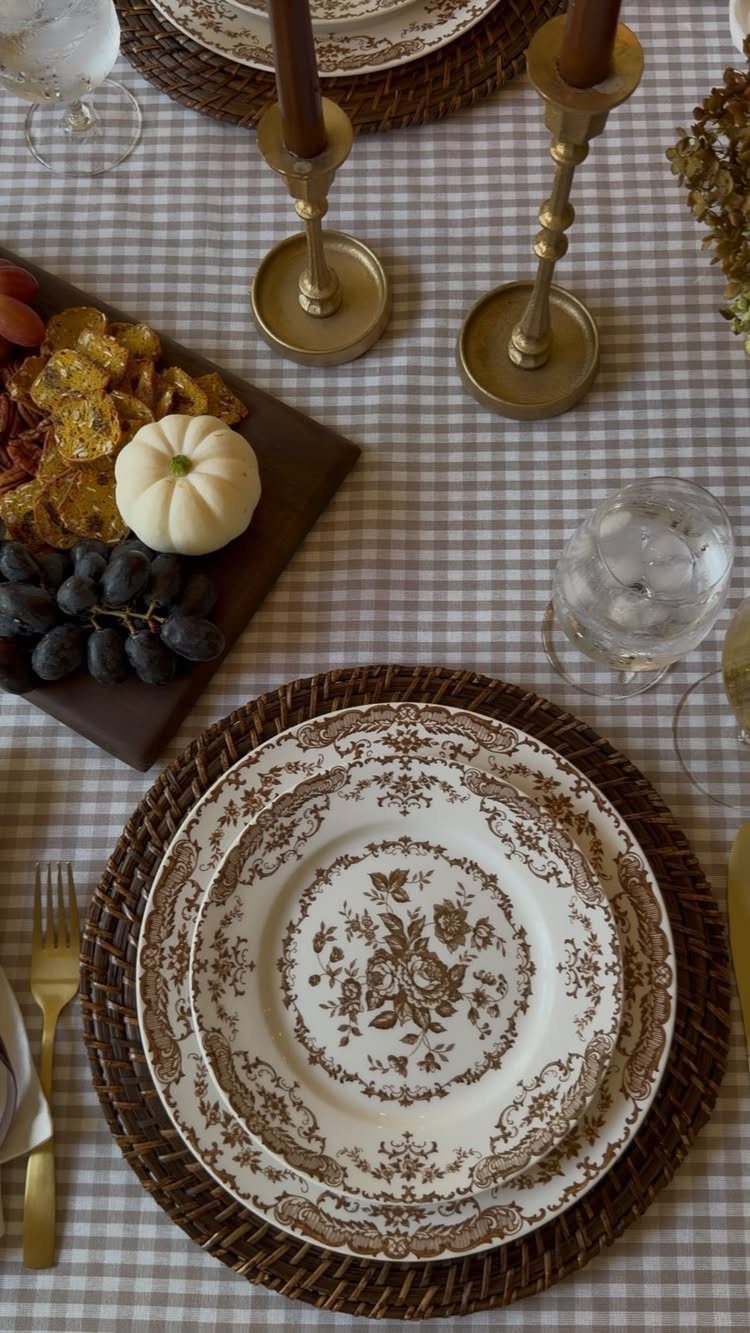
Brown gingham reads as farmhouse without sliding into country-kitsch when the scale is small and the brown is deep rather than bright.
The check pattern does the visual work, so the rest of the table can stay simple: woven chargers, transferware plates with a floral motif, and brass candlesticks that catch light against the matte fabric.
Cream and caramel florals keep the palette grounded in neutrals rather than competing with the grid.
I would use real or faux grapes and a small pumpkin as the single accent color, then stop; the gingham already supplies enough pattern for one table.
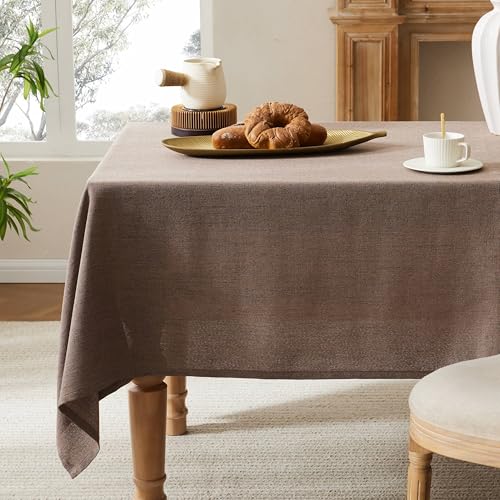
60"x120" Size Guide: This 60x120 inch tablecloth fits 7ft–8ft rectangular tables for a proper drape, and offers a narrow fit on 9ft tables. Please measure your table before purchasing. For a fuller, more elegant overhang, we recommend sizing up.

High Quality: Our vinyl heavy weight tablecloths are crafted from fade resistant durable PVC, excellent strength and durability provide you with the convenience of being stain & waterproof for dining event activities.
8. Layering for Visual Interest
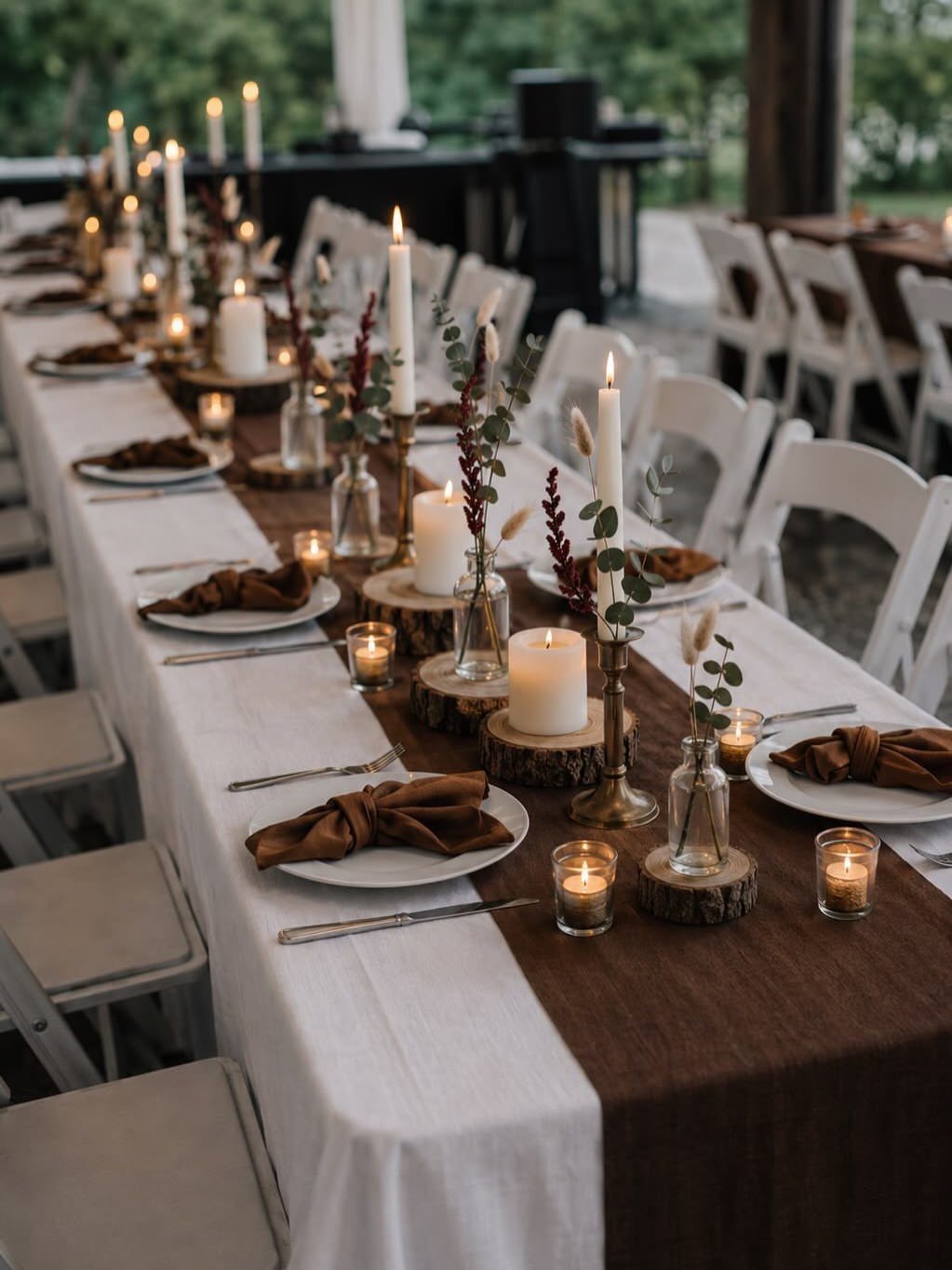
Flat tables read as catering; layered tables read as hosted. Building upward starts with a base cloth or placemats, adds a runner with texture, then sets charger plates beneath the dinnerware so each place has its own defined zone.
Wood slice risers at varying heights break the long horizontal line of a banquet table, and small bottles with single stems sit lower than the candles so nothing blocks sightlines.
Brown napkins folded at each seat repeat the runner color without requiring a full brown tablecloth. The lesson I take from this setup: 3 distinct heights minimum, or the eye slides straight across.
9. Brown Dinnerware with Brass Flatware
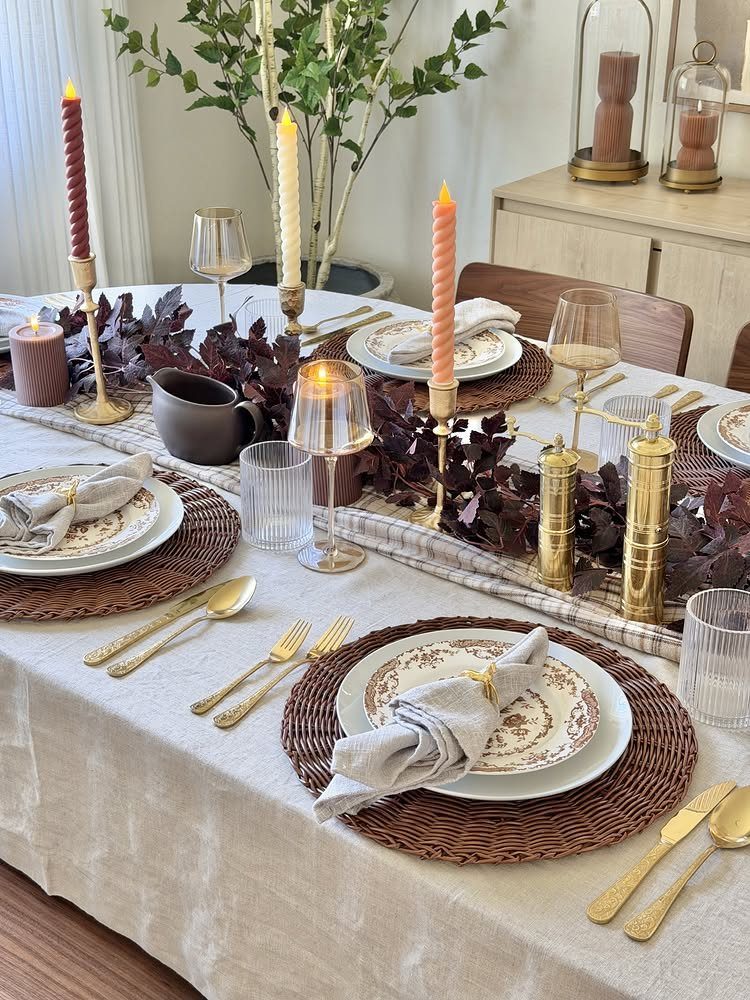
Brown transferware against brass flatware creates a particular formality that plain brown plates cannot manage; the pattern on the plate and the weight of the metal signal that this is an occasion, not a weeknight.
Gold-rimmed glasses continue the metallic thread upward, while dark foliage garland along the runner keeps the center from going bright.
White napkins are the necessary interruption; without them, the brown and brass pool into something too heavy for a long meal.
This combination suits autumn and winter receptions where the outside air already leans cold and the table needs to feel like shelter.
10. Brown Tablecloth and Gold Chargers
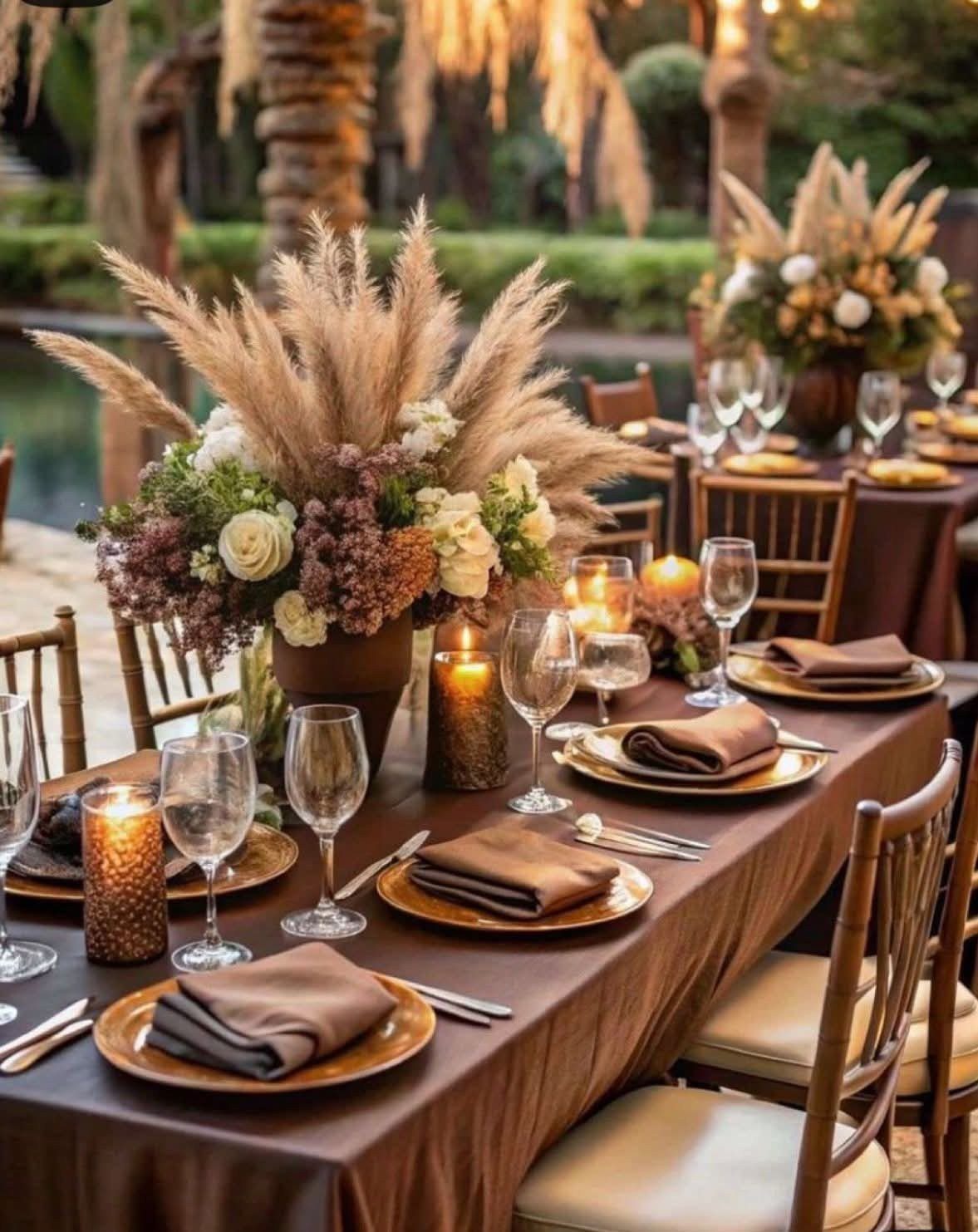
A solid brown tablecloth is a commitment: it absorbs light rather than reflecting it, and every spill shows.
A dark brown cloth gives the table a formal, enclosed feeling that white or cream cannot produce, especially outdoors where the sky competes for attention. Gold chargers and amber votives supply the warmth and reflection the cloth withholds.
Before choosing this, check your venue lighting; brown linens under dim bulbs go muddy, and this setup needs enough glow to read as rich rather than dark.
11. Brown Satin Runner with Ribbons
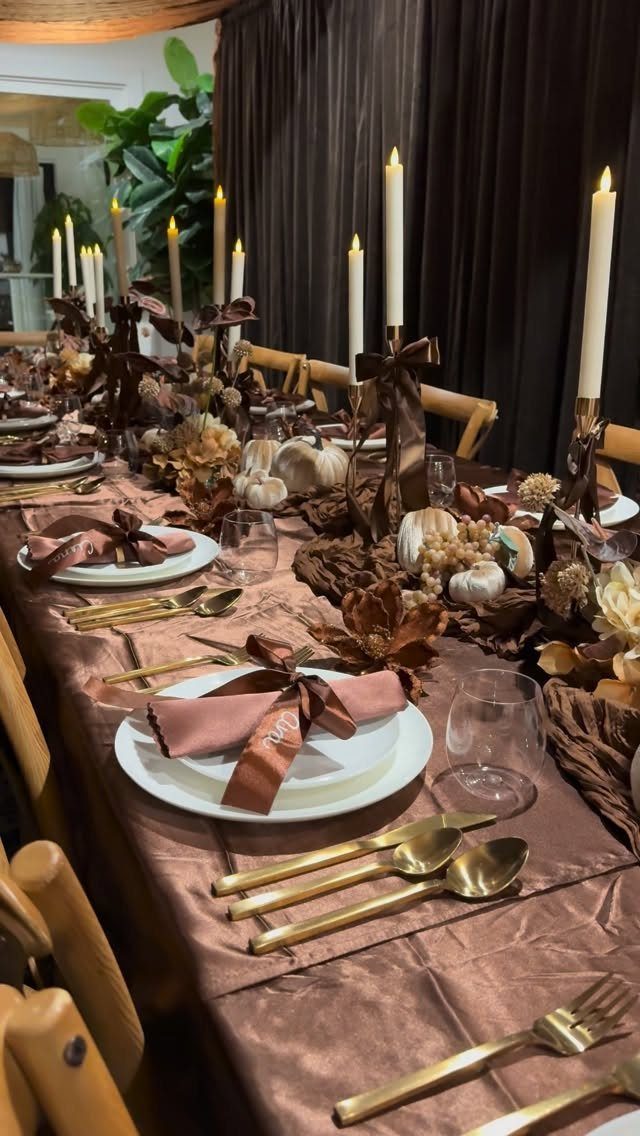
Satin catches light differently than linen or cotton; it reads as evening, as dressed-up, as slightly impractical for a table where red wine might travel.
The brown version warms the formality rather than making it cold, and pairing it with matte white plates keeps the contrast clear enough that the eye knows where to rest.
Ribbons tying each napkin, printed with a name, replace place cards and favor tags in a single gesture.
The visible pumpkins suggest this works for autumn events; for other seasons I would swap them for something similarly small and pale, like white stone fruit or bare branches in low vases.
12. Brown Gauze Runner with Pampas
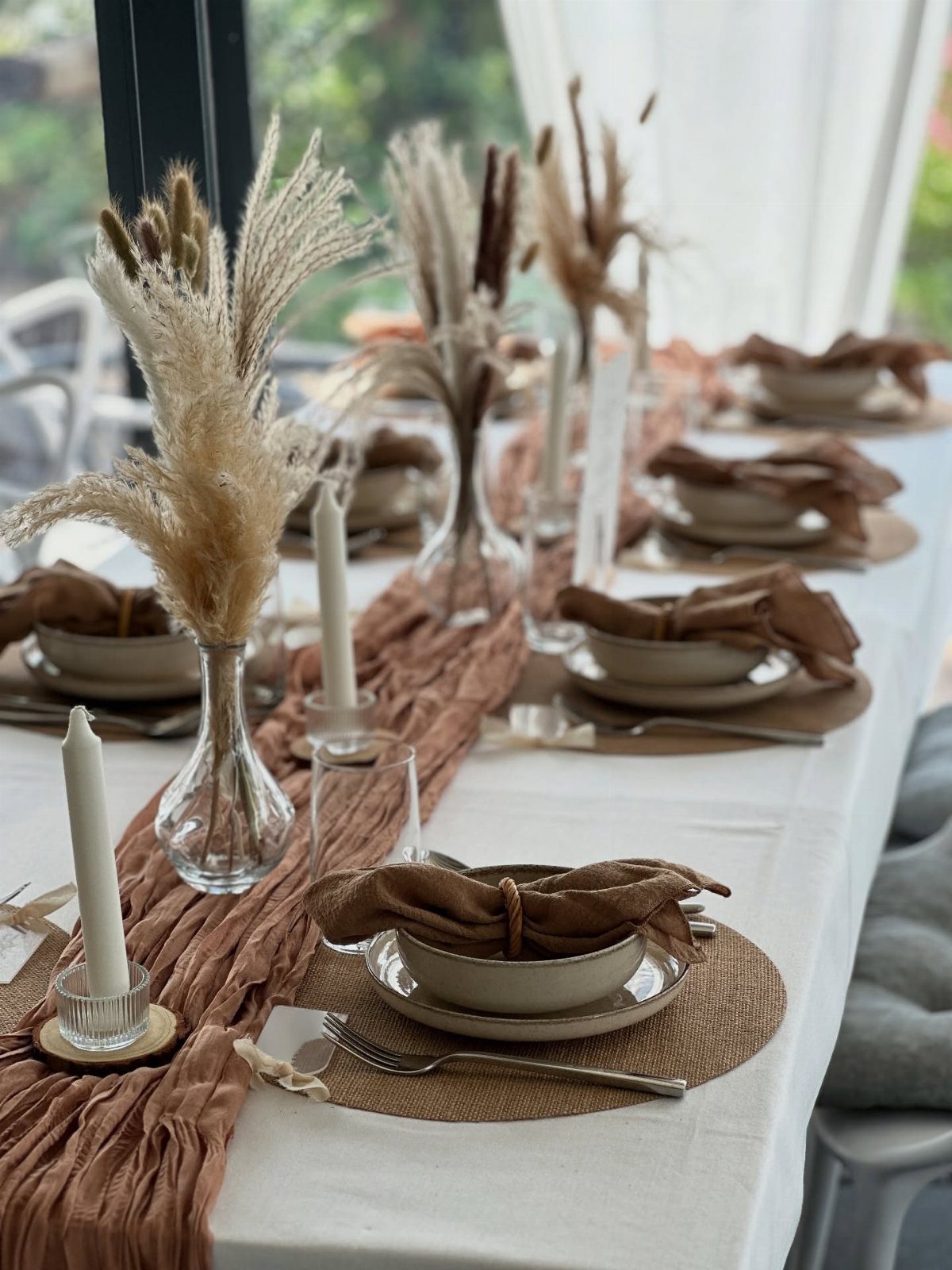
Gauze runners drape and pool in a way stiffer fabrics resist, which means they need a heavier cloth underneath to stay put; the white base visible here does that work while letting the terracotta-brown layer read as intentional texture.
Beige plates and brown napkins keep the tonal range narrow, so the pampas grass in clear vases becomes the focal point without shouting.
Pampas sheds; setting it the day before means sweeping the table again before guests arrive.
I would place the vases on small cork or felt pads to keep them from scratching anything beneath, and trim the stems to keep the plumes below eye level when seated.
13. Pleated Dark Brown Banquet Linens
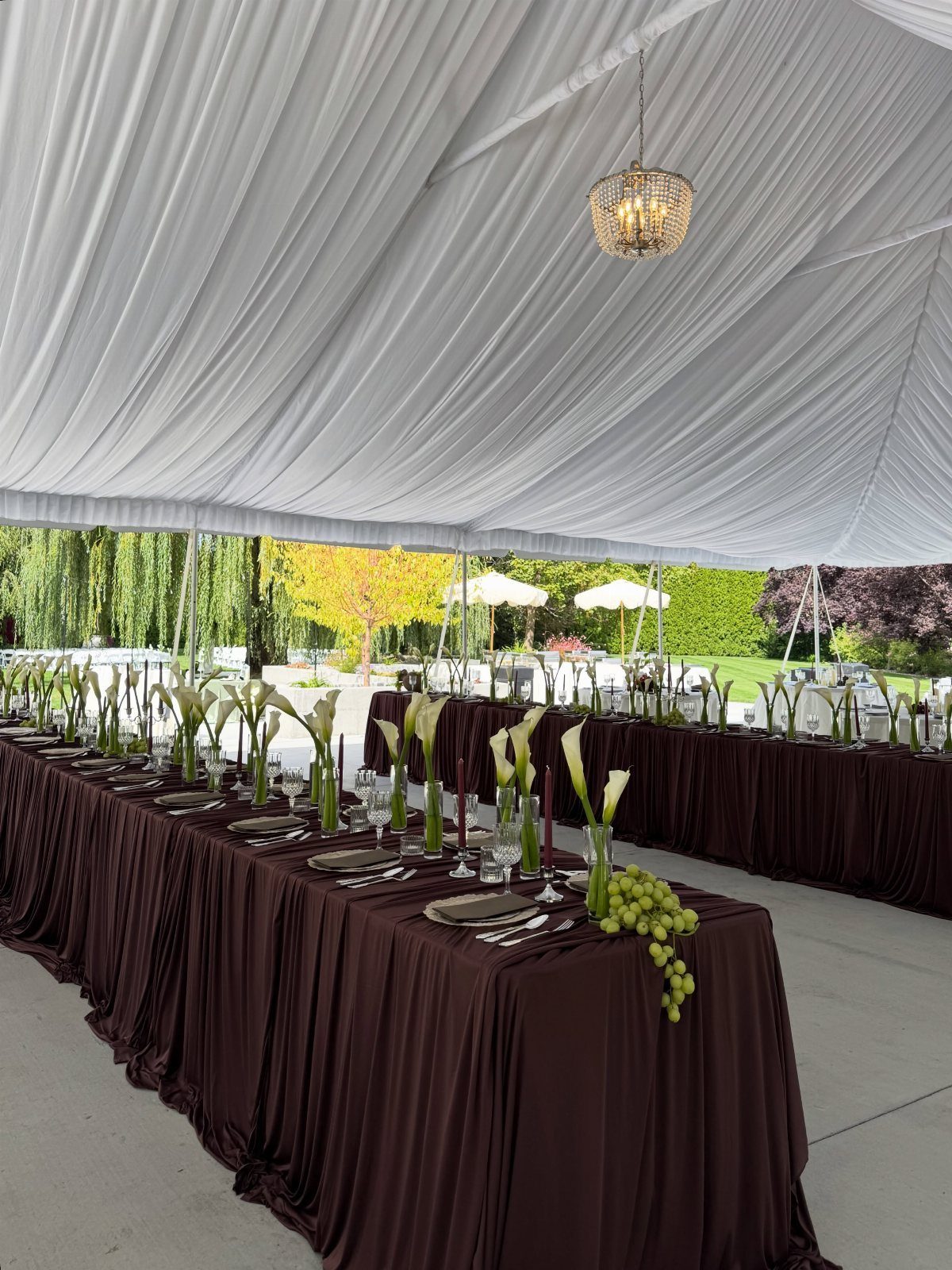
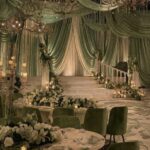
Pleated dark brown banquet linens turn long tables into a single continuous plane of color, which works best under a white tent where the contrast keeps the brown from disappearing into shadow.
The pleating adds texture that catches light even when the cloth itself absorbs it.
White calla lilies provide the necessary lift; without them, the table would read as a solid block.
Dark plates continue the depth rather than breaking it, so the flowers become the single bright note. I would check that your venue has enough ambient light; this setup under dim bulbs goes flat, and candles alone cannot save it.
14. Patterned Brown Plates with Amber
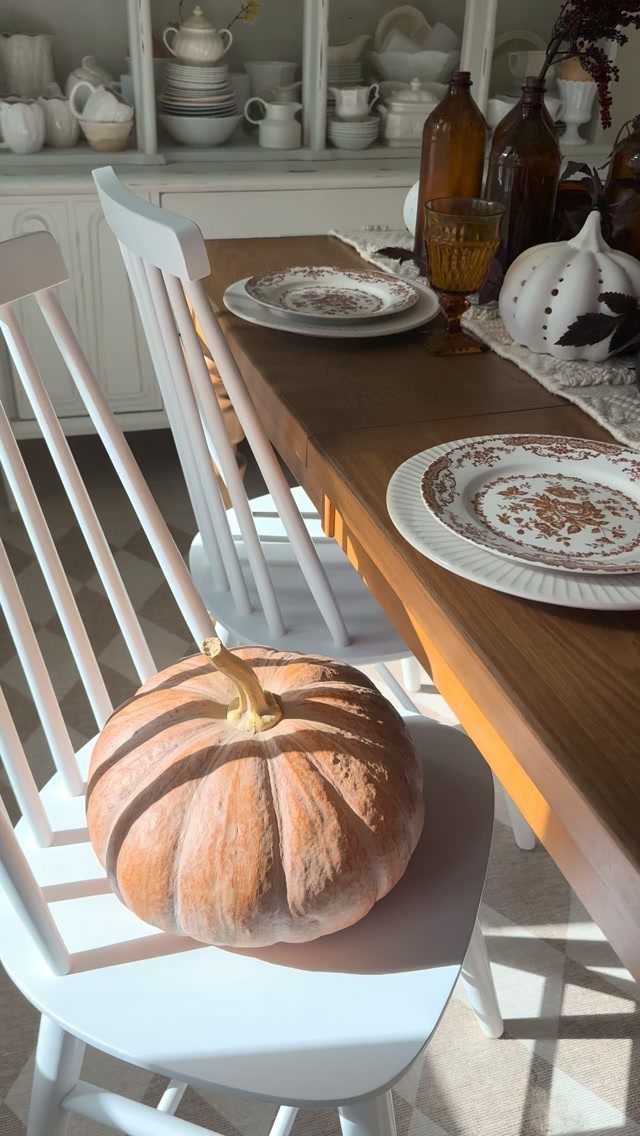
Patterned brown plates with amber glassware suit autumn gatherings where the table should feel seasonal but not literal.
The pattern on the plate does the visual work, so the rest stays simple: clear bottles as low centerpieces, and the amber in the glassware rather than the stemware.
Before buying, hold a plate against your table surface; too similar a brown and the pattern vanishes, too far and it looks mismatched.
A pumpkin carries autumn weight as a centerpiece, though bare branches or stone fruit work the same sculptural job in other seasons.
15. Orange and Brown Plaid Linens
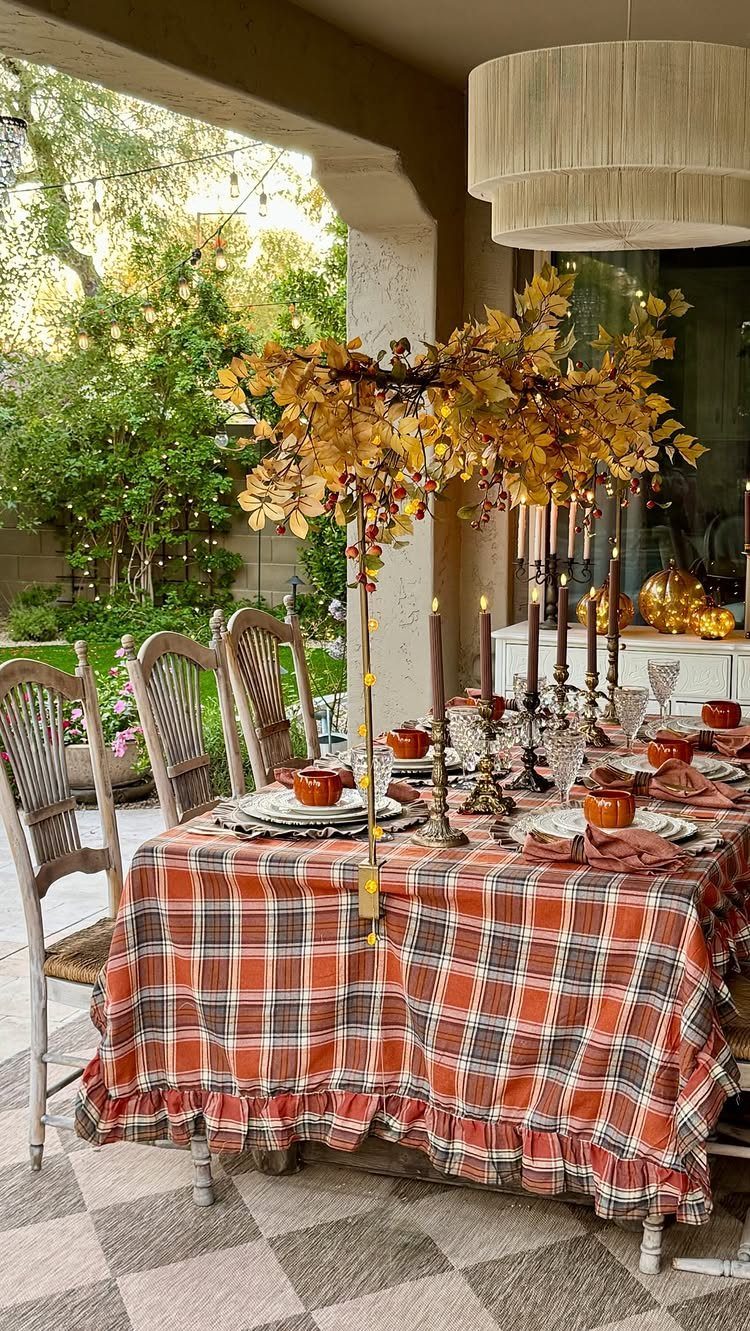
Orange and brown plaid linens commit to a season and a mood; the ruffled edge here softens the grid so it reads cozy rather than lumberjack. Small pumpkin bowls reinforce the autumn thread without adding a second pattern.
This works outdoors where the surrounding foliage echoes the colors, but indoors the same cloth can feel loud in a neutral room.
I would use it once, as the dominant piece, then keep dishes and glassware plain. An overhead leaf centerpiece adds height, but skip it if guests need sightlines across the table.
16. Autumn Leaf Table Runner
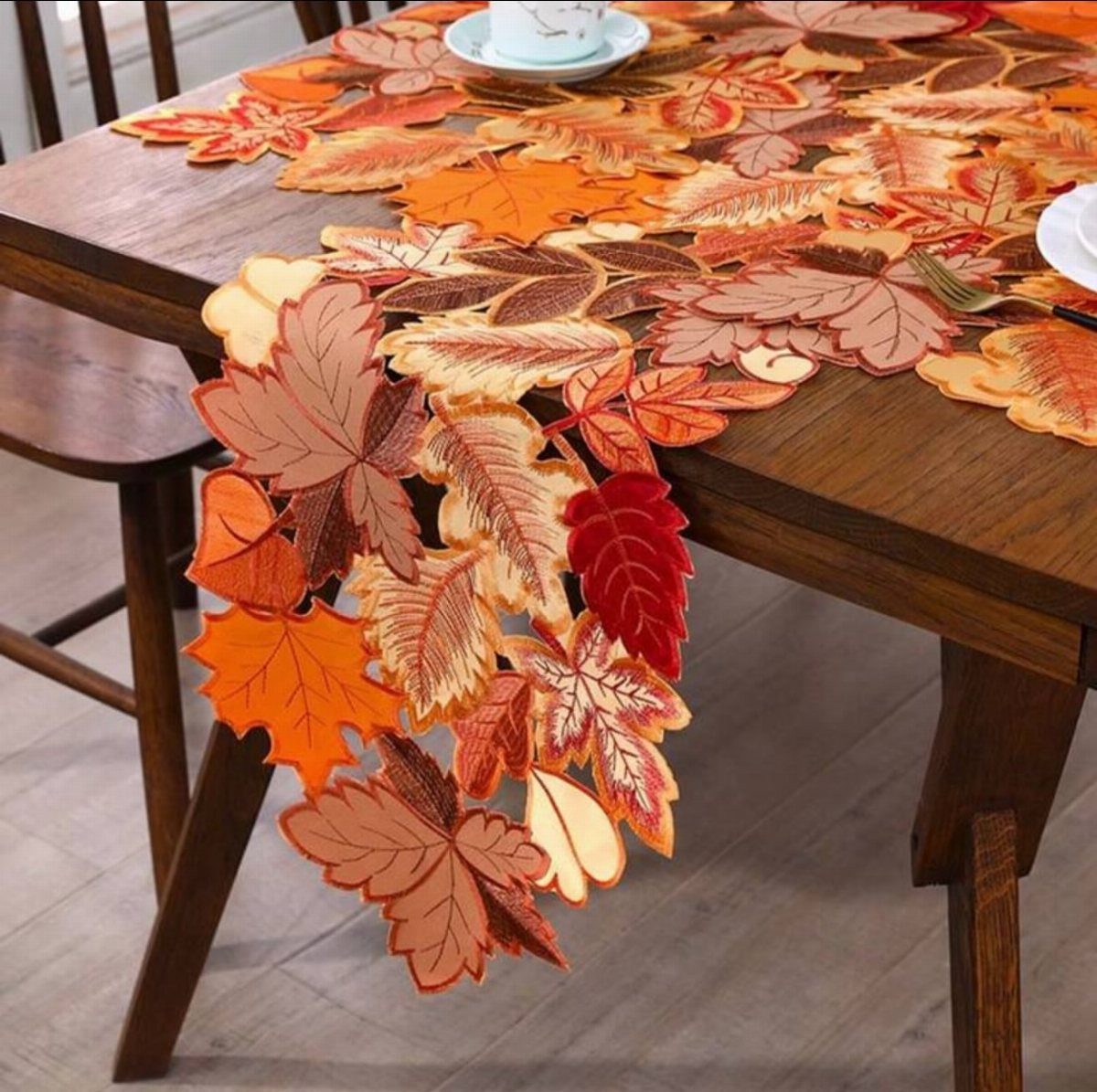
An embroidered autumn-leaf runner gives you the season on a single strip of fabric rather than across the whole table, which keeps the cost and the commitment lower than a full cloth.
The orange, red, and brown embroidery sits on a base that reads as brown from a distance, so the effect is tonal up close and unified from across the room.
White plates on top provide the necessary break; colored plates would compete with the stitching. I would measure your table before ordering; too short and the runner floats, too long and the ends bunch where elbows land.
17. Brown Placemats and Taper Candles
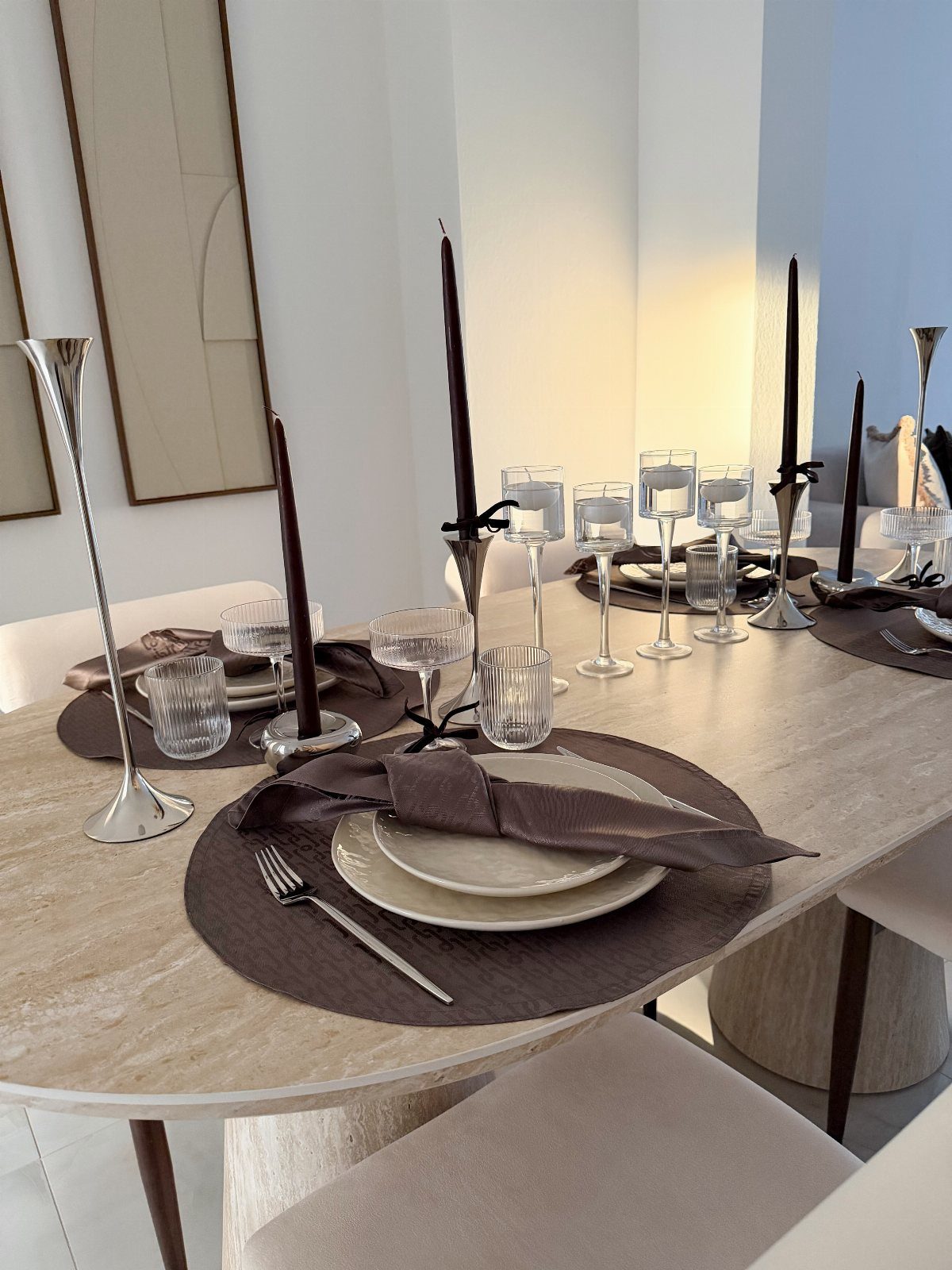
Dark brown round placemats create a defined zone at each seat without covering the whole table, which suits hosts who want the warmth of brown without the formality of a full cloth.
Tall taper candles in silver holders add vertical lines that draw the eye upward and keep the brown from flattening into a single plane.
The off-white plates and brown napkins keep the palette narrow; introducing a third color would fracture the calm.
Check that your candle holders are weighted; slender tapers in tall holders tip easily when guests reach across. Silver here reads as cool interruption; brass would warm the whole arrangement further.
18. Brown Napkins and Tall Candles
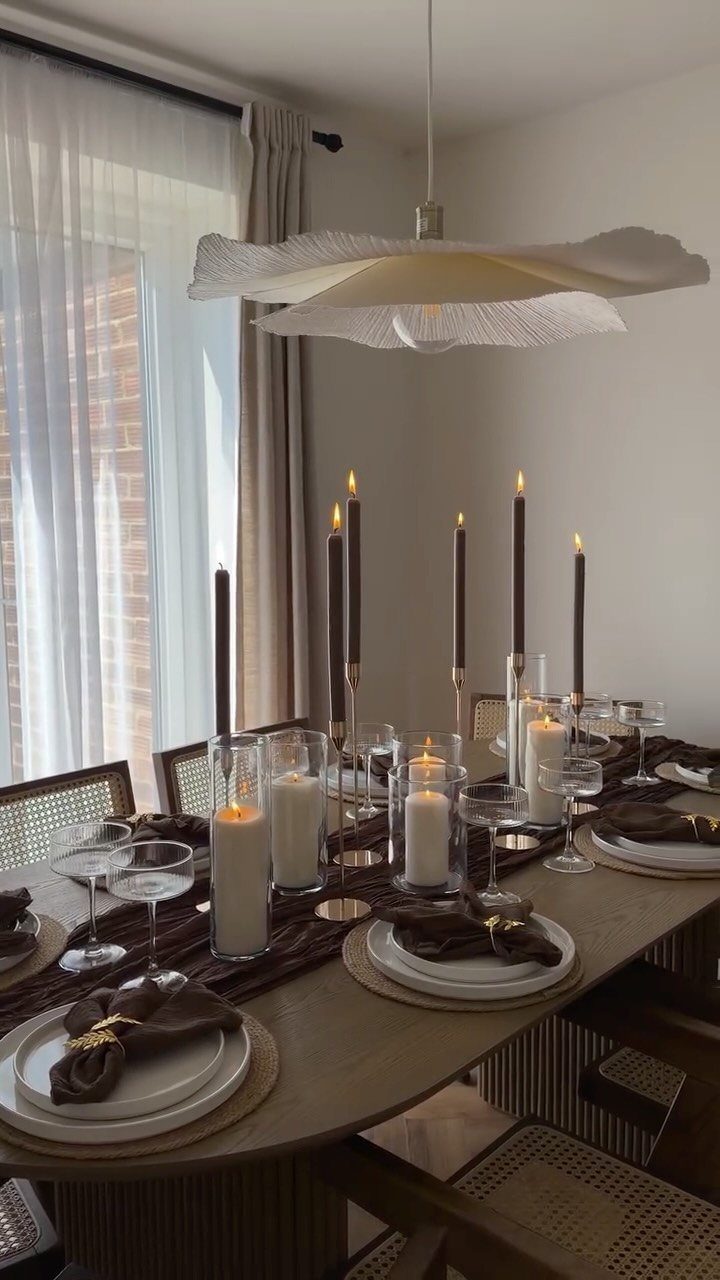
Brown napkins with tall candles place the color in fabric rather than on the table surface, which means you can shift the mood with a different napkin fold or ring without replacing the whole setup.
Gold rings add a single metallic point that ties to the candlelight without requiring gold flatware or chargers.
The mix of taper and pillar candles in glass holders gives you two heights and two widths, so the light varies down the table rather than repeating identically.
Ribbed glassware adds texture that catches the flame; smooth glass would feel colder against the warm wood and fabric. I would light the candles before guests arrive to check that pillars do not pool unevenly in a draft.
19. Brown Leather Napkin Rings
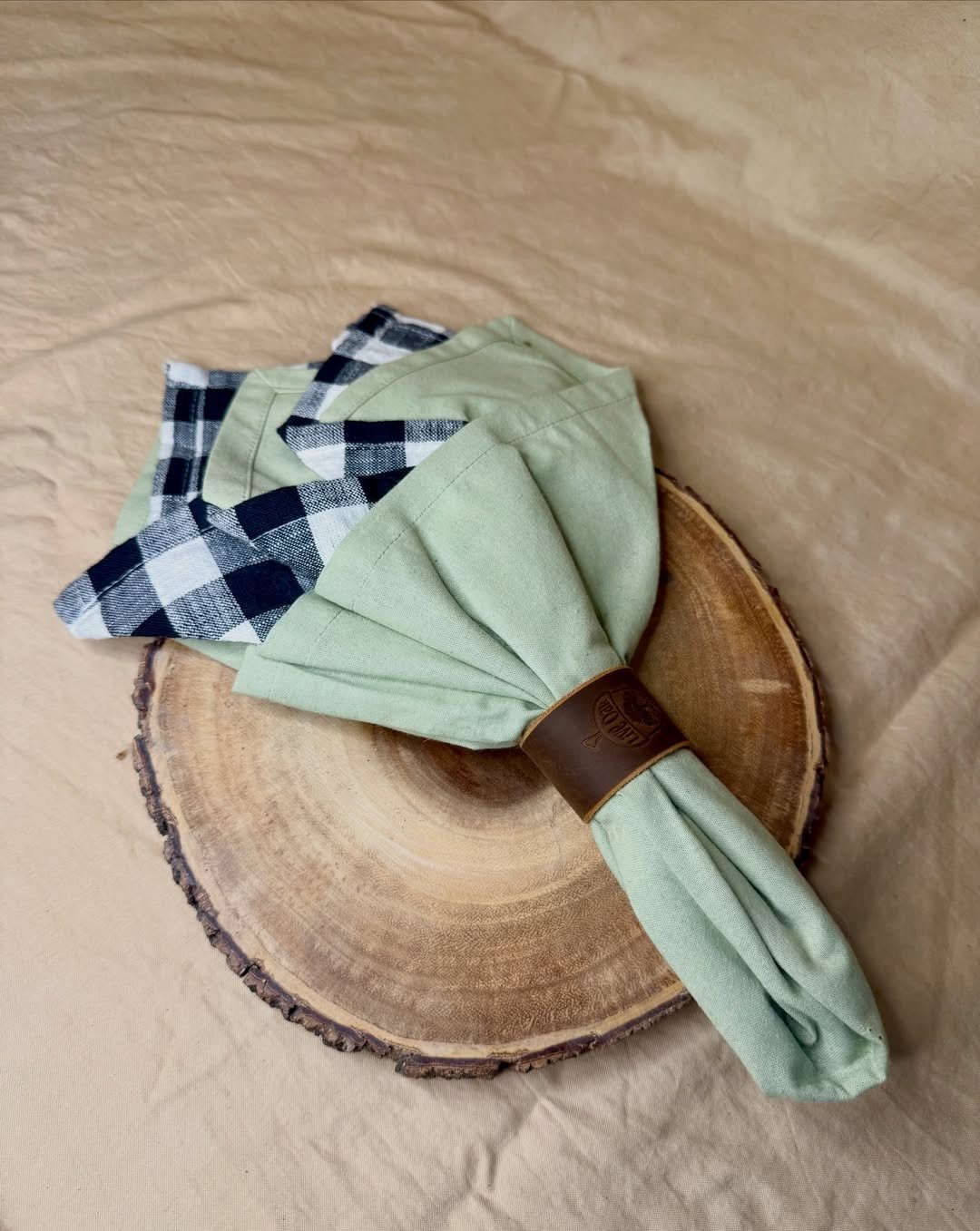
Embossed brown leather napkin rings carry more weight than metal or fabric; the stamp and tooling signal craft rather than manufacture.
The ring here sits on a light green checkered napkin over a wood slice, which means the brown arrives as accent rather than field color.
Before ordering, check the interior circumference against your napkin fold; too tight and the leather creases the fabric, too loose and the ring slides. Embossing adds cost, but plain leather ages better and suits tables beyond autumn.
20. Dark Brown Ribbon Accents
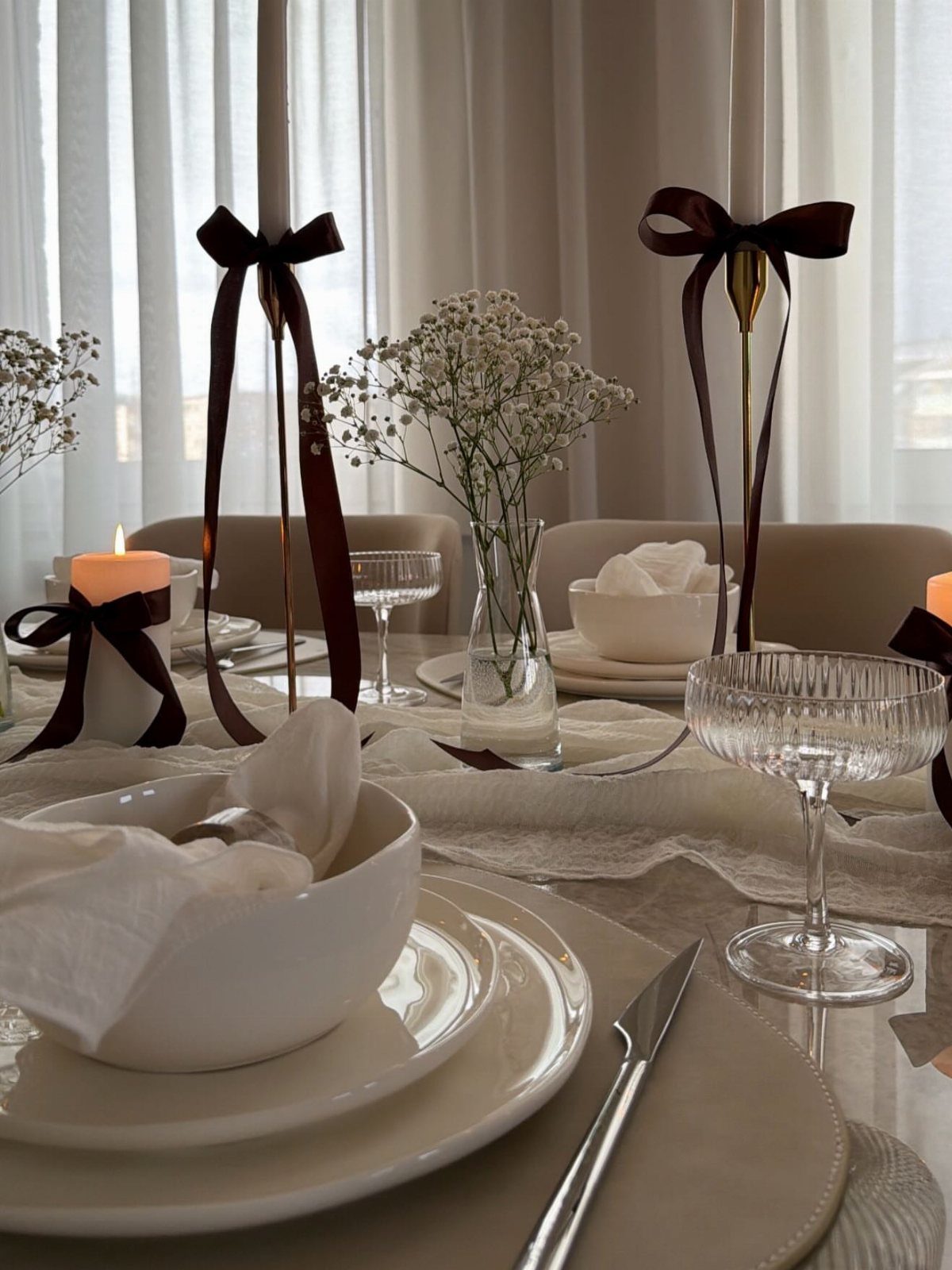
Dark brown satin ribbon tied around white candles and glassware lets you add brown without committing to brown dishes or linens. The ribbon arrives as a thin line against white, so the contrast stays sharp even in low light.
Cut lengths before the event and finish the ends with a quick pass of flame to prevent fraying; satin unravels fast once it starts.
This suits hosts who want to shift color seasonally: the same white base takes burgundy in winter, moss green in spring. The gauzy runner here keeps the table from feeling too bare between the ribbon points.
21. Brown Napkins and Amber Glassware
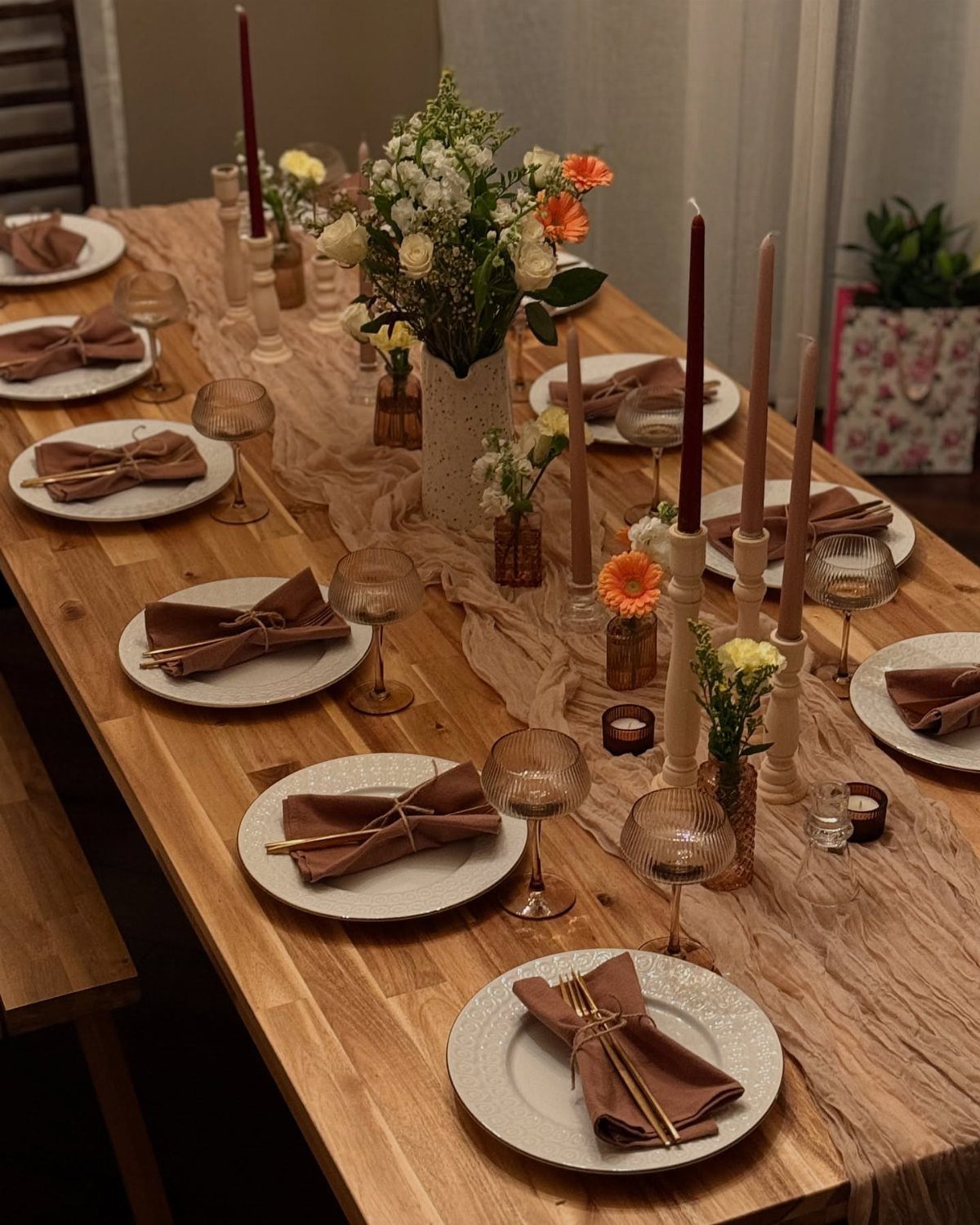
Brown napkins with amber glassware places the warmth in 2 separate materials, fabric and glass, so the table reads as coordinated rather than themed.
Twine ties the napkins here rather than rings, which keeps the tone casual and saves the cost of hardware.
Amber glass catches candlelight in a way clear glass does not; the glow seems to come from inside the liquid.
Check that your amber pieces match in depth of tint; mismatched amber reads as collected, which suits some tables, or accidental, which suits none. This setup needs no centerpiece beyond the glassware itself.
22. Brown Paper Botanical Runner
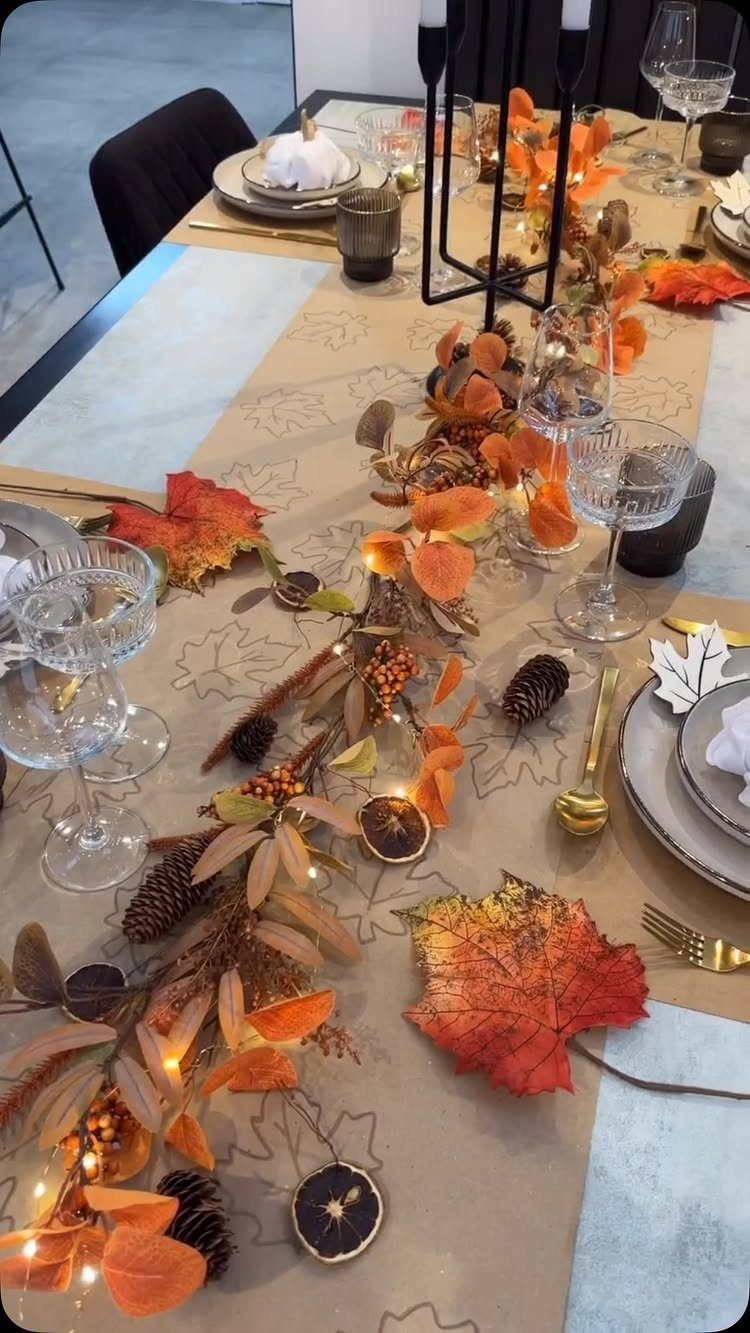
A kraft paper runner drawn with leaf outlines turns the table surface into something you made rather than bought. The botanical garland, pinecones, and dried citrus sit on top, so the runner functions as both ground and frame.
Kraft paper tears easily; unroll it the day of and tape the underside rather than weighing the edges, which would crease it.
The hand-drawn leaves mean this scales cheaply for long tables, though the drawing takes time. Faux foliage and dried citrus keep for reuse; store flat and the runner survives another season with fresh drawing.
23. Textured Brown Runner and Pillars
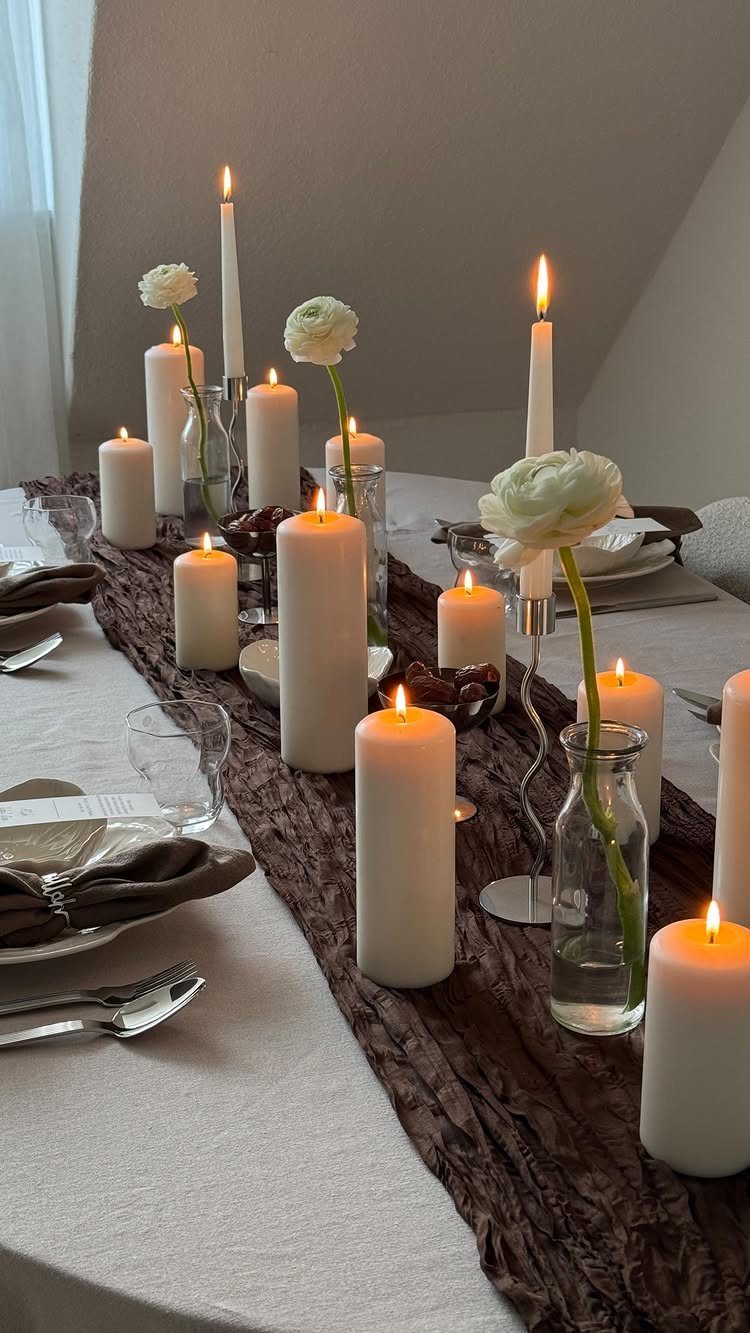
Crinkled brown fabric under white pillar candles creates a texture contrast that smooth linen cannot manage; the wrinkles catch light and cast tiny shadows of their own.
White pillars mixed with a few tapers give you varied heights and wider, steadier flames that do not all need holder stability.
The small bud vases with single stems keep the height low enough for conversation across the table.
Check that your fabric is flame-resistant or keep candles well clear; crinkled material has more edge area than flat. This suits evening events where the candles become the primary light source and the brown runner recedes into warmth.
24. Woven Brown Chargers with Gingham
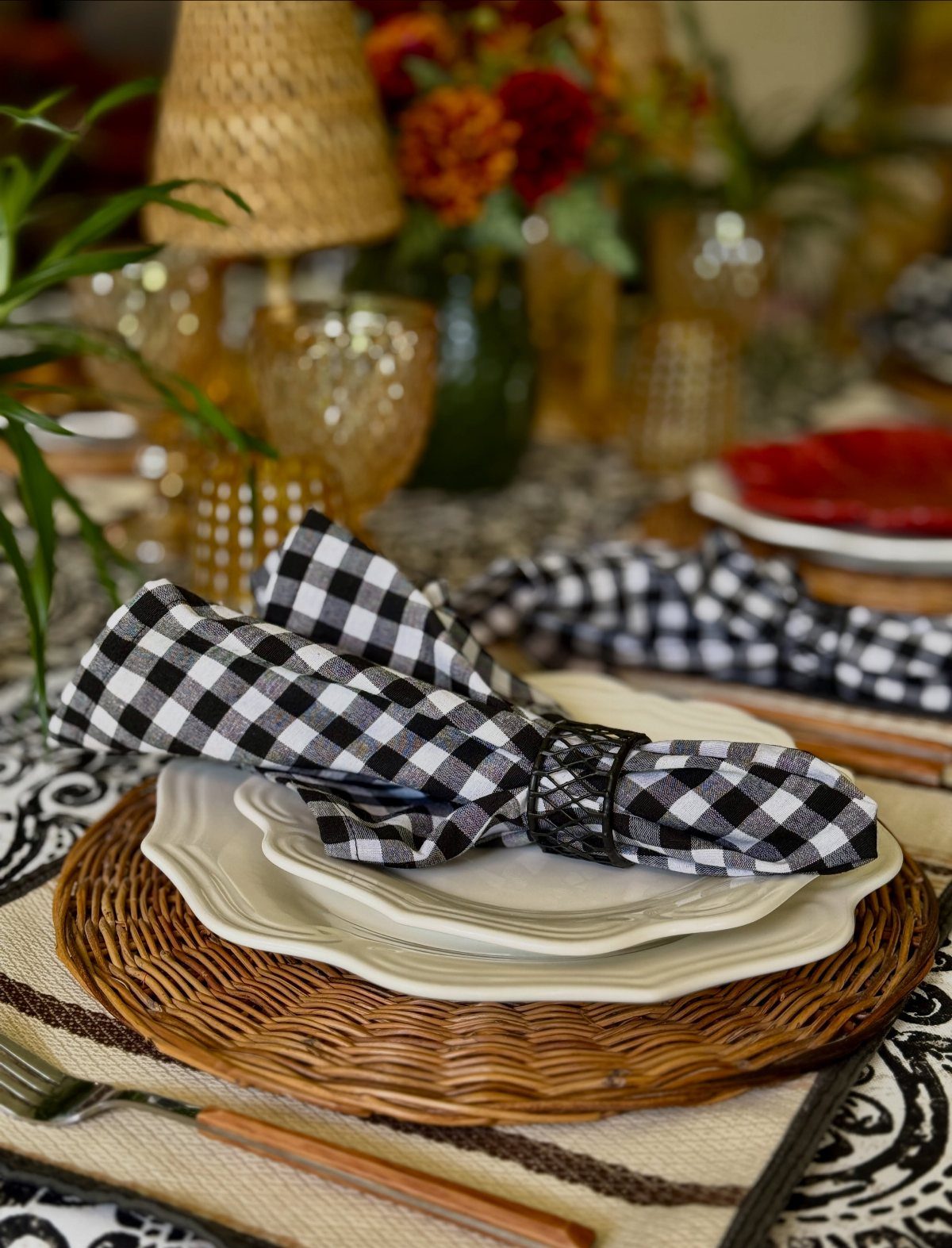
Woven brown chargers under white scalloped plates add a natural fiber layer that wood or ceramic cannot provide; the wicker has give and irregularity that reads as handmade.
Gingham napkins in black and white keep the palette to 3 colors, which prevents the pattern from feeling busy.
Scalloped plate edges echo the round charger shape, so the eye travels smoothly outward.
Wicker cleans poorly; assign a place setting to each guest and do not plan to reuse the chargers between courses. Amber glassware in the background warms the scene; if your set is clear, add brown candles to restore the balance.
Why Choose Brown Dinnerware
Brown dinnerware ranges from sandy beige to deep espresso, and that range matters because it lets you choose which version of outdoors you want at the table.
For couples working toward a sustainable wedding, the appeal is practical as well as aesthetic.
Brown glazes on stoneware or ceramic hide the minor wear that lighter colors show, which means the set lasts through rehearsal dinners, the wedding itself, and years of anniversary meals without looking tired.
Durability and Texture of Stoneware
Stoneware carries weight differently than porcelain or earthenware. A brown stoneware plate in your hand feels settled, less likely to slide when a guest reaches for water or leans in to hear a toast.
That heft translates to the table: the setting reads as substantial before anyone lifts a fork.
The material itself resists the small accidents of a wedding reception. Stoneware tolerates heat, so hot plates coming from a kitchen line do not crack it.
The matte or semi-gloss glazes common on brown stoneware hide the hairline cracks that eventually claim lighter, more brittle pieces. Matte finishes in particular age gracefully; they do not show water spots or fork marks the way high-gloss surfaces do.
For a couple buying once with the hope of using these dishes afterward, that durability matters.
The same set that looks formal enough for a seated dinner with gold flatware works on a Tuesday night with steel. The brown glaze makes the transition possible.
Choosing the Right Dinnerware
The finish on brown dinnerware determines more than how it catches light; it signals the tone of the entire event.
Matte reads contemporary and unpretentious, suited to a lunch reception or a daytime garden party where the setting should feel relaxed.
Hand-painted pieces add another variable. Hand-thrown cups or vases sitting nearby pull the look together without everything being part of the same set.
Before committing, hold a single plate against your table surface and your napkin choice.
Match the shade too closely and the plate vanishes against the cloth; go too far and guests wonder if the rental company mixed up orders. The right pairing makes the plate look inevitable.
Caring for Your Brown Dinnerware Set
Hand-washing preserves reactive and hand-painted glazes longer than a machine cycle, though most stoneware tolerates both dishwasher and microwave if you verify first.
The risk is not the heat but the abrasion: plates knocking against each other, detergent dulling a glossy finish over repeated runs.
For storage, felt pads or cloth liners between stacked pieces prevent the chips that ruin a set one plate at a time. Metal scouring pads scratch; nylon or soft sponge cleans without damage.
Let each piece dry all the way through before you stack it. Water left in the glaze will spot the finish, and in a humid cabinet that same moisture turns to mold.
A brown glaze hides minor wear better than white or cream, which means you notice problems later rather than sooner.
Check the rim of each piece before the event; a chip on a brown plate is harder to spot but just as sharp against a guest’s lip.
The small time investment before stacking them in a rental crate or your own cabinet pays back across years of use.
Frequently Asked Questions
What goes with a brown table?
Cool-toned accessories prevent brown from sliding into too much warmth. Green plants or dried flowers add the living element that keeps earth tones from feeling static, and gold cutlery with candlelight supplies sparkle against the calm.
What does a perfect table setting look like?
A perfect table setting builds upward in layers and varies in height.
How to dress a dark wood dining table?
I throw a pale linen or natural muslin cloth over a dark walnut table and the whole room breathes differently; the wood still reads, but it stops swallowing the afternoon light.
Ivory, pale gray, or blush tablecloths or runners create contrast that makes the table stand out.
Layer in natural textures like woven placemats or gauze runners, and add vertical elements such as taper candles or wooden candlesticks so the surface does not flatten into a single plane.