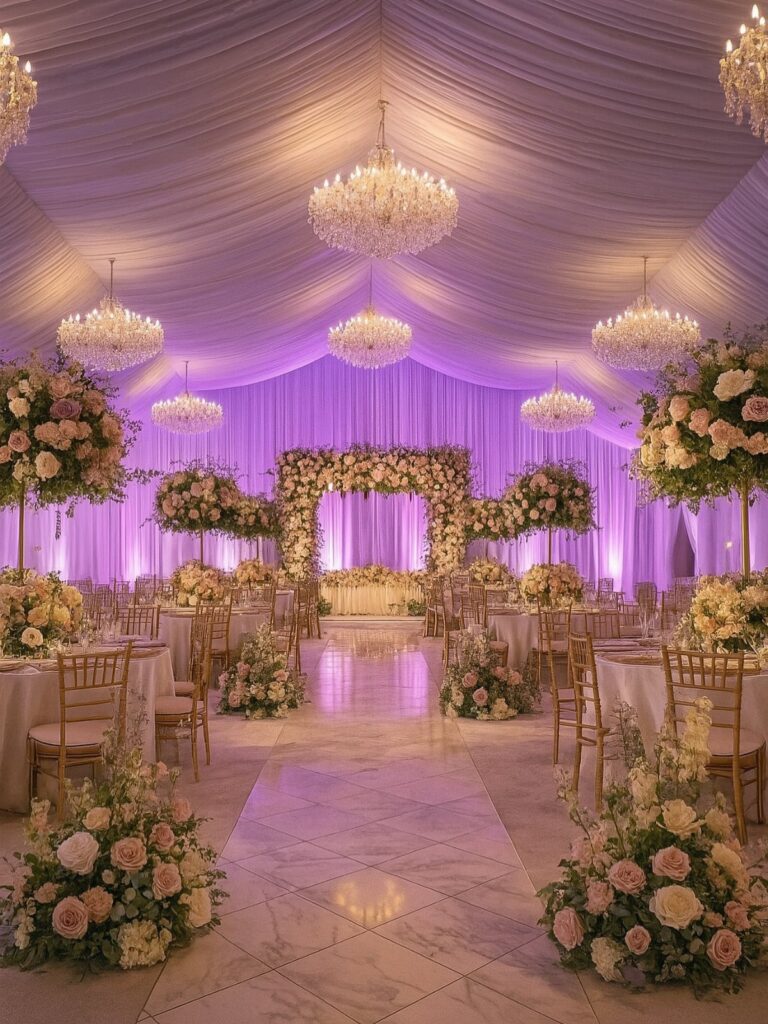
The ideas below run from craft-store chiffon to crystal chandeliers that need structural engineering review, and the single question that sorts them is what your hall already gives you: beams to hang from, walls you cannot touch, or a bare floor and ceiling you must build entirely.
Where a flat drywall ceiling rules out suspended greenery and crystal bead strands, a freestanding gold frame or a fabric backdrop on a weighted pipe-and-drape base becomes the obvious move.
1. White Fabric Swags Paired with Fairy Lights
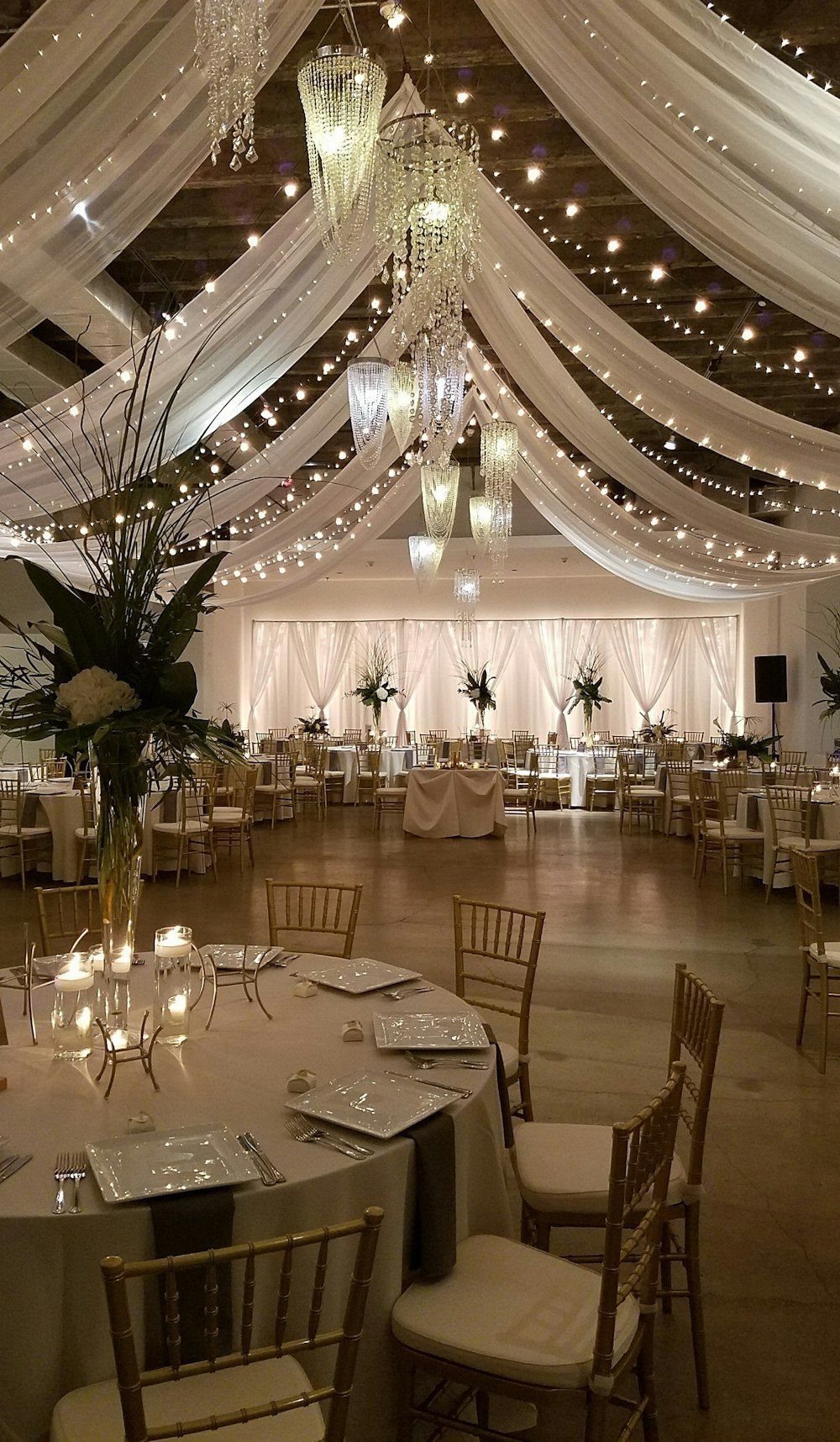
White fabric swags gathered across a ceiling turn the plainest hall into something theatrical.
The fabric does the heavy lifting; warm fairy lights tucked into the folds do the rest, bouncing soft light back through the cloth so the whole ceiling glows rather than glares.
For a budget that cannot stretch to hired draping crews, lightweight chiffon or organza by the bolt and a staple gun on a tall ladder will get you most of the way there.
Start the swags from a central point or a beam and let them fall in even scallops toward the walls. The lights go in last, strung along the top of each fold where the fabric bunches and hides the wire.
This works best in halls with some height; in a low-ceilinged room the fabric eats visual space and the effect turns claustrophobic.

【Wedding Arch Draping Fabric】Package includes 1 panel ivory sheer drapes, each panel is 28.7 inches wide and 20 ft long. The length of wedding arch draping fabric is long enough to fit different size arch decoration. This polyester sheer drapery backdrop can create a romantic and elegant atmosphere on your party.

【Ivory Ceiling Draping Set】Pack of 6 ivory wedding ceiling drapes with lights (a set of 9.8ft warm white string light), each ceiling draping panel measures 5 feet(60inch)wide x10 feet(120inch) long. Attach to the ceiling of the venue to soften the space and create a stunning fairytale atmosphere, transform any venue space.Drapes and fairy lights can be used for decoration on both indoor as well as outdoor events

CONTAINS : Pack of 1 PC. Each panel is 30 Inch (Wide) x 20 Feet (Long). Thermal cutting no seaming technique. Seamless, one-piece design. Each panel is cut entirely from one single piece of fabric. It is perfect length for arch either round or rectangle for a elegant puddle drop. Soft and overhanging pendants make the wedding decorations more popular.This chiffon drapery backdrop can help your party to create a warm and elegant scenes.
2. Floral Arrangements
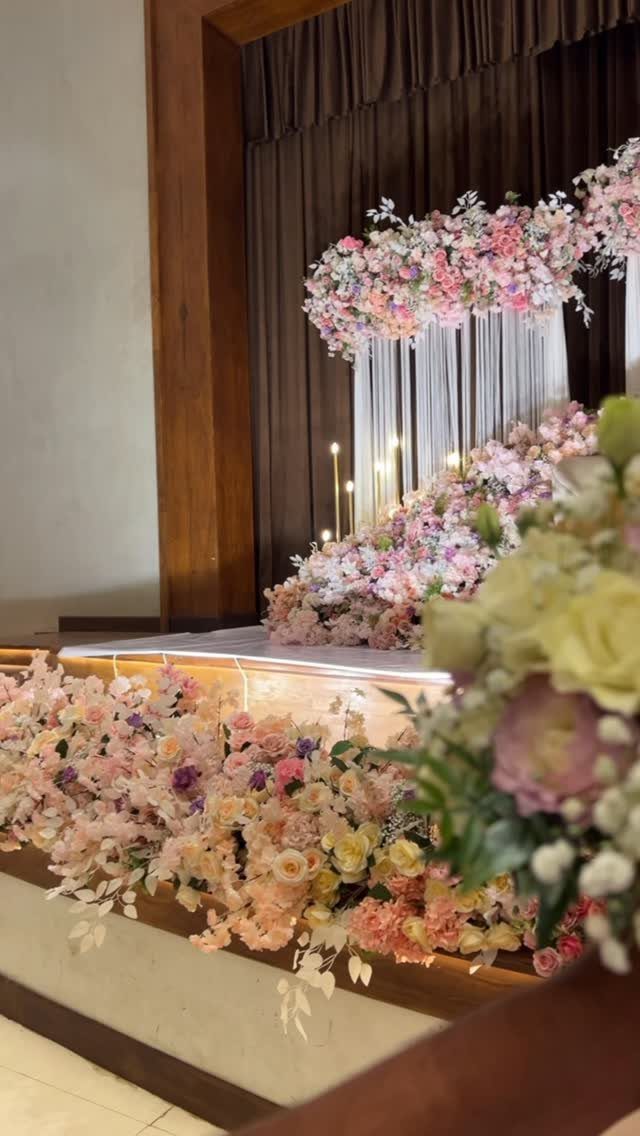
Fresh flowers where people sit, eat, and gather do what paint and fabric cannot: they move, they smell, they drink the same air as your guests.
Roses and hydrangeas in dense clusters give the most coverage per stem, and greenery fills the gaps without the cost of more blooms.
A stage or altar area lined with flowers in deep colors photographs beautifully against white or cream backdrops. For tables, lower is better; tall centerpieces split conversation across the table and block sightlines to anyone beyond the candles.
Garlands strung along a railing or wound through a banister carry the same color story through the whole room without requiring dozens of separate arrangements.
Timing is what makes or breaks fresh flowers. Fresh work needs doing within a day of the event, and someone has to place it.

Battery Operated String Lights: Powered by 3*AA battery (batteries NOT included). The battery box is not waterproof, please keep it away from water

【Large Capacity LR44 Battery】Each fairy lights is equipped with 3 pre installed 180mAh batteries, which can provide up to 72 hours of lighting without additional purchase. Very suitable for decorating mason jars, vases, handicrafts, bottles, plants, decorations, flower wreaths, flower wreaths, etc
3. Chandeliers
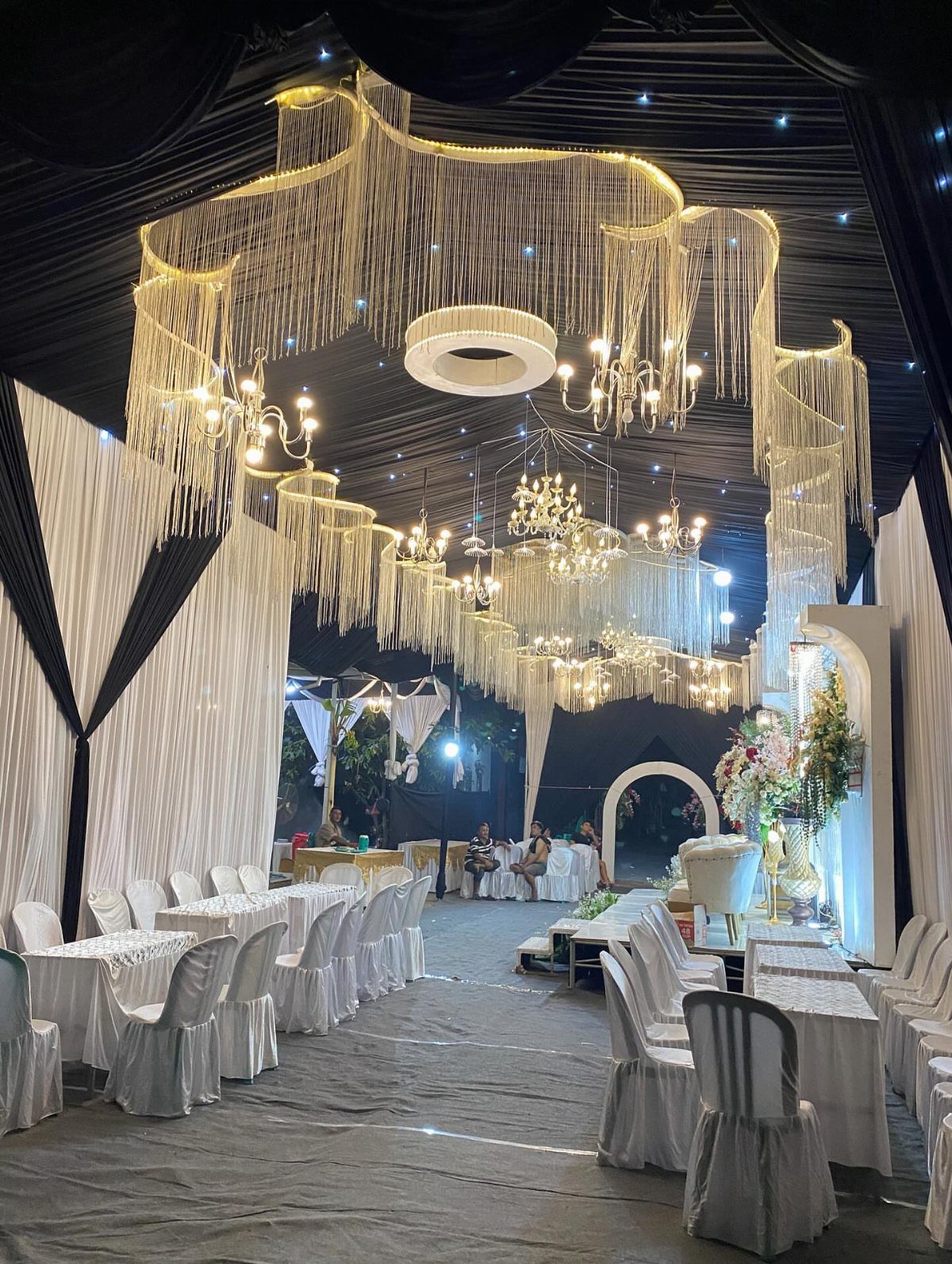
Crystal chandeliers hung where no fixture existed before signal that someone planned beyond the room’s defaults.
They need not be wired; battery-operated LED candles in real crystal housings, or rented plug-in pieces on extension cords, both read as chandelier from guest level.
The pairing with draped fabric matters more than the fixture itself. A bare ceiling with a single chandelier looks stranded; the same light with white or black fabric gathered around it belongs to a larger design.
Fringe or crystal strands lengthening below the light catch air currents and sparkle without extra bulbs.
For an outdoor tent, weight is the problem. A chandelier in canvas needs a beam or a reinforced cross-pole rated for more than the piece weighs; a falling fixture is the kind of story that outlives the marriage.

Packaging Includes: dusty rose red single artificial bouquets combination of 12 bundles, 4 different styles, each with 3 bundles; The bouquet group consists of peonies, rose, hydrangea, and some foam flower spikes, leaves, and flower buds; The total height is about 29.8cm/11.73 inches, and the overall opening diameter of the bouquet is about 30cm/11.81 inches

The artificial chrysanthemum flower is made of silk. The stem is consisted of steel wire inside and plastic outside. You could cut easily to fit your vase.

Generous Size & Elegant Design: Each order includes 2 full bouquets of artificial hydrangeas, totaling 10 big flower heads. With a generous diameter of 6 inches per bloom and stems measuring 17.7 inches long, these large-scale flowers create a lush, high-end visual impact without the hassle. (Vase not included).
4. Table Settings
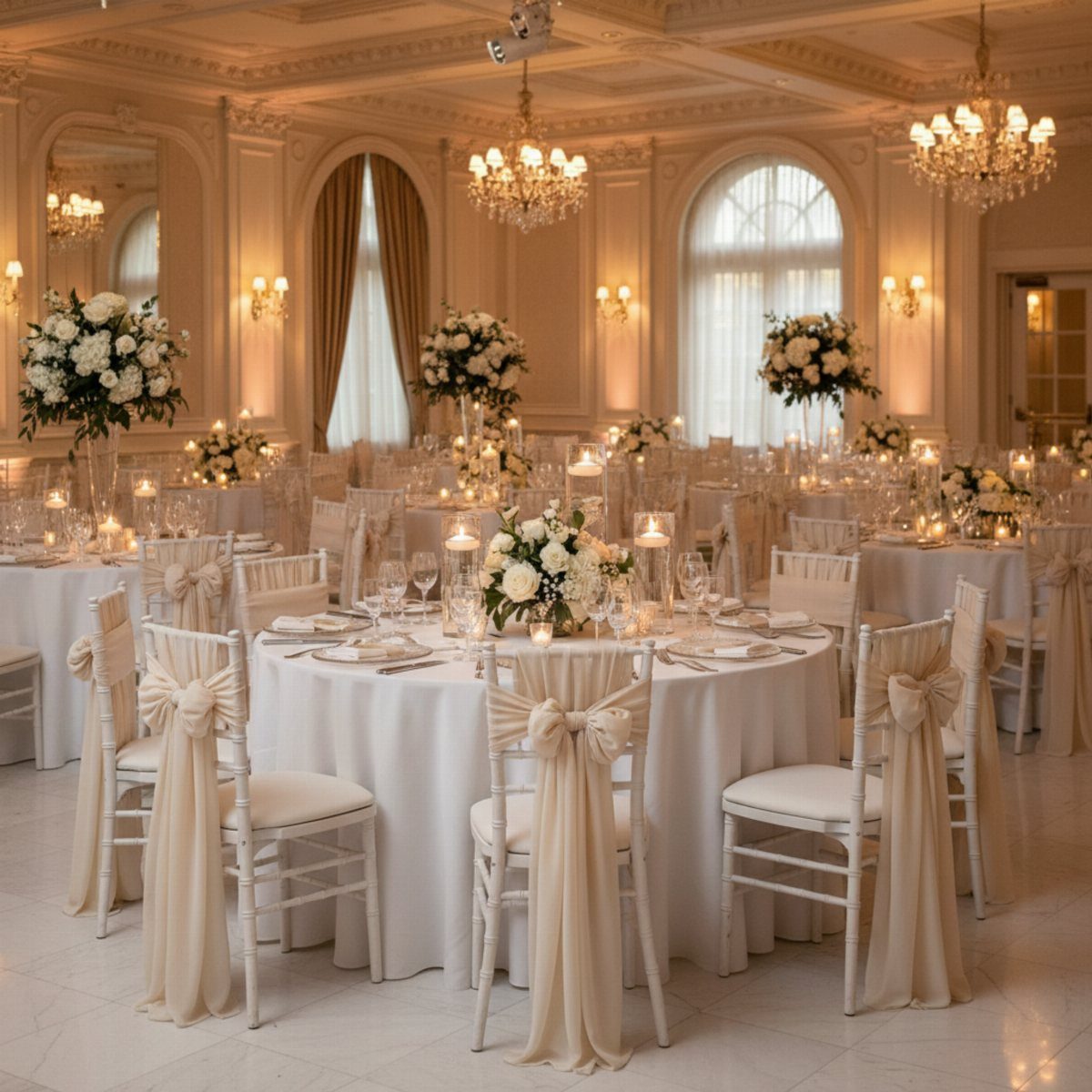
The table is where guests spend the most conscious time, and the settings are what they touch.
White linen is the base almost everyone chooses because it reflects light onto faces and forgives mismatched chairs. Gold flatware warms the whole scene against that white; silver reads colder and needs more flowers to compensate.
The consistency lets guests relax into the room instead of working to decode it.
What I would skip: charger plates that no food ever touches, and folded napkins elaborate enough to need their own instructions.

Each flower vine consists of 10 large roses (flower head diameter 3.15in) and 30 small roses (flower head diameter 1.57in), with 2 pcs per pack.

Brown Garland Tie: you will receive 50 brown Christmas garland tie, this tie is suitable for hanging garland, stockings, wreaths and other holiday decorations, suitable with your holiday decorations, add Christmas atmosphere

Quantity: Comes In Faux Silver Dollar Eucalyptus Leaves Garland and Willow Leaves Twig Vine Garland Which Have Been Intertwined Together. Do a little fluffing when out of the package,it will be turned out beautiful. This Greenery Garland includes 54 Eucalyptus Leaves Branches and 35 Willow Leaves branches.
5. Hanging Greenery
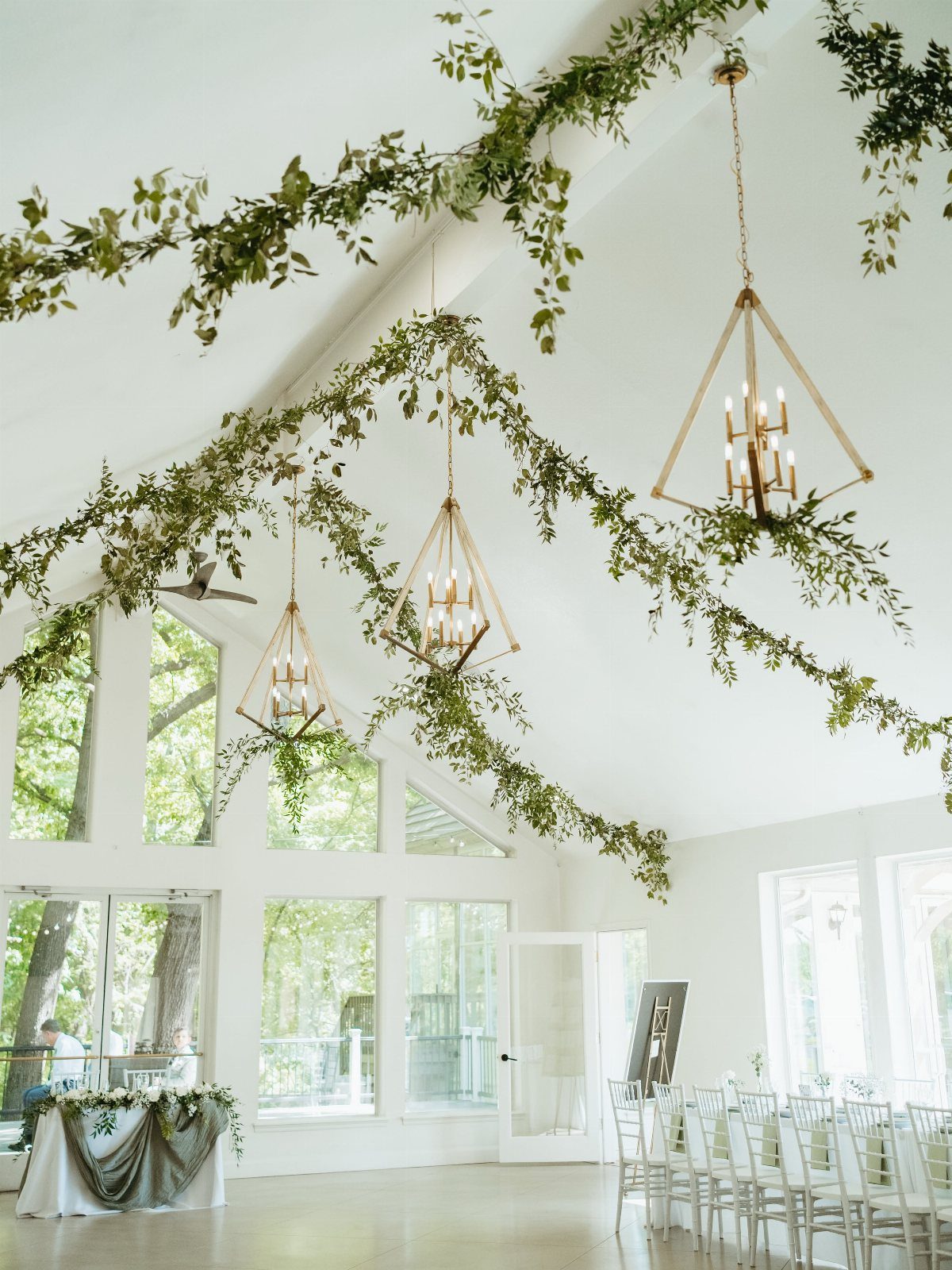
Garlands of greenery hung overhead bring the outside in without the fragility and cost of suspended flowers.
Ivy, eucalyptus, or smilax vines drape naturally under their own weight; wired garlands hold a shape if you need a sharp line across a beam.
The method is simple: fish line or thin wire from existing hooks, or S-hooks clamped to beams, with the greenery bunched and wired at intervals so it reads as continuous from below.
Geometric gold or black fixtures hung through the greenery give the eye something structured to rest on, and the leaves soften what would otherwise be bare geometry.
This suits halls with exposed beams or trusses to anchor from. A flat drywall ceiling means rigging that must be patched after, or abandoning the idea for something floor-based.

🌞【6 Lights Crystal Candle Chandelier】 D23.6" X H23.6"(Not include the long chain, it can be adjustable), Item weight: 10.5 Pounds. Package Weight: 12.7 Pounds. Bulb Type: E12 * 6 Required(Bulbs not included), Max 40Watts. The following types of bulbs are compatible with the lamp: energy-saving bulbs, LED bulbs, Halogen Bulbs, etc.

Eye-catching Design: Add a touch of elegance to your home with the enchanting chandelier, featuring simulated crystals that radiate charm and sparkle. Dispel the darkness and cast away the gloom with these chandelier

ALL-IN-ONE ILLUMINATION: Skip the hassle of finding compatible bulbs. This 2-tier silver chandelier arrives pre-equipped with 10 LED candle-style bulbs, providing an immediate, warm, and inviting glow for any space or event venue.
6. Gold Frames
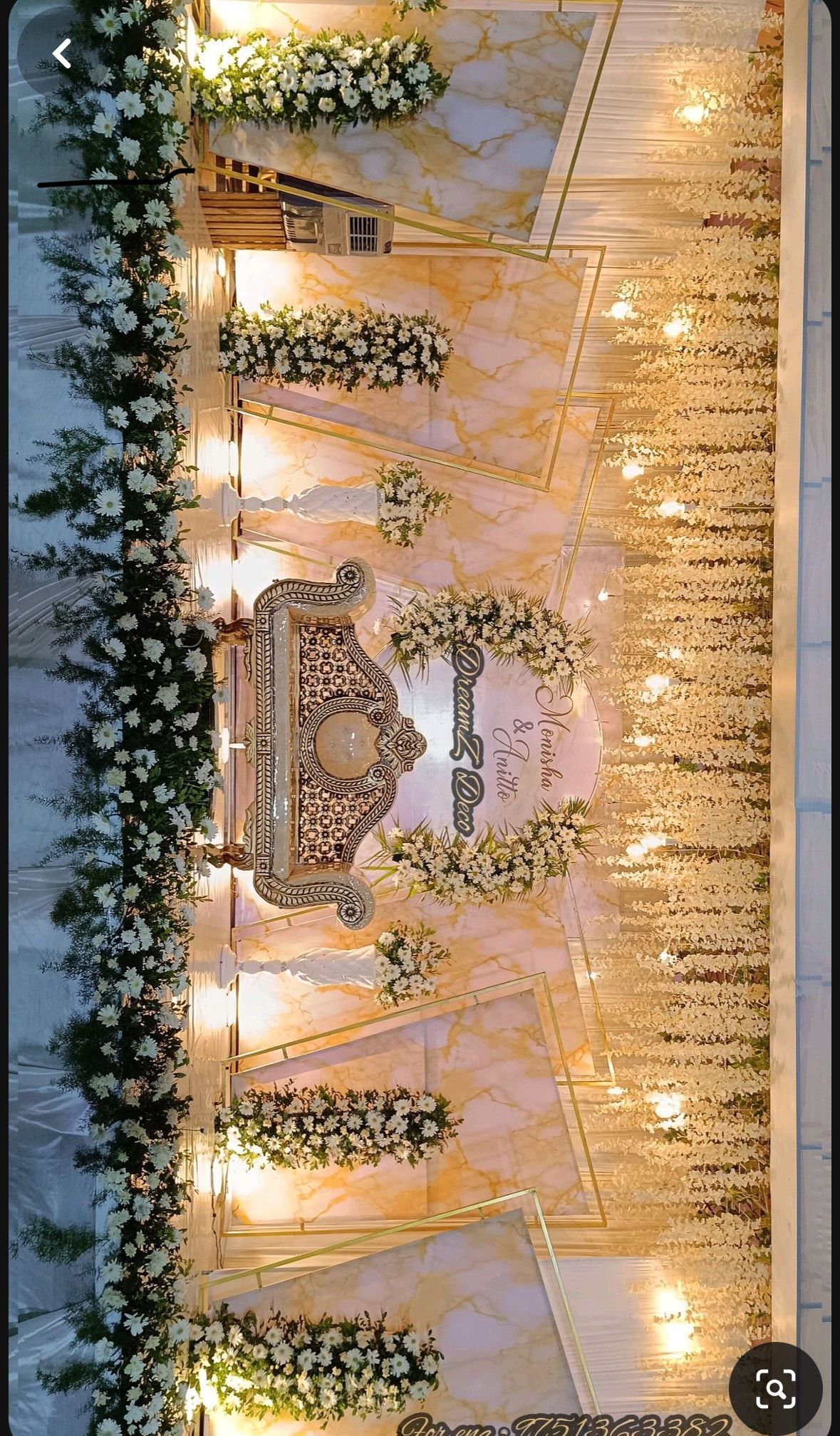
Gold reads as warmth and intention in a way that silver or bare wood does not, and geometric frames are the lightest way to introduce it.
A single gold arch or grid behind a head table, or framing a stage opening, needs no flowers to justify its presence though it welcomes them.
The same frames work without panels, with hanging blooms or candles inside them, for a lighter, less constructed look.
Chair sashes in gold fabric, mirrored tabletops, or gold-rimmed glassware extend the same metallic note through the room without repeating the exact shape.
What to check before committing: the actual color of the gold. Rental frames vary from brassy yellow to nearly bronze, and mixed tones in the same sightline look like a mistake rather than a choice.
7. Candlelight
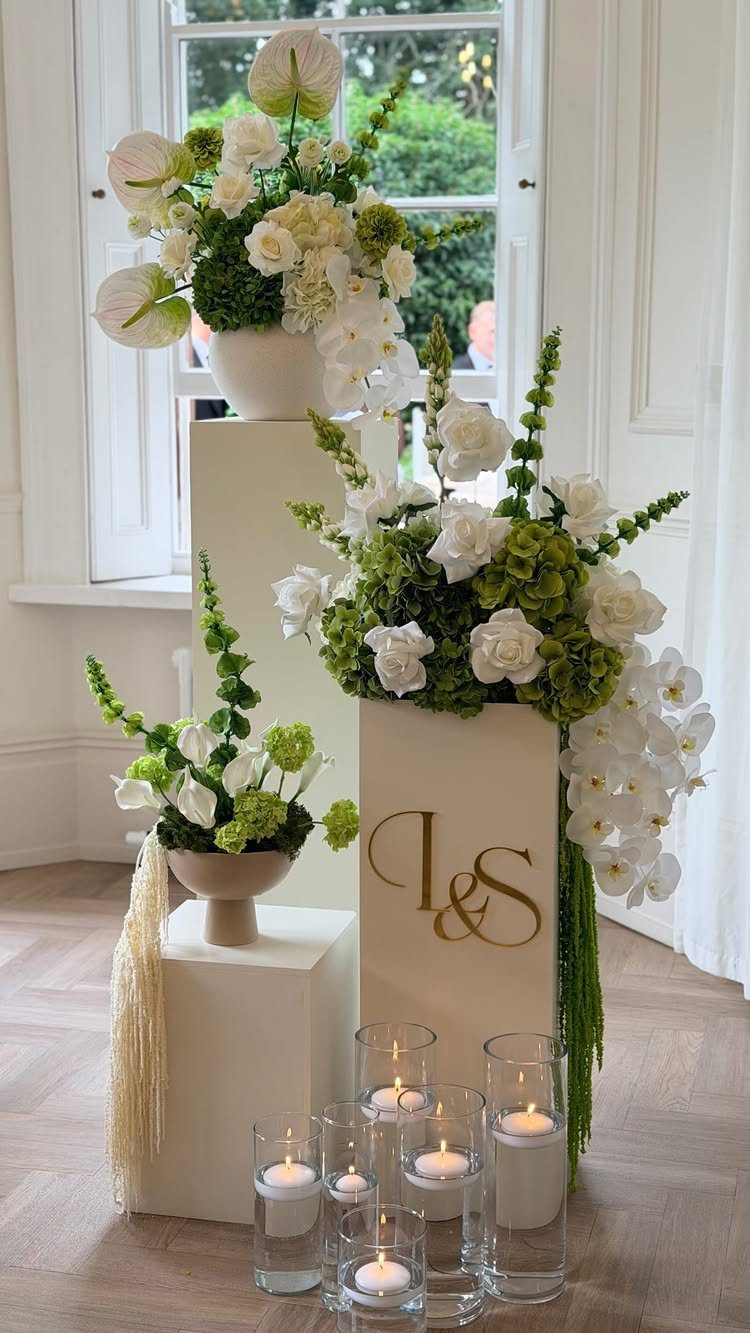
Real flame does what bulbs cannot: it moves, it wavers, it makes people lean in closer.
Pillar candles clustered at the base of a display, or tea lights in clear glass marching along an aisle, give enough light to find your seat without turning the hall into an office.
The glass matters as much as the wax. Cylinders protect flame from breeze and sleeve alike; votives without holders tip, pool, and stain linen.
For a hall that forbids open flame, LED pillars with flicker circuits have improved enough to fool the eye at table distance, though they still miss the smell of warm wax.
What I check first: the venue’s flame policy, written into the contract, not assumed.

Bright: Led christmas lights are composed of warm white micro LEDs with big chips, brighter than others' led fairy lights. Perfect decoration for weddings, parties and kids' rooms

3 High-Capacity LR44 Batteries: Each fairy lights are equipped with 3 pre-installed 180 mAh batteries. Perfect for decorating mason jars, vases, crafts, bottles, plants, ornaments, garland, wreath and more. Note: Total battery life varies based on the selected lighting mode
8. Layered Fabrics Across Tables
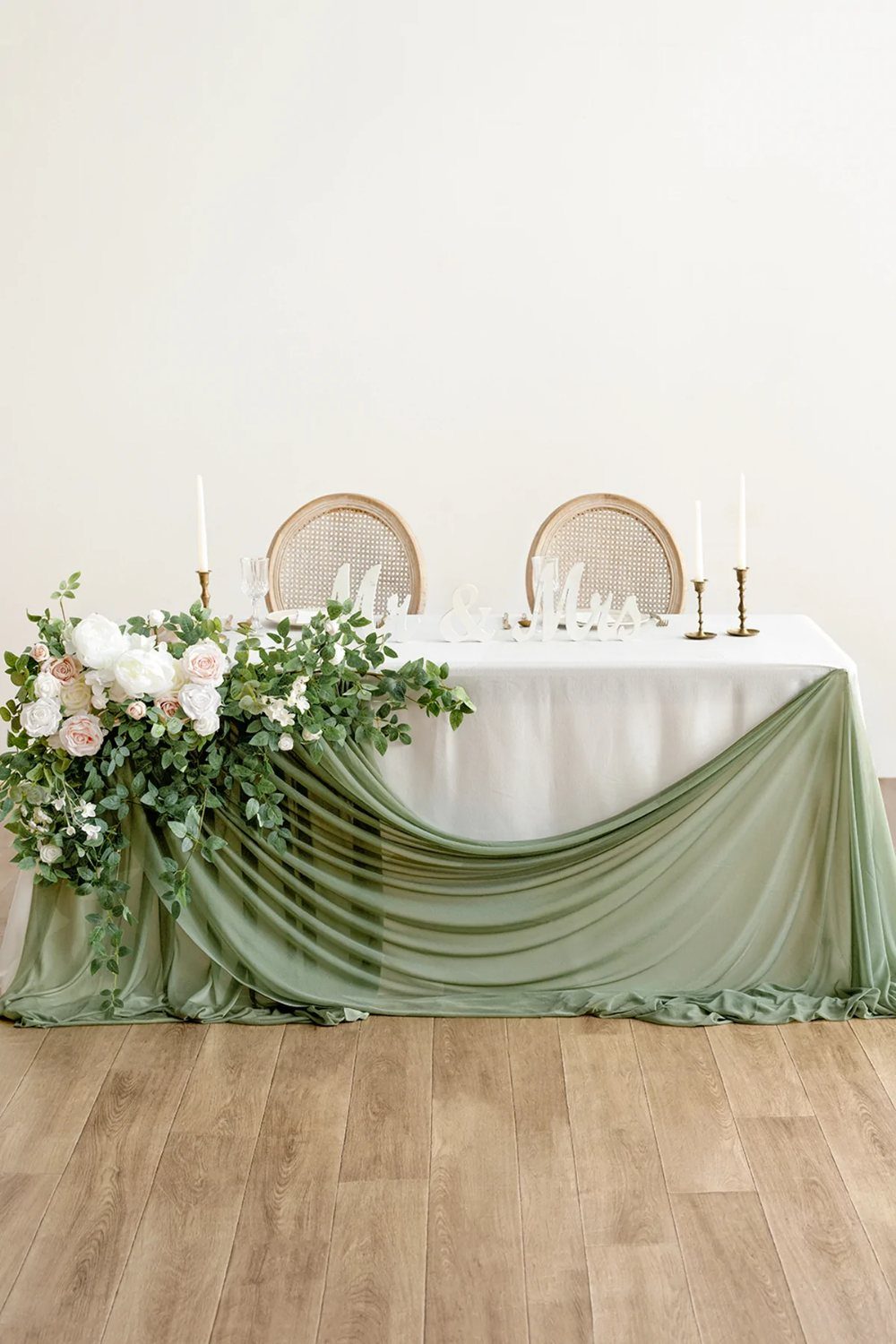
A single tablecloth is a blank surface; 2 fabrics in conversation become a design.
Sage green chiffon drawn across white linen, gathered rather than spread flat, gives depth without weight and suits the sweetheart table or a cake display where photographs concentrate.
The top layer does the work.
Chiffon or organza catches light and shows the color softly; satin reflects sharply and needs careful smoothing. Both gather well at corners or center points, held with clear fishing line or fabric pins that hide in the drape.
What costs less than it looks: a bolt of sheer fabric from a craft store, cut to length, edges left raw if the weave holds.
9. Crystal Bead Strands
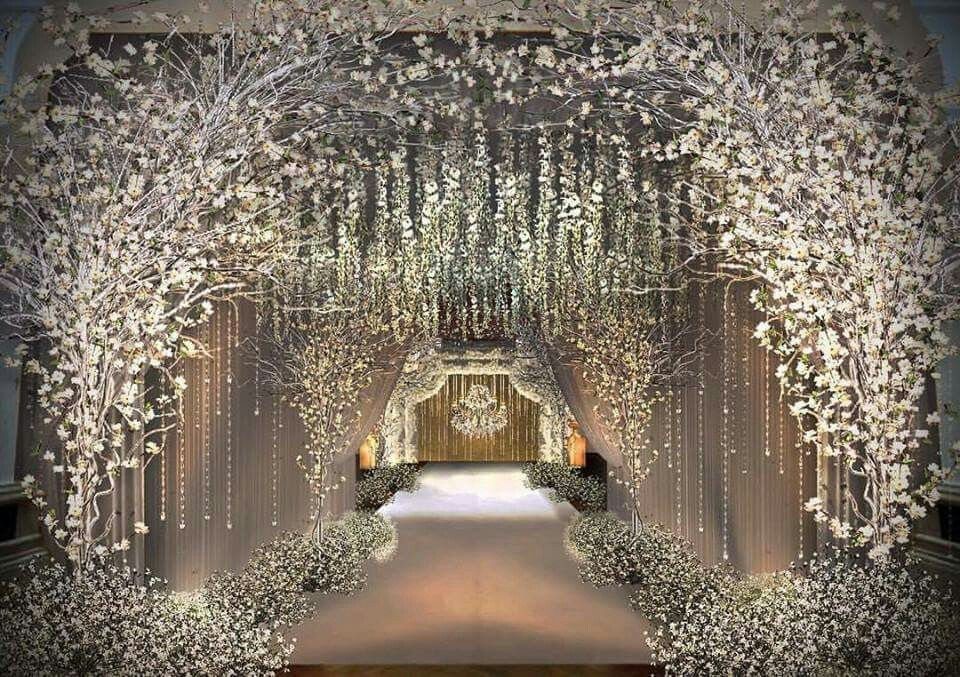
Suspended crystal turns any light source into dozens, splitting it into moving dots across walls and faces.
Strands hung from a ring or beam, or gathered into a curtain behind the couple, give the effect of water or ice without the temperature.
The weight adds up fast. A single strand of quality crystal is light; enough strands to fill a ceiling need hardware rated for actual weight, not a guess.
For a hall with no rigging points, a freestanding frame or arch can carry the strands within its own structure, turning a limitation into a defined doorway.
What pairs well: warm light behind or through the strands, not white, which reads cold against their sparkle.
10. Archways
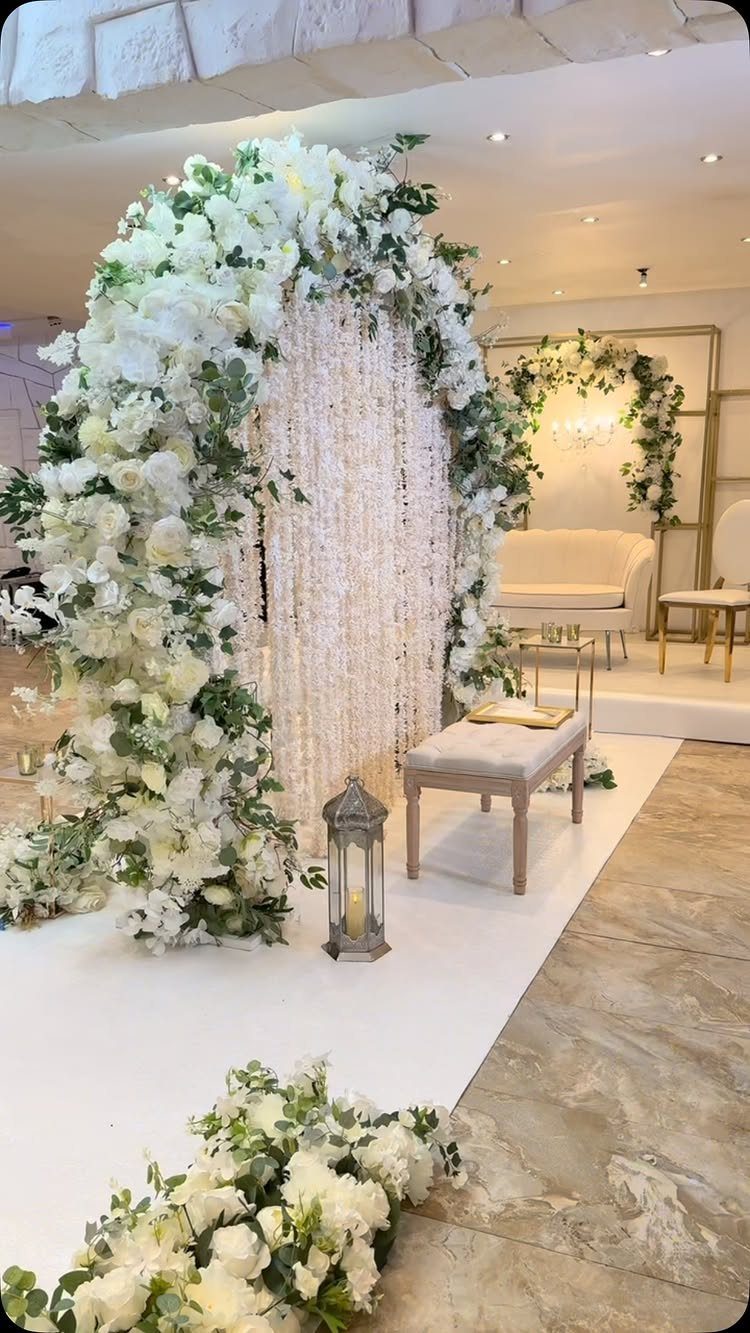
An arch at the end of an aisle does what a frame does for a painting: it tells the eye where to rest.
Florals climbing white or natural wood, or fabric in a color pulled from the rest of the room, mark the moment without needing words.
The scale should match the hall.
A delicate arch in a grand room disappears; an oversized structure in an intimate space swallows the couple. For rental pieces, ask for dimensions and stand in the space with a tape measure before signing, not after.
What I would add only if the budget allows: fresh flowers on a rented frame, swapped in day-of; silk or dried blooms travel better and install earlier.

【High Quality And Waterproof】This modern farmhouse style candles chandelier has a stylish European look, simply stunning metal frame to create a lighting accent that leaves a lasting impression.The waterproof level of the lighting candles chandelier is IPX4, allowing you to use it in any indoor or outdoor environment! Can accent your home or gazebo for the right decor.

Size:0.7''Dia x 4''Height ,material: plastic,Multi Color,Color changed
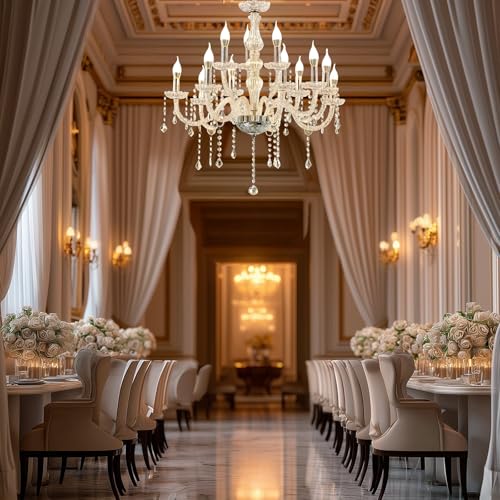
ALL-IN-ONE ILLUMINATION: Skip the hassle of finding compatible bulbs. This 2-tier silver chandelier arrives pre-equipped with 15 LED candle-style bulbs, providing an immediate, warm, and inviting glow for any space or event venue.
11. Themed Decor
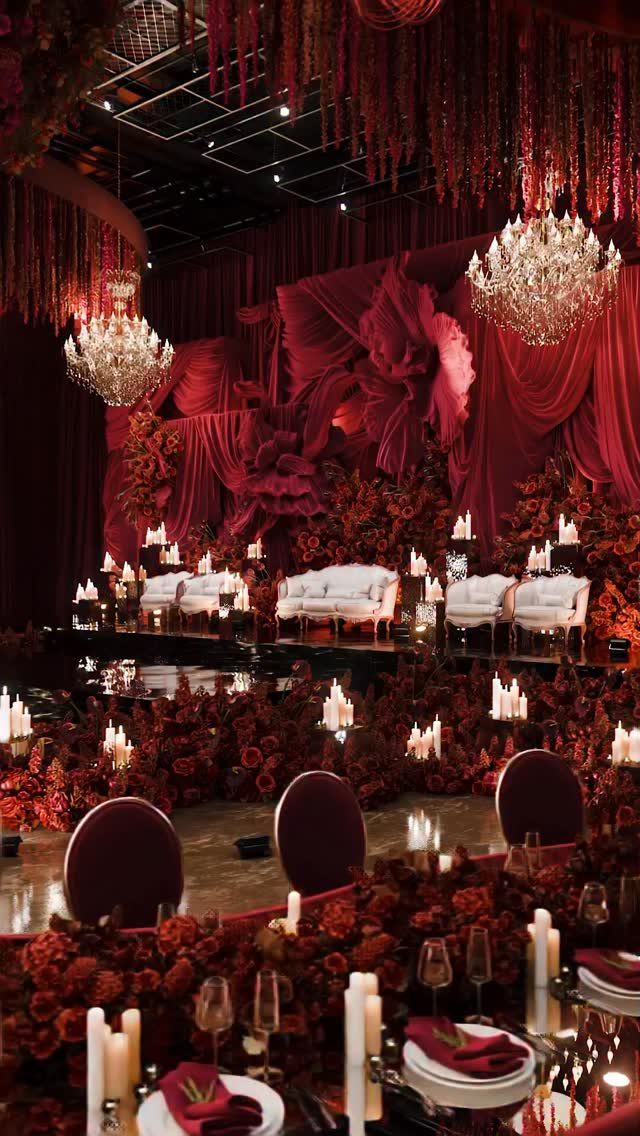
A single color carried through every surface asks more commitment than mixing palettes but repays it in coherence. Draped fabric, floral tone, candle shade, and seating upholstery all speaking one language turns a rented hall into a deliberate world.
The risk is saturation.
Without breaks of neutral, cream, or metallic, the eye tires and the room flattens. White linens against crimson walls, or gold accents in the candlesticks and chandeliers, give the theme room to breathe.
What to decide first: whether the theme is a color, an era, or a mood. Each choice then filters every later decision.
12. Seating Arrangements
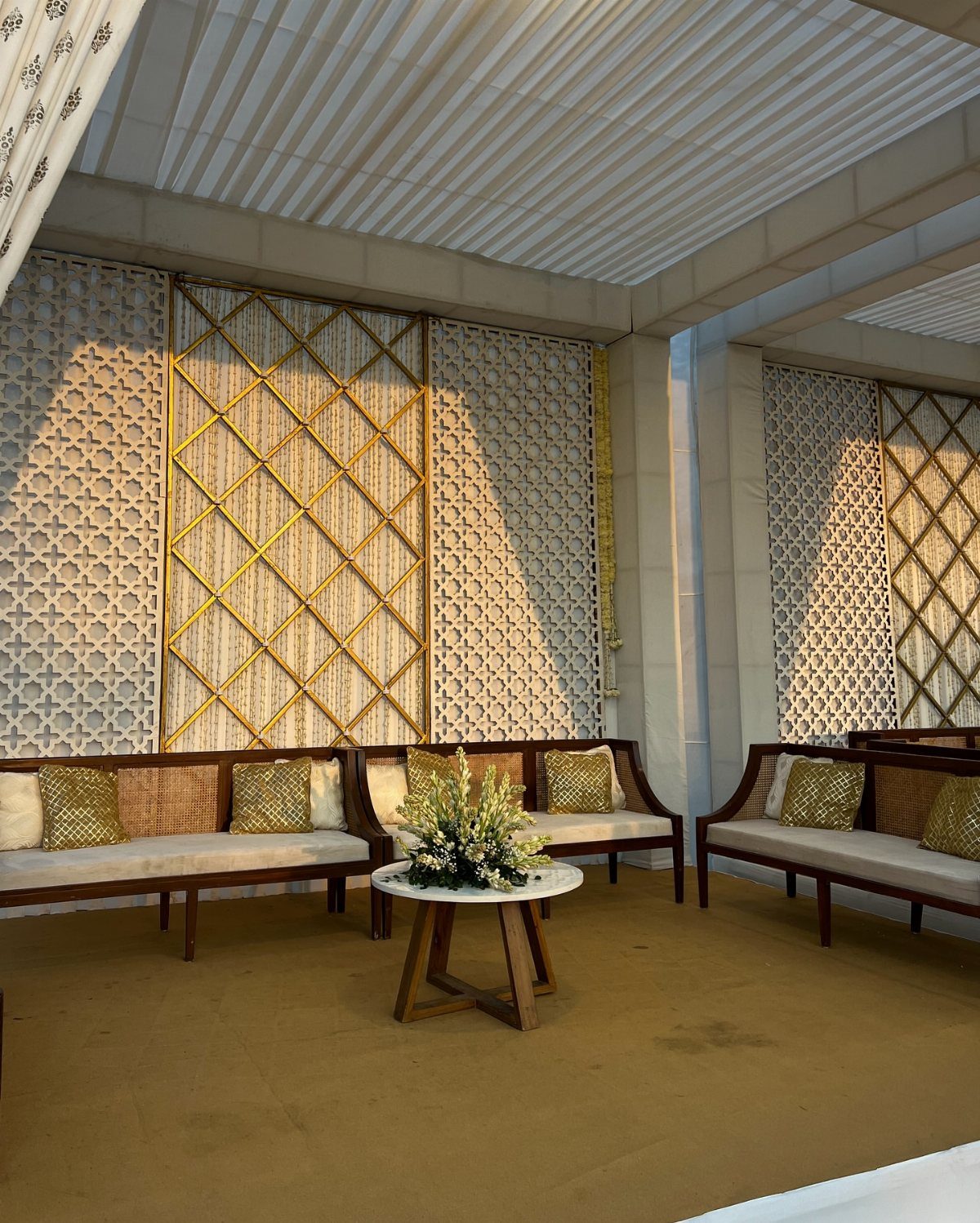
How guests sit shapes how they talk.
Benches in a lounge cluster, as above, invite conversation across a small table; rows of identical chairs face forward and perform ceremony. The hall’s purpose, or the portion of the evening, should choose the arrangement.
For a reception mixing ages and relations, varied seating reads as hospitality.
A few low sofas with cushions for younger guests, standard chairs with backs for those who need them, and clear sightlines to the couple’s table let everyone find their place without a seating chart’s rigid geography.
What to check: the path from seat to dance floor, seat to bar, seat to exit. A beautiful arrangement that traps guests is a cage in nice upholstery.
13. Welcome Signs
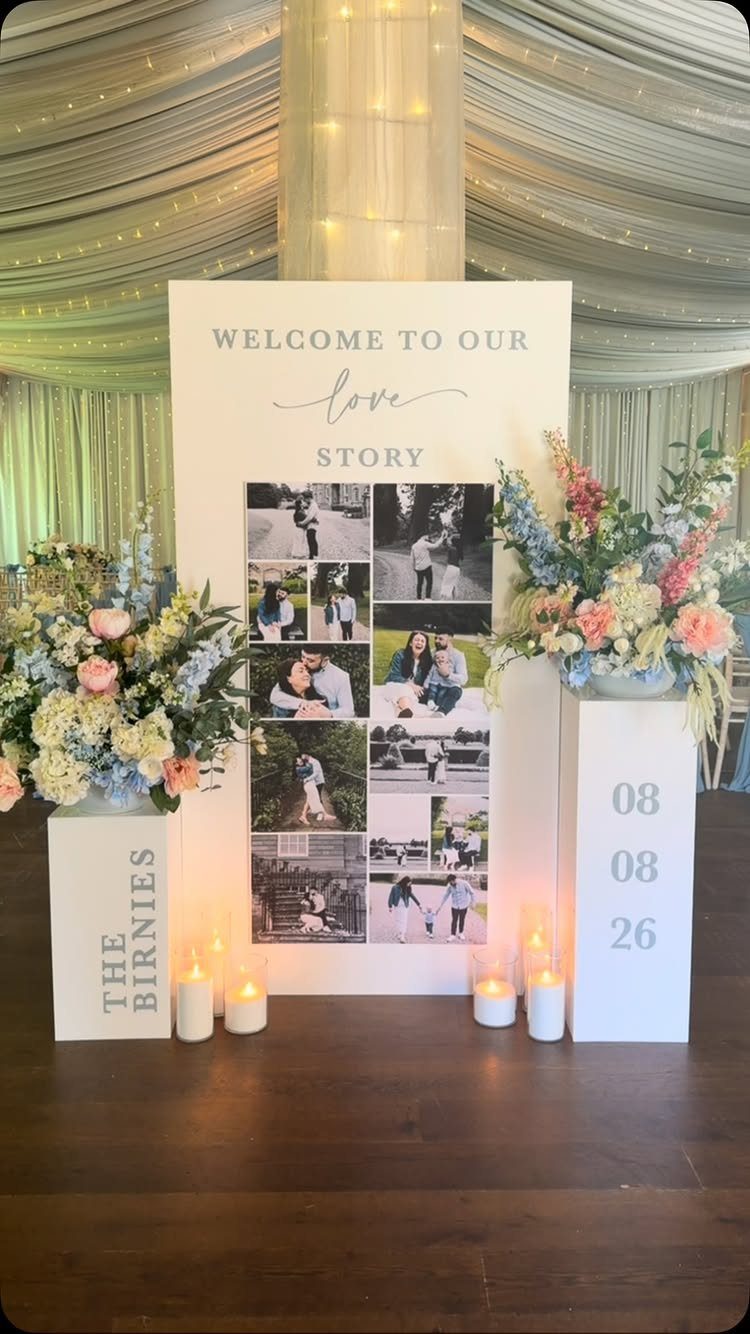
A welcome sign at the entrance does the host’s first job: it tells guests they are in the right place and that someone planned their arrival.
Wood gives warmth and weight; acrylic reads cleaner and survives a rain gust if the hall opens to a garden path.
Flowers at the base or climbing one edge turn a directional sign into a decorative piece that photographs well in arriving guests’ first shots.
The text should be readable from across the room, which means large letters and not too many words.
A date, a first name, a phrase; the rest belongs on the program inside. For a hall with a narrow entry, a vertical sign on a plinth needs less floor depth than a wide horizontal board.
What I would check: whether the hall allows standing pieces in the fire lane or doorway path, or whether the sign must sit on an existing table.
14. Dessert Tables
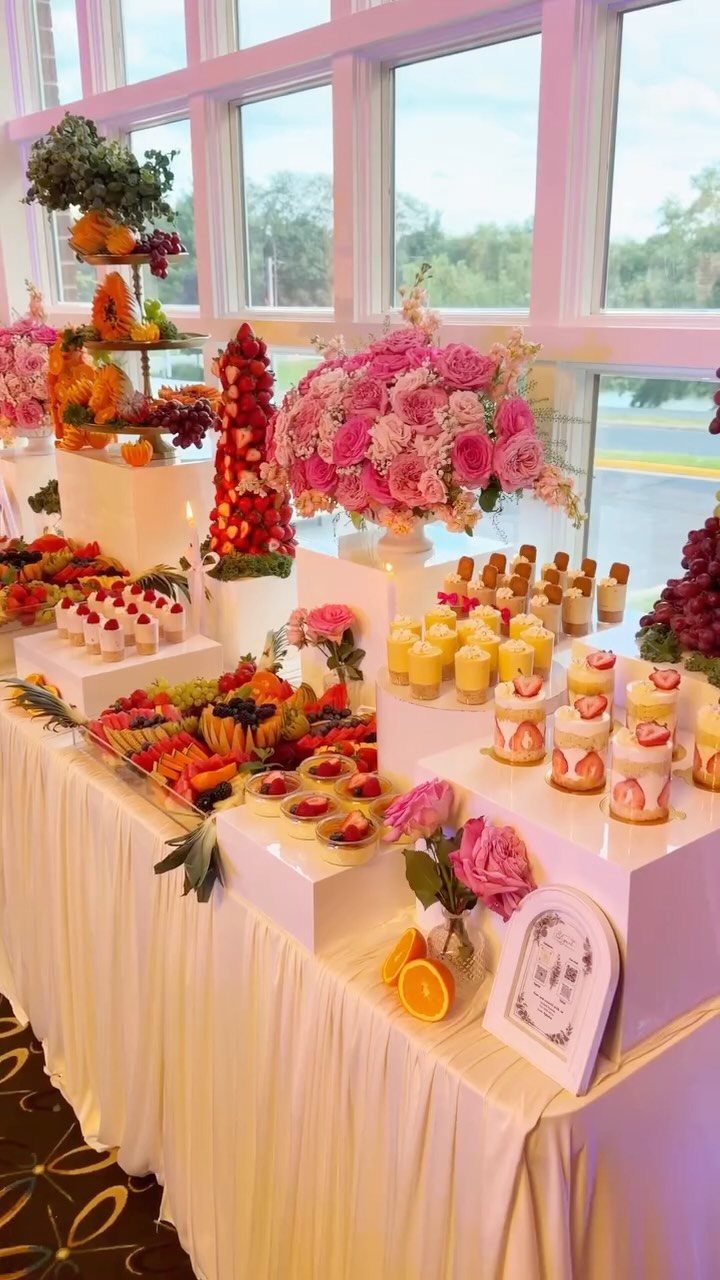
Dessert tables draw the eye before the meal ends, and that is their purpose. A gold sequin cloth under glass jars and tiered stands catches existing light and needs no extra fixture; the shimmer does the work.
White meringues and chocolate-covered strawberries against that gold read as luxury without the price of a plated dessert course.
The arrangement matters more than the sweets themselves. Height in back, lower pieces forward, with a small floral cluster or two to break the line of sugar.
For a hall with large windows, the natural side light makes the glassware sparkle; a dim room needs candles or uplighting at the table’s edge or the display goes flat.
What costs less than it looks: bulk candies in a single color, scooped into apothecary jars, with small paper bags for guests to fill.
15. Fabric Backdrops
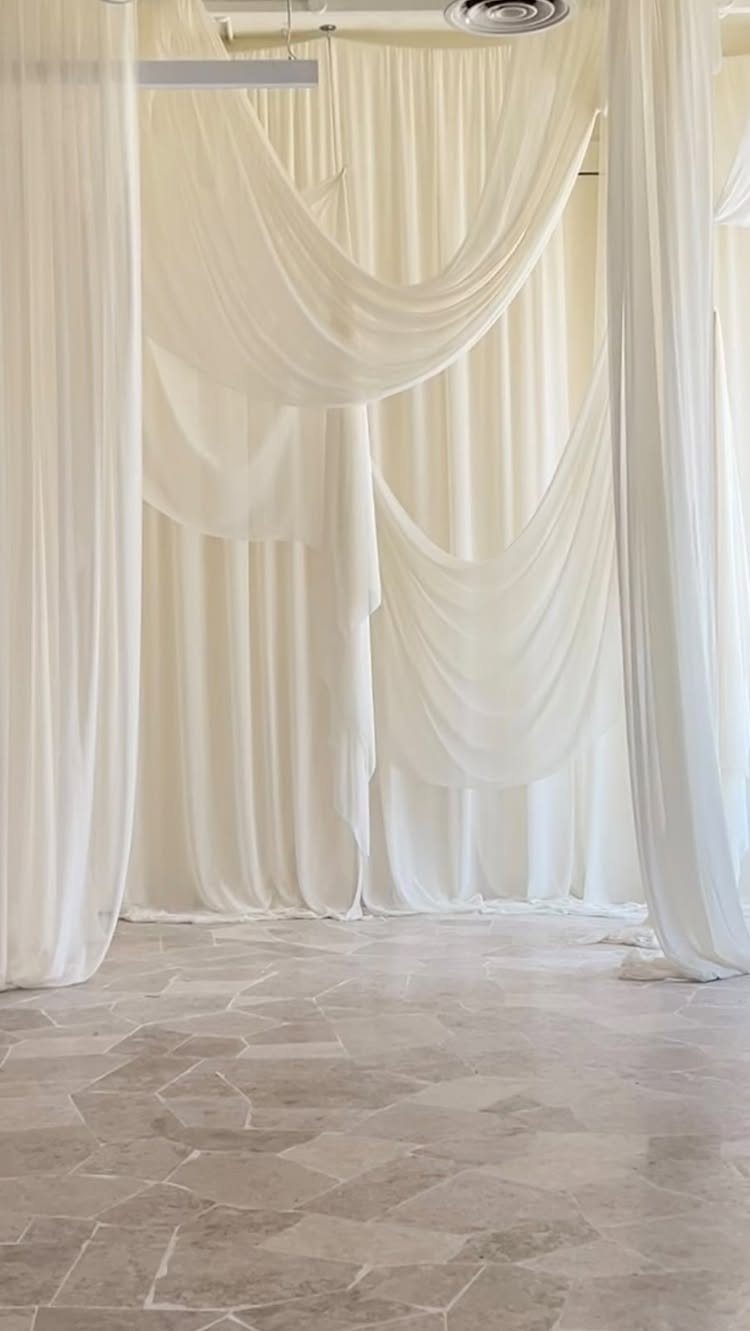
Fabric hung as a backdrop turns any wall into a ceremony site or photo corner without construction.
Sheer white layers in front of a solid drape give depth; the camera reads it as volume, the eye as softness. A garland of white blooms or dried pampas at one edge keeps the white from reading as empty.
The weight of the fabric determines the rigging. Lightweight chiffon or voile can hang from a pipe-and-drape frame or a freestanding arch; heavier velvet or lined panels need a truss or wall anchor.
For a hall that forbids wall attachments, a self-standing frame with a weighted base is the only option, and the frame itself should be finished since guests will see its edges.
What to decide first: whether the backdrop faces the ceremony guests or the camera. A photo backdrop can be narrower and more heavily styled; a ceremony backdrop needs width for the couple and the officiant to stand within it.
16. Photo Displays
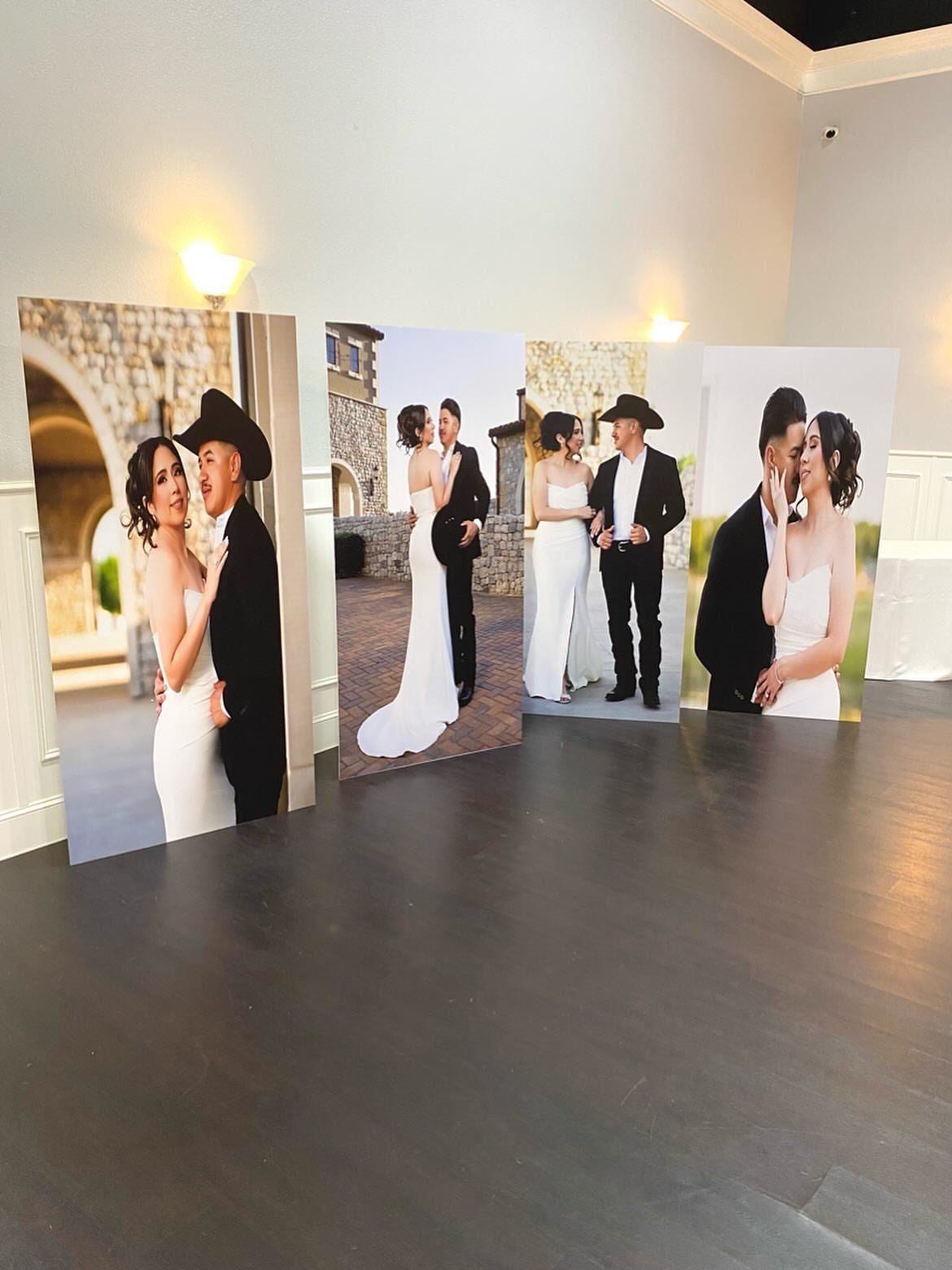
Large prints standing on the floor or hung along a wall tell a story in a way that a phone slide show cannot.
The scale matters; a small print at chest height gets lost in a hall, but a portrait on an easel becomes part of the architecture.
White borders and simple frames keep the attention on the faces, not the object holding them.
The arrangement should walk guests through time, not scatter moments randomly.
One wall, chronological or thematic, lets people follow the couple’s years without a map. For a hall with dark wood floors and warm walls, the prints need warm-toned paper or a slight cream mat; stark white fights the room.
What I would skip: small frames on a table that guests must bend to see, and any photo the couple would not want projected at the reception.
17. Lanterns as Centerpieces
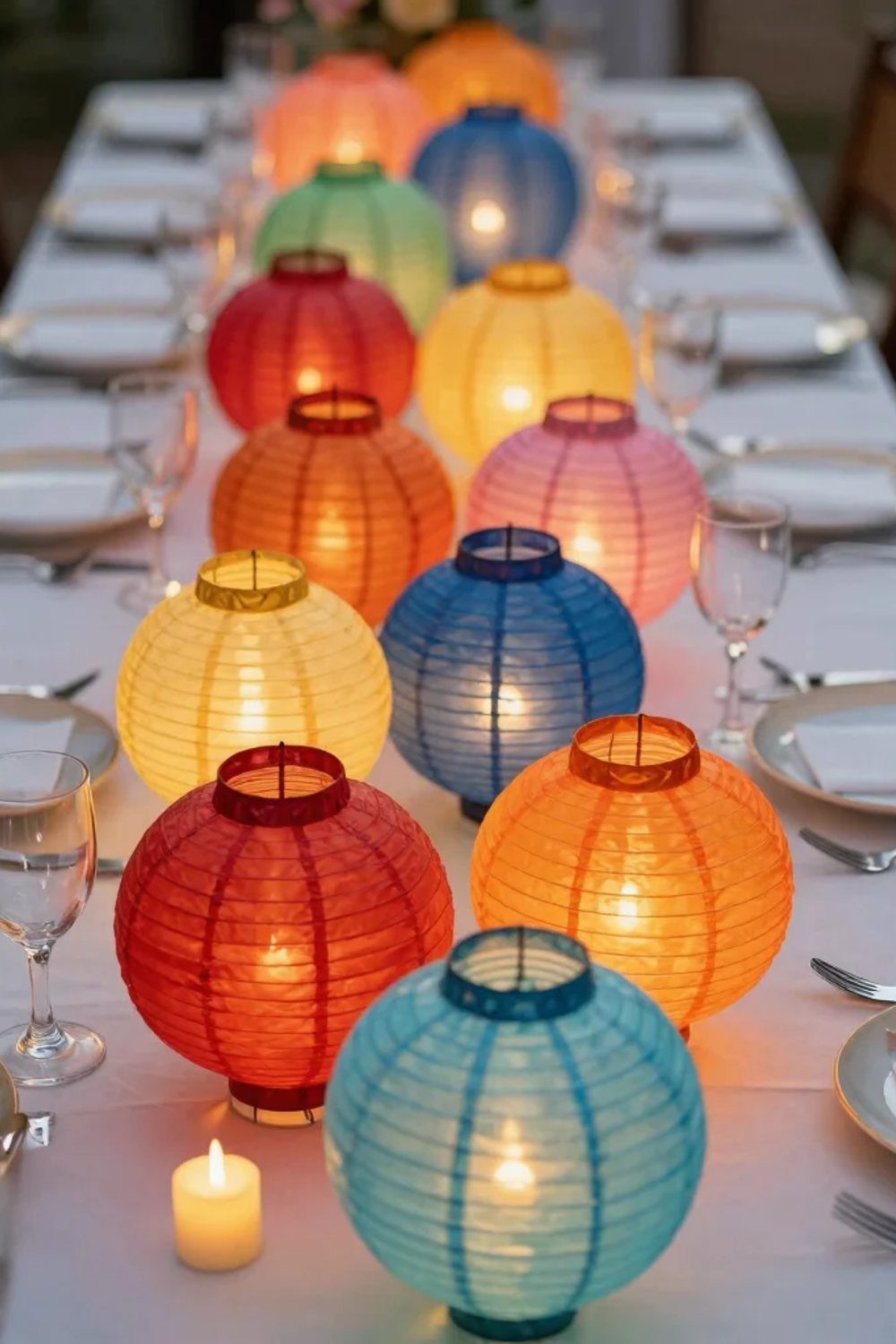
Lanterns down the center of a table give height without blocking faces across it.
Paper lanterns in color, lit from within by battery candles, cast a diffuse glow that flatters skin and food alike; metal or glass lanterns with real flame need the same holder caution as any open candle.
The line should be continuous, not a single piece stranded in a sea of linen.
A lantern placed close together, or clustered in threes with small greenery between, reads as a single design rather than an afterthought. For a long banquet table, the repetition pulls the eye the length of the room.
What to check: the battery life of LED inserts, tested the week before, not assumed from the package.
18. Photo Booths
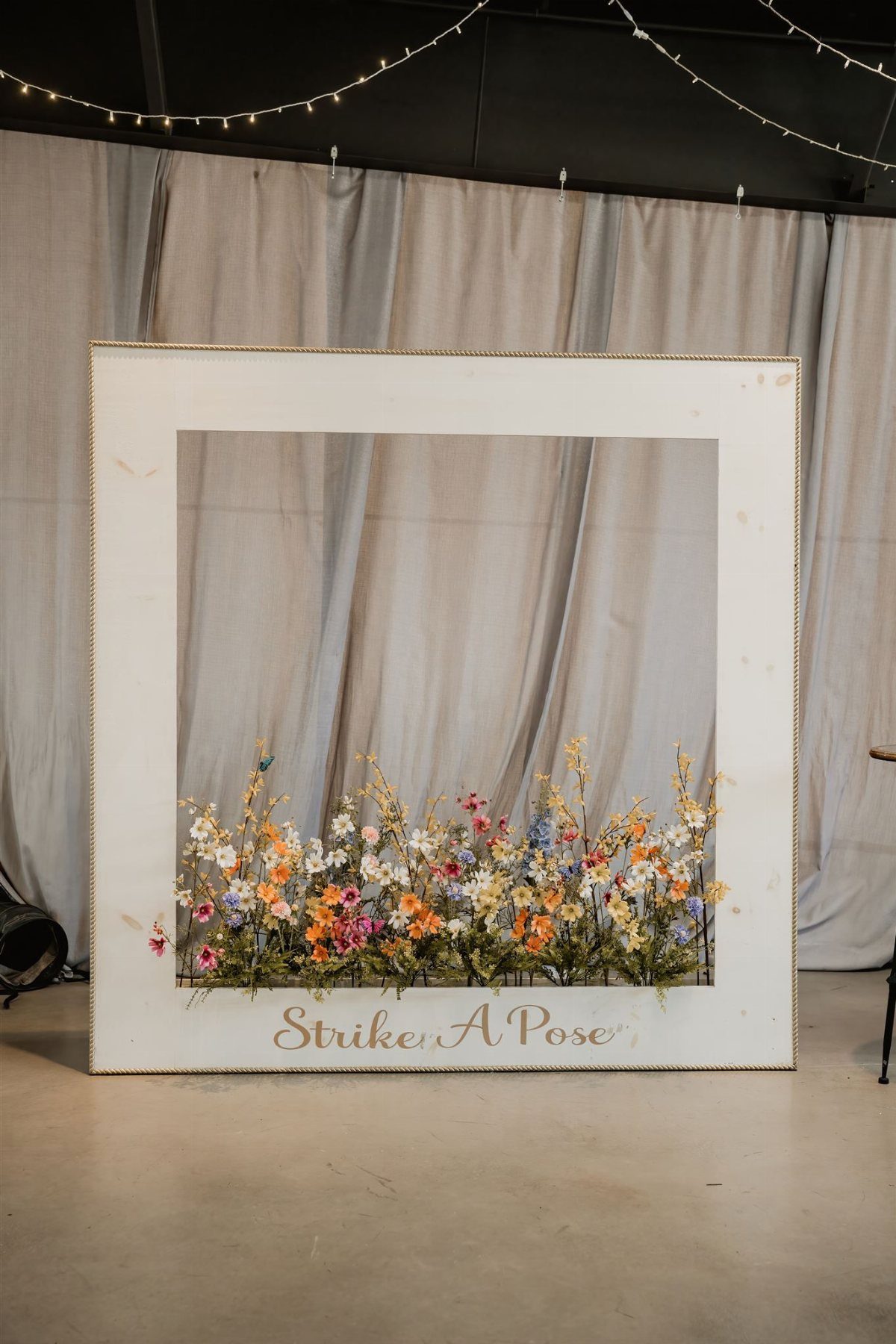
A photo booth gives guests something to do during the lull between dinner and dancing, and the prints become favors they actually keep.
A large frame prop, freestanding against a draped backdrop, needs no technology beyond a phone; guests shoot their own and post immediately.
The frame itself, painted wood with a phrase across the top, gives hands something to hold and poses something to organize around.
The backdrop behind the frame should be simpler than the frame, not competing with it.
White or cream drapes, maybe with fairy lights behind for evening, keep the attention on the people. For a hall with strong ambient light, the backdrop needs to be deep enough to shadow the subjects or the photos wash out.
What costs less than it looks: a thrifted frame, painted, with a new backing board and a printed phrase.
19. Vintage Furniture
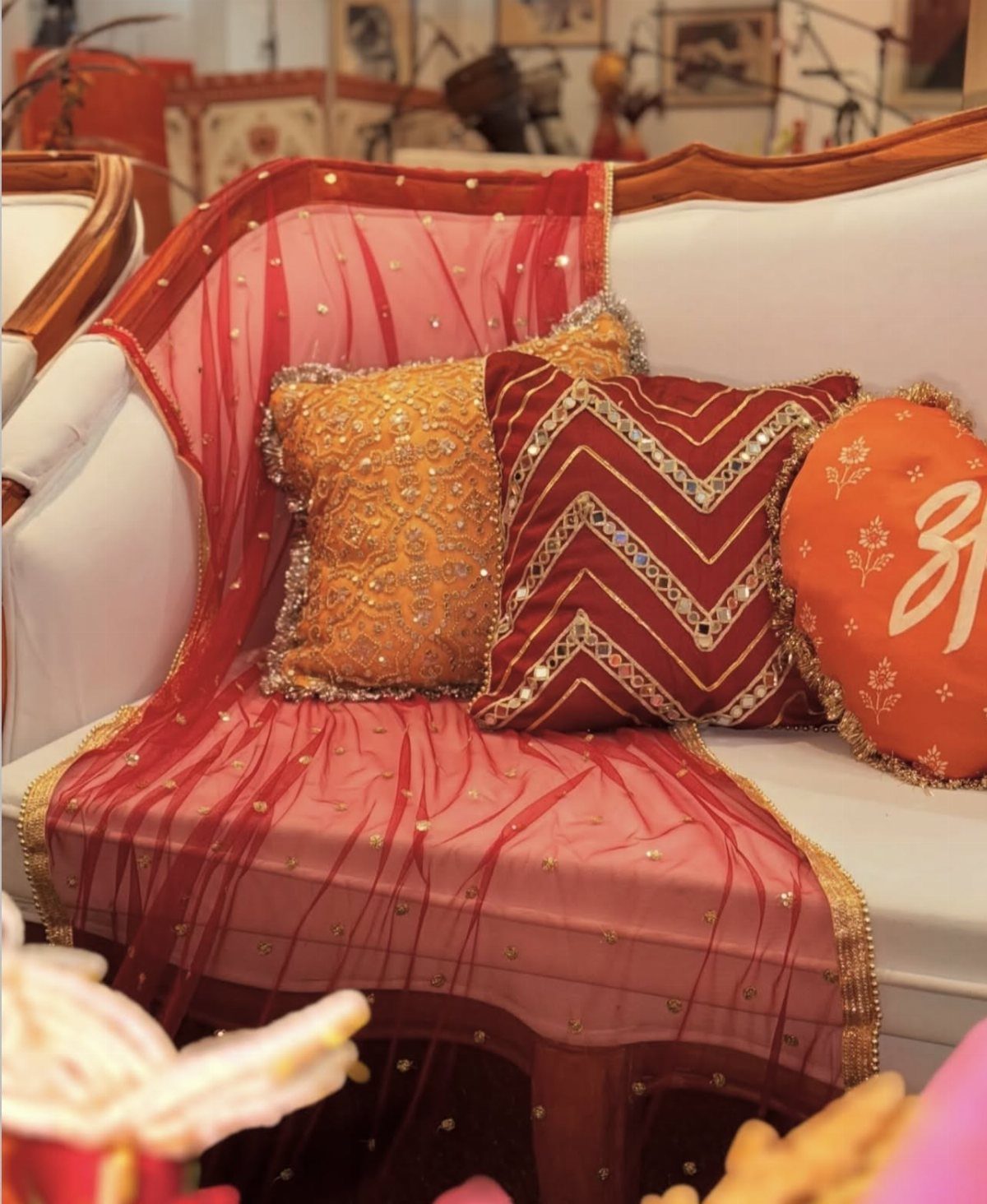
A settee with carved wood and worn velvet invites guests to sit differently than rental chairs allow. The piece itself becomes decor, and the people on it become part of the scene.
Sources for vintage furniture vary by region: estate sales, rental houses specializing in period pieces, or family attics. Upholstery in good condition saves the cost of re-covering; a faded patch on a seat cushion matters less than a sagging frame.
For a hall with limited floor space, one statement piece near the entry or beside the cake table gives the effect without blocking traffic.
What to check: whether the hall’s insurance covers antique or borrowed furniture, or whether a rental contract is required.
20. Balloons
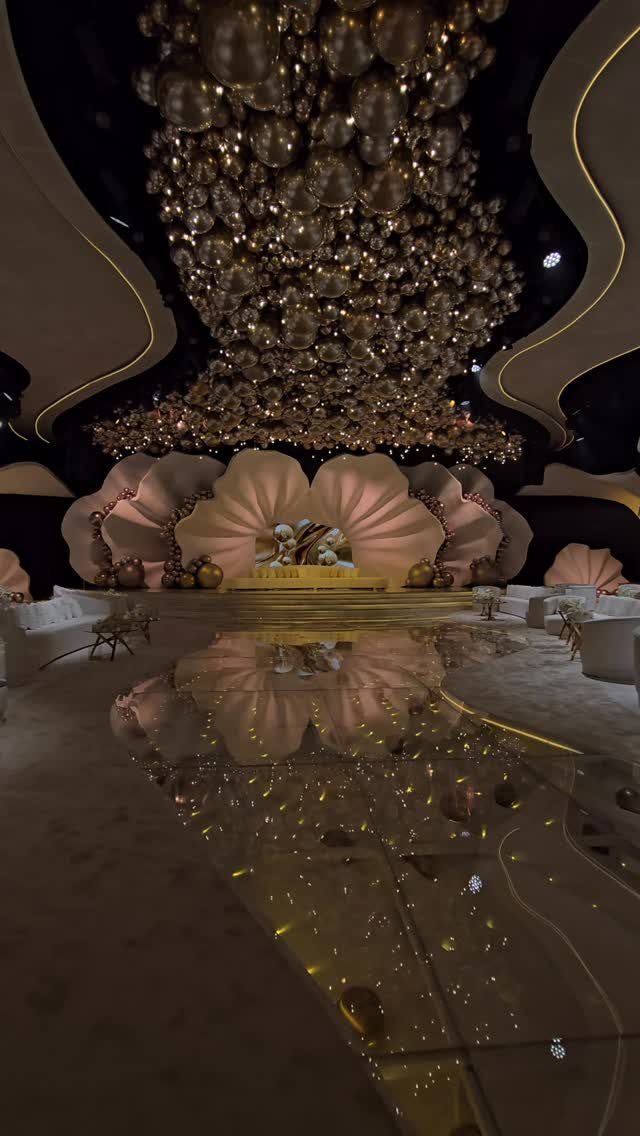
Metallic balloons gathered overhead turn a standard ceiling into a reflective surface that doubles the room’s light. The effect is immediate and temporary, which suits a rented hall that forbids nails or adhesives.
Clusters of varying sizes read as organic; uniform sizing looks corporate.
Helium-filled balloons need ceiling access or a tall ladder and someone steady on it; air-filled balloons taped to a flat ceiling in a grid give similar coverage without the gas cost.
A glossy floor doubles the effect by reflecting the balloons upward, though every scuff shows up twice so the surface needs a thorough cleaning first.
The finish matters more than the shade: metallic catches candlelight for evening receptions, while matte stays soft under afternoon windows.
21. Cultural Elements
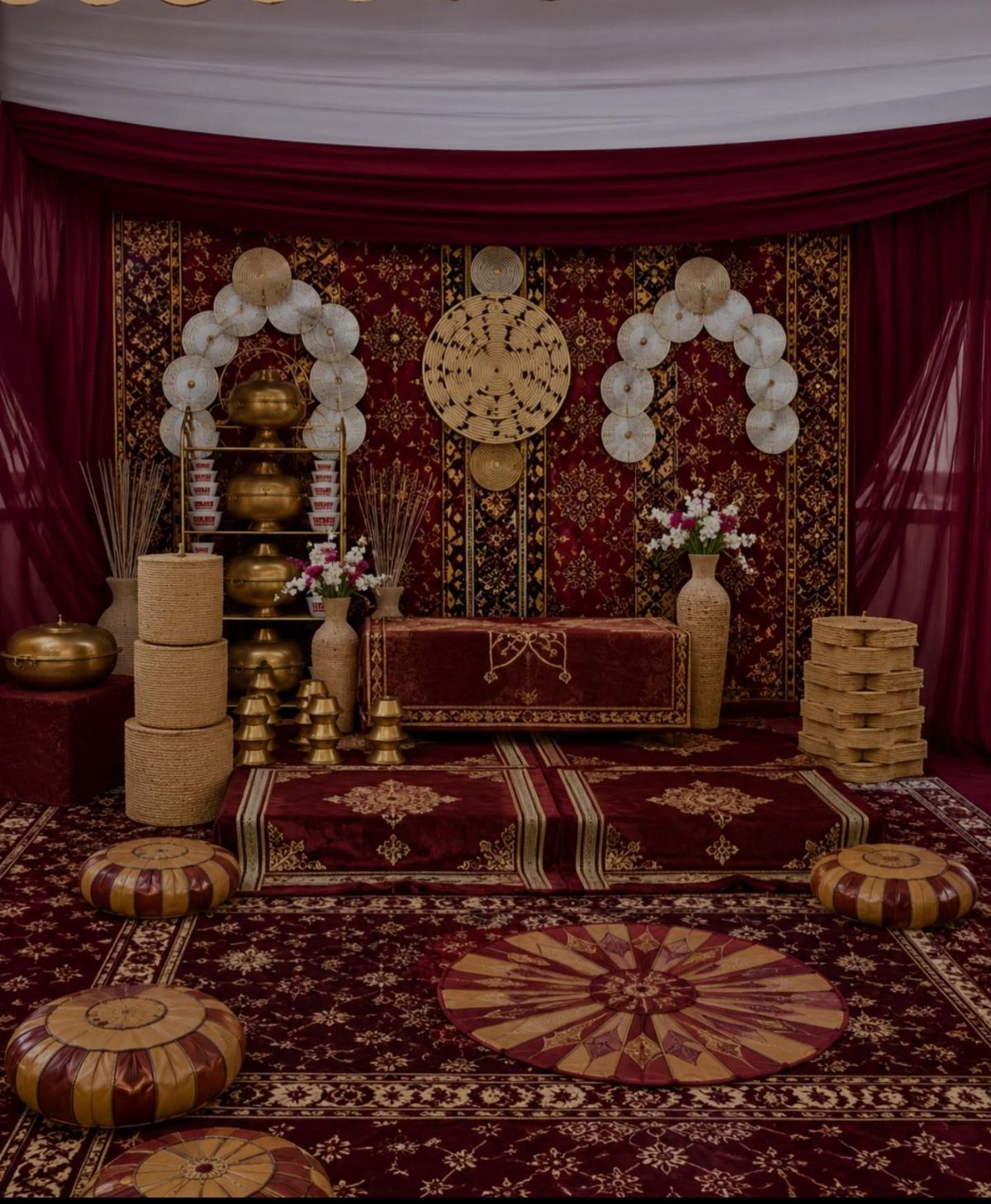
Rugs, brass vessels, and woven wall pieces brought from home or sourced for the day turn a rented hall into a specific family’s gathering. The objects carry meaning that purchased decor cannot replicate.
Red and gold, common in South Asian ceremonies, work against neutral hall walls that would otherwise fight the palette.
Floor cushions replace chairs for part of the seating, which changes how guests move and talk; plan for guests who need back support by keeping some standard chairs at the edges.
Brass tarnishes quickly; polish pieces the day before, not the week, or the glow dulls.
What to check: whether the hall allows open-flame oil lamps or candles within cultural setups, or whether LED substitutes are required.
Budget Considerations
Put the money where guests will actually stand, sit, and raise their phones. The ceiling and the head table repay proportionally more than peripheral walls guests pass once.
Ceiling draping and uplighting are the 2 rentals that change a plain hall without touching a wall.
Both run a wide range depending on square footage and whether rigging points exist. If the budget forces a choice, uplighting alone changes wall color and mood for roughly half the draping cost.
Fresh flowers on every table multiplies fast.
A single large arrangement at the entrance and smaller repeats at every third table gives the same impression of abundance without covering every surface. Greenery garlands substitute at roughly a third the per-foot cost of mixed blooms.
Labor is the hidden line item.
Florals need day-of placement; draping needs a crew with ladders and time. A venue that includes basic linens and chairs lets the budget move to pieces that actually show.
DIY Options
The ceiling swags in the list need no professional crew if the hall allows a ladder and a staple gun.
Lightweight chiffon by the bolt is cheap at craft stores; a few bolts cover a modest ceiling in gathered scallops. The staple holes in a painted ceiling patch with spackle in an afternoon.
Hanging greenery uses the same fish-line method florists charge premium rates for.
Eucalyptus or smilax from a wholesale nursery, wired in bunches close together, gives a continuous look from below with no horticultural training. The wire and line cost less than a single professional garland.
Layered table fabrics need only scissors and a willingness to leave edges raw.
Chiffon frays the moment you cut it, so the edges need finishing; a rolled hem or a quick pass with a flame seals the threads before you hang the panels. One bolt cuts to six to eight sweetheart-table overlays.
What I would not DIY without practice first: anything involving rigging weight overhead, or anything timed to the day-of. Crystal strands, chandeliers, and fresh floral placement all need speed and safety checks that a first attempt rarely delivers.
Seasonal Themes
Seasonal flowers cost less because they travel less. June peonies and September dahlias arrive without the air-freight premium of out-of-season imports, and they hold up better through a long reception day.
Spring and summer palettes lean naturally toward the sage greens and soft whites that suit most halls without fighting their existing carpet or wall color.
Fall weddings gain depth from burgundy, burnt orange, and dried elements like pampas grass that last the full weekend without water. Winter receptions read as intentional with deep greens, white amaryllis, and the warm candlelight that shorter days already invite.
The risk is letting the season choose everything.
A hall with warm wood tones and gold fixtures needs the same gold or cream accents in December that it does in June, or the seasonal colors turn garish against the room’s fixed features.
Seasonal flowers are a starting point, not a complete palette.
Venue Considerations
A hall with existing chandeliers and wall sconces needs less added light than a converted warehouse or tent. The fixtures already set the warmth and scale; fighting them with competing color temperatures looks unsettled rather than decorated.
Exposed beams or trusses are structural gifts: they offer rigging points for draping, greenery, and crystal without engineering new attachment methods.
A flat drywall ceiling forces the choice between pipe-and-drape frameworks, which guests see the edges of, or abandoning overhead decor for floor-based pieces.
Carpet color is the element most couples ignore and most decorators plan around.
A hall with burgundy or navy floor covering reads dark even with white linens; the same linens in a room with pale wood or neutral tile reflect light upward onto faces.
The decor budget that ignores the floor fights it all evening.
Wedding hall decorations must follow the venue’s 3 rules on open flames, hanging items, and wall attachments, which eliminate or enable half the ideas on most lists, and assumptions cost more than questions.
Frequently Asked Questions
What are popular wedding decoration themes?
Rustic, vintage, modern, and garden styles show up most often in American weddings right now. Carrying one color or mood through every surface makes a hall read as one deliberate world rather than a collection of trends.
A single palette with breaks of neutral or metallic tends to photograph better and feel more intentional than mixing named styles.
How can I make my wedding decor unique?
The most distinctive halls come from one person’s actual story told through objects: family furniture pressed into service, a color chosen from a grandmother’s garden, a phrase painted on a thrifted frame.
Gold frames with mixed flowers, crystal strands on a self-built arch, or vintage settees from estate sales rather than rental catalogs all separate your hall from the standard package. What makes it yours is the source, not the style name.