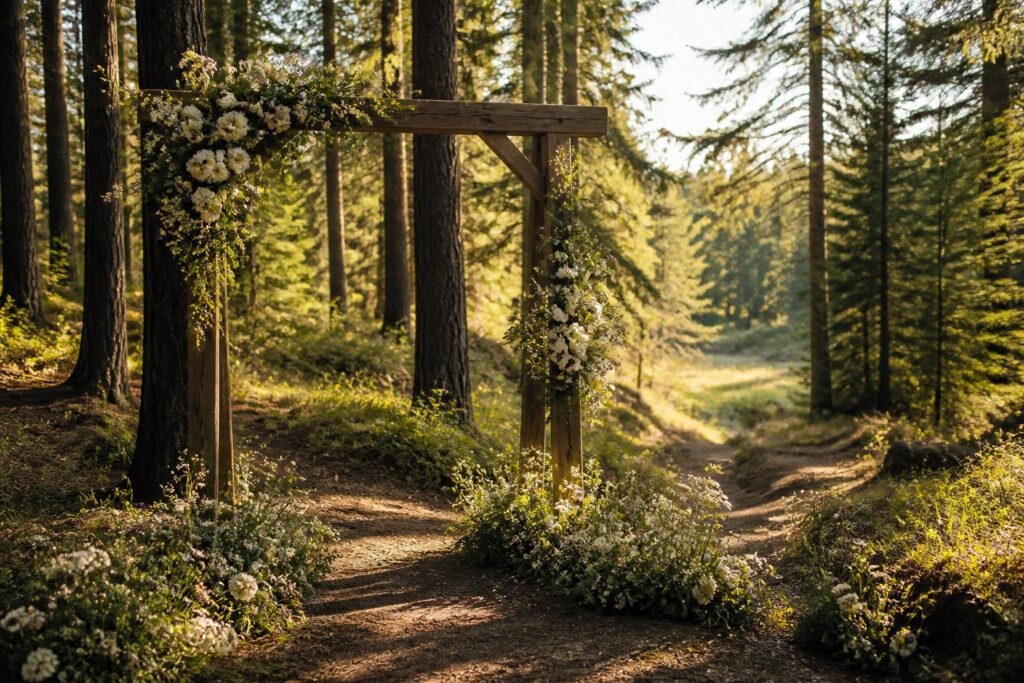
A forest wedding ceremony in Minnesota means finding a venue that actually lets you stand among the trees, not just pose near them.
Most places with pine backdrops book out 12 to 18 months ahead, and a few cap their yearly weddings so low that a single taken Saturday can erase your season.
Cuyuna Cove, two hours north of the Twin Cities, is not marketed as a wedding venue at all.
You negotiate ceremony space as a side arrangement to a lodging reservation, which collapses your venue fee, guest housing, and morning-after brunch into one line item running under $10,000.
Cuyuna Cove
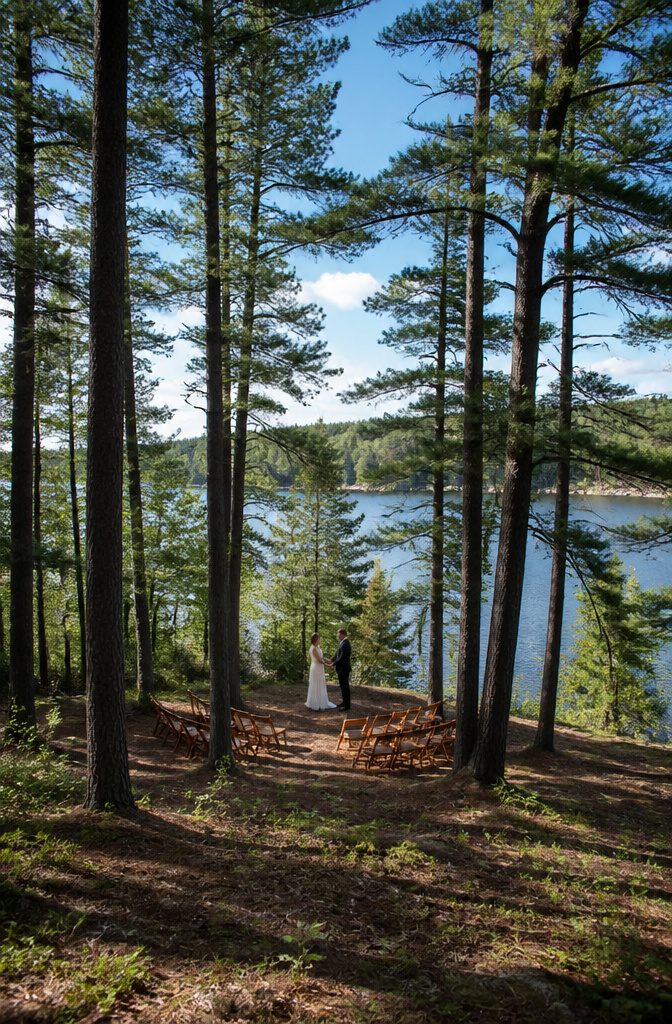
Cuyuna Cove sits in the Iron Range of Minnesota, about two hours north of the Twin Cities, and it is not marketed as a wedding venue at all.
The property runs as boutique lodging, which is exactly why it works for couples who want a forest wedding ceremony without the packaged feel.
The land gives you 15 lakes and 55 miles of trails threading through proper northwoods forest. No groomed aisle, no permanent arbor, no coordinator checking a clipboard.
You pick a spot where the pines open enough for light, bring your own officiant and seating, and hold the ceremony where no other wedding party has stood that same morning.
The lodging piece matters more than it first seems. Your guests stay on site, you rehearse dinner on the deck the night before, and the after-party shrinks to whoever is already there.
For a budget running under $10K, that collapses venue fee, guest housing, and next-morning brunch into one line item instead of three.
You need a permit. Because Cuyuna Cove does not book weddings as a category, you are essentially a large group reservation negotiating ceremony space as a side arrangement.
Get that in writing before you send invitations, and confirm whether they allow tent stakes, open flame, or amplified sound in the area you want.

🍷【Best Choice Wedding Arch】Package includinge 4 panels sage green sheer arch drapes, each panel is 28 inches wide and 20 feet long.The dimensions of the four panels have been accurately measured, and there is not much difference.The length is long enough to fit any size arch decoration.Soft and overhanging pendants make the wedding decorations more popular.This chiffon drapery backdrop can help your party to create a warm and elegant scenes.

Product Includes: you will receive two sets of black and white embossed slim wedding ceremony vow books with ribbons, symbolizing the purity of love and the eternity of commitment; They are specially customized for couples to exchange vows; They are a must-have for the romantic ceremony of weddings, engagements or anniversaries

Gently request that your wedding guests be fully present and engaged during your ceremony with this elegant "Unplugged Ceremony Sign". This beautifully sign sets the tone for an immersive, distraction-free celebration of your union.
Juliane James Place
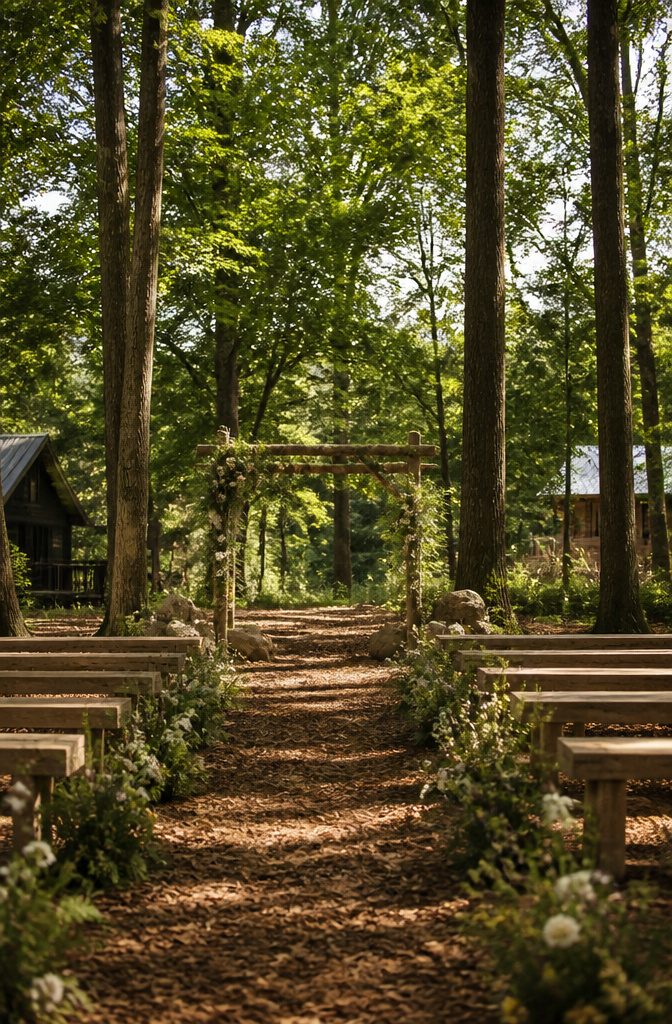
Juliane James Place sits on 40 acres outside Finlayson with waterfront views threading through the woods, and the privacy is the first thing that registers.
The property keeps a house and cabin on site for guests, which matters more than it sounds when the nearest hotel is a drive away.
Only 15 weddings happen here each year.
That cap is not a marketing angle; it is a hard limit that reshapes how you plan. Most Minnesota forest venues book 12 to 18 months out as a rule of thumb, but the math here is tighter.
With just over one wedding a month across a short season, a single Saturday taken means the next open slot is likely the next month, or gone.
Couples who found this place in late winter for a fall date have already missed the window more than once.
What the limit buys is absence of overlap. No staff resetting between events, no other bridal party in the background of getting-ready photos, no compressed turnover forcing a hard end time.
You lose flexibility. You commit early or you do not commit at all, and the deposit structure I have seen at comparable exclusive venues usually reflects that risk.

Woods Retreat
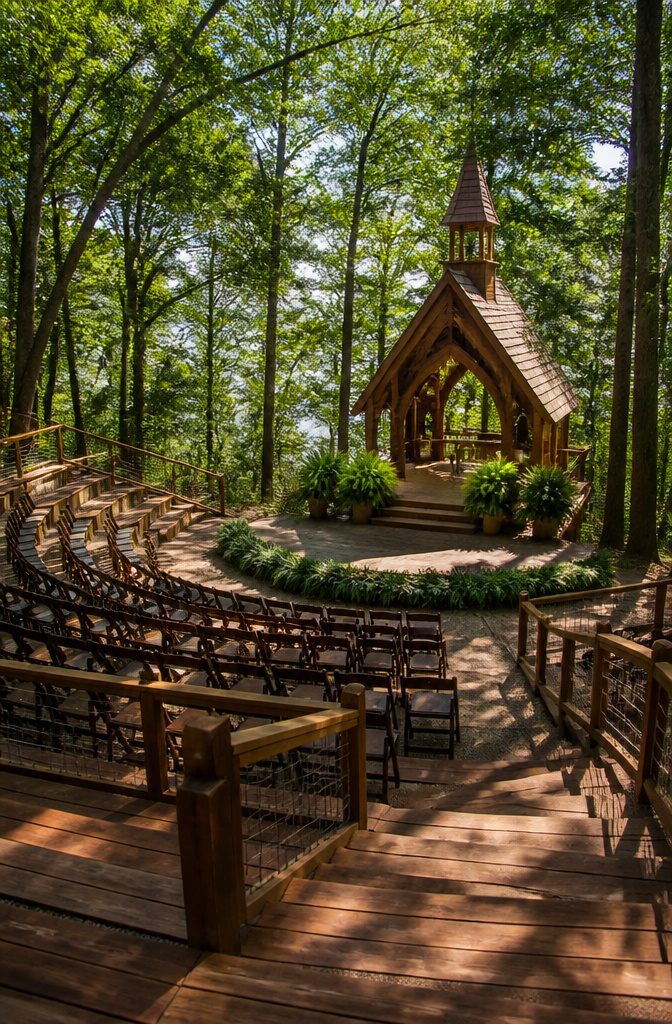
The amphitheater at Woods Retreat seats 300 people, which changes the entire math of a forest wedding ceremony.
Fully wild locations need you to build everything, bring everything, and hope the ground cooperates. Here, the structure is already built into the slope, so guest capacity stops being a guess and becomes a number you can actually use.
Rain backup sits right there too, an indoor chapel on the same property.
That pairing matters in Minnesota, where a June afternoon can turn without much warning. You are not renting a tent you might not need or praying the weather holds; you are walking thirty feet to a finished interior.
The wood coverage is heavy enough that the setting reads as forest in spring, summer, or fall. Winter ceremonies outdoors would be rough, though the trees still photograph well against snow if you want those portraits.
For a couple sizing venues against a guest list that keeps growing, this built-in capacity removes one hard ceiling.
The trade is less of that untamed feeling you get in a clearing you found yourself. Two ways to play it: embrace the structure and design around it, or keep looking if your vision starts from a blank hillside.

Built to Last & Great Value: Our garden arch is constructed from heavy-duty, rust-resistant carbon steel with 0.6mm walls and a wider 16mm diameter, making it about twice as heavy as most for superior bend resistance, and stability. The coating is electrostatically applied and heat-cured, creating a solid shield that locks out moisture and air to prevent rust and corrosion for years. You get both ground stakes for secure outdoor use and bases for stable indoor use on any flat surface

Elegant Arch: Elegant white is suitable for weddings, classy parties and just about any occasion. Whether standing alone or covered with climbing vines and flowers, these outdoor arch add a striking focal point to your event. Adding grace and prominence to any outdoor venue with the Arbor features squared lattice side panels
The Renaissance Festival Grounds
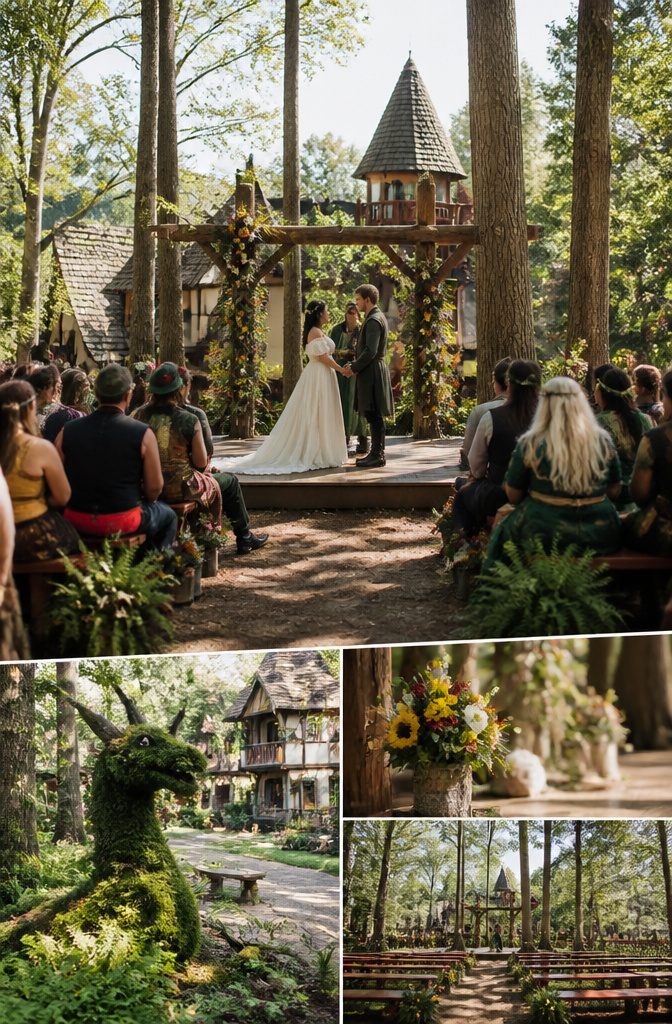
The Minnesota Renaissance Festival grounds in Shakopee operate what they call Magical Outdoor Weddings, and the name fits better than you might expect from a place known for turkey legs and jousting.
Five separate ceremony sites sit across the property, each with its own density of trees and light.
The Secret Garden and Chapel Garden read more open and tended, while the King’s Arbor and Crown Stage push deeper into actual forest cover.
The Front Gate lands somewhere between, with enough clearing for guests to gather but mature oaks still overhead.
What sold me on looking into this place was the flexibility within one rental.
A couple who wants dappled afternoon light through leaves can have it; another who needs a cleared aisle for a grandparent’s wheelchair can choose the garden end instead.
You are not locked into whatever forest mood the venue happens to own. The setting itself asks something of you: these grounds host a festival, so the architecture and permanent fixtures lean theatrical.
Your photos will include that heritage whether you planned for it or not. For some couples that reads as built-in character; for others it competes with a more natural forest wedding ceremony look they had in mind.

6-pack of lightweight, durable, and versatile camping and backpacking tent stakes that stay put

【Camping Tent Accessories Kit】You will get 12 packs of 10in heavy duty tent stakes, 1pc storage pouch. The bulk quantity is enough to meet your needs

𝐁𝐀𝐂𝐊𝐏𝐀𝐂𝐊𝐈𝐍𝐆 𝐄𝐒𝐒𝐄𝐍𝐓𝐈𝐀𝐋 – The Vargo Titanium tent stakes combine the classic Shepherds Hook design with the lightness and durability of titanium. Throw these stakes in your bag and rest assured they’ll work in any soil condition.
Osprey Wilds Environmental Learning Center
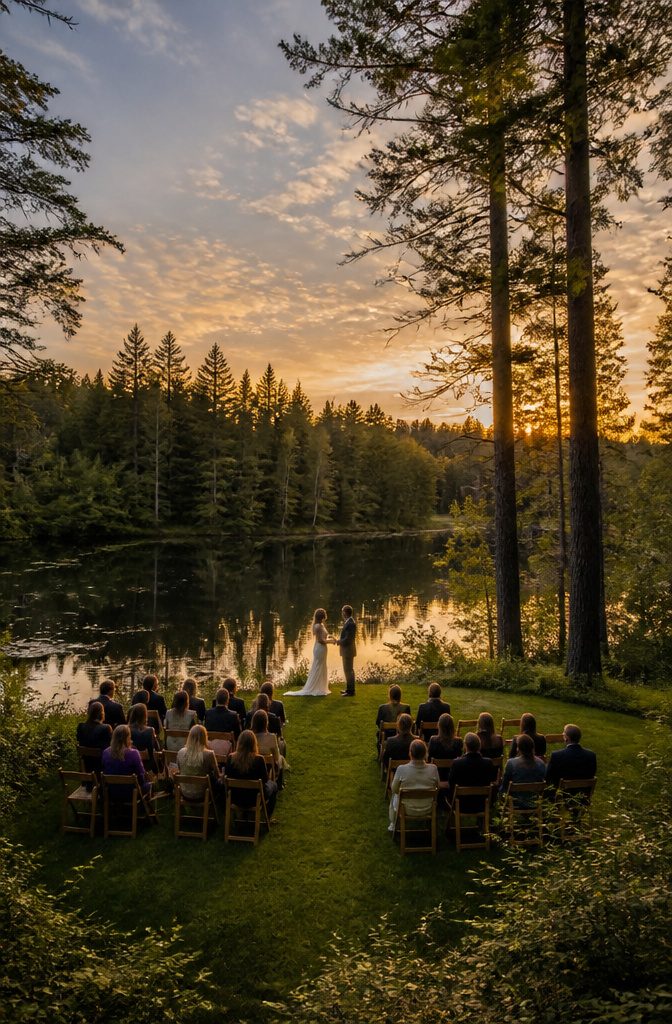
Osprey Wilds Environmental Learning Center sits on 780 acres outside Sandstone, about 90 minutes north of the Twin Cities. That scale matters more than most couples realize at first glance.
With that much land, the center can place a forest wedding ceremony far enough from any other event that you hear pine needles instead of another couple’s processional music. Privacy becomes the default, not an upgrade you pay extra for.
The acreage also changes how you think about guest movement. A ceremony by Grindstone Lake, a reception at a second clearing, and lodging elsewhere on the property means shuttles or a solid walk in dress shoes.
I would ask upfront whether the center assigns a single site or allows you to choose, because the logistics of moving 80 guests across even a fraction of those 780 acres add up fast.
The center does offer lodging, which solves part of the problem: guests who stay on-site eliminate one round trip.
What draws the outdoorsy couples is the same thing that demands planning.
Pine forest means shade, which means cooler temperatures and earlier darkness under canopy than open-field venues face. The sustainability focus mentioned in the center’s mission fits naturally here; a property this size either manages its footprint carefully or degrades visibly.

PERFECT PRODUCT: Our wedding welcome sign is the perfect way to greet your guests as they arrive. This beautifully designed wedding decor will set the tone for your event and let everyone know they are in the right place. Whether you're looking for a rustic, elegant, or modern welcome sign, we have something to suit every taste. Our wedding signs are made of high-quality materials and are built to last. So please, come on in and enjoy the celebration!

PERFECT PRODUCT: Our wedding welcome sign is the perfect way to greet your guests as they arrive. This beautifully designed wedding decor will set the tone for your event and let everyone know they are in the right place. Whether you're looking for a rustic, elegant, or modern welcome sign, we have something to suit every taste. Our wedding signs are made of high-quality materials and are built to last. So please, come on in and enjoy the celebration!
Interstate State Park and Riverboats
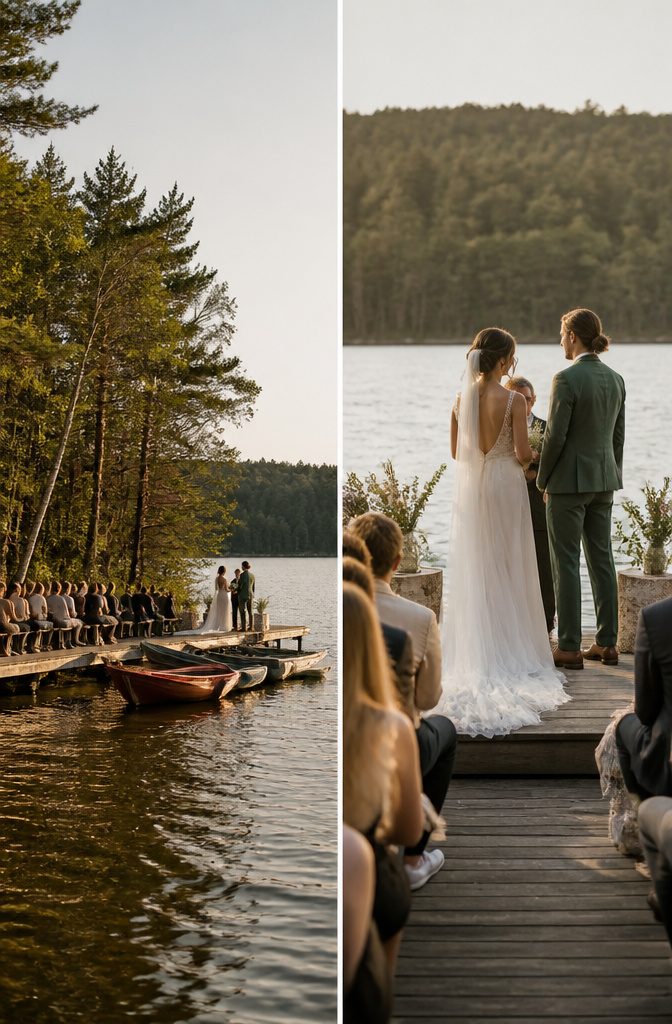
The St. Croix River at Taylors Falls gives you two biomes for one permit: dense pine and birch woodland rising behind you, open water reaching toward the opposite shore.
Interstate State Park handles the forest half. You file for the proper permit, no venue fee beyond that, and the waterfalls stay open for couple photos after the vows.
The riverboat option changes the physics of the ceremony entirely.
The Taylors Falls Queen lets you stage the thing on water instead of looking at it. A weathered timber dock or the boat deck itself becomes the aisle; the same golden-hour light doubles back at you off the glassy surface.
One photographer who shot there mentioned hauling gear down a steep hill ten times to set up. The reflection in the river paid it back.
Two ways to play this: keep feet on land and use the boat as a photo backdrop, or move the whole ceremony onto the water and let the shoreline frame you.
The dock wins if your guest list wobbles on uneven ground. The boat wins if you want the forest wedding ceremony to feel like it happened somewhere no road reaches.
Bluefin Bay
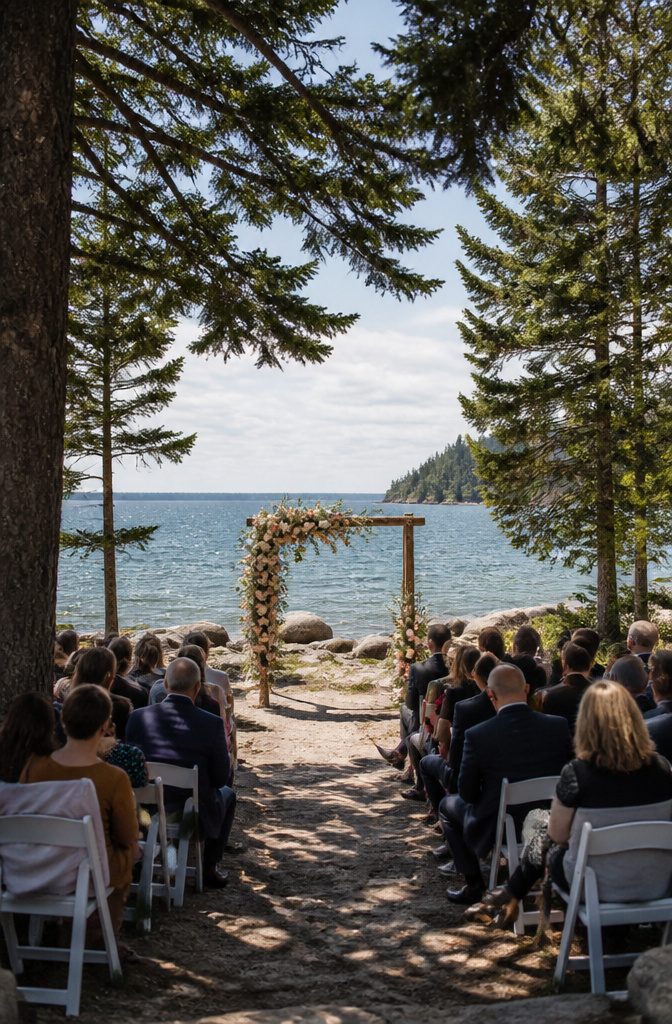
Bluefin Bay caps its weddings at 80 people, a number that sounds generous until you start writing names in a spreadsheet.
I planned a Lake Superior ceremony once where the forest edge met the water, and that guest limit forced the exact conversation most couples avoid: who makes the cut when the room runs out.
The venue sits where the trees lean close enough to feel like a forest wedding ceremony without the logistical headache of a remote clearing.
An 80-person ceiling shapes the whole tone. You lose the third cousins and the coworkers you only see on Slack, but you keep the people who would notice if your vows cracked mid-sentence.
That tradeoff is the point. Lake Superior does the heavy lifting on atmosphere, so the guest list stays intimate by design rather than by accident.
If you are budgeting under $10K, a smaller headcount also means a smaller catering line item, which is where most modest budgets bleed out.
The limit is not a constraint to work around. It is the reason the place works.
Spirit Mountain
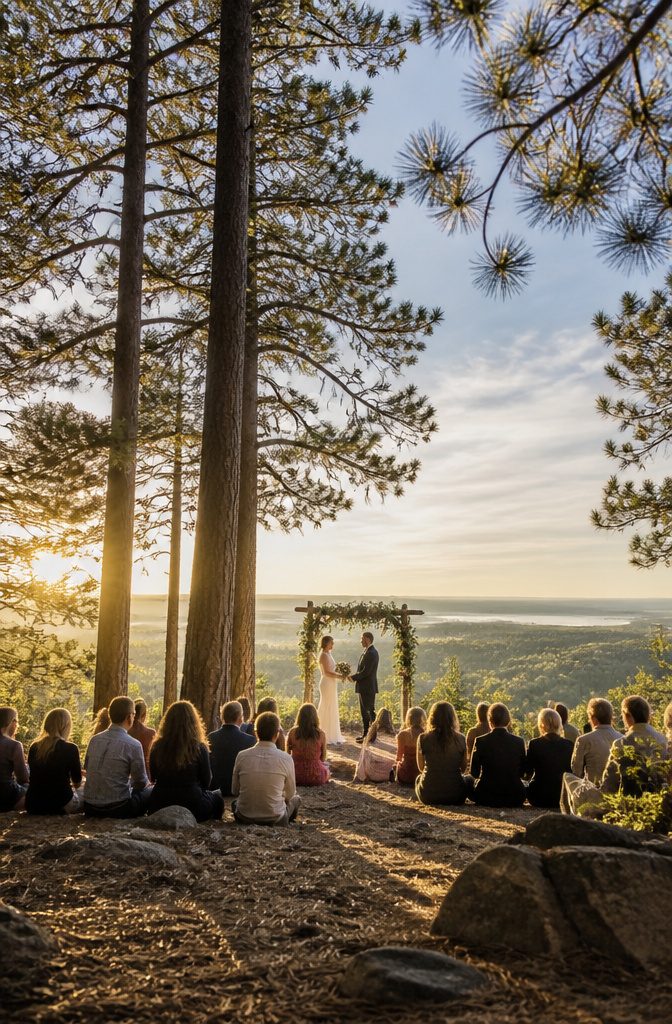
Spirit Mountain sits above Duluth on a ridge that drops toward the St. Louis River Valley on one side and the city on the other, so a forest wedding ceremony here happens with elevation built in.
The outdoor spaces put guests among pines with views that open west across the valley, which means late-afternoon light in summer lingers long enough to run a ceremony past 7 p.m. without losing it entirely.
That same exposure brings weather you have to plan for: wind off the lake hits a hillside harder than flat ground, and a cold front in shoulder season drops the temperature faster up here than downtown.
The venue has indoor backup, which shifts from nice-to-have to essential if you are set on a spring or fall date.
I would book the indoor space even if the forecast looks clear; Duluth’s weather turns inside an hour, and mountain terrain accelerates that.
The view makes up for it, but only if you treat the built-in shelter as part of the package, not a fallback.
Voyageurs National Park
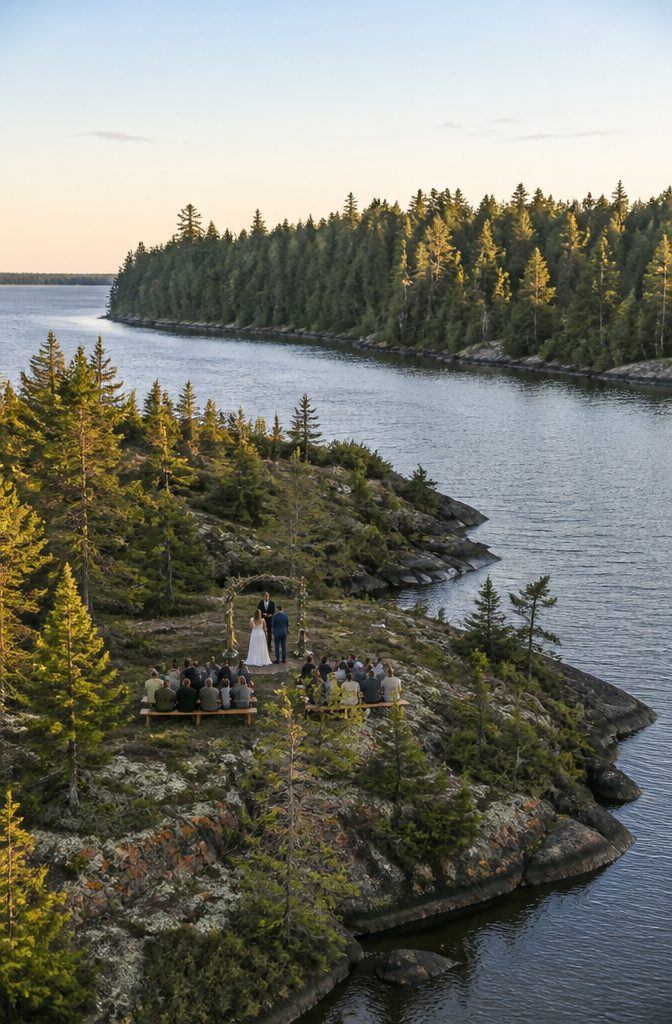
Voyageurs National Park sits right against the Canadian border with over 218,000 acres of land to choose a ceremony spot from. That scale changes what a forest wedding can mean.
Most Minnesota venues give you a clearing or a grove; here you are picking an island, a shoreline, or a stand of pines from a map that looks more like an inland sea.
The park lives up to its name, "a park of water, islands, and horizons."
Most ceremony sites are only reachable by boat. Kettle Falls Hotel, where guests might stay afterward, is itself water-access only.
That exclusivity cuts two ways: your guest list will shrink to whoever can manage the logistics, and your budget shifts from venue rental toward boats, permits, and a plan B for weather.
A national park designation brings rules that private land does not. You will need a permit for the ceremony itself and a separate photography permit.
The National Park Service sets group size limits, restricts where you can place chairs or arches, and enforces leave-no-trace standards on petals, rice, or any decoration that does not pack out.
These are not suggestions; rangers check, and fines start around the low hundreds.
For couples already considering a small guest count and an adventurous day, the trade-off works. The park remains enough of a hidden gem that you are not competing for space with three other wedding parties on a Saturday evening.
For anyone needing guaranteed accessibility, reliable cell service, or a venue coordinator on site, this is the wrong direction entirely.
The Shire in the Woods
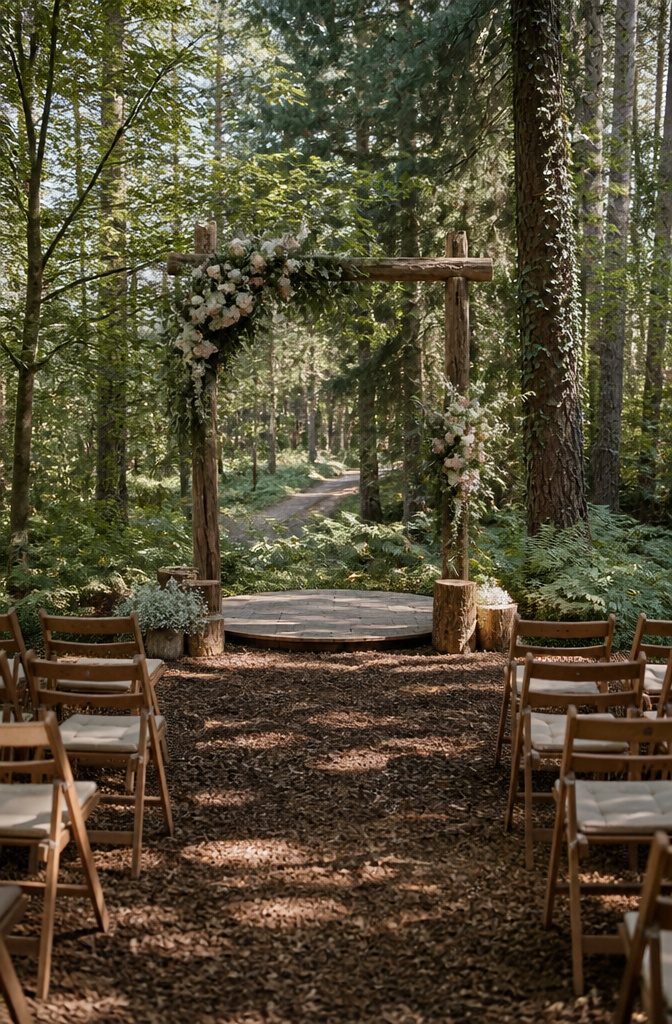
The Shire in the Woods sits inside Solana State Forest near McGrath, close enough to Mille Lacs that guests can make a weekend of it.
Seven cabins in different sizes mean the wedding party can stay on-site rather than scattering to motels, which matters when the forest setting is the whole reason you picked it.
The name promises something specific, and the venue leans into it: a working farm with animals, trails through the trees, and enough wildlife that your guests will likely spot something.
The ceremony structure itself is open-air, framed by the forest rather than built against it.
That is the trade-off to know going in. Rain means a backup plan or a wet crowd, because there is no permanent shelter hiding behind the scenery.
For couples weighing budget against experience, the cabin setup changes the math.
Feeding and housing guests on-site for a night or two can cost less than the equivalent hotel blocks and transportation, but only if your crowd is small enough to fit the seven cabins.
The farm animals add atmosphere without adding to your line items, which is rare; most themed venues charge extra for every detail that photographs well.
The full outdoor, woodsy experience is what you are paying for, and what you are planning around.
Pinewood
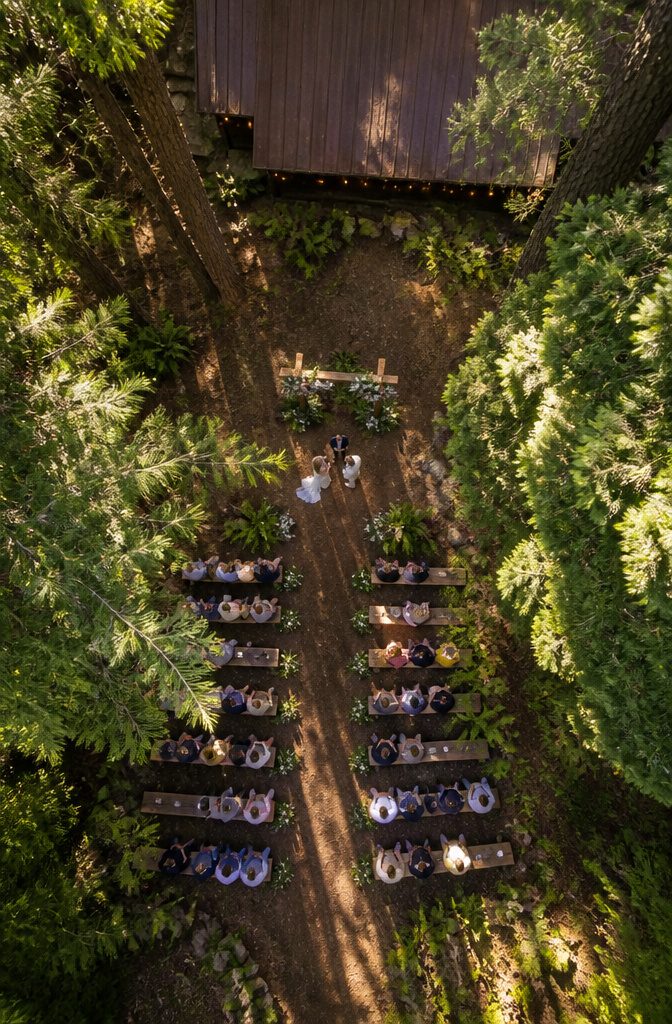
Pinewood sits on 10 acres just outside Cambridge, which sounds expansive until you walk the property and realize how tightly the ceremony space, reception barn, and getting-ready rooms fit together.
The pine trees top 100 feet, so the forested backdrop reads as deep wilderness in photos, but the actual distance from vows to cocktail hour is maybe a couple hundred yards.
That compact scale is either a gift or a constraint, depending on your crowd.
For a smaller wedding, the flow feels almost residential.
Guests wander from the outdoor ceremony site to the reception barn without needing shuttles or signage, and the couple can slip back to the getting-ready suite without a fifteen-minute hike in heels.
The venue books year-round, and the same density that works in summer becomes more valuable in winter, when no one wants to trudge through snow between locations.
Larger guest lists strain against those 10 acres, though.
The parking area, the turning radius for a limo, the buffer between dinner music and the ceremony site where early arrivals wait: all of it sits closer together than the marketing photos suggest.
A planner who knows the property can stagger arrivals to hide the squeeze, but the site does not pretend to be a sprawling estate.
It offers forest atmosphere on a working-farm footprint, and the couples who love it are the ones who wanted intimacy without sacrificing the tree line.
The Black Lantern
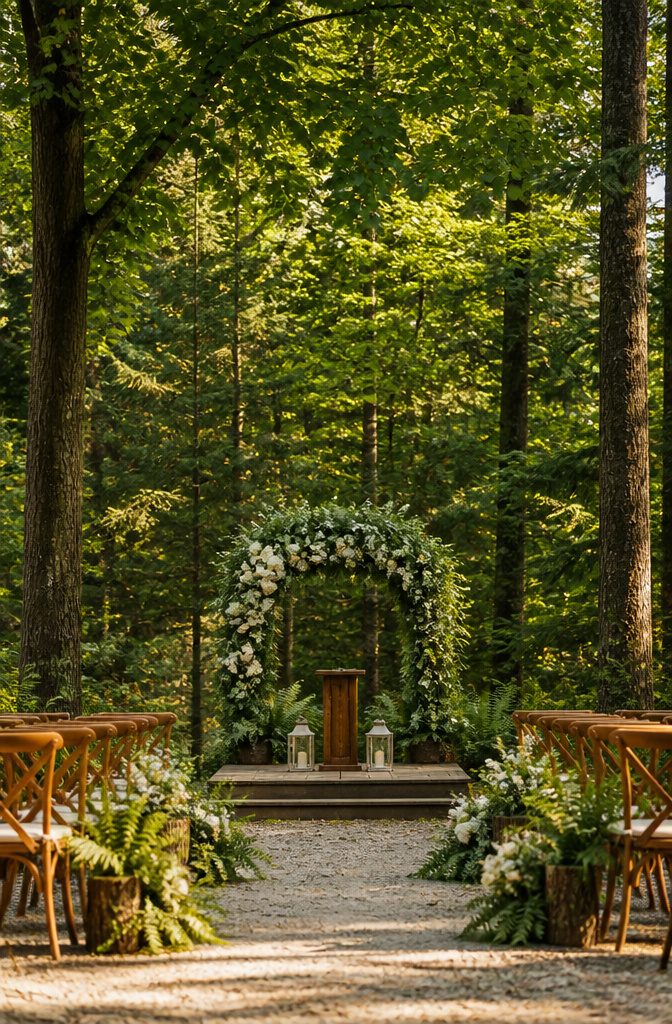
The Black Lantern sits on over 100 acres in northern Minnesota, and that scale is what makes the place workable for either a full guest list or an elopement with two witnesses.
A property this size means you are not wedged against another event or a public trail. You get indoor and outdoor venues, forest lodging, lake access, and trails that guests can wander without crossing into someone else’s ceremony space.
Package choice determines how much of that land is yours.
The entire property can be reserved for a single day or stretched across a weekend, which matters if you are bringing people in from out of state and want the rehearsal, wedding, and morning-after all in one place.
Privacy at that level is harder to find at smaller forest sites where a Saturday ceremony might overlap with a public hiking hour or a second booking on the adjacent lawn.
For a couple trimming the budget down toward that under-$10K mark, the acreage still functions because you are not paying for a separate lodging block or transportation between venues.
The lodging is on the property, the lake is on the property, the forest backdrop is on the property. You consolidate the line items that typically scatter a modest budget across three or four vendors.
The Gardens of Castle Rock
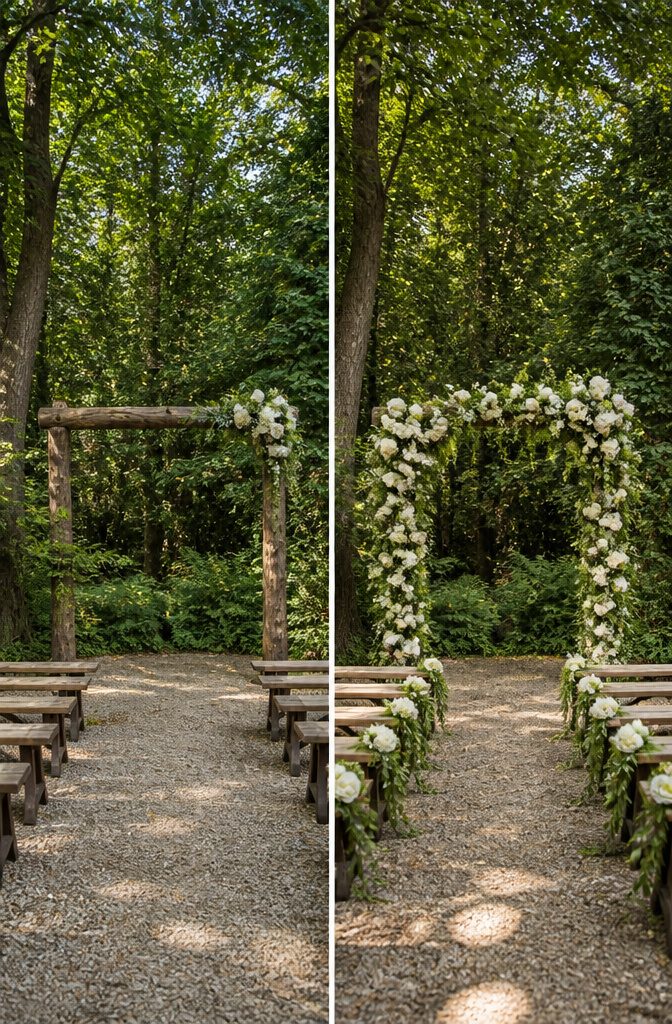
The Gardens of Castle Rock spreads across a property that used to be a nursery in the 1920s, and some of the trees still standing date back to those days, nearly a century old now.
Four separate ceremony spots are built into the grounds, which matters more than it sounds at first.
A couple with eighty guests and one with twenty have different problems in a forest setting, and the density of trees changes whether your ceremony feels sun-dappled or straight-up hidden.
The Wedding in the Woods site sits on the northwest side and runs toward the secluded end, thick enough with old growth that the light comes through in patches.
That is the one to ask about if you want the enchanted-forest effect without adding much decoration yourself.
The other three sites presumably open up from there, though how far I could not say from what I found; still, having the choice means you are not forcing your guest count into a spot that fights it.
University of Minnesota Landscape Arboretum
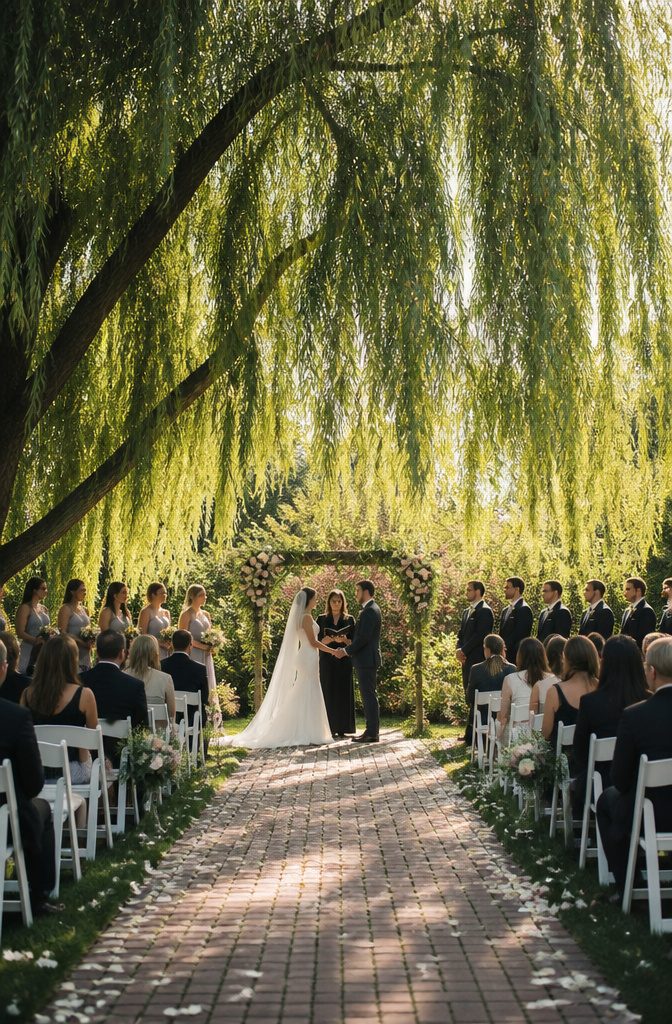
The University of Minnesota Landscape Arboretum sits on 1,200 acres in Chaska, which sounds enormous until you realize most couples zero in on one of the tree-specific ceremony spots.
The Weeping Willow Collection and the Oak & Nut Collection are the named locations that get booked, and that distinction matters.
An arboretum is not a wild forest; it is cultivated ground, which means the paths are graded, the understory is managed, and the tree that frames your arch will still be there in September because someone planned for it.
That reliability is the trade-off.
You lose the untamed density of a North Woods clearing, but you gain seasonal predictability. Spring weddings here run on bloom schedules that are published, not guessed.
Fall color arrives on a calendar that the staff has tracked for decades. The grounds are maintained, so your heels will not sink into unmowed meadow, and your guests will not need bug nets for a June ceremony.
Reception venues are available on-site, which turns the arboretum into a full-day option rather than a ceremony-only stop. For couples who want the woodsy feel without the variables of an unmanaged site, this is the middle path.
I would still ask to visit your exact ceremony tree in the season you are marrying, not just in the season you are booking.
A willow in leaf looks nothing like a willow in bare branch, and your photographs will care about that difference.
Maidenwood
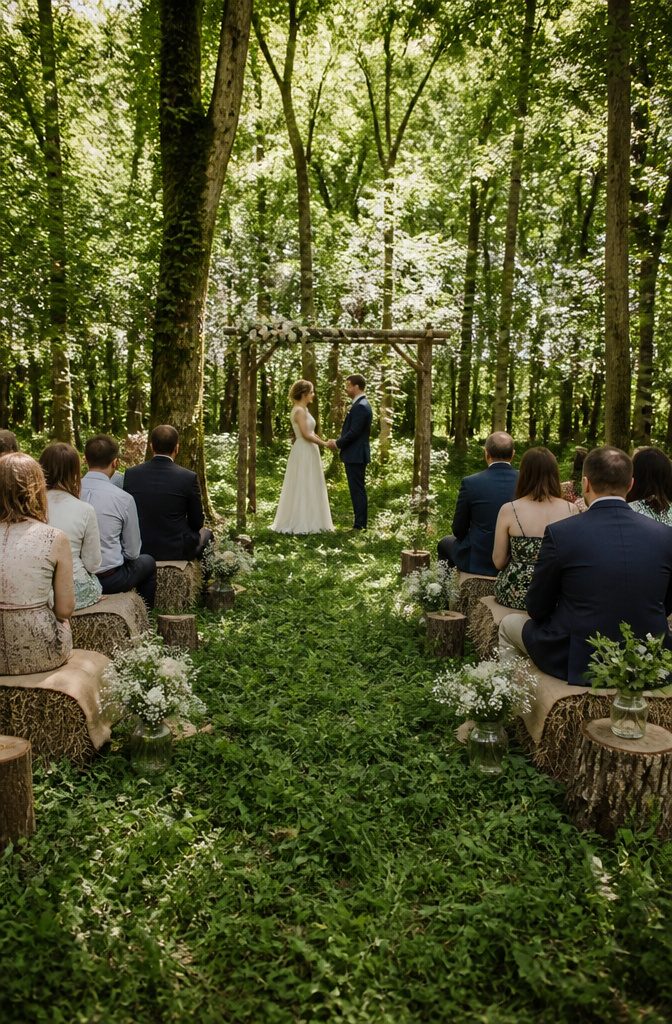
Crossing the Minnesota–Wisconsin line for a forest wedding ceremony costs you maybe forty minutes from the Twin Cities, and the Driftless Area geography is the reason to do it.
Maidenwood sits near Lake Pepin in Stockholm, Wisconsin, inside the same unglaciated hills and folded valleys that shape the terrain just across the border.
The draw is the wooded setting itself: thick tree cover, dappled light, and the kind of enclosed green space that reads as private even with a full guest list.
I have seen couples treat this as their Minnesota-adjacent workaround when every actual in-state woodland venue booked out by October for a June date.
The property styles itself toward fairytale aesthetics, which in practice means mossy ground cover, mature hardwood canopy, and enough density that you are not staring at a parking lot through the trunks.
No lodging numbers or ceremony capacity came through in what I found, so you will need to ask directly whether the site fits your head count and whether guests can stay on property or drive back toward Red Wing or Wabasha.
Permits and Permissions
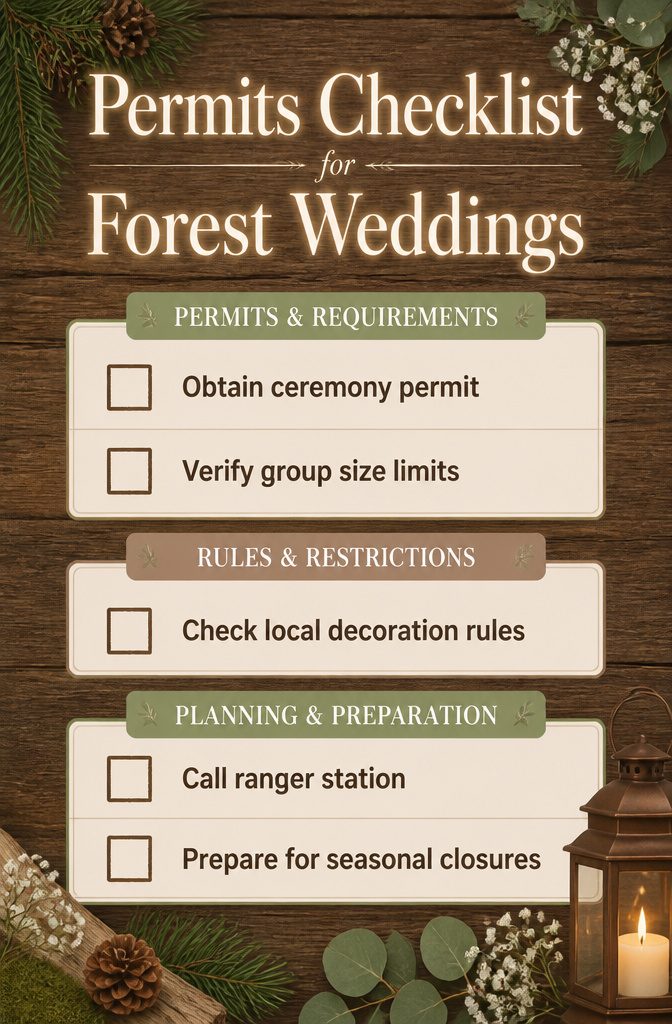
Most Minnesota state and national forests require a permit for any ceremony or photography session, even if the guest list is small.
The fees and specific rules shift depending on which forest you’re considering, so a phone call to the local ranger station is the only way to know what applies to your date.
Some areas limit group size, restrict where guests can walk, or prohibit certain decorations like stakes or candles. Getting the permit early also means learning about seasonal closures or trail conditions that could affect where your ceremony happens.
The half hour spent on that call saves the headache of a ranger interrupting your vows, or worse, issuing a fine.
Accessibility and Terrain
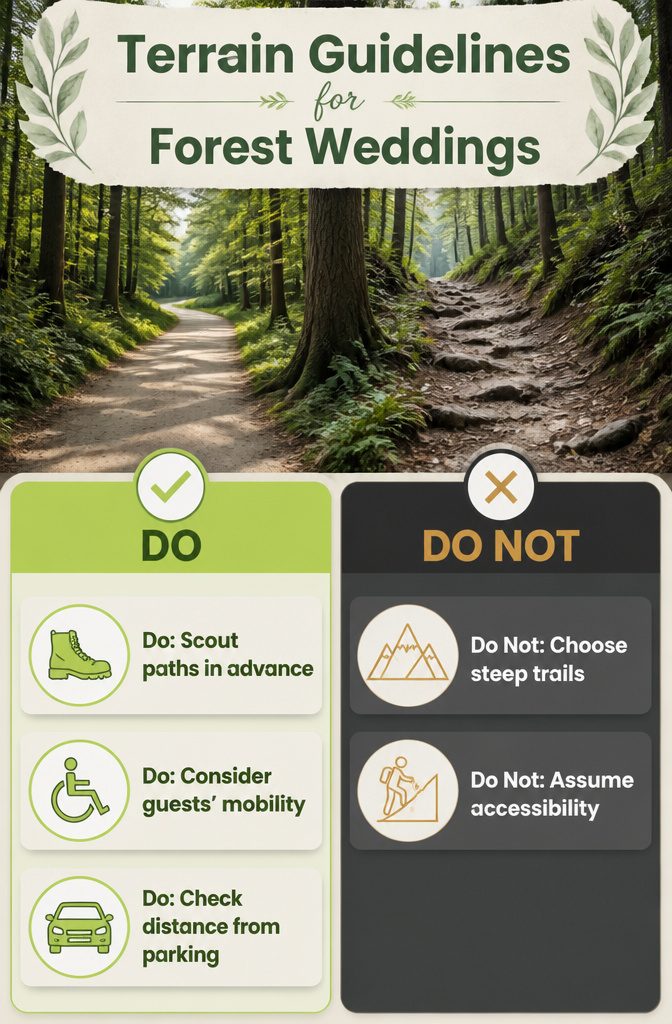
Forest terrain varies more than most couples expect when they first picture a ceremony among the trees.
Some trails stay flat and easy the whole way in, while others ask for a short hike before you reach the clearing where guests will stand. That difference matters for who can attend and what they wear.
I’ve seen the mistake of choosing a gorgeous ridge overlook only to watch a grandmother turn back at the trailhead.
The terrain you pick shapes your guest list as much as your invitation does. Flat, wide paths suit heels and wheelchairs; anything steeper narrows the field to guests who can manage uneven ground.
If someone in your circle has limited mobility, scout the route yourself in the shoes they’ll wear, not the boots you hope they brought.
Ask the venue manager exactly how far the parking area sits from the ceremony site and whether the path is packed dirt, loose gravel, or roots crossed by boardwalk.
A location that works for you and your partner only works if it works for the people you want beside you.
What to Pack
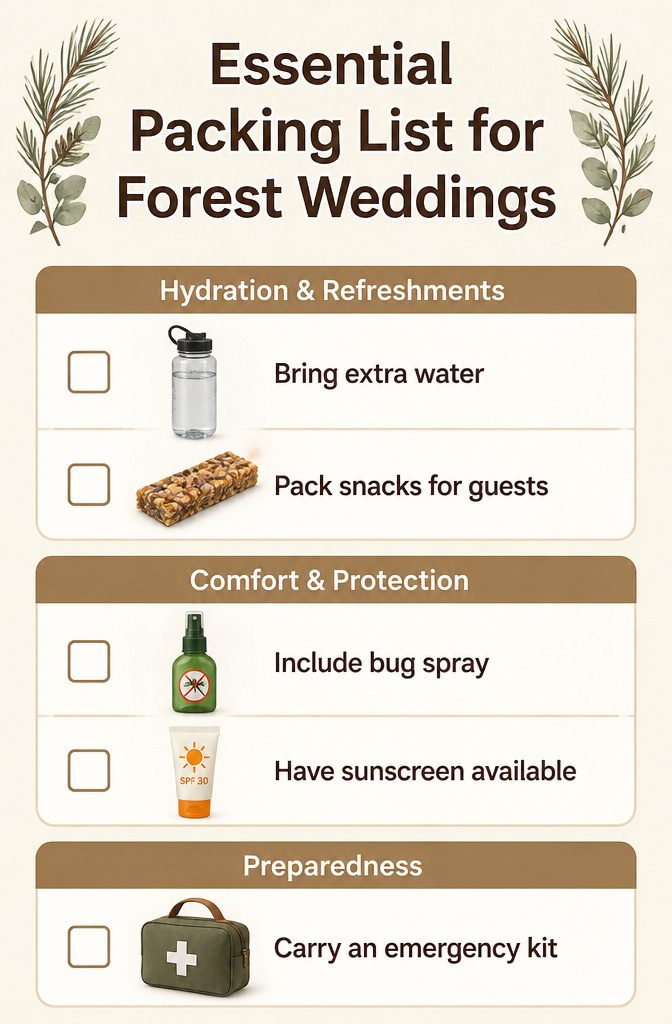
A forest wedding ceremony puts you in charge of the basics a building would normally handle.
Water and snacks matter more than you might think, especially when guests arrive early or photos run long. I have seen a June ceremony in Itasca where the couple brought none, and the officiant nearly passed out mid-vow.
Seating is the same puzzle. Blankets work on dry ground; chairs are the safer bet where dampness lingers.
Bug spray and sunscreen both belong in the kit, not just one or the other. Mosquitoes own Minnesota evenings from May through September, and the canopy that looks romantic in photos blocks less UV than guests assume.
The small emergency kit covers what a venue coordinator would normally sprint to find: bandages, pain relievers, stain remover, a sewing pin.
Pack it in a bag you will carry out yourself, because no forest comes with trash service. Leave-no-trace is not a slogan at most of these sites; it is the condition of your permit.
Where Guests Stay
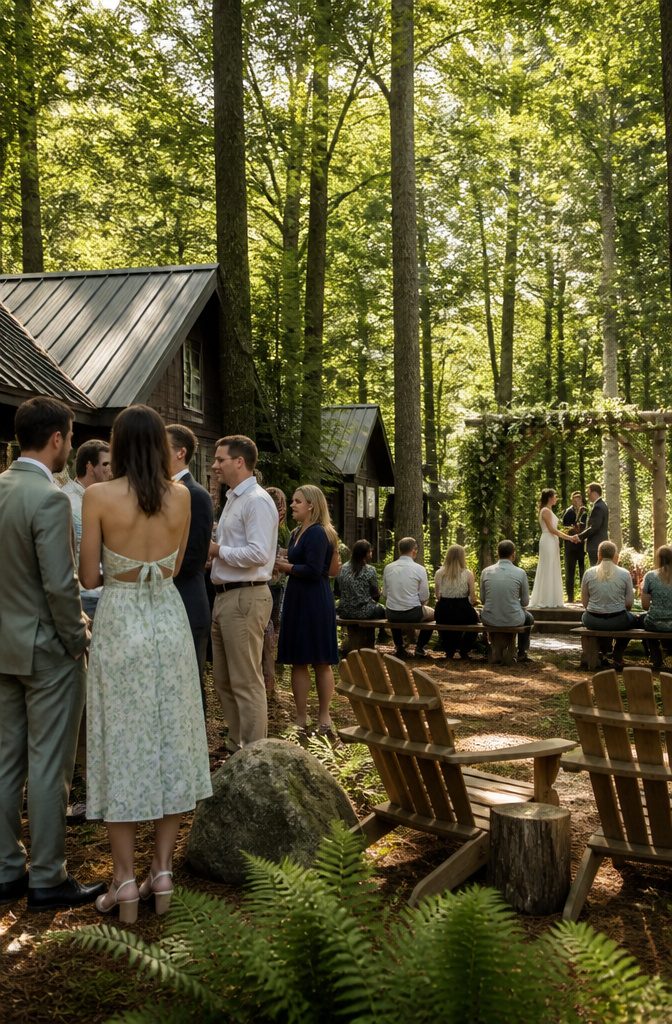
A forest wedding ceremony in Minnesota pulls off something a hotel ballroom never can: it turns Saturday into a full weekend without anyone driving home.
Cabins and Airbnbs near the site let guests settle in Friday evening, linger over coffee Sunday morning, and actually talk to each other instead of rushing through a receiving line.
The Shire in the Woods, near Mille Lacs and inside Solana State Forest, runs seven cabins in different sizes, so the couple can stay alone or host the wedding party on-site.
Guests who book those cabins get trails, trees, and a small farm with animals; the weekend becomes the event, not just the backdrop. Capacity runs around 100, which keeps it intimate without feeling squeezed.
For larger guest lists, the model still works if you split the lodging.
Pioneer Creek Farm in Lomira handles ceremonies for up to 125 but sends guests to nearby towns for beds; you can fit more people, but the group scatters. I would push for the cabin-cluster approach every time.
A guest who stays two nights dances more, drinks less, and remembers your vows. The extra coordination, booking five or six properties instead of one hotel block, pays back in atmosphere.
Weekend rates at cabin properties often run lower per night than a Friday hotel, and clustered Airbnbs let you stage casual events, a Friday campfire or Sunday brunch, that no venue package includes.
The forest setting does the decoration for you.
Timing and Light
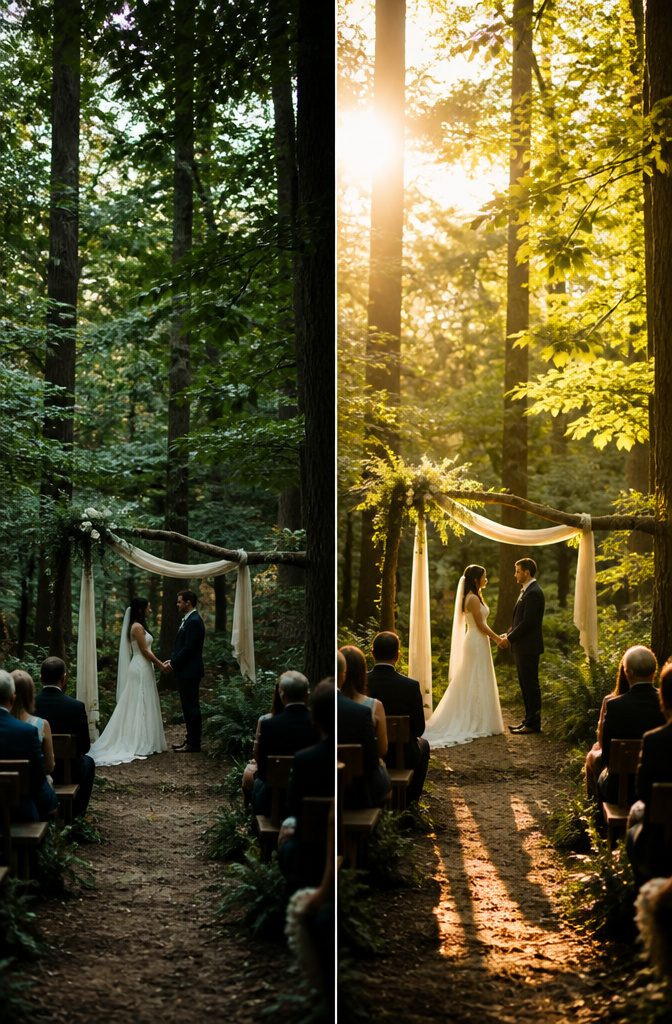
A forest wedding ceremony changes completely depending on when you schedule it. Golden hour, that stretch roughly an hour before sunset, sends warm light filtering through the canopy in scattered beams that fall softly on faces and fabric alike.
The trees themselves become part of the lighting design, breaking the sun into pieces that flatter without a reflector in sight.
Midday is a different situation entirely.
Direct overhead sun punches through gaps in the leaves and throws hard shadows across the aisle, the altar, the couple at center stage. The contrast is unforgiving: bright patches where the sky breaks through, dark pools where the canopy thickens.
Guests squint. Cameras struggle.
The canopy that causes midday problems also offers the solution. Dense tree cover acts as a natural diffuser, scattering what light reaches the forest floor into something gentler and more even.
A venue with mature hardwoods overhead gives you more scheduling flexibility than one at a meadow’s edge or along a recently logged trail.
Scout the specific spot where you’ll stand, not just the parking lot or the entrance path. Watch how the light moves through those particular trees at the hour you’re considering.
Frequently Asked Questions
Do I need a permit to get married in a Minnesota forest?
Most Minnesota state and national forests require a permit for any ceremony or photography session, even with a small guest list.
Fees and rules vary by forest, so a call to the local ranger station is the only way to know what applies to your date.
Some areas also limit group size, restrict guest movement, or prohibit decorations like stakes and candles.
Can I elope in a forest without renting a venue?
Yes. Minnesota has 60 state forests and 2 national forests, including Superior National Forest and Chippewa National Forest, where elopement ceremonies are doable without a formal venue.
You pick a spot, handle any required permits, and hold the ceremony where no other wedding party has stood that morning.
What time of year is best for a forest wedding?
Spring and summer bring full greenery, fall delivers color through the canopy, and winter offers snowy backdrops for portraits.
At cultivated sites like the University of Minnesota Landscape Arboretum, bloom schedules and fall color calendars are tracked for decades, so you can book with seasonal precision.
Are forests accessible for guests with various mobility needs?
Forest terrain varies sharply by location. Some trails stay flat and wide enough for wheelchairs and heels; others require a short hike over uneven ground to reach the ceremony clearing.
Scout the route yourself in the shoes your guests will wear, and ask venues directly about graded paths, parking distance, and backup indoor spaces.
Can I have vendors in a forest wedding?
Yes, vendors work at forest weddings, though the setting changes what they need.
A photographer at Interstate State Park hauled gear down a steep hill ten times for riverboat shots. Caterers, florists, and rental companies who specialize in outdoor weddings already account for uneven ground, limited power, and weather contingencies.