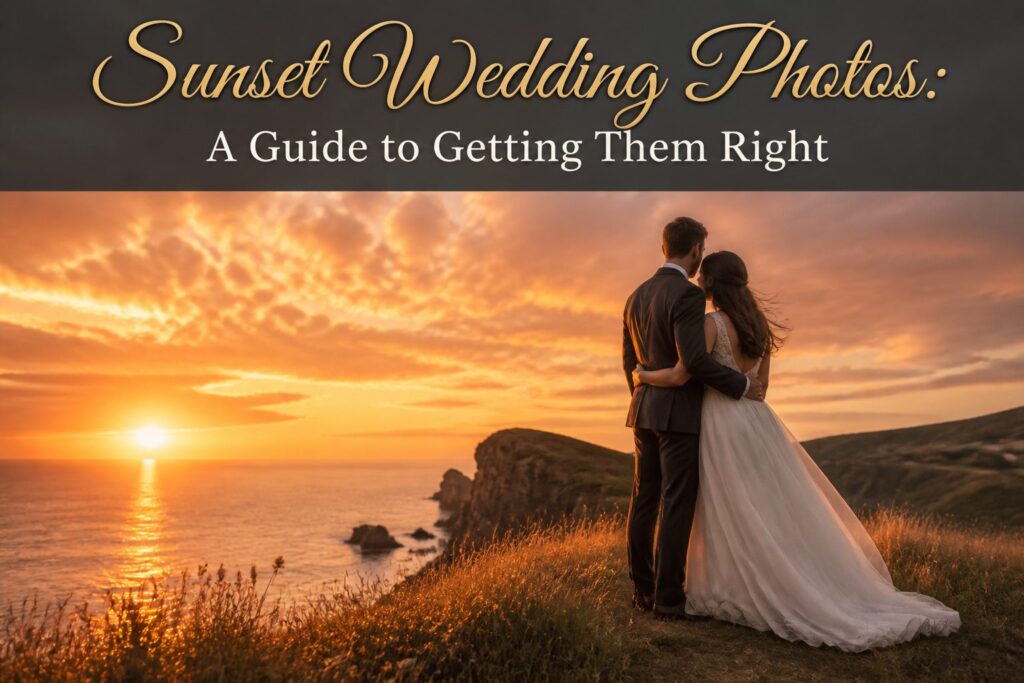
A sunset wedding photo is a portrait taken during the last usable light of the day, when the sky turns warm and the couple is pulled out of the reception for a brief session.
The challenge is that the light you actually want is not the sunset itself but the 30 to 45 minutes before it, a window that closes fast if your venue sits behind trees or hills.
One hard lesson from the field: a hilltop ceremony can lose the sun twenty minutes early to a tree line the app never warned about, leaving nothing but flat gray where the gold should be.
Plan Ahead
The light you want for a sunset wedding photo is not the sunset itself.
It is the 30 to 45 minutes before, when the sun sits low enough to soften into something photographers call golden hour. By the time the disc touches the horizon, the warmth has already thinned into flatness.
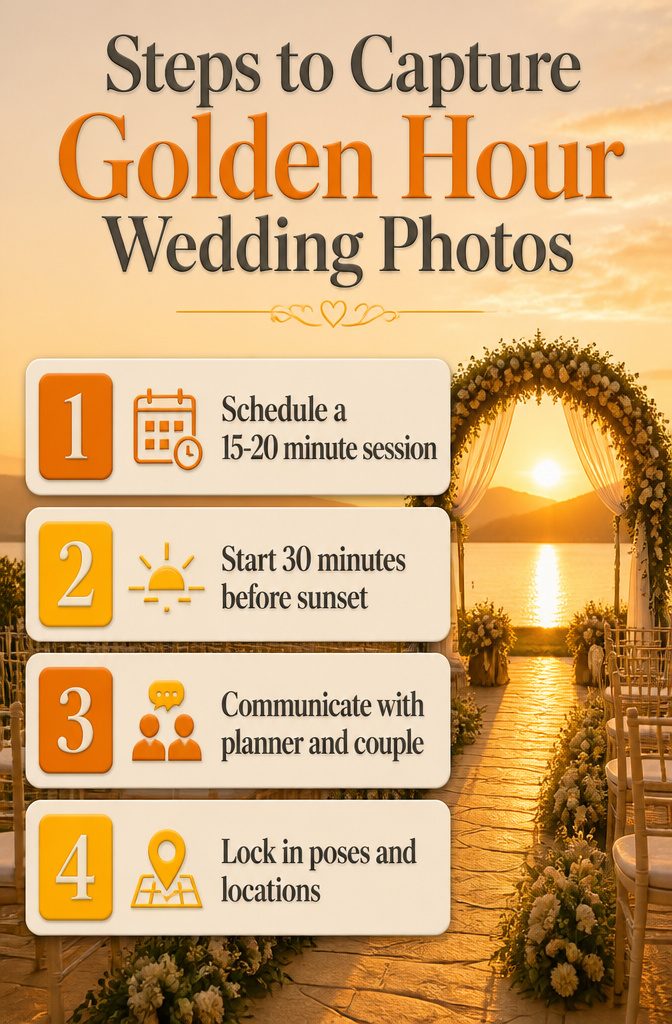
Schedule a 15 to 20 minute session starting half an hour before sunset, not at sunset, and you catch the window when skin glows and backdrops turn molten without harsh shadows.
Building this into a wedding day timeline takes more than marking a time slot. The couple is usually deep into reception formalities right then, toasts or table visits or the hundred small obligations that accumulate.
The photographer and planner need to pull them out, and the couple needs to know this is coming so they do not feel hijacked.
Ten to fifteen minutes is the realistic working window once you account for finding the spot and sharing space with videographers, so poses and locations get locked in advance.
Rushing ruins it. The light does not wait, and neither does a stressed couple.

Sunglow Lamp: Snuggle lovers sharing the beautiful sunset - Create a romantic atmosphere around and add a warm, comfortable glow to any room, every night.

This is exactly what you need to bring a little light into your life and into your space. Make your home your safe haven, your environment affects your mood.
This is exactly what you need to bring a little light into your life and into your space. Make your home your safe haven, your environment affects your mood.
Scout Location
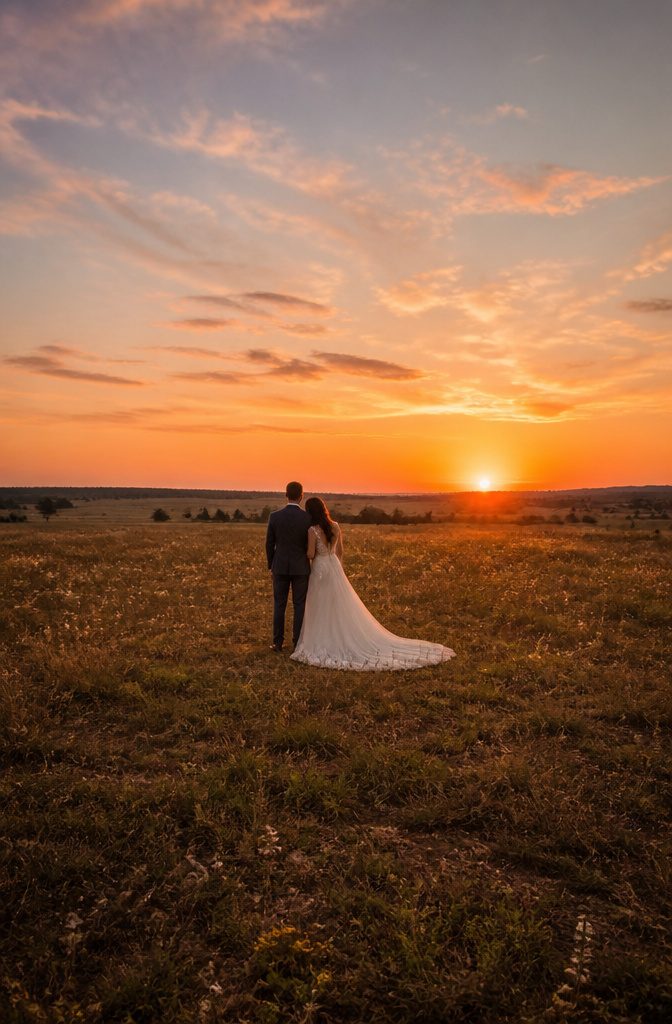
A west-facing spot with an open horizon is what separates a usable sunset backdrop from a disappointment.
I learned this the hard way at a hilltop venue where the sun dropped behind a tree line twenty minutes earlier than the app predicted, leaving us with flat gray light instead of the gold we planned for.
Now I check three things on location: where the sun actually sets for that season, whether buildings or hills cut the light before true sunset, and how far the couple will need to walk in formal wear to reach the open ground.
An unobstructed view matters more than elevation; a level field facing west beats a dramatic cliff that loses the sun behind its own ridge.
Apps that map sun position to your specific GPS coordinates solve the problem that general sunset times cannot.
The sun slips behind a valley wall or a hotel block at different moments than it hits the horizon, and that local sunset is the only one that counts for photos.
Scout at the same time of year, or you will miss how summer leaves change the sight lines.


Communicate with Photographer
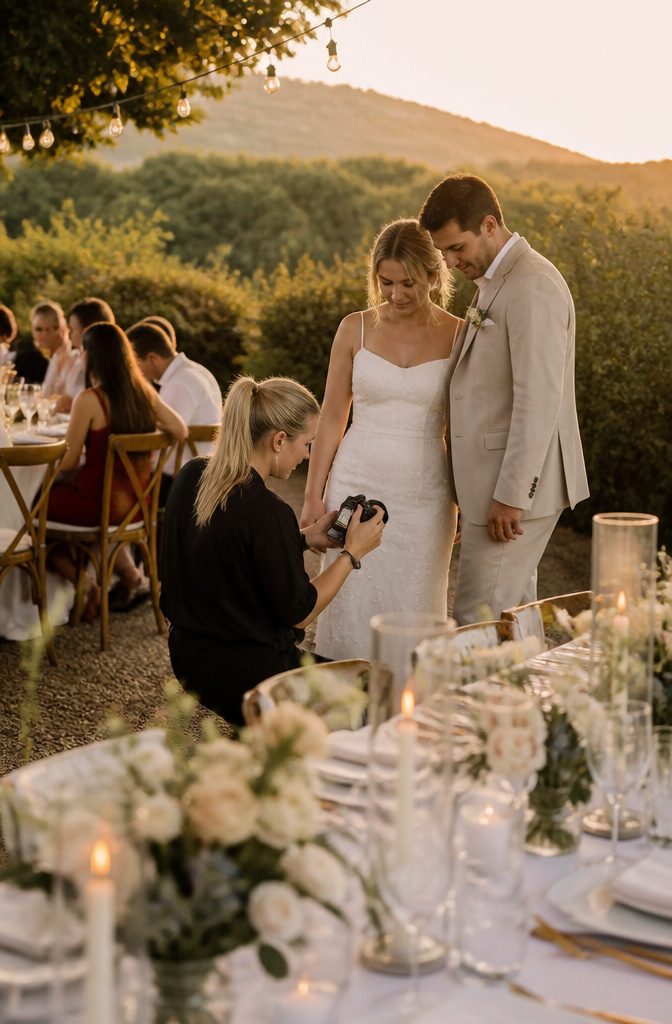
The timeline for sunset wedding photos has to be built into the day, not bolted onto it. Golden hour lasts roughly 15 to 20 minutes, and that window shrinks fast if your venue sits in a valley or behind tall trees.
I make sure my photographer knows exactly when the sun sets relative to our location, not just the zip code, because the horizon line at a hillside venue buys extra minutes that a flat garden simply won’t.
A shared schedule prevents the classic collision: sunset portraits landing square in the middle of dinner service.
One practical fix is to eat first, then slip out while guests are still at their tables. But that only works if the caterer, the planner, and the photographer are all reading from the same schedule.
I send mine as a single document with sunset time highlighted, plus a 10-minute warning and a hard stop so nobody drifts.
Must-have shots should be named in advance. For me, that’s a backlit silhouette and one close-up with the last direct light on our faces.
Naming them means the photographer can stage the first while the light is still high, then pivot to the second as it drops. Without that list, you spend precious minutes negotiating poses while the color drains from the sky.

Personalized invitations and stationary. Printed on 100 lb cardstock. Order only what you need!

CUSTOMIZABLE TIMELINE OF WEDDING WELCOME SIGN: Give your wedding ceremony a personal touch by adding your name to our rose theme wedding sign. We also allow you to add text of your choice on the wedding sign. Click on the “Customize Now” button to create your wedding welcome sign.
Arrive Early
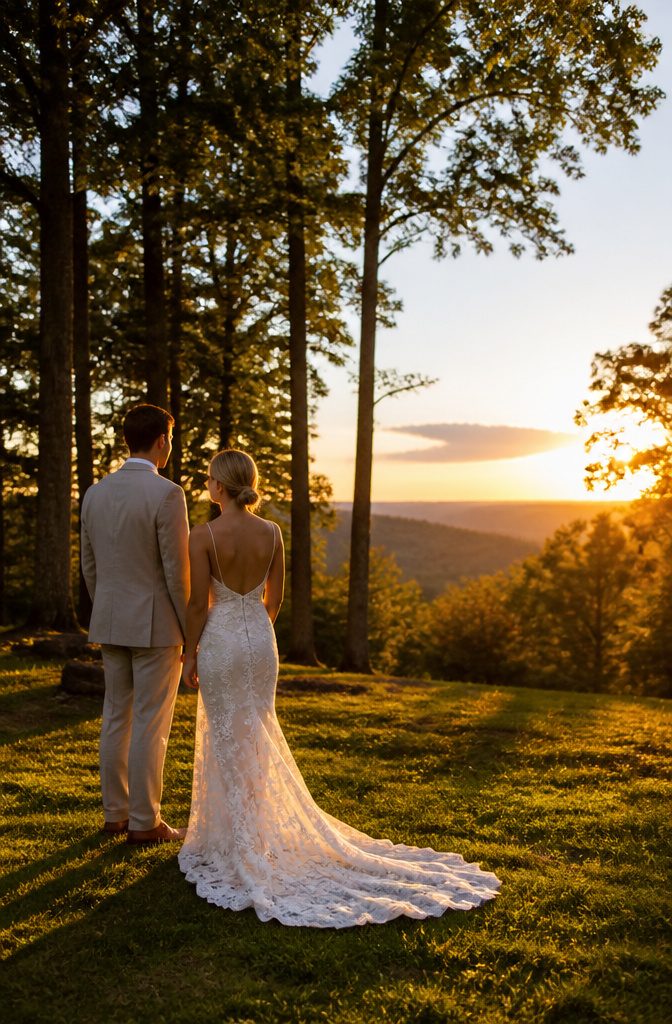
The light you actually want for sunset wedding photos starts shifting long before the sun touches the horizon.
That warm, workable glow, what photographers call golden hour, typically opens up about 30 to 45 minutes before true sunset, then keeps evolving through a range of colors until dusk settles in.
Arrive at least an hour before sunset and you buy yourself the full arc instead of gambling on a single moment.
Ceremonies rarely run to the minute. A readings runs long, a processional stalls, someone hugs every guest twice on the aisle exit.
Without that buffer, a fifteen-minute delay shoves your portraits straight into muddy twilight. Push the timeline and your sunset wedding photo session turns into a dark, rushed scramble.
That hour also lets you watch how the light behaves in your exact spot. A hillside venue might hold usable light longer.
Tall trees or a valley floor can kill it fast. You are not guessing when you step out; you have already seen the angle change and picked your positions.
The investment is sixty minutes of waiting. The return is variety in your images and the breathing room to actually enjoy them.
【VERSATILE WALL DECOR】: Add visual interest to a living room, bedroom, office, hallway, entryway, dorm, studio, or apartment with an expressive wall art poster made for modern interiors.

【VERSATILE WALL DECOR】: Add visual interest to a living room, bedroom, office, hallway, entryway, dorm, studio, or apartment with an expressive wall art poster made for modern interiors.

Hide Clutter: Is the space under your table cluttered with tangled cords, storage bins, or other unsightly items Teacher desk skirt is the perfect solution. Desk skirts for teacher desk conceals table legs and everything underneath - supplies, boxes, bags, spare tableware, and other items - instantly giving your table a neat, polished look. Whether for a home office, a reception desk, or a party table, it provides immediate coverage so you never have to worry about clutter being on display
Experiment with Lighting
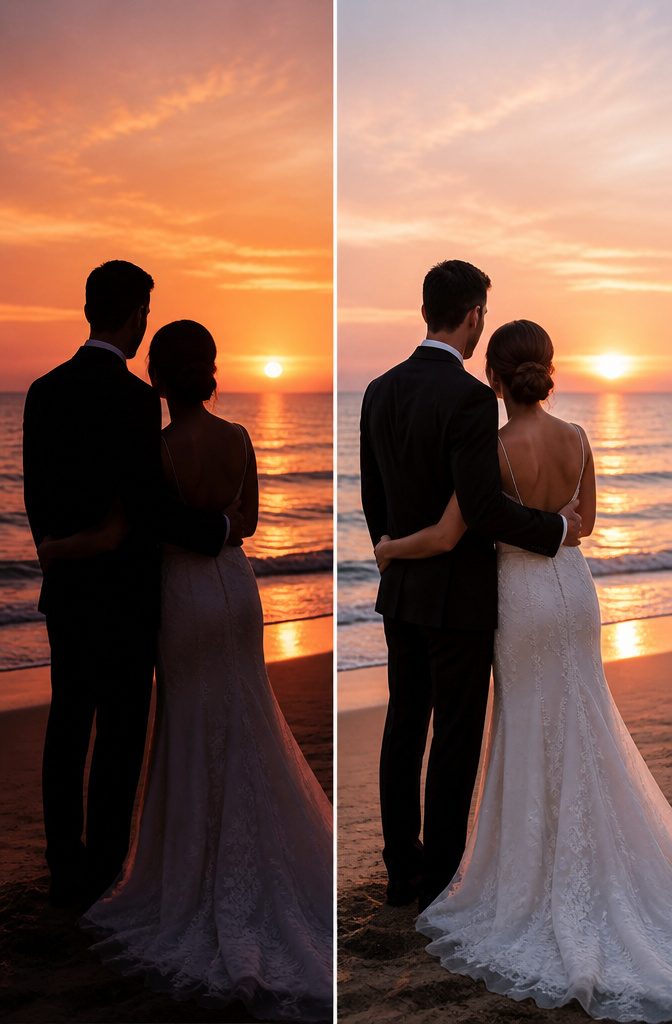
Most sunset wedding photos end up backlit, which throws the background into vivid color while the couple goes almost black. That is the first thing to notice, and the first choice to make: whether to fix it or use it.
A reflector or an off-camera fill flash will pull the couple back into visibility without killing the sky.
Warm the flash with a CTO gel so the light matches the ambient tone; otherwise you get two color temperatures fighting each other and a post-processing headache you did not budget time for.
But flash can flatten the mood you came for, so there are shots where the reflector wins and shots where you are better off going dark.
Silhouettes work best 15 to 20 minutes before sunset, when the light softens enough to paint the sky in layered color without blowing out the edges.
Water helps, if you have it: the reflection doubles the shape and gives the frame something to hold.
Trees do something different toward the end of sunset, filtering the last sharp light into a softer flare or a scattered peek-a-boo effect that needs no gear at all.
The real judgment call is knowing which tool to reach for and when to leave everything in the bag. Flash or reflector when the couple’s faces matter; nothing but the sun when the shape of the moment matters more.

【Size】Backdrop size is 7x5FT / 2.1m x 1.5m / 81 inch x 59 inch. Manual measurement may result in 1–2 inches error. Folded and packaged for shipping. Only includes 1 backdrop (no stand or clips). More sizes available in store or via customization.

【Size】: 7x5FT(WxH) / 2.1m x 1.5m / 82 inch x 59 inch, Horizontal Style. Clips and stand are not included . Without grommets or pole pockets.

【Size】: 7x5FT(WxH) / 2.1m x 1.5m / 82 inch x 59 inch, Horizontal Style. Clips and stand are not included . Without grommets or pole pockets.
Capture Moments
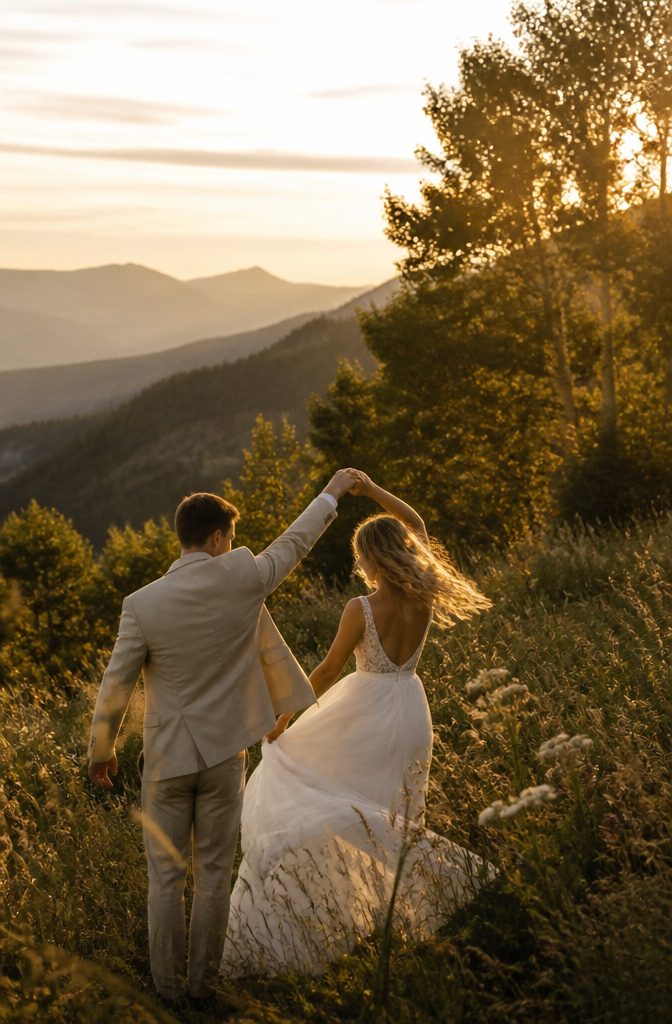
The best sunset wedding photos happen when the couple forgets the camera exists.
My photographer stepped back ten or fifteen feet during our golden hour shots and let us talk, let us laugh at how loud the crickets had gotten, let us just be newly married for a minute.
That distance is what separates a portrait from a memory.
A good photographer reads the moment instead of forcing it. They might suggest walking toward the tree line or mention the light is about to drop, but they do not choreograph every tilt of a chin.
Natural movements and simple gestures read more romantic than stiff poses, and the couple actually enjoys the break from the reception instead of enduring another item on the timeline.
The real trick is trust.
The photographer knows how the fading light behaves; the couple knows their own dynamic. Handing control to someone else feels strange when every other decision that day has been yours, but this is the one place where surrender pays off.
Let them guide the frame. You guide the feeling.
Golden Hour vs. Sunset
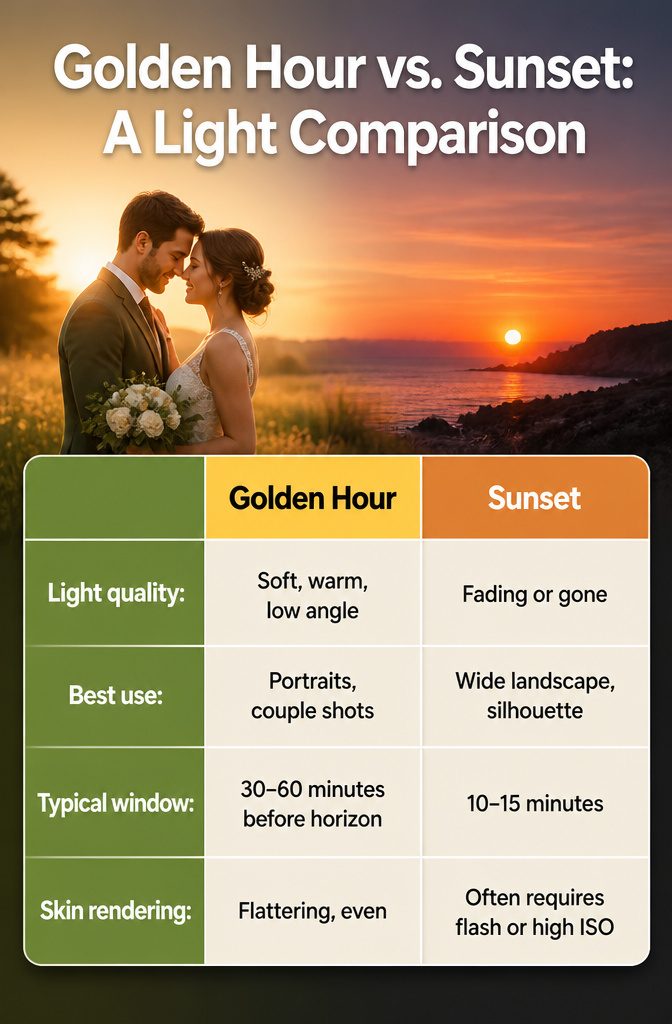
The soft, sideways light that photographers call golden hour arrives roughly 30 to 60 minutes before the sun touches the horizon. Skin looks smoother, colors deepen, and shadows fall gently enough that you rarely need to think about them.
Sunset itself, the moment the sun disappears, is something else entirely: the light source is gone, the warmth drops fast, and what looked romantic a minute earlier can turn flat or muddy.
Most wedding photographers I have spoken with schedule portrait sessions during golden hour, not at sunset.
The difference is the usable light. Golden hour gives you a moving but generous window; sunset gives you a deadline.
| Golden Hour | Sunset | |
|---|---|---|
| Light quality | Soft, warm, low angle | Fading or gone |
| Best use | Portraits, couple shots | Wide landscape, silhouette |
| Typical window | 30–60 minutes before horizon | 10–15 minutes |
| Skin rendering | Flattering, even | Often requires flash or high ISO |
If your photographer asks to step out of the reception 30 minutes before sunset, that timing is intentional. The portraits you keep are almost always made in that earlier window.
【VERSATILE WALL DECOR】: Add visual interest to a living room, bedroom, office, hallway, entryway, dorm, studio, or apartment with an expressive wall art poster made for modern interiors.
【VERSATILE WALL DECOR】: Add visual interest to a living room, bedroom, office, hallway, entryway, dorm, studio, or apartment with an expressive wall art poster made for modern interiors.
【VERSATILE WALL DECOR】: Add visual interest to a living room, bedroom, office, hallway, entryway, dorm, studio, or apartment with an expressive wall art poster made for modern interiors.
Candid vs. Posed Shots
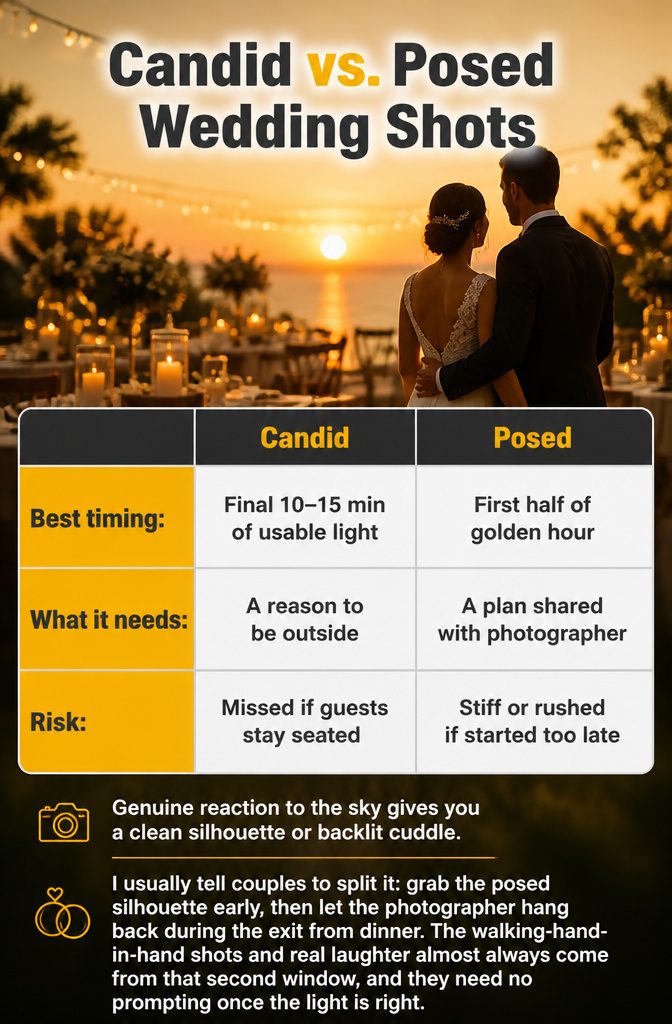
The sunset window is short enough that you have to know what you’re after before the light goes.
Candid shots work best in the last ten minutes, when guests are loose from dinner and the sky is doing something worth reacting to.
Posed shots eat minutes you don’t have; save them for the earlier, steadier light when your photographer can still direct without rushing.
| Candid | Posed | |
|---|---|---|
| Best timing | Final 10–15 min of usable light | First half of golden hour |
| What it needs | A reason to be outside (toasts wrapping, someone grabs you) | A plan shared with photographer before dinner |
| Risk | Missed if guests stay seated | Stiff if you overdirect; rushed if you start too late |
| Genuine reaction to the sky gives you a clean silhouette or backlit cuddle. |
I usually tell couples to split it: grab the posed silhouette early, then let the photographer hang back during the exit from dinner.
The walking-hand-in-hand shots and real laughter almost always come from that second window, and they need no prompting once the light is right.

【Size&Color】-- 5x4ft/1.5x1.2m(WxH), High-resolution digital print with eye-catching details and lifelike colors.No reflective or faded. Decorate it on your birthday party center decoration and table background!

【Size】: 7x5FT(WxH) / 2.1m x 1.5m / 82 inch x 59 inch, Horizontal Style. Clips and stand are not included . Without grommets or pole pockets.

【Vinyl material】: sturdy backdrop compared to other materials, bright colors, light weight, easy to carry and store, perfect for photo backdrops.
Lighting Quality
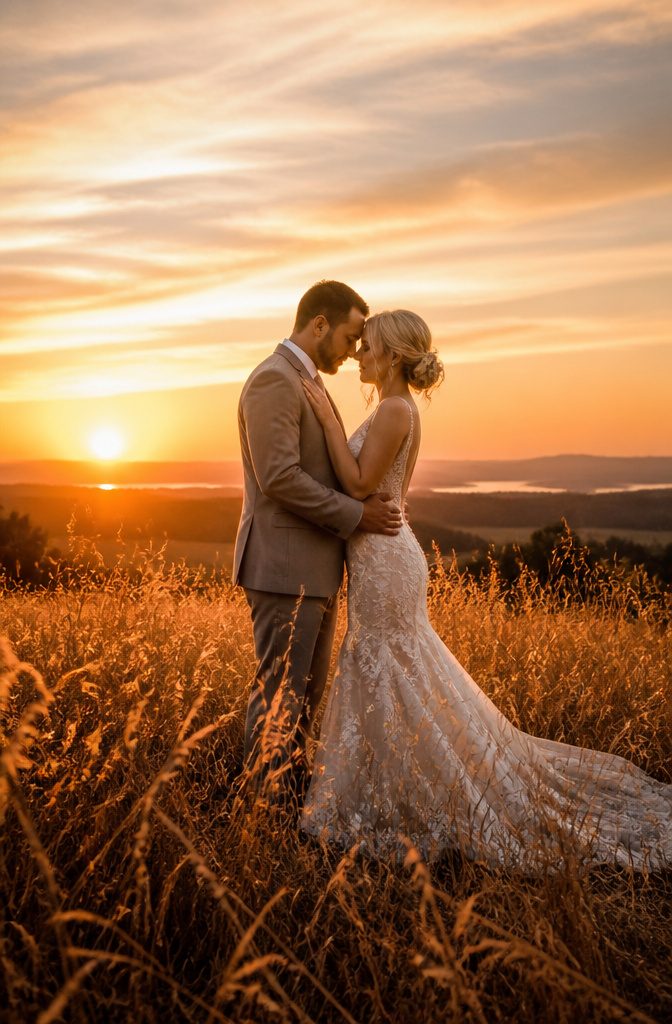
Sunset light does something to skin that midday sun simply cannot. The color temperature shifts warm, so faces look alive rather than washed out, and the lower angle means the light wraps instead of punches.
That softness matters because harsh overhead sun creates deep shadows under eyes and chins that no amount of editing fully fixes.
I have seen photographers try to salvage midday portraits where the couple spent the whole time squinting, and the result never quite escapes the fact that the light was fighting them.
The real difference is atmospheric. When the sun sits low, its rays travel farther through the air, which scatters the harder blue wavelengths and leaves the warmer golds and ambers.
The light becomes less intense by default, so details in a white dress or a dark suit hold their texture instead of blowing out or sinking into black.
Shadows stretch longer and fall in directions that add depth rather than flatten everything into a single plane.
A short 15 to 20 minute window during golden hour turns ordinary compositions into something that already looks finished before any editing begins.
Midday sun demands workarounds: finding open shade, using reflectors, timing poses between blinks. Sunset light just cooperates.
Timing for Sunset Photos
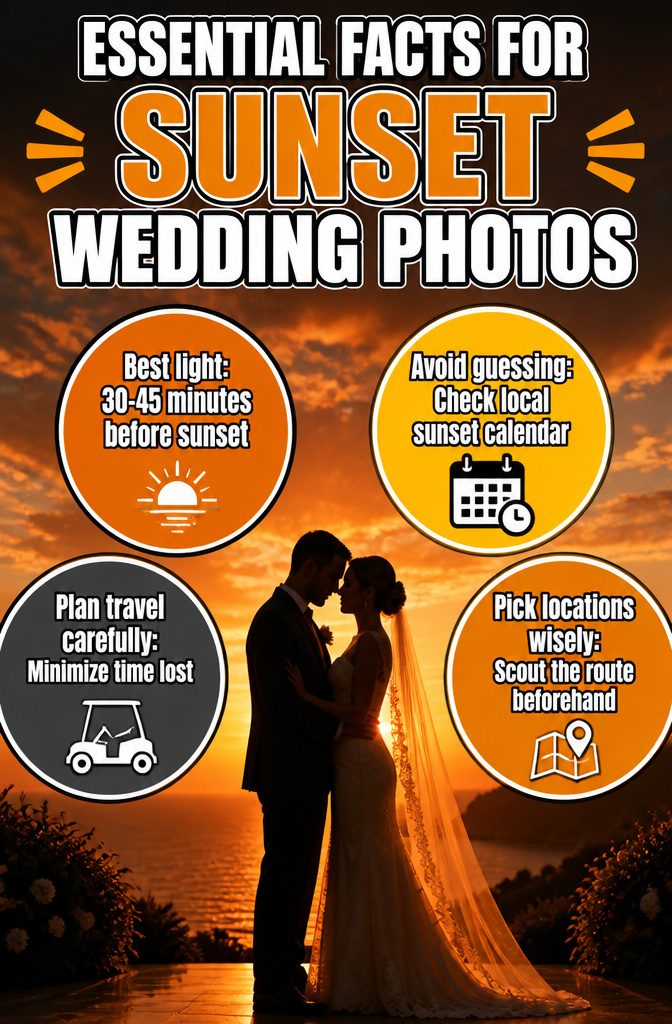
The best light for sunset wedding photos arrives 30 to 45 minutes before the sun officially drops below the horizon, when the sky still holds that soft, warm glow instead of fading to flat gray.
I learned this the hard way at a cousin’s outdoor reception a few years back: we ducked out right at sunset, and the golden window had already slammed shut. The colors were gone, and the photos came back muddy.
Summer sunsets in places like San Diego can run as late as 8 pm, while winter ones might collapse around 5:15 pm, so checking a local sunset calendar for your exact date matters more than guessing from the season.
Your photographer will need that number to build the timeline backward from dinner or speeches.
Travel between spots eats minutes you cannot get back.
If your ceremony garden and the hillside overlook are ten minutes apart by golf cart, that travel sits inside your 30-to-45-minute window, not outside it. Scout the route beforehand, or pick one location and stay put.
Location Considerations
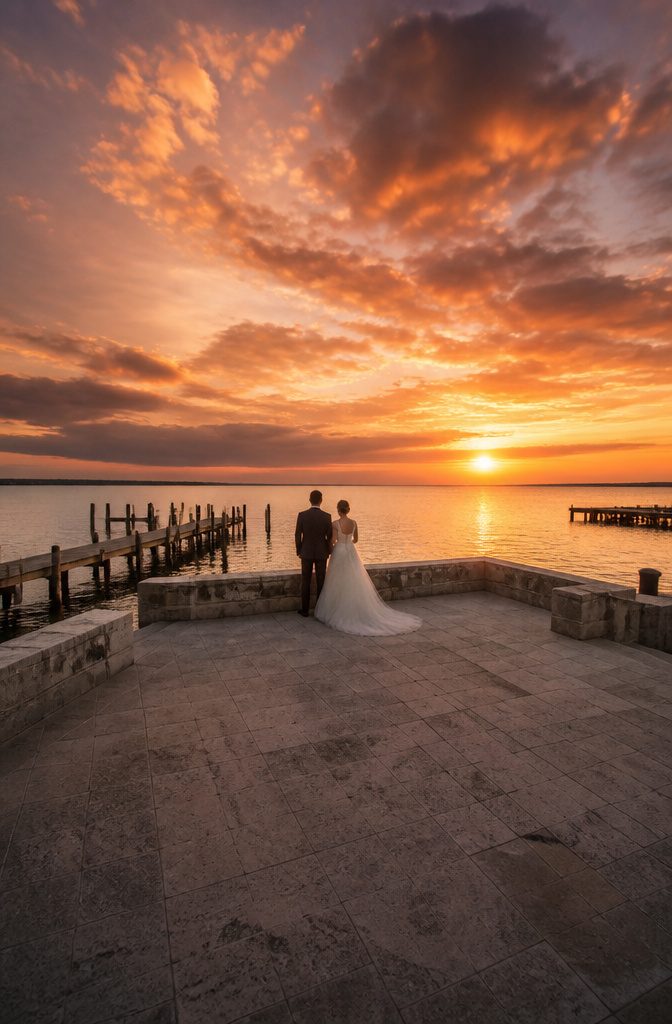
A west-facing spot with a clear sightline to the horizon makes the difference between a sunset wedding photo that glows and one that fizzles.
I learned this the hard way at a hilltop venue where the couple had chosen the prettiest overlook for their ceremony, only to find a tree line blocking the actual descent.
Arriving an hour early on a scouting run would have caught it. Open fields, beaches, and elevated ground are the reliable standbys because they give that unobstructed path the light needs.
Weather is the other variable you cannot control, only plan around. Cloud cover shifts fast, and the golden window is brief, so a covered backup location within quick reach of your main spot keeps the timeline from unraveling.
Public spaces add another layer: many require permits for photography, and the paperwork takes longer than you expect. Checking with the venue or local office early in the planning process saves the scramble later.
Frequently Asked Questions
What is golden hour?
Golden hour is the 30 to 45 minutes before sunset when the sun sits low enough to soften into warm, workable light.
Skin glows, backdrops turn molten, and harsh shadows disappear. By the time the sun disc touches the horizon, that warmth has already thinned into flatness.
Why is sunset light special for weddings?
The color temperature shifts warm so faces look alive rather than washed out, and the lower angle means light wraps around subjects instead of punching straight down.
Details in a white dress or dark suit hold their texture without blowing out or sinking into black, and shadows stretch in directions that add depth rather than flatten everything.
How long should the sunset photo session last?
Schedule 15 to 20 minutes of actual shooting time, starting 30 to 45 minutes before sunset.
Ten to fifteen minutes is the realistic working window once you account for reaching the spot and sharing space with videographers, so poses and locations need to be locked in advance.
What poses work best for sunset photos?
Silhouettes work best 15 to 20 minutes before sunset, when the sky layers with color without blowing out edges.
Backlit cuddles and close-ups with the last direct light on faces belong earlier in the window. Candid shots, like walking hand-in-hand or laughing together, work in the final 10 minutes when guests are loose and the sky is worth reacting to.
Are sunset wedding photos worth it?
They are worth the effort if you plan ahead.
The light flatters skin, deepens colors, and creates images that look finished before any editing begins. The trade is pulling the couple out of reception formalities for a short window that does not wait for delays.
When to do sunset photos for a wedding?
Start 30 to 45 minutes before the sun officially drops below the horizon, not at sunset itself.
Build this into the day, not bolt it on: eat first, then slip out while guests are still at their tables, with the caterer, planner, and photographer all reading from the same schedule.
What is the 30-5 rule for weddings?
The timing rule it does give is to arrive at least an hour before sunset so ceremonies that run long do not shove portraits straight into muddy twilight.