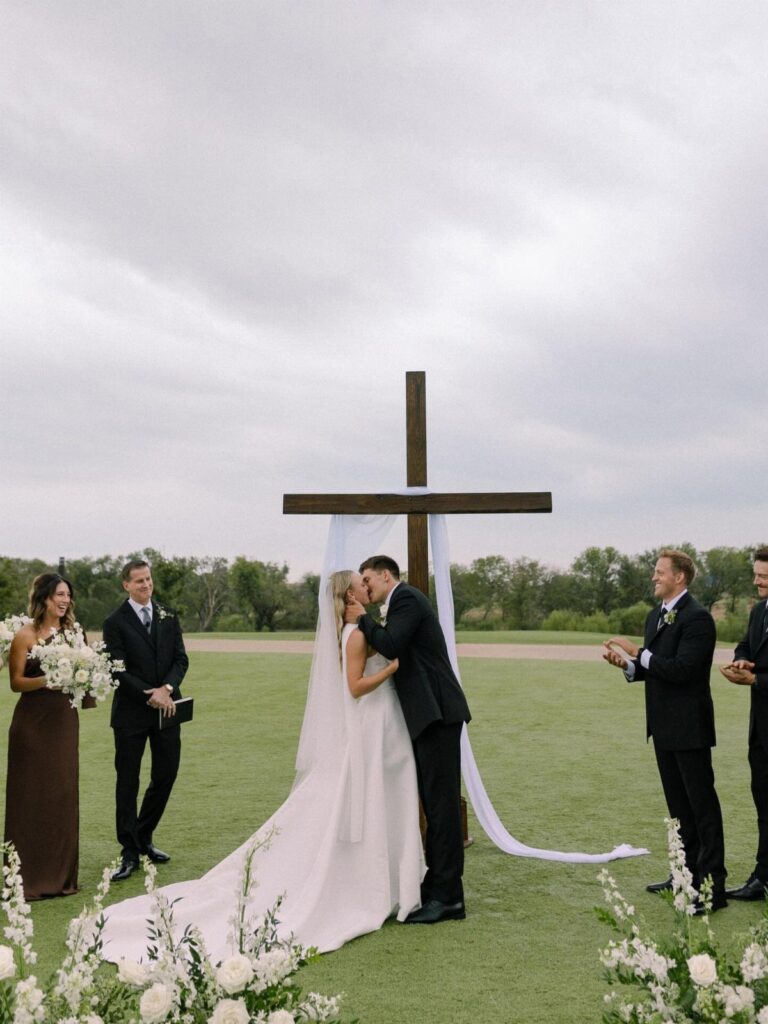
A wedding ceremony cross can run from a few hours of sawing and staining in your garage to a florist-built installation that costs more than the photographer, and the list below covers both ends of that range.
What separates one cross idea from another is where your ceremony actually happens, outdoors on uneven grass or indoors against a fixed wall, because that single fact decides whether you need a four-legged base with diagonal bracing or can get away with sheer fabric that never has to fight the wind.
The builds I looked at ranged from 6 feet tall for open hillsides to 7-foot crosses that need to be broken down to fit in a car.
1. Wooden Cross with Flowers
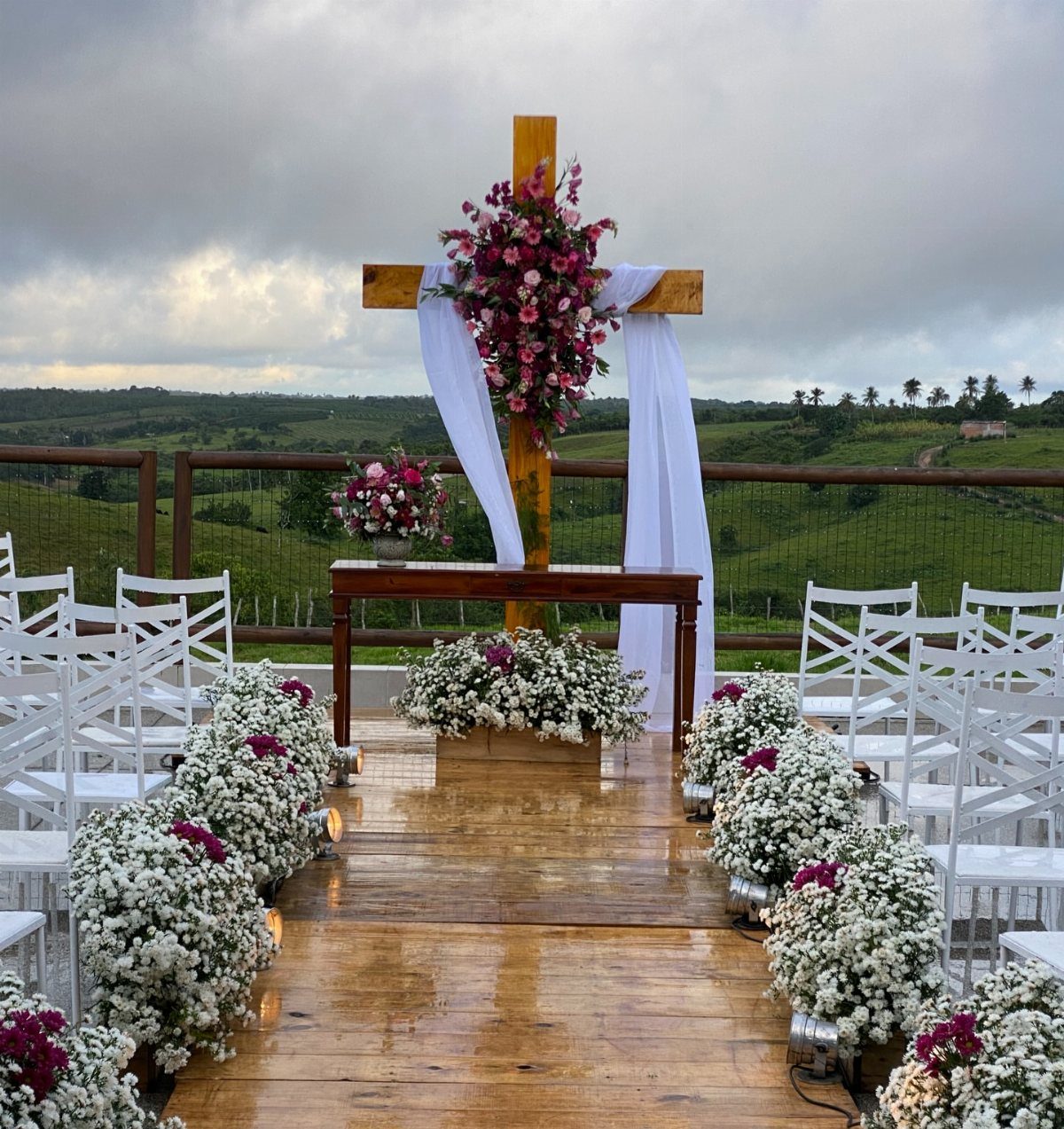
A wooden cross gives you something solid to build on, literally. A dark stain reads formal against green hills, and pink flowers soften it without making the whole thing feel like a garden arch that lost its way.
I would start with a cross tall enough to stand above seated guests, then cluster roses and hydrangeas at the center and let greenery trail down.
The asymmetrical look in some of the builds I have seen keeps it from feeling too symmetrical, too church-supply. Fabric helps too, a sheer drape that moves if there is any breeze.
This one suits outdoor ceremonies where the landscape does half the work. Indoors, you may need more mass at the base to anchor the visual weight.

ELEGANT RELIGIOUS HOME DECOR: Enhance your sacred space with this beautifully crafted standing cross. Featuring an inspiring blend of natural wood, it serves as a stunning centerpiece for your living room, mantel, prayer room, or home altar, bringing peace and divine grace to any corner.

What’s Included: This set comes with 1 large wooden cross, 1 white ribbon, and 2 eucalyptus garlands for easy decorating. It also includes a pack of screws and a screwdriver for simple installation. The cross is made up of 5 wooden pieces. Just follow the manual to assemble it into a standing wood cross decor. You can place it in your yard, garden, or use it as indoor or outdoor decor.

Package Includes: This wedding display set contains one 59.1 in wooden cross, one 9.8 ft x 29.5 in white drape, one 13.0 in floral wreath, one 70.9 in vine flower garland, screws, and a screwdriver. The large standing cross decoration provides a complete focal setup, while the wedding decorations set and standing cross with white drape help coordinate ceremony styling.
2. Floral Cross Backdrop
The cross as backdrop changes how you arrange the room.
Instead of standing in front of a blank wall or a rented curtain, you are standing in front of something with its own presence, and the flowers frame you rather than compete.
White wisteria works here because it hangs, it fills vertical space without your having to build a taller cross.
Ferns at the base extend the green outward so the whole thing reads as one installation, not a cross with decorations bolted on.
Matching arrangements on either side widen the focal point so the photographer can shoot from more angles without losing the couple against a narrow vertical.
If your aisle is long, consider whether guests seated far back will see the floral detail or just a white shape. That is the trade-off with any backdrop element.

🎊【Color】We adopt high-definition digital printing and thermal transfer technology,which can print the color on the background cloth realistically.

What You Will Get: the wisteria flowers curtain backdrop set includes 2 white tulle backdrop curtains (5 feet wide and 8 feet high), 1 LED light, 3 artificial white wisteria flowers garland decor; Create a beautiful party photo backdrop, will effortlessly enhance the appeal of your space

Material: Vinyl material photography backdrop, high-definition background, lightweight, easy carry and storage.
3. Draped Cross
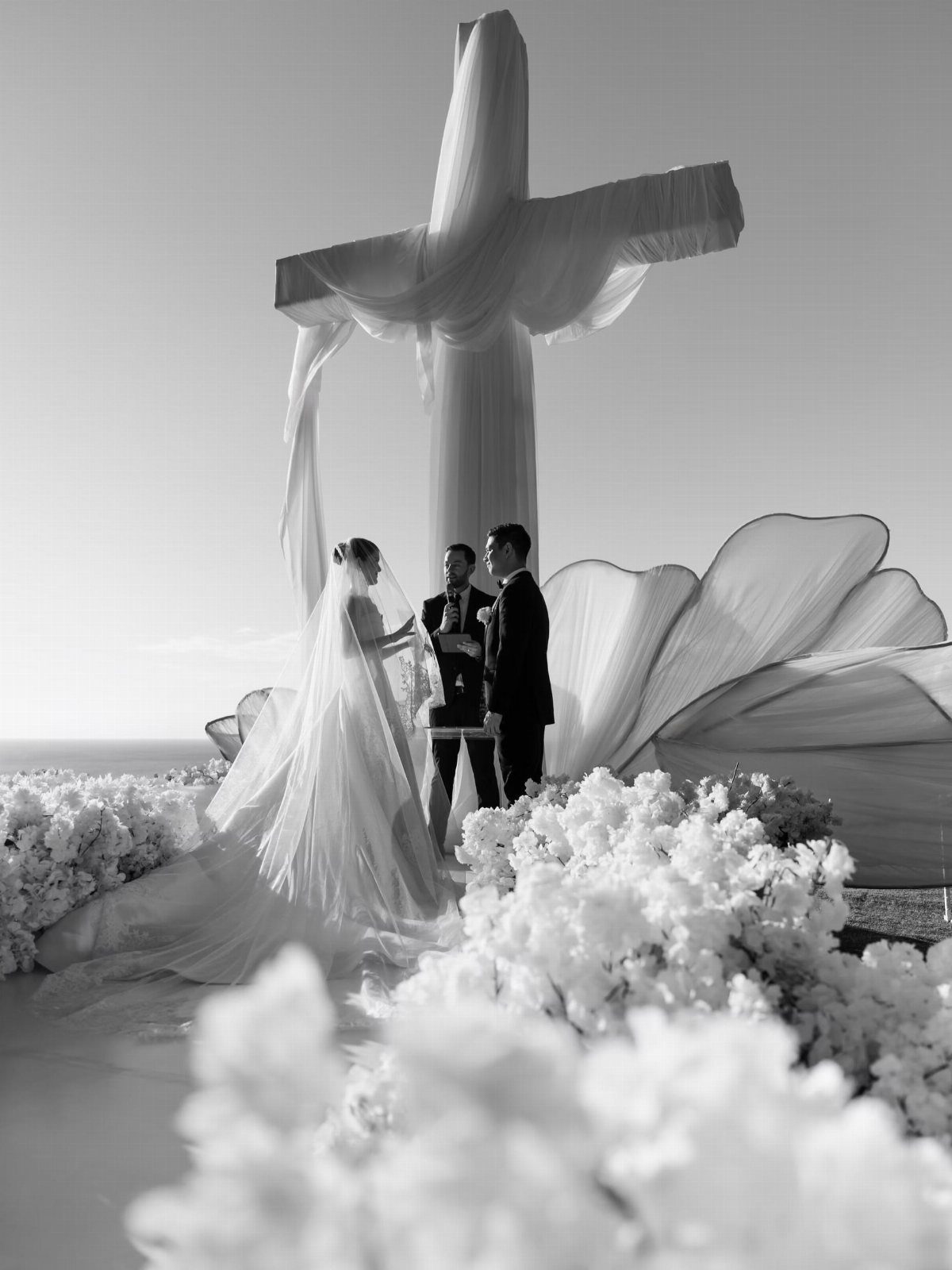
Fabric does what flowers cannot, it turns a wooden structure into something that breathes.
Sheer white catches light differently than petals would; it glows rather than colors, and that suits an evening ceremony or any space where you want the cross to feel present without shouting.
I have seen this done with lace too, which gives more texture but reads more rustic, more country-church. Sheer is safer if your venue has any formality to it.
A drape that runs from top to bottom means planning how it attaches: hooks at the back, a rod hidden in the joint, or a simpler tie that lets it move.
Roses and greenery at the center and base keep it from looking like you forgot to decorate.
Wind is your enemy here. Outdoor setups need the fabric weighted or the cross itself heavy enough not to sway.

【Wedding Arch Draping Fabric】Package includes 1 panel ivory sheer drapes, each panel is 28.7 inches wide and 20 ft long. The length of wedding arch draping fabric is long enough to fit different size arch decoration. This polyester sheer drapery backdrop can create a romantic and elegant atmosphere on your party.

Elegant Halter Neck Design: This A line maxi dress features a unique woven criss cross band at the front, paired with an adjustable halter tie for a secure, customizable fit. The strapless halter neckline elegantly frames the shoulders and neck, creating a modern silhouette perfect for both beach strolls and evening outings.
4. DIY Wedding Cross
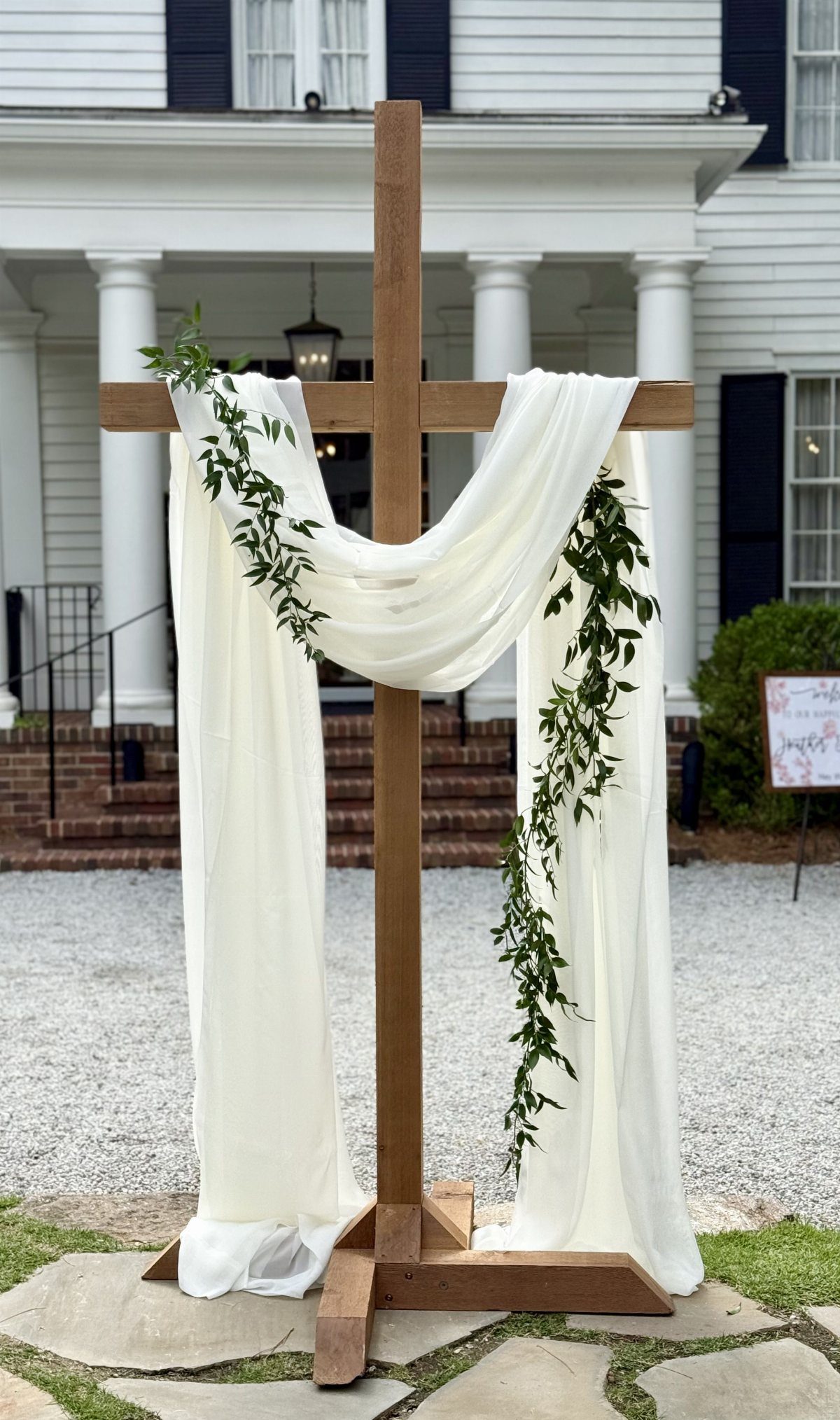
Building the cross yourself is not about saving every dollar, it is about getting the proportions right for your space and knowing it will survive the day without wobbling.
Light brown planks and a four-legged base mean someone thought about stability on grass or gravel, not just how it photographs.
The assembly is straightforward if you have basic tools. 2 planks for the cross, a wider base with diagonal bracing, and screws rather than nails if you want to break it down for storage or resale after.
Fabric and greenery do the visual work, so the wood itself can be simple, even slightly rough.
I would stain or seal it unless you want the raw wood to gray, which is its own look but hard to predict. Paint is another option, white for brightness, black for drama against light walls or green lawns.

76 Inch Extra Large Wooden Cross Stand - This large wooden cross stand creates a meaningful focal point for weddings, church events, Easter, Christmas, communion, baptism, memorials, and religious celebrations. The standing cross design works for yards, gardens, chapels, stages, and indoor or covered outdoor event decorations.

71 INCH LARGE STANDING DISPLAY: This large wooden cross stands 71 inches tall, making it a visible focal point for ceremony backdrops, church events, garden setups, and indoor outdoor displays

BRAID YOUR COVENANT TOGETHER :An Interactive Cord of Three Strands Unity Ceremony at the Altar During your ceremony, you and your partner each take a strand—and together you braid them into one, with the third strand representing God. As you weave, every guest witnesses Ecclesiastes 4:12 come to life: "A cord of three strands is not quickly broken." More meaningful than a unity candle, more lasting than unity sand—because when you finish, the braided cord stays displayed on your cross as a keepsake forever. This is your ceremony, not just your backdrop.
5. Ceremony Cross Decor
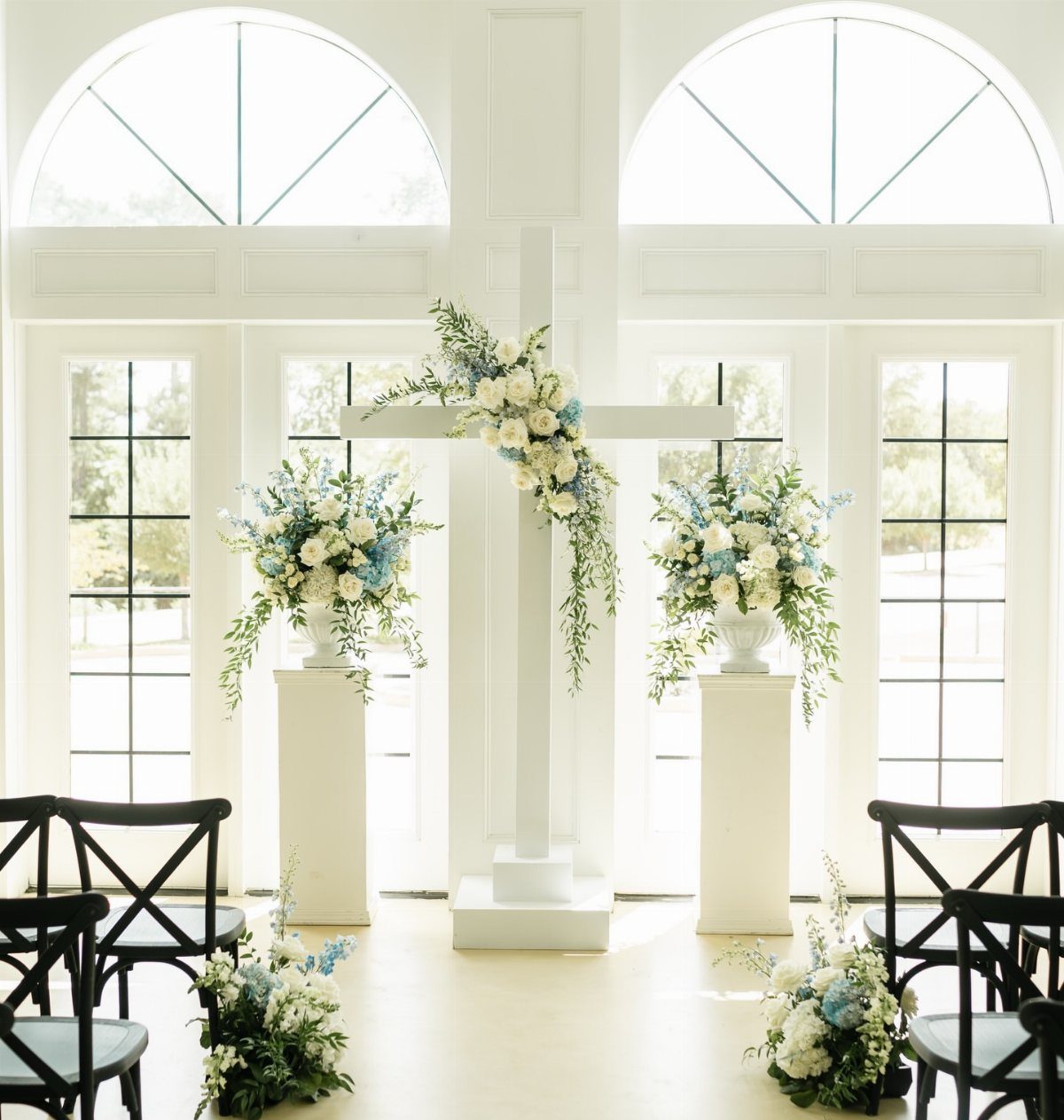
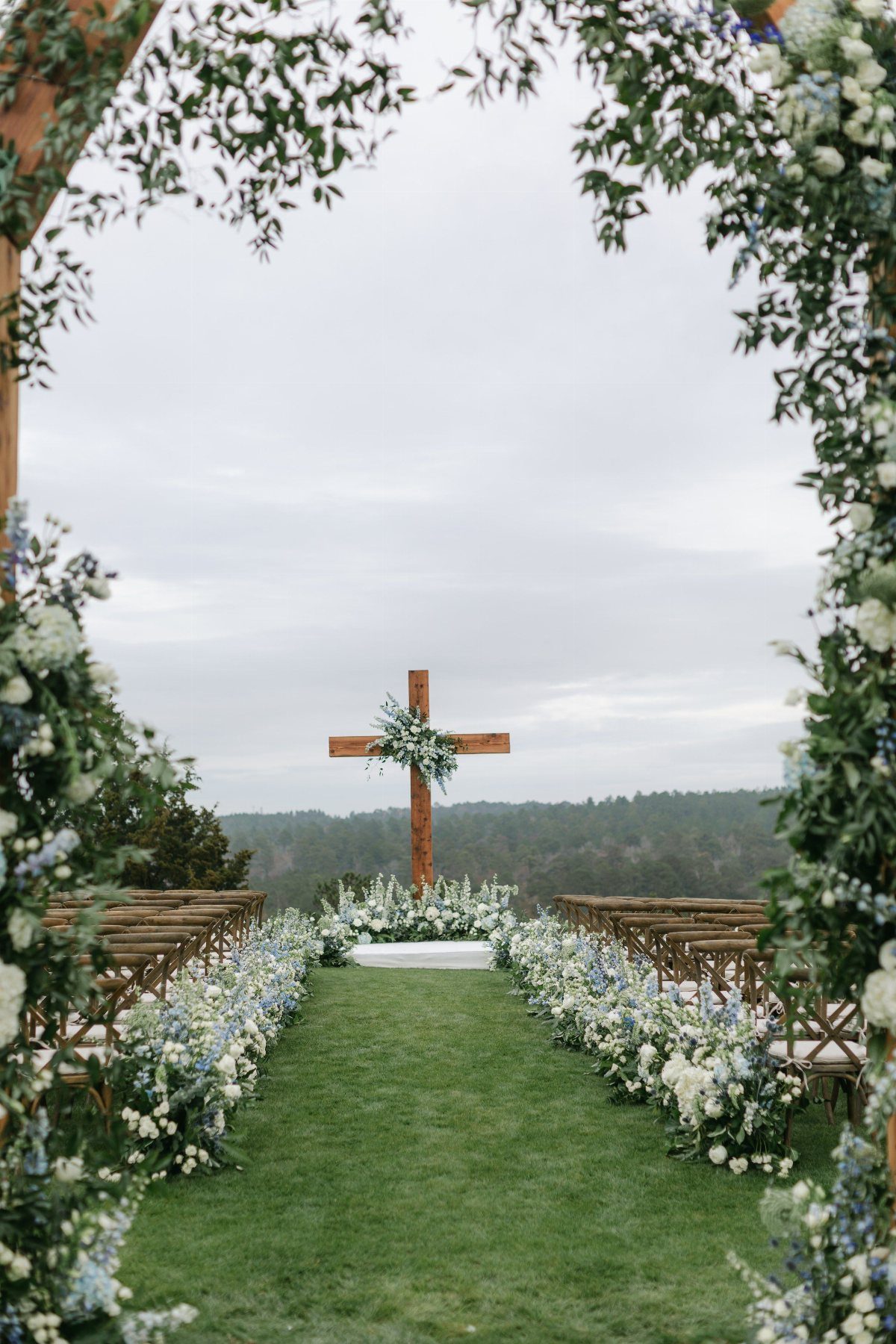
Decor on a cross is where you get to choose your own density. White and blue kept to clusters rather than coverage leaves the cross itself visible as structure rather than hidden under flowers.
Asymmetrical placement matters here. Clusters of roses and peonies with foliage carry uneven weight, heavier on one side, lighter on the other.
It looks intentional, not like you ran out of flowers. Cream with white gives depth without introducing new colors; if your palette is already set, staying in that range is easier than matching a bold shade exactly.
Urns or pedestals at the base extend the arrangement downward without requiring more flowers on the cross itself. That is useful if your florist is pricing by the stem.

What’s Included: This set comes with 1 large wooden cross, 1 white ribbon, and 2 eucalyptus garlands for easy decorating. It also includes a pack of screws and a screwdriver for simple installation. The cross is made up of 5 wooden pieces. Just follow the manual to assemble it into a standing wood cross decor. You can place it in your yard, garden, or use it as indoor or outdoor decor.

Perfect Gift for Vow Renewals & Weddings: A thoughtful religious gift for couples, this cross is ideal for weddings, anniversaries, bridal showers, and vow renewals

Versatile Display Options: This cross decor for wall can be hung above your door, bedroom wall, or mantle; the integrated cross stand allows it to function as a standing cross decor piece for your desk, table top, or shelf
6. Cross with Lanterns
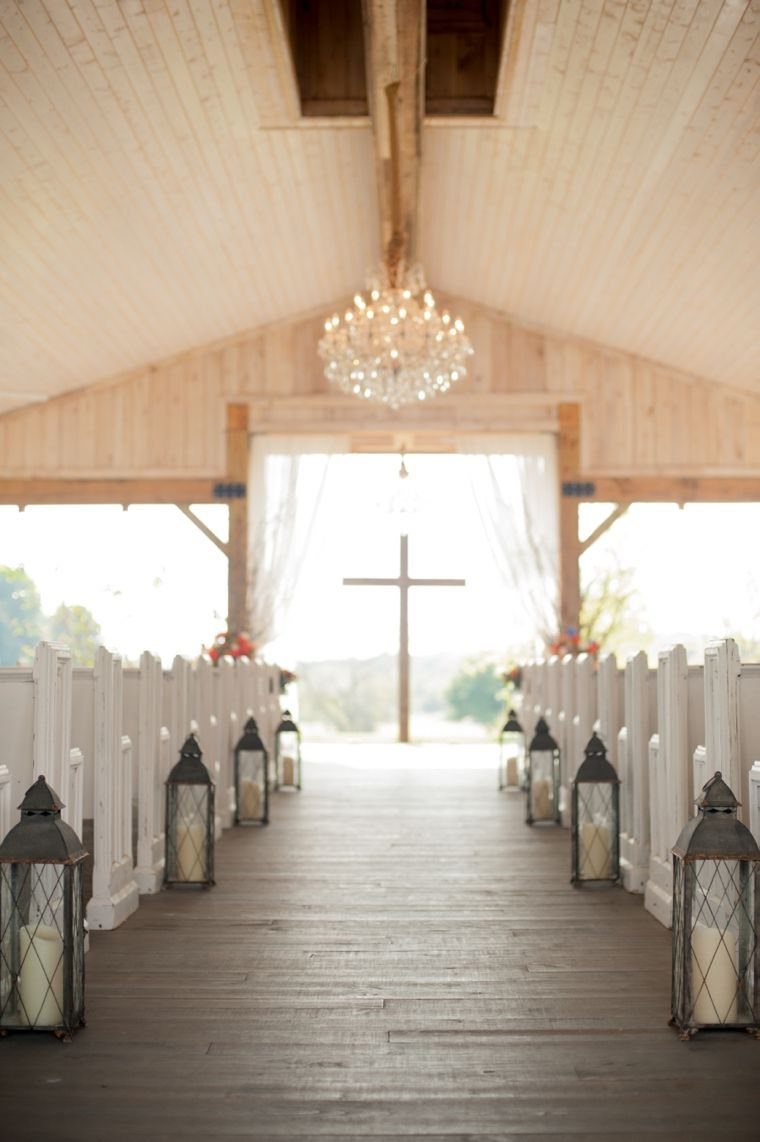
Lanterns change the ceremony after sunset, which is when many summer weddings actually reach their vows.
Black lanterns with white candles read formal, almost chapel-like, and lining the aisle as well as sitting at the cross base makes the whole space read as one design rather than an altar with random candles nearby.
Battery candles are the practical choice if your venue has any wind, any tent flap, any nervous fire marshal.
Real flame photographs warmer but requires tending. Sheer fabric with roses and greenery, illuminated from below by lanterns, gives a different effect than overhead lighting or natural daylight.
I would test the candle height against the fabric before the day. Too tall and you risk heat on the drape; too short and the light does not reach where it should.
What’s Included: This set comes with 1 large wooden cross, 1 white ribbon, and 2 eucalyptus garlands for easy decorating. It also includes a pack of screws and a screwdriver for simple installation. The cross is made up of 5 wooden pieces. Just follow the manual to assemble it into a standing wood cross decor. You can place it in your yard, garden, or use it as indoor or outdoor decor.

Made of Natural Solid Wood: Each piece showcases unique natural grain patterns and offers durable quality. Note: As no two pieces of wood in the world are exactly alike, each product has its own distinctive and beautiful grain.

Package Includes: This wedding display set contains one 71 in wooden cross, one 9.8 ft x 29.5 in white drape, one 13.0 in floral wreath, one 70.9 in vine flower garland, screws, and a screwdriver. The large standing cross decoration provides a complete focal setup, while the wedding decorations set and standing cross with white drape help coordinate ceremony styling.
7. Cross with Eucalyptus
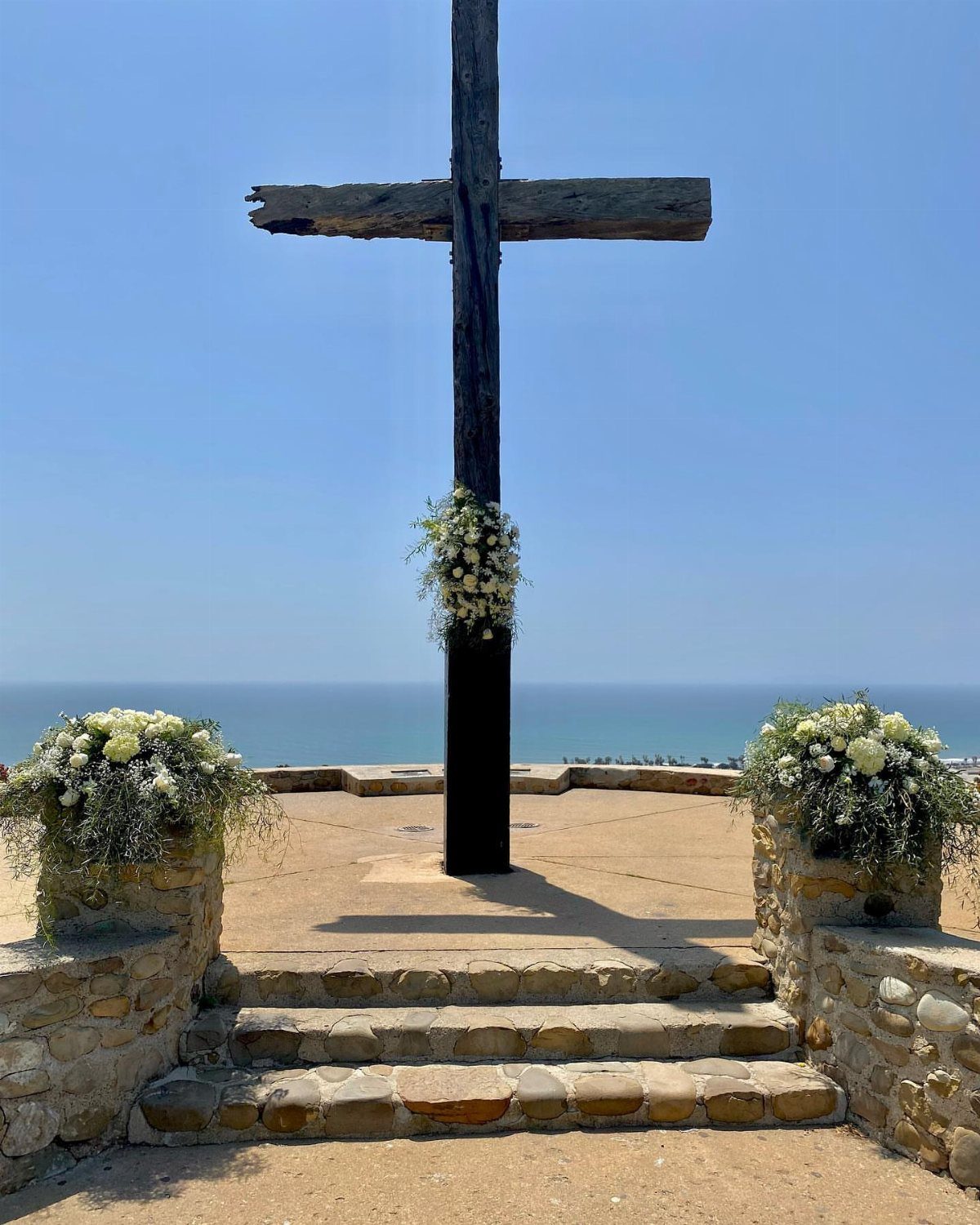
Eucalyptus gives you volume without weight, and the silver-green reads against almost any wood tone.
White roses at the center keep the color quiet, which helps if your bridesmaids wear sage or your linens carry the same green through the room.
Glass cylinders at the base carry the arrangement lower without paying florist rates for extra stems. Floor greenery, more eucalyptus or something simpler, widens the footprint so the cross does not float in a large space.
This one suits venues with stone, concrete, or any cool-toned surface. Against warm oak or pine, the silver-green can read slightly cold, so I would test a branch against your cross material before committing.

All in One Wedding Backdrop Kit: transform any venue with this comprehensive wedding backdrop curtain flower decoration set; It includes 50 white artificial fake wisteria flowers, 2 elegant sheer backdrop curtains, and a USB powered warm white fairy light string for a captivating display at weddings, bridal showers, or parties

Size: 7 ft(W) x 5 ft(H), 210 cm x 150 cm seamless, collapsible and reused

Package:Because Of The Rules Of Post Office,Item Will Send By Folded,Easy Storage And Carry.The Package You Received Only Contains The One Years Old Background Wall,No Photography Stand.
8. Cross with Sheer Fabric
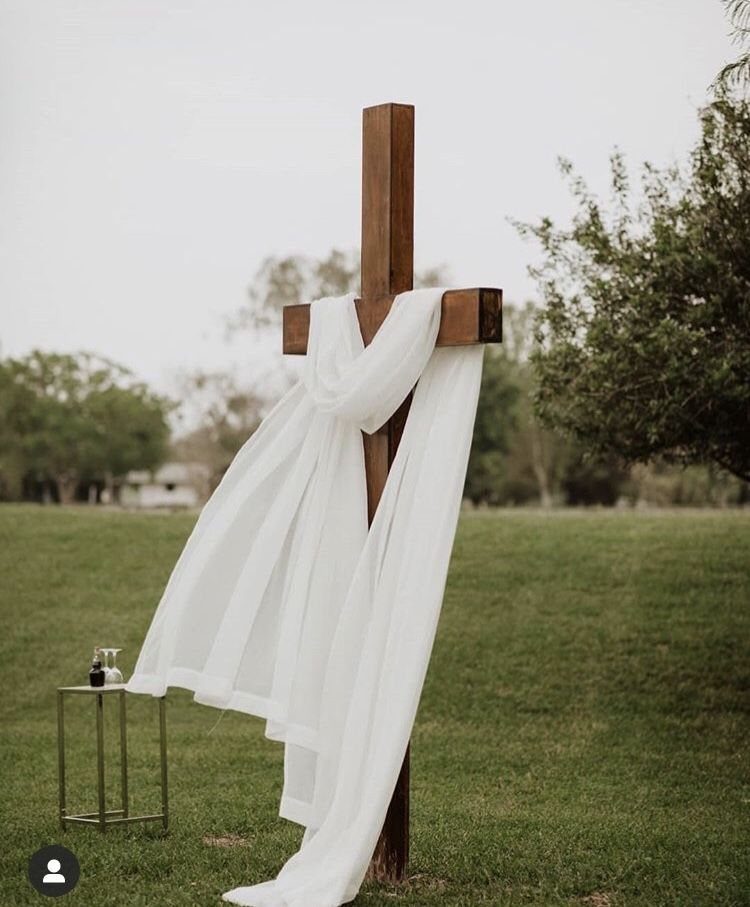
Sheer fabric wrapped around the cross turns structure into something softer without hiding the wood entirely.
White flows best outdoors where wind can move it; indoors it can hang still and look pinned, so a slight diagonal drape rather than vertical wrapping helps.
Thick white flowers and greenery at the bottom hold the visual weight down, which steadies the airy fabric overhead.
Dark wood gives the cross some gravity; paint it white and the whole thing turns misty, maybe more than a midday ceremony can handle.
A small table for communion or ritual pieces should stay low, letting the base flowers read as the anchor instead of fighting for the same eye level.

Premium Quality: Crafted from wrinkle-resistant gauze with subtle micro-glitter, soft and elegant.

Premium Quality: Crafted from wrinkle-resistant gauze with subtle micro-glitter, soft and elegant.

Premium Material & Effortless Elegance: Crafted from premium wrinkle-resistant chiffon fabric, this wedding arch draping fabric provides a substantial weight and fluidity for an easy and romantic decor. The silky-smooth texture allows it to drape into flowing folds, suitable for creating an elegant atmosphere at formal events
Floral Arrangements for Crosses
A single flower type reads formal; mixing shapes gives you the lush look most couples want.
White roses paired with wisteria and ferns cover different planes, the roses at center, the wisteria hanging, the ferns extending outward. That layered structure means you are not relying on one expensive bloom to carry the whole visual.
Asymmetry helps too. A cluster heavy on one side with lighter trailing on the other looks arranged, not purchased.
If your cross is dark wood, white and green pop without needing stronger color. For lighter wood or painted crosses, the same palette still works but reads softer, more muted.
Ground arrangements matter as much as what is on the cross itself.
Matching white florals at the base turn a vertical accent into an installation. Budget-wise, this is where you shift volume downward rather than paying stem rates for height.
DIY Cross Frame Kit: you will receive a complete DIY cross frame kit, including multiple sizes of white PVC pipe, 14 elbows, 7 t joints, 2 thickened straight pipes, 8 grips, and 1 roll of tape; All accessories are included, allowing for quick and easy installation without additional tools

BRAID YOUR COVENANT TOGETHER:An Interactive Cord of Three Strands Unity Ceremony at the Altar During your ceremony, you and your partner each take a strand—and together you braid them into one, with the third strand representing God. As you weave, every guest witnesses Ecclesiastes 4:12 come to life: "A cord of three strands is not quickly broken." More meaningful than a unity candle, more lasting than unity sand—because when you finish, the braided cord stays displayed on your cross as a keepsake forever. This is your ceremony, not just your backdrop.
Choosing the Right Cross Size
Height is the first question, and the answer depends on who needs to see the cross. Add a hillside or stadium seating and you can go lower, maybe 6 feet, since sightlines open up.
Width matters for photography. Indoor spaces with lower ceilings compress the vertical, so a wider cross relative to its height keeps it from looking squeezed.
Visibility also means thinking about the back row. Fine floral detail on a tall cross reads as texture up close, a white mass from farther back where guests sit.

Complete Wedding Decor Kit: you will receive a full wedding cross decoration set including one freestanding wedding cross, one white tulle drape, and three artificial wedding arch flowers; The all-in-one package allows you to easily assemble a stunning wooden cross display without purchasing extra accessories, creating a beautiful and sacred centerpiece for your special day

✝️【Quality Material】Beautiful handcrafted Christian cross made of Metal frame and hot fused glass decorations,which has texture,paired with a charming metallic butterfly,It can be used both indoors and outdoors.
Cross Symbolism in Weddings
The cross as ceremony element carries weight whether your wedding is in a church or a field.
Both a plain wooden cross and an ornate decorated one are valid choices for a wedding ceremony, and the style you pick shapes what you put on it.
A Christ-centered marriage, as some couples describe it, tends toward cleaner lines, fewer decorative distractions, wood and white with restrained green.
The cross itself stays visible as structure. More culturally rooted setups layer more, lace, lanterns, fuller florals, the cross becoming backdrop rather than focal point.
Fabric draping reads softer, more inclusive; heavy floral coverage reads celebratory.
Neither is more correct. Match the visual tone to the promise you are making, so guests feel the ceremony belongs to the couple in front of them.
DIY Cross Building Tips
Four-legged bases win on uneven ground.
A simple cross with 2 posts sinks or tilts on grass, gravel, any surface not perfectly flat. A wider base with diagonal bracing spreads weight and resists torque if someone leans during setup.
Screws over nails if you want to reuse or resell.
The break-down matters more than you think; a 7-foot cross does not fit in most cars assembled. Pre-drill holes to keep planks from splitting, especially if the wood is soft or slightly green.
Stain or seal before assembly, not after.
Drips on joints look careless, and raw end grain drinks finish unevenly. White paint is forgiving but shows every scuff; dark stain hides wear and photographs as solid mass rather than surface.
Weight the base for outdoor use, sandbags or bolted plates, even with bracing. Wind on fabric or floral extensions adds pull you do not feel until it is too late.
Frequently Asked Questions
How tall should a cross be for a wedding ceremony?
A cross for a wedding ceremony usually stands 6 to 8 feet tall, though 6 feet works on a hillside or with stadium seating where sightlines open up.
A low ceiling can make a tall cross feel cramped; spreading the width out keeps the proportions from looking pinched.
Up close, you notice every petal on a tall cross, but guests in the last row see only a soft white shape against the light.
What is a cross ceremony?
A cross ceremony places a cross at the center of the wedding as a focal point, carrying weight whether the wedding happens in a church or a field.
The style you choose shapes what you put on it: cleaner lines and restrained green for a Christ-centered marriage, or fuller florals and lace for a more culturally rooted setup. The visual tone should match the promise you are making.