The 13 ideas below run from a single pressed pansy to orchids spiraling down four tiers, so the right cake depends on how much floral weight your space and budget can carry.
A rectangular cake with scattered roses marks a micro-wedding without the per-stem cost of full coverage, while a cascade of lilies needs structural planning between florist and baker that buttercream flowers simply do not.
One rule cuts across every option: the flowers must be cleared for food contact or they stay off the cake entirely.
1. Floral Toppers
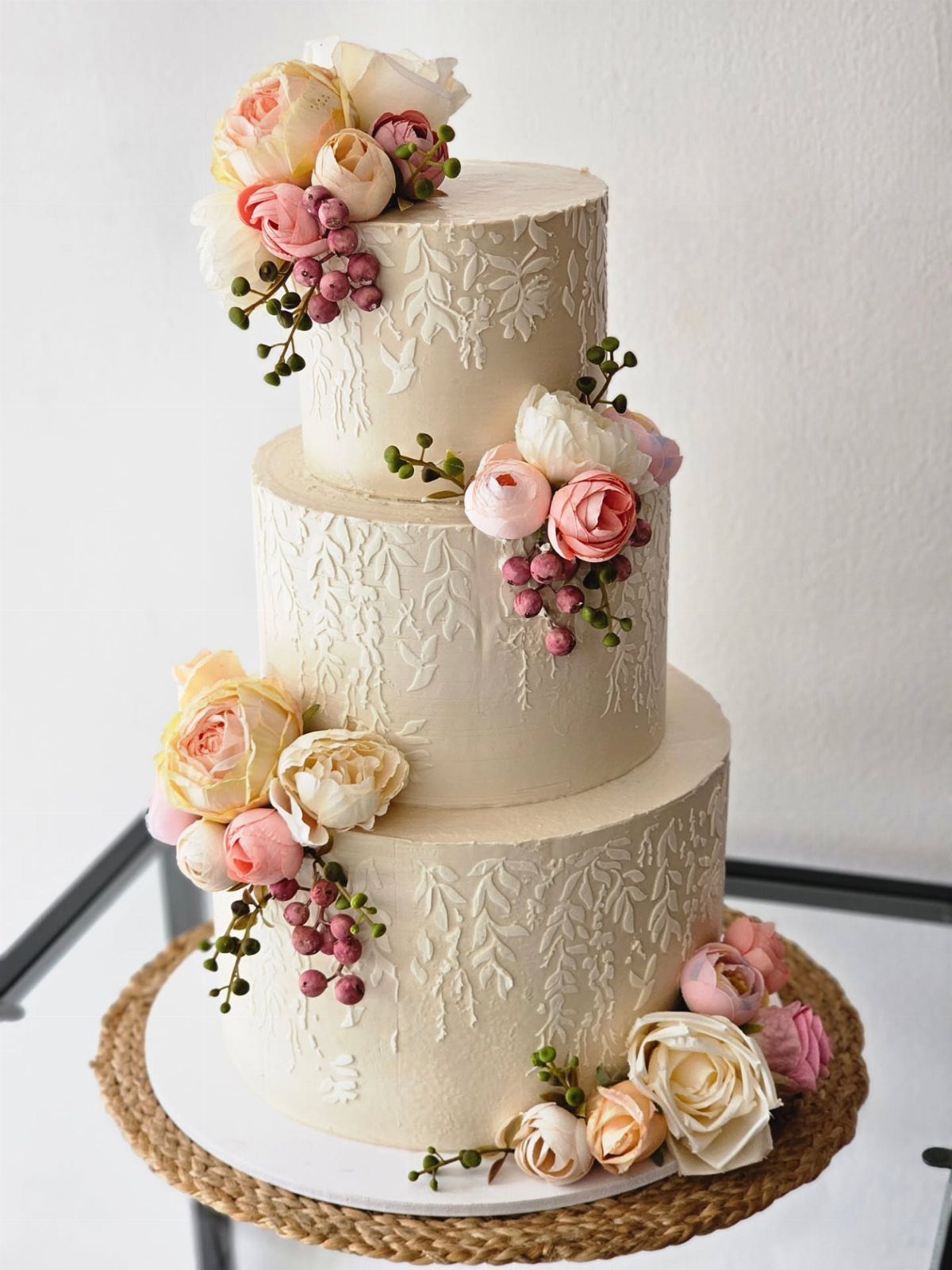
A floral topper turns the highest point of your cake into a small bouquet.
I like this for couples who want color without committing flowers to every tier. The decorator clusters roses, berries, and softer filler blooms so the arrangement reads as one shape from a distance.
If you are using a traditional bride and groom figurine, the flowers can frame it or sit slightly offset.
On simpler cakes, the topper carries the whole floral statement alone. Either way, ask your florist to build the cluster on a small base or pick so your baker can anchor it securely into the top tier.

Elegant and Stylish: Our boho cake topper is the perfect decoration accessory for any celebration, featuring a beautiful combination of 33 pieces of stunning silk cloth and dried pampas grass flowers cake topper

Soft and Elegant Color Palette: This 3Pcs Pre-made Cake Flower Set is beautifully designed with a blend of dusty pink roses, white roses, light pink roses, and delicate pink flowers. The soft, muted tones create a romantic and sophisticated feel, perfect for a wide range of events, including weddings, birthdays, baptisms, or baby showers.
2. Flowers Between Tiers
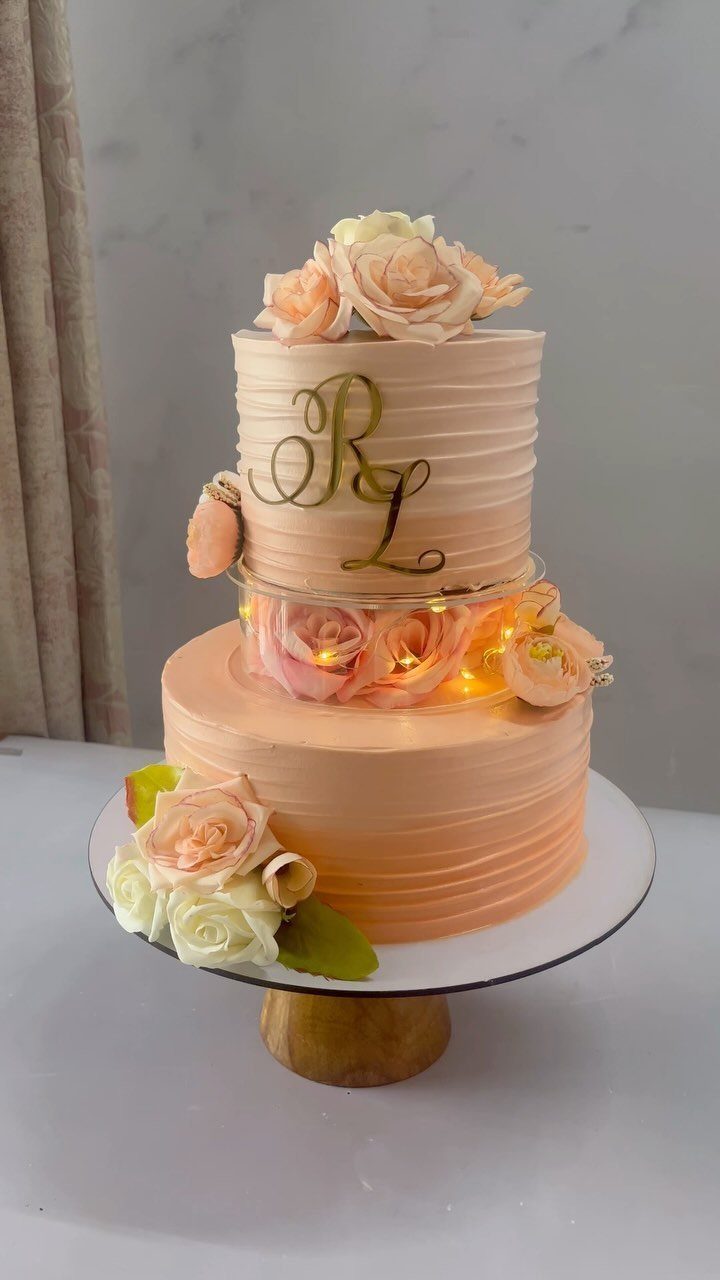
Clear separators between tiers turn the gap itself into a vase. Pink roses and fairy lights inside a cylinder give height and drama without adding extra cake servings.
This is where I would put money if the venue has high ceilings or the cake table sits in a corner that needs drawing out.
If your baker does not use separators, the same effect works flatter: flowers tucked into the crease where tiers meet, almost like a ruffle of blooms.
Check that your florist uses water picks for any fresh flowers in contact with frosting.

Elegant & Versatile Display – The acrylic cake stand Showcase your cakes, cupcakes, desserts, or even jewelry, flowers, and gifts in this stunning transparent acrylic cylinder. Perfect for weddings, birthdays, baby showers, and holiday parties.

CREATIVE DIY PERFORMANCE - The cake tier can be filled with a variety of creative decorations to create stunning centerpieces. The fillable cake stand display box with Lid can be filled with colorful flowers, confetti, small toys, cookies, candies, balloons, confetti, desserts, or other creative and stunning decorations, etc., It is perfect for weddings, birthdays, party scenes, and more

Plastic Cake Separator Plates: The cake separator plates come in 4 different sizes including 3.5”, 4.7”, 6.2”, 7.8” which is designed for 4, 6, 8, 10-inch cakes, creating a sense of hierarchy; In order to look good, the diameter of the cake plate should be smaller than the cake.
3. Buttercream Cake with Flowers
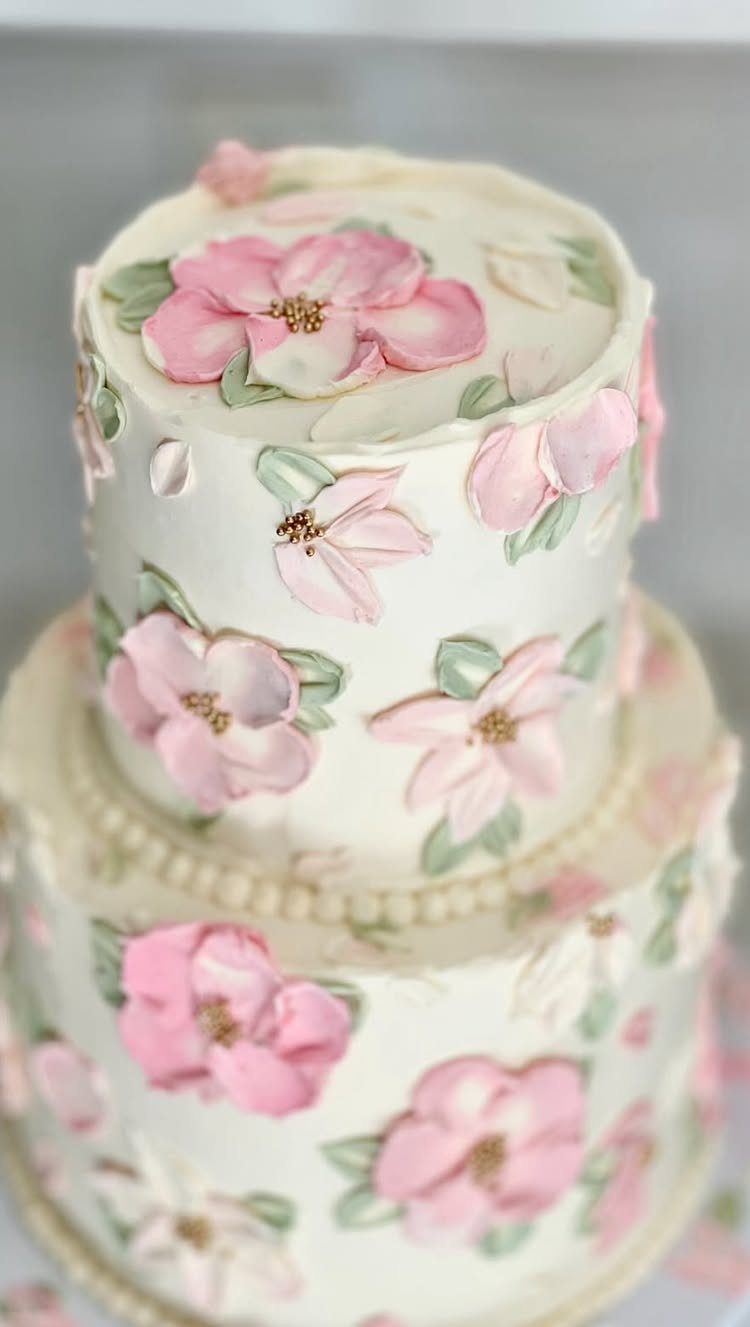
Rough buttercream gives flowers something to hold onto.
Palette-knife texture catches light in ridges that make piped or fresh blooms look planted rather than placed. I would choose this for a spring wedding where the cake should feel garden-picked, not gallery-perfect.
The finish is forgiving, which matters if your baker is working in humidity or transporting the cake any distance.
Ask to see a sample of their buttercream texture first; some run thinner and lose the ridge definition that makes this style work.
【Palette knife set】 5 styles of painting supplies knife can meet your different painting needs, so you can create at your own pace.

ARTIST PALETTE KNIFE: 12.75'' W x 6'' H x 0.5'' D, 5 Pieces Set includes 1-each of all 5 Standard Paint knife Styles.Every spatula has one individual package in case the entire safety. This high quality knife has been crafted with the finest stainless blade that resists all wear and corrosion from any media including acrylics

ARTIST PALETTE KNIFE: 10Piece Set includes 1-10each of all Different Paint knife Styles.This high quality knife has been crafted with the finest stainless blade that resists all wear and corrosion from any media including acrylics.
4. Fruit & Flowers
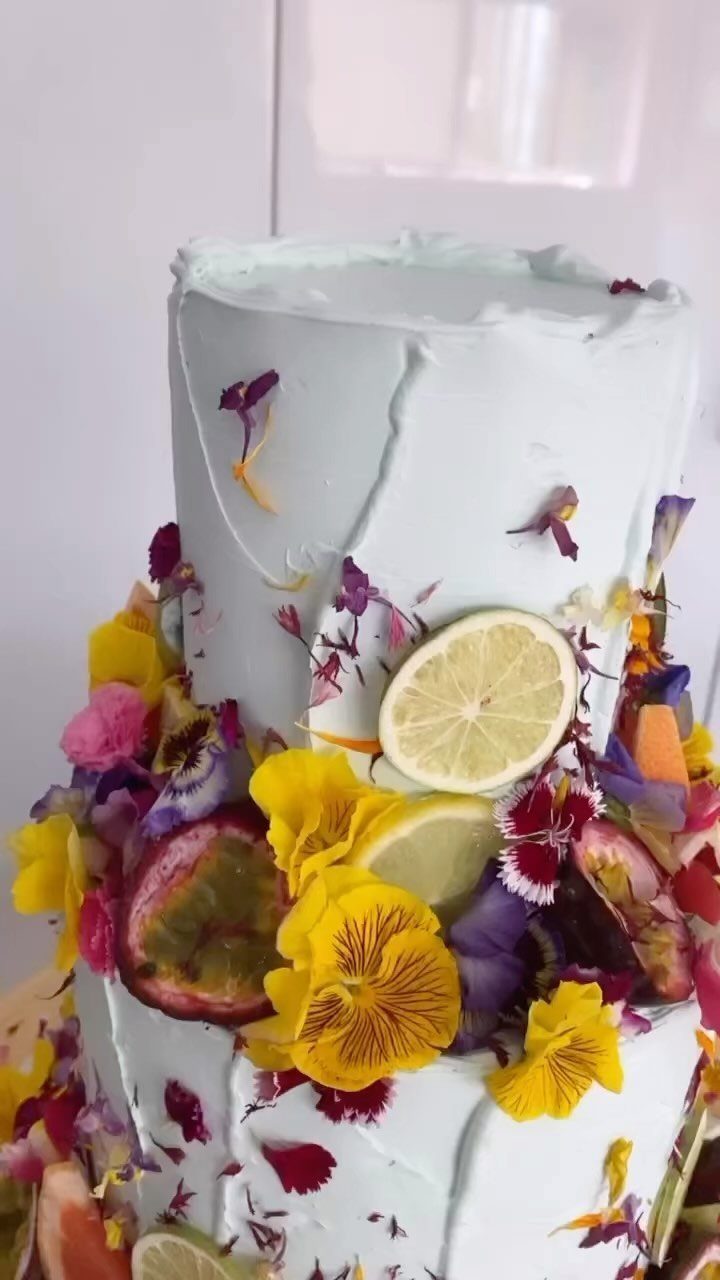
Dried fruit and edible flowers do 2 jobs at once. Passion fruit halves and lemon slices give guests a preview of flavor before the cake is cut, and the scent carries across a reception table better than flowers alone.
I would use this for a summer wedding or any menu that leans citrus or tropical.
The fruit needs to be truly dried, not fresh, or it weeps into the frosting. Pansies and other edible blooms are safe to serve; decorative-only flowers should be flagged for the catering staff so no guest mistakes them for garnish.

🍰 【Edible Flowers for Cake Decorating & Dessert Toppings】- Perfect edible flowers cake decorations, cupcakes, cookies, cake pops, and plated desserts. Ideal flower cupcake toppers, cake decorations flowers, and edible decorations for treats.

🌸 100% Natural Strawflowers: These edible dried strawflowers are naturally grown without additives, and carefully dried to preserve their bold structure, rich color, and food-grade safety

The product includes:20 Pcs resin flower cupcake toppers. These flower are very nice and enough quantity for your use.
5. Cascading Flowers
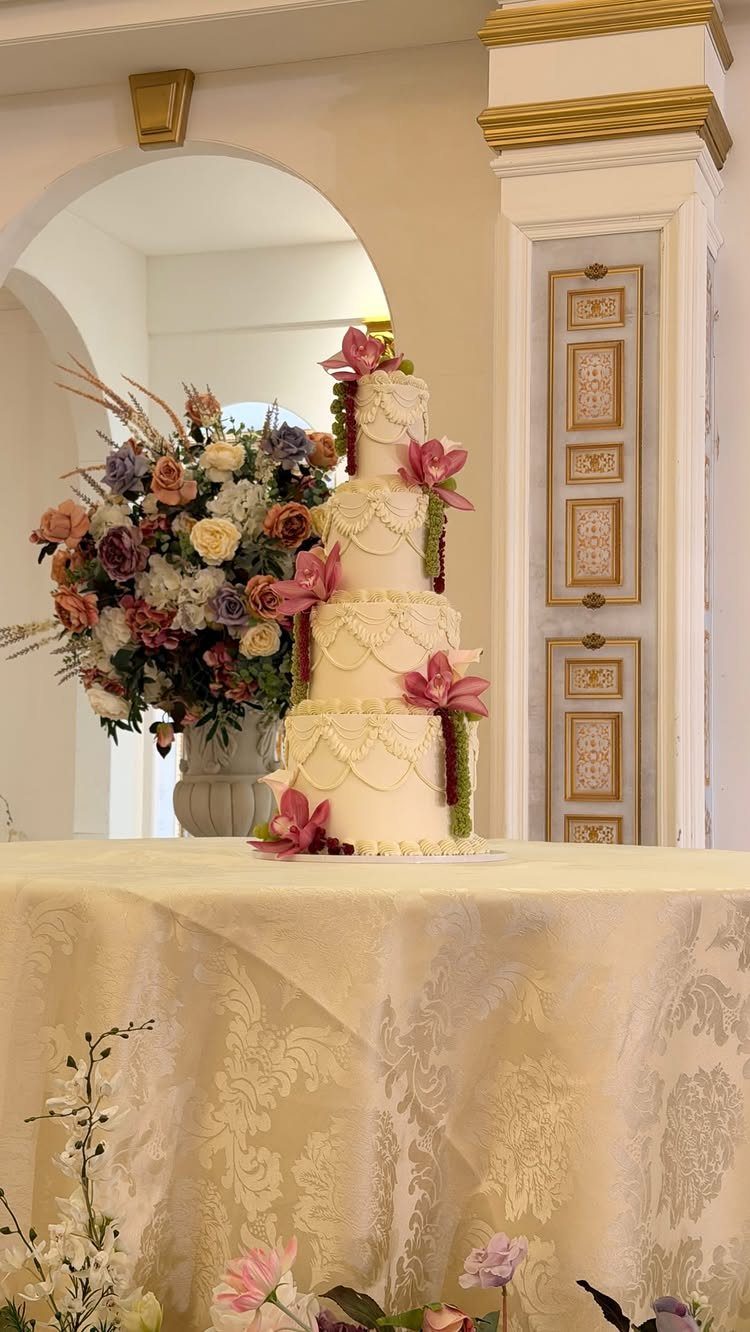
Cascading flowers follow the eye down. Starting from the top tier or just below it, orchids and trailing amaranthus curve in a single line that makes a tall cake feel taller.
This is the choice when you want movement without busyness; one strong cascade reads cleaner than flowers dotted everywhere.
A spiral down a four-tier cake takes planning.
The florist and baker need to agree on where stems anchor, especially with heavier trailing elements like orchids and amaranthus. Ask for a sketch showing the curve from your seated guests’ angle, not just straight on.

Use these spikes to hold real and silk blooms on your cakes Just push the spike down into the cake and add flowers for a perfectly placed decoration The floral water tubes...
6. Scattered Flowers
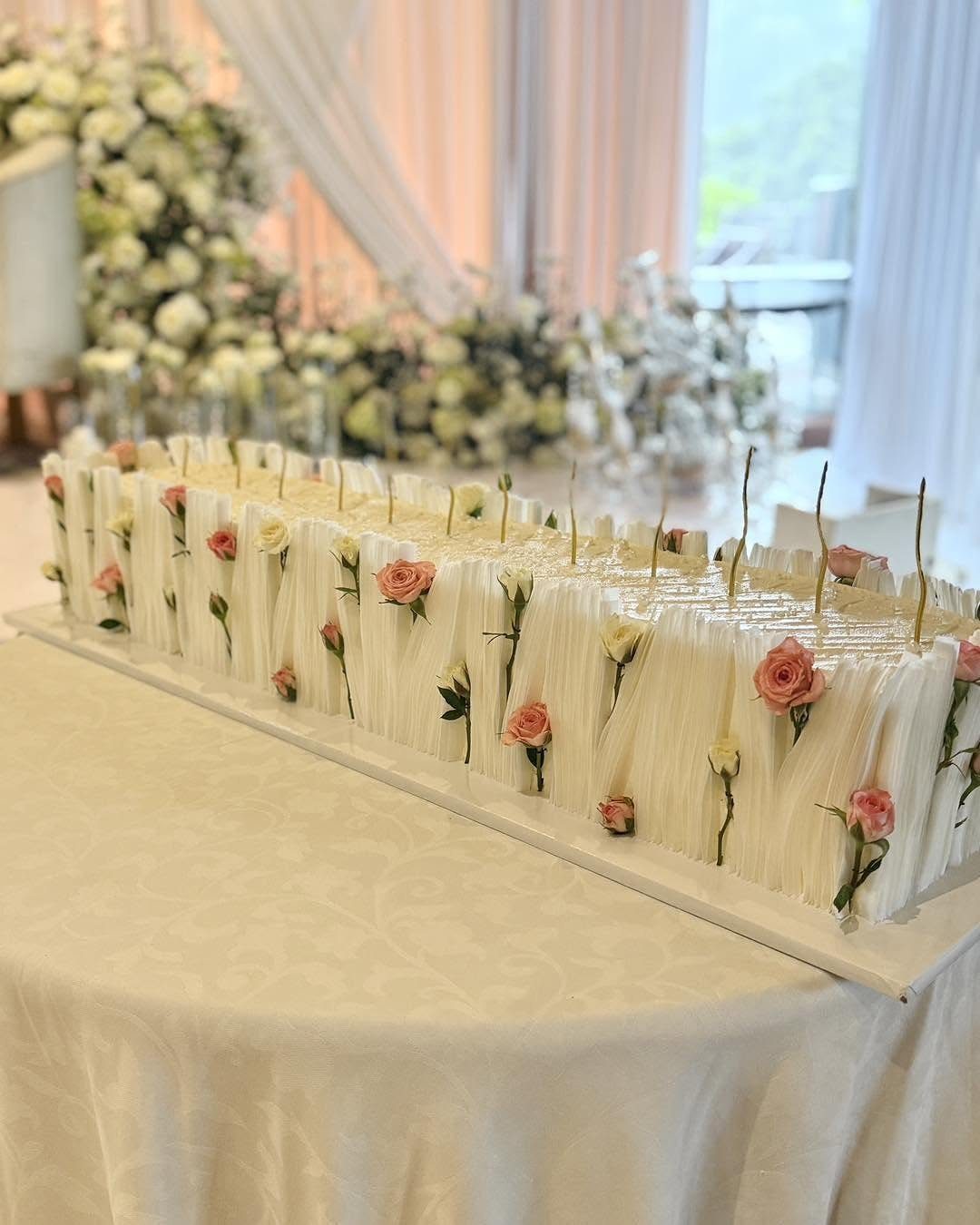
Scattered blooms suit a small cake that would disappear under full coverage.
A rectangular cake with just enough roses marks it as a wedding cake, not a dessert buffet option. I would use this for a micro-wedding or a cutting cake paired with sheet servings in the kitchen.
Larger individual flowers work best here; small buds look accidental rather than intentional. If your flower budget is tight, scattered petals in a matching tone stretch the look without the per-stem cost.

Package included: 2Pcs Artificial large white roses,14pcs artificial green eucalyptus leaves which meet your white theme party decoration needs, which make your party more interesting.

Wedding Cake Flowers: Package including 4 pieces of artificial flower cake toppers, 2 different styles, These artificial flowers that replicate the look and feel of real flowers, ensuring a lifelike appearance. The romantic and timeless beauty of roses brings a touch of sophistication to any wedding cake design.

7. Tropical Flowers
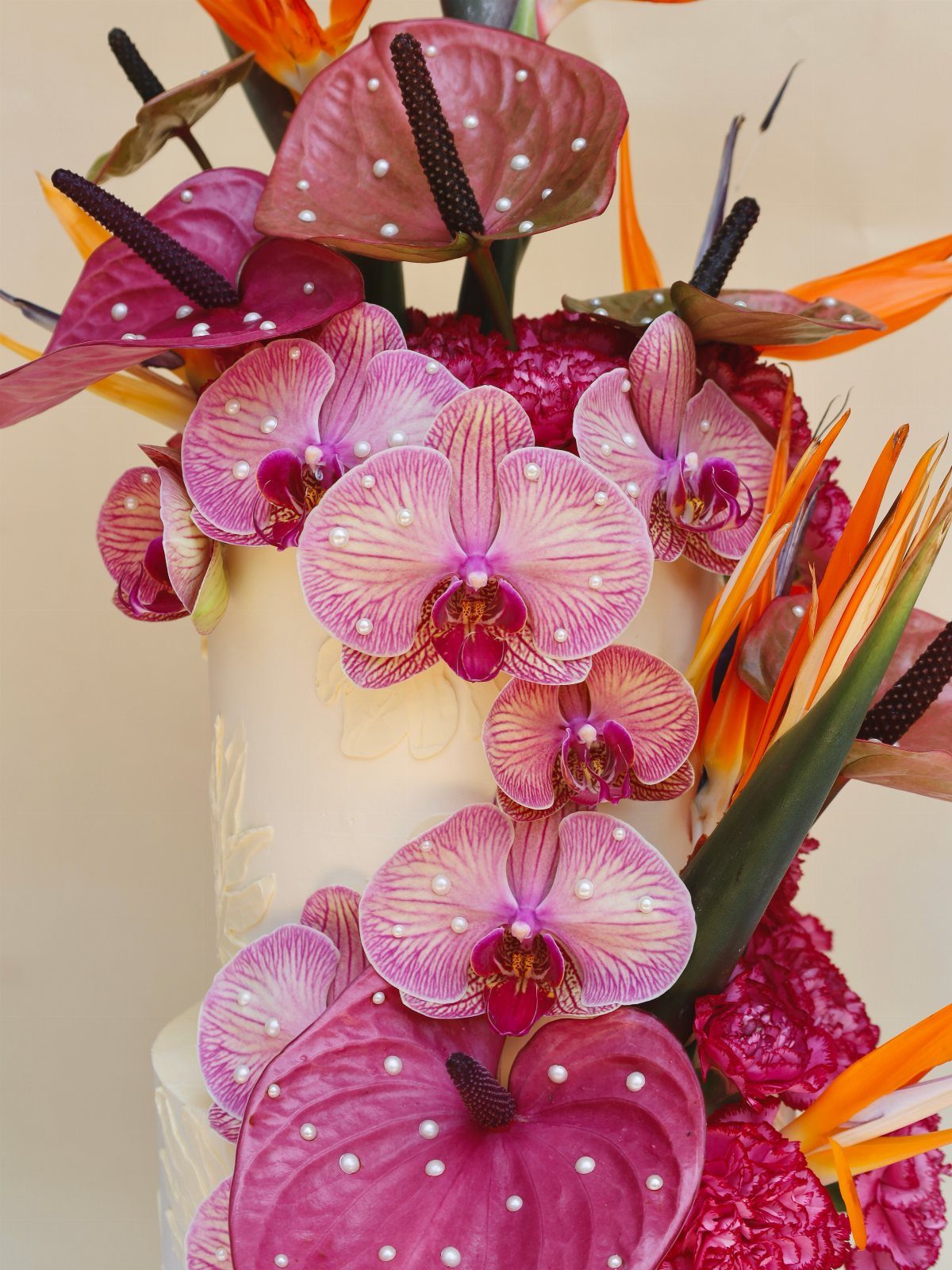
Tropical flowers read as color first, variety second. Orchids, anthuriums, and bird of paradise carry enough punch that you do not need many stems to make the cake hold its own against a busy reception room.
I would choose this for a summer wedding where the rest of the decor already leans bold.
The leaves matter as much as the blooms.
Broad monstera or palm fronds give the florist something to build against so the flowers do not float. A smooth fondant finish gives tropical elements space to stand out without competing texture.

【3Pcs Cylinder Stands for Party】This clear cylinder pedestal stand set includes 3 freestanding sizes: 23.62 x 12.99 in, 21.65 x 11.81 in, and 19.69 x 10.24 in (H x D); arrange the round cake display stands together or separately for layered presentations

【Package Included】The package contains 12 pieces white cake sticks support rods, 4 pieces cake separator plates and 12 pieces clear cake stacking dowels, sufficient quantity and nice combination to make your cakes more beautiful.

Durable Plastic Construction: Made from durable plastic that is oven safe and can withstand stacking for cake decorating.
8. Dried Flowers
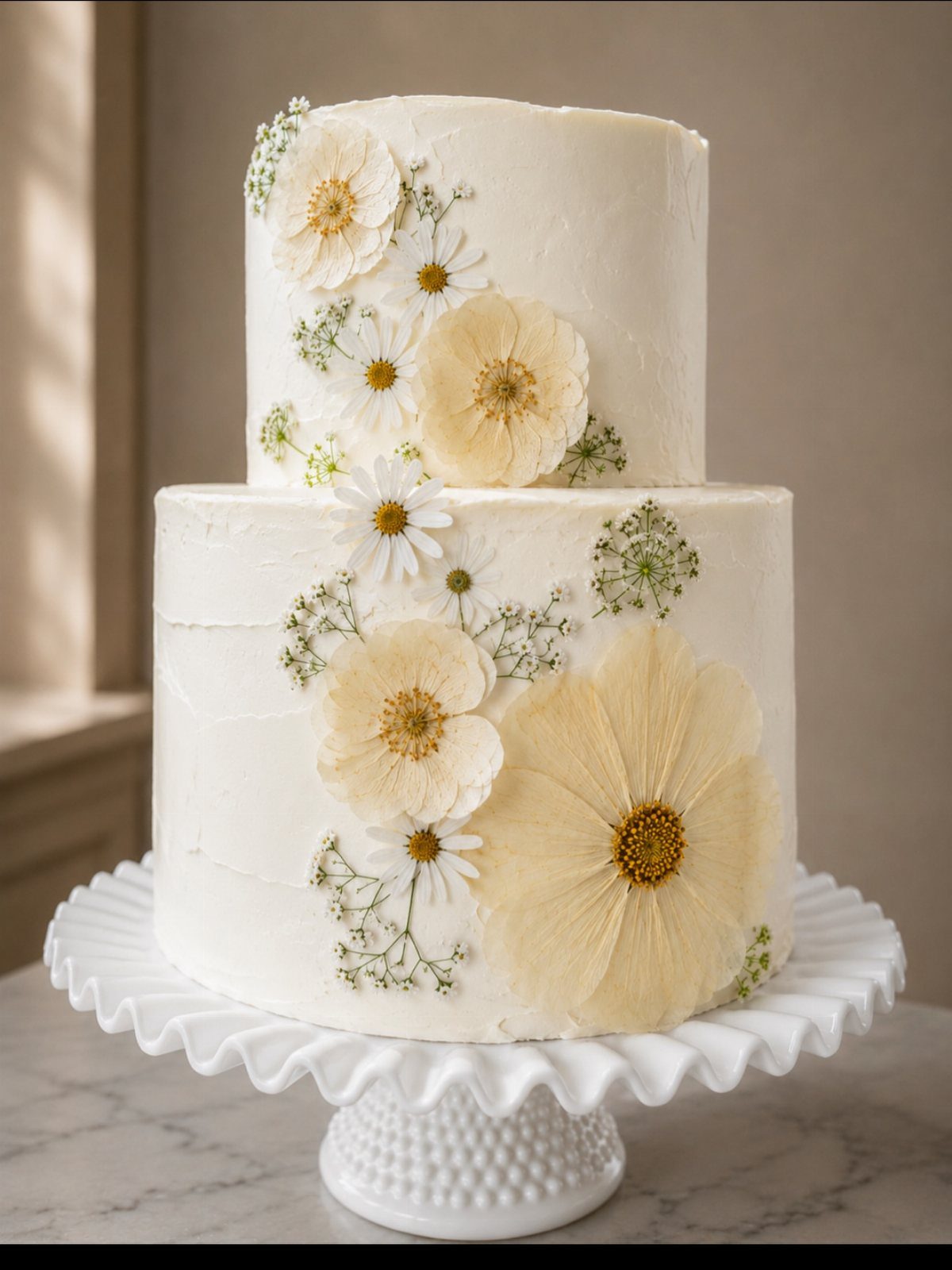
Dried flowers stay where you put them, which is more than you can say for fresh blooms in August heat.
They also keep after the wedding if you want to save the top tier display. I like this for couples who prefer a quieter palette; creams and muted greens age better dried than bright colors do.
The texture is brittle, so placement happens late, ideally on site.
Your florist should seal the stems to prevent shedding onto white frosting. Pressed flat, dried flowers read almost as pattern rather than bouquet, which suits a smaller cake that cannot carry full dimension.

Excellent Blades: The material of blades is stainless steel, good elasticity, can resist all wear and corrosion from any media including acrylics, you can use it long time.


● SET OF 9: This set includes 9 Flower Art Scraper Texture Knives, perfect for creating unique textures in your artwork.
9. Baby’s Breath Border Cake
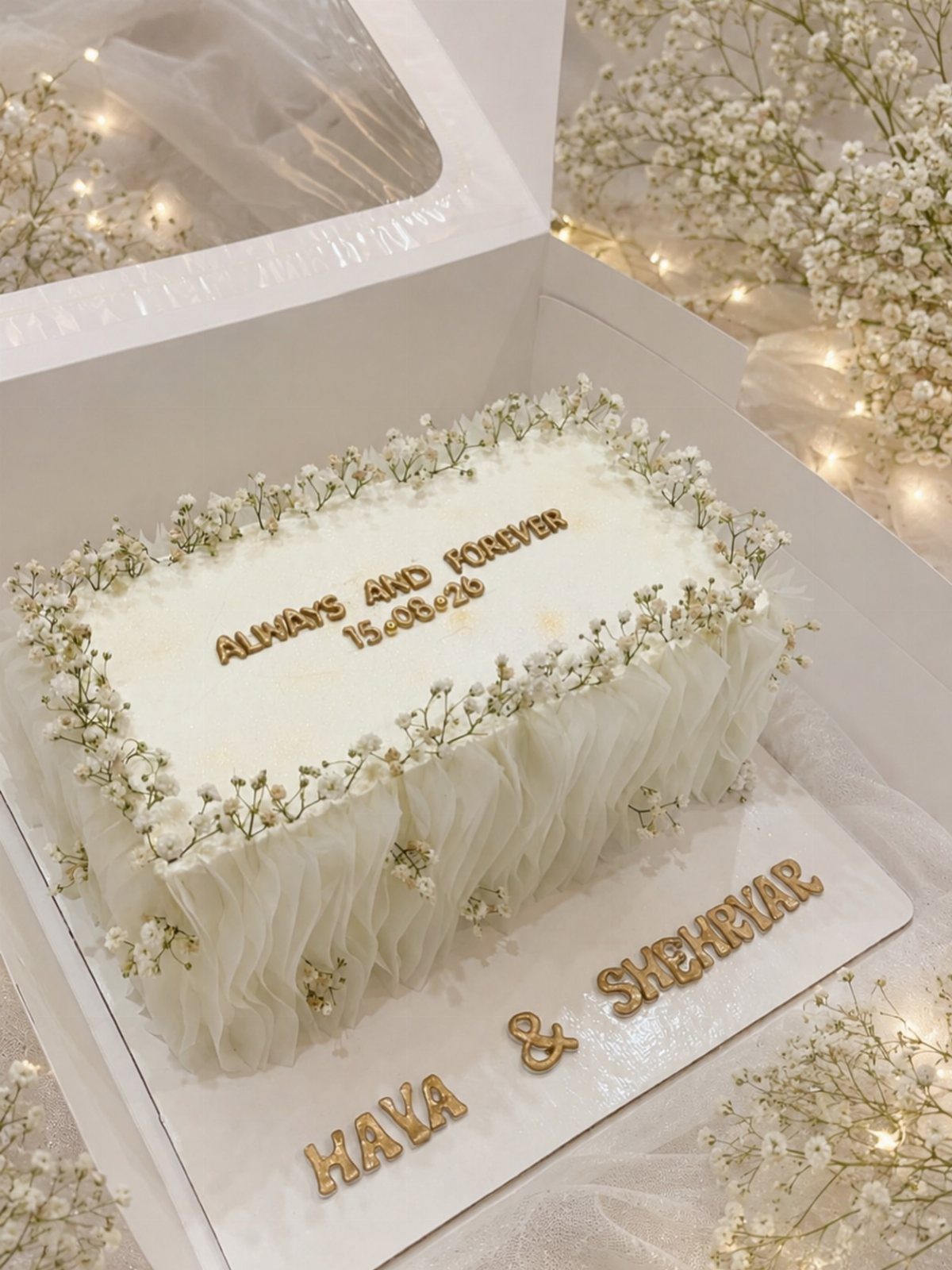
Baby’s breath borders turn a simple rectangular cake into something ceremonial without crowding the surface you need for lettering or a date.
The tiny blooms read as texture from guest distance, not individual flowers. I would check that your baker can source stems short enough to lie flat; long cuts stick out and break the line.
A ruffled box base adds its own texture, so the baby’s breath border stays single and spare.
If your cake sits without a frame like this, consider doubling the row of baby’s breath so the edge reads clearly against the table.

Decorative white rose-shaped edible toppers add an elegant floral finishing touch to cakes, cupcakes and other desserts without the work of creating flowers by hand.

📏 60+ Sprigs, 1.1oz Ready to Style – Each tin includes about 60+ edible lavender sprigs, approx. 1.1oz (30g) and 6.69 inches long, ideal for cocktail garnish, drink styling, desserts, tea and small gatherings

Premium Pink Strawflowers: Our edible pink dried flowers are handpicked at full bloom and gently dried to preserve their soft color and classic strawflower shape. Natural, food grade, and made to elevate desserts and drinks with a refined floral touch
10. All-White Floral Cake
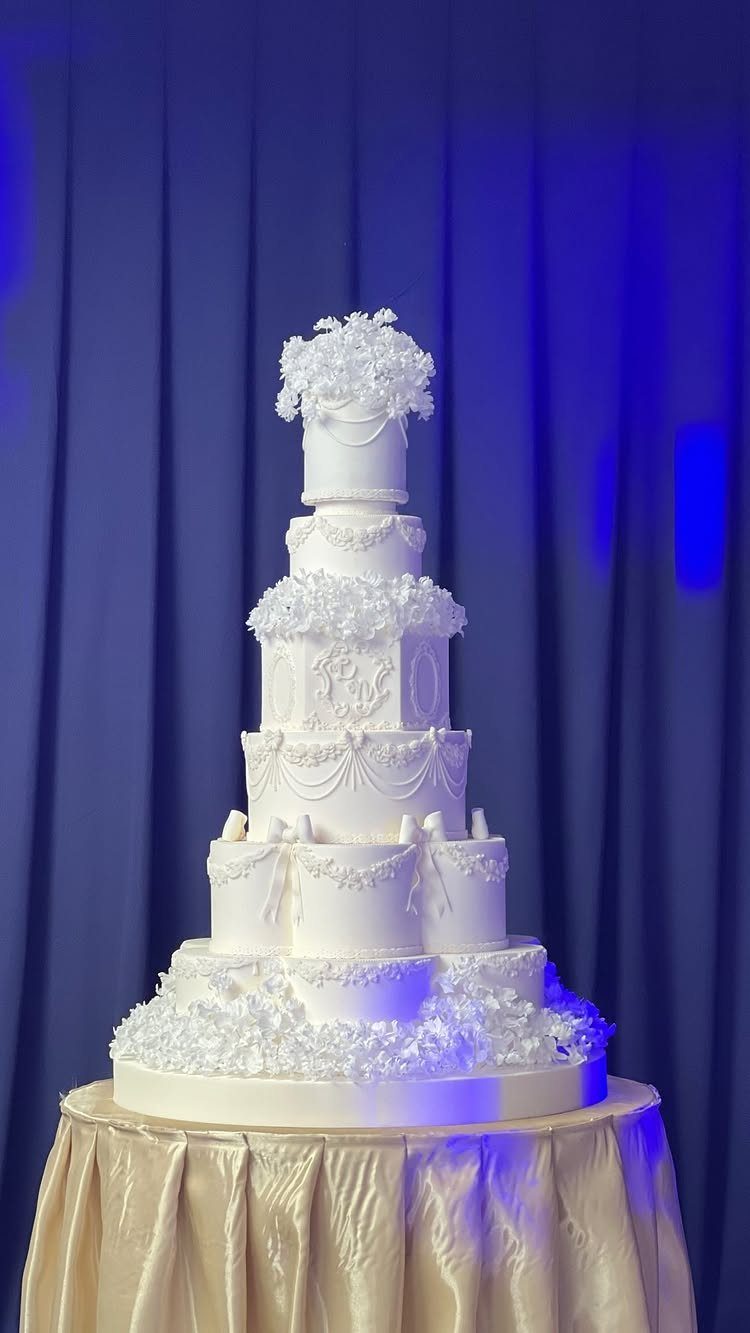
An all-white cake lives or dies by its shadows.
Without color contrast, the eye catches on depth: how far the sugar flowers project, how the light falls across piped garlands, whether the tiers vary in height enough to create rhythm. A tall build gives that variation room to work.
Sugar flowers cost more than fresh and take longer to arrange. The trade is permanence; they do not wilt, droop, or stain frosting.
I would put money here only if the cake stays on display through the full reception. For a quick cutting and kitchen serve, fresh white roses at half the labor make more sense.
11. Monogram Wedding Cake with Flowers
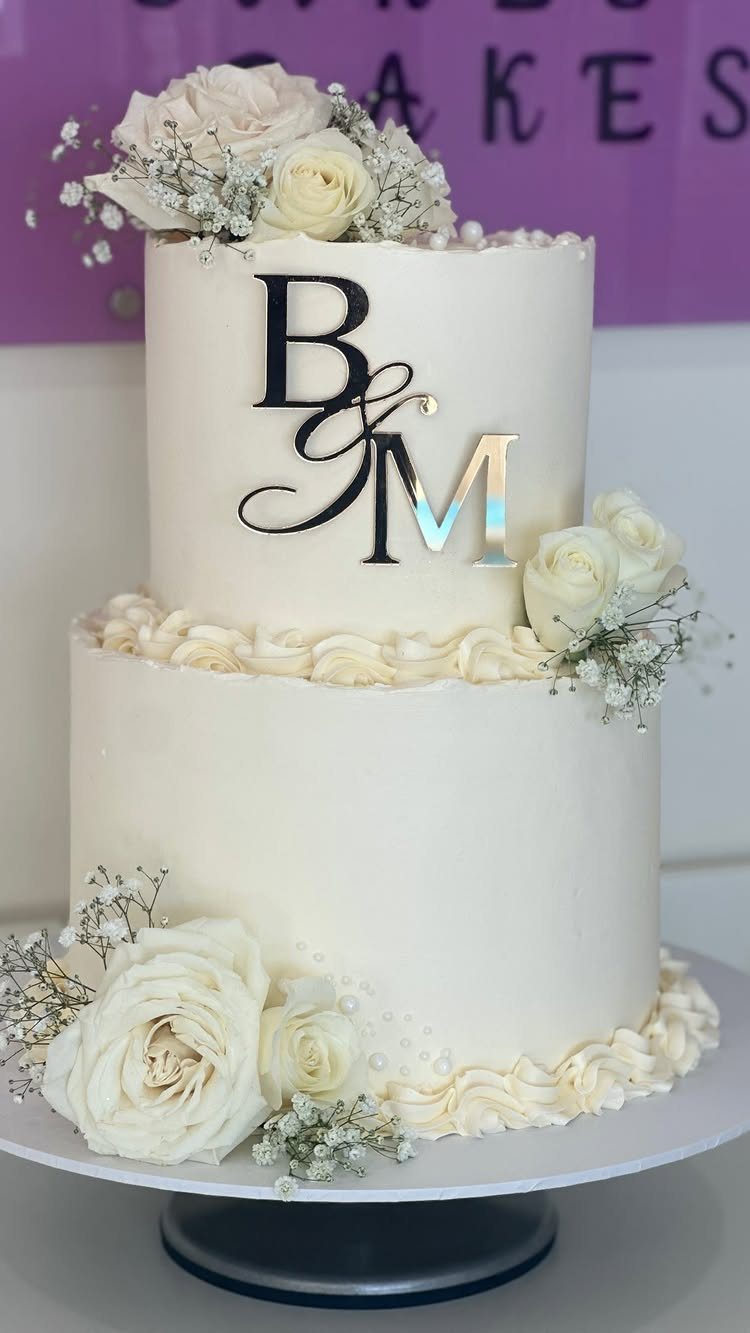
A monogram gives guests something to read, which matters when the cake sits in a large room where not everyone will pass close enough to notice flower varieties.
Silver or metallic initials catch light differently than frosting; they become a focal point the blooms frame rather than compete with.
The two-tier build keeps the monogram proportionally large, which I prefer to initials lost on a four-tier surface.
Ask your baker about the backing; the letters need slight elevation or a thin plaque so they do not sink into soft buttercream during display.
Fresh roses and baby’s breath are easy to swap if your florist has supply trouble close to the date.
12. Pressed Edible Flower Wedding Cake
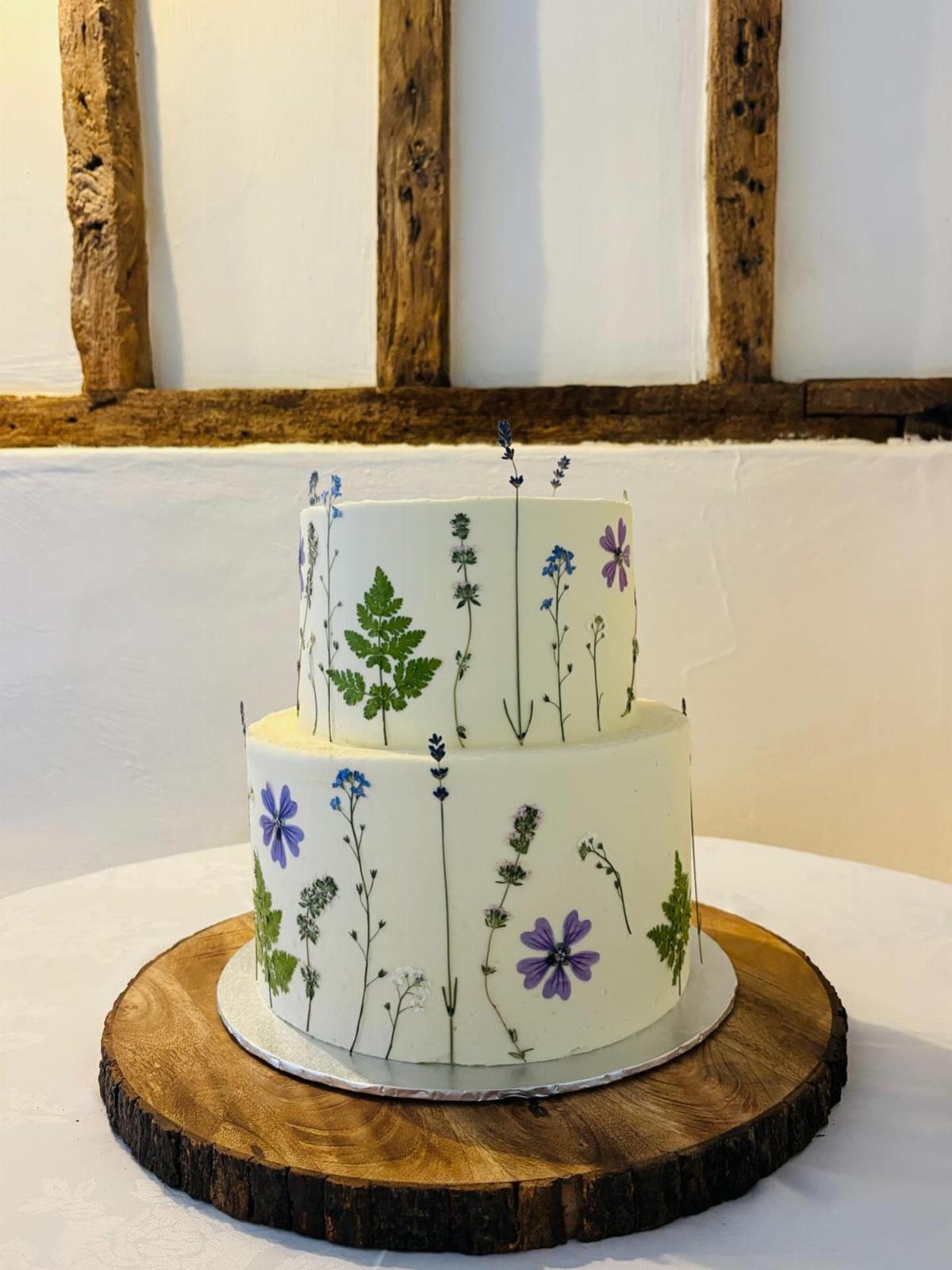
Pressed edible flowers lie flush against the frosting, which makes this the most integrated floral look you can get. The blooms become part of the surface rather than sitting on top of it.
I would choose this for a small wedding where guests will actually see the cake up close, since the detail does not carry across a large room.
The flowers must be edible and food-safe, which limits your palette; many common wedding blooms are toxic.
Your baker or a specialty supplier can source pansies, violas, and certain herb flowers. Apply them the day of, not before, or the moisture in the frosting shifts the petals from the pressed shape you chose.
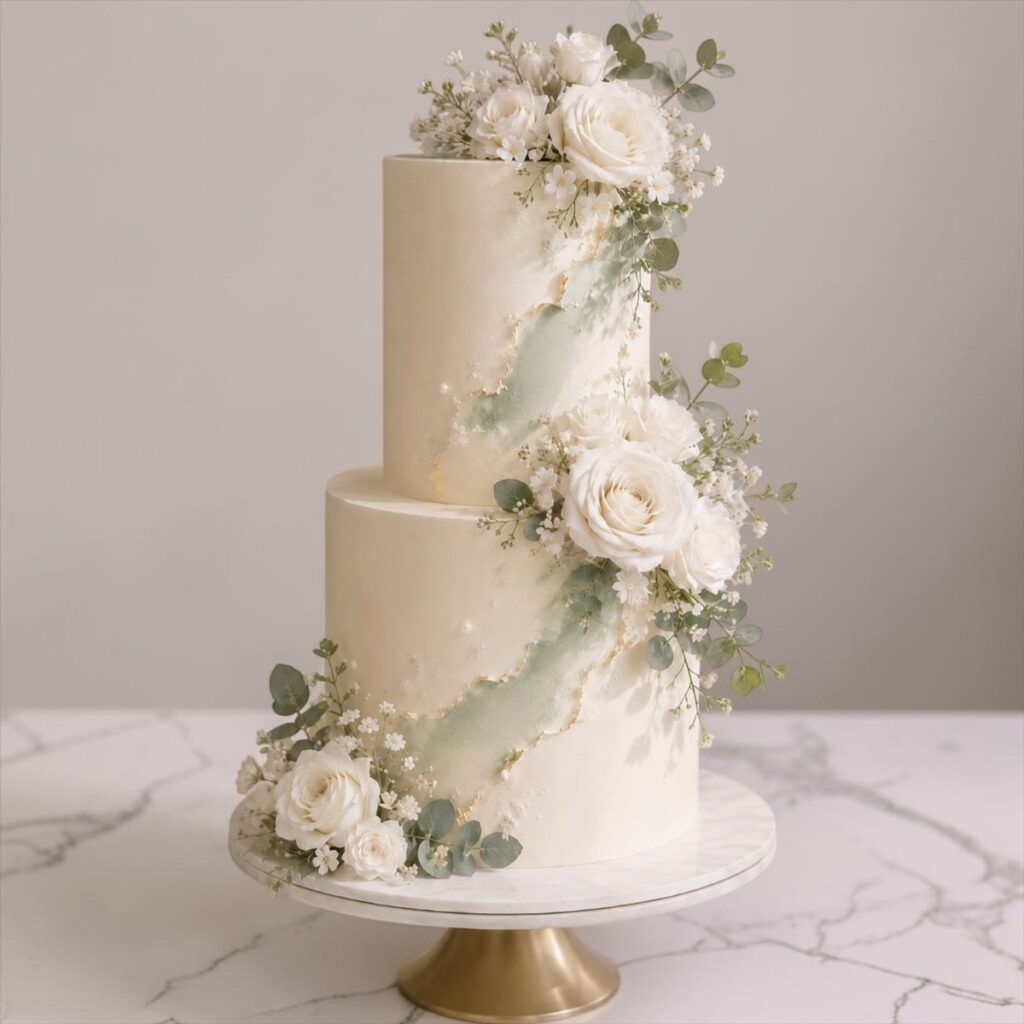
13. Ombre Floral Wedding Cake
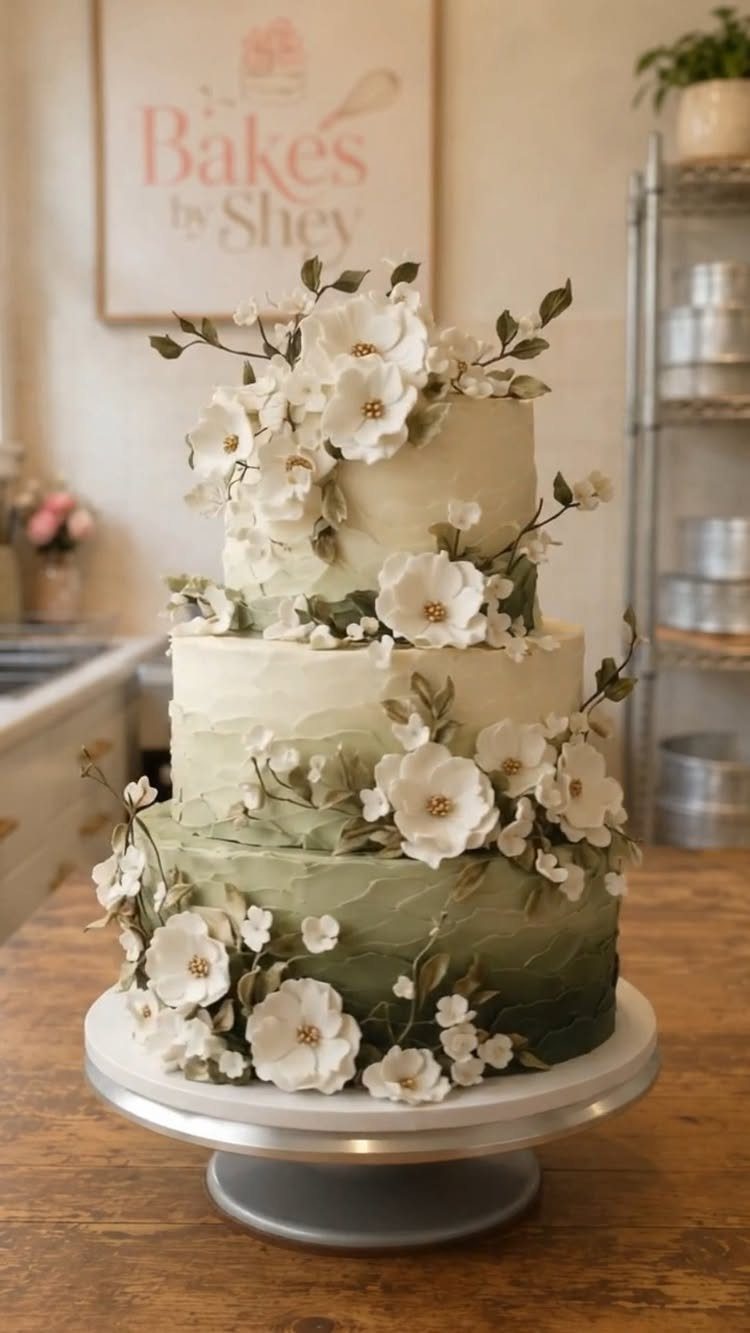
Ombre frosting shifts color from pale to saturated across the tiers, which gives flowers a built-in background to read against.
A green-to-white ombre cake reads cleaner when sugar flowers match the exact tones; fresh blooms bring their own color variations that compete with a precise gradient.
I would keep the flowers single-color, whatever shade sits at the light end of your ombre. Your baker needs to smooth each tier carefully, since the color transition draws the eye to any flaw in the surface.
Ask to see a dummy cake first; ombre takes more time to build than solid color, and not every bakery prices it the same.
Safety of Flowers
Fresh flowers on a cake need the same scrutiny as anything else on the plate.
Many common wedding blooms, hydrangeas and lilies among them, carry toxins that can transfer through pollen or sap even if no one bites the petal. Pesticide residue poses the same risk on otherwise safe varieties.
I always ask my florist 2 questions: were these grown without spray, and are they cleared for food contact? The answer to either one being no means the flowers stay off the cake.
Stems never go directly into frosting.
Hidden plastic picks, available from any bakery supply, create a barrier between plant tissue and what guests will eat. I also flag the cake for catering staff so flowers get removed before slicing, not passed onto plates as garnish.
Presentation Tips
Carrying the same blooms from your bouquet onto the cake ties the whole reception together without trying too hard.
Ask your baker and florist early who handles getting the flowers onto the cake; sometimes they talk directly, sometimes you or your planner ends up as the delivery service.
Freshness depends on temperature more than most couples expect. Keep flowers chilled until the moment of placement, and return the finished cake to refrigeration until display time.
Stem picks with tiny water tubes buy you a few extra hours before wilting sets in, but not every florist keeps them on hand so put in the request ahead of time.
The restraint of a single rose line or the abundance of mixed citrus and bloom both work; the common thread is that the flowers tie to the broader décor rather than floating as an isolated accent.
Decorating wedding cakes with fresh flowers is not as easy as it may seem. The couple, along with their baker and florist, needs to consider issues of safety and presentation when coordinating this type of floral motif.
Simplicity in Design
A cake heavy with piping, metallic leaf, or dimensional details fights its own flowers for attention.
Icing in a tone that matches the bloom color, with maybe a dot border or thin band at the tier base, gives the eye somewhere to rest.
Fondant filigree at the top of an otherwise plain white cake plays with height without crowding the floral cap.
The solid band at each tier base anchors the design; too many competing textures and the flowers stop reading as the point.
The goal is subtle drama, not minimalism for its own sake. A single pale pink rose surrounded by white spray roses carries more weight when the surface around it stays quiet.
Choosing Flowers
Start with your wedding theme and season, then test each candidate bloom against the food-safe rule. Roses, ranunculus, and certain edible varieties like pansies pass; hydrangeas and treated florist favorites do not.
Your florist knows which suppliers grow without pesticide; your baker knows which blooms have stained frosting in past orders. Both conversations matter.
If the baker and florist do not coordinate directly, confirm who transports what and when.
The safest choice is the one where every stem has been checked, every placement planned before the morning of.
Frequently Asked Questions
What are some different types of wedding cake?
You can arrange blooms in several ways: cluster roses and berries at the top, run flowers between tiers, let orchids and amaranthus spill downward, scatter a few on a small cake, or press edible varieties flat into the frosting.
Buttercream textures that grip fresh stems, tropical builds with oversized leaves, dried flower palettes, and all-white sugar-flower designs that rely on shadow rather than color are worth considering too.
How long will fresh flowers stay fresh on a cake?
Freshness depends on temperature more than most couples expect. Chill the flowers until you are ready to place them, then get the finished cake back into refrigeration until display time.
What kind of flowers are used on wedding cakes?
Roses, ranunculus, and certain edible varieties like pansies and violas are common and food-safe. Tropical cakes use orchids, anthuriums, and bird of paradise; quieter palettes favor baby’s breath or dried creams and muted greens.