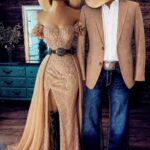
Brown groomsmen suits run from relaxed tan cotton-linen blends for summer mornings to formal dark brown flannel for evening ceremonies, with the venue’s lighting and season doing most of the deciding.
1. Brown Tailored Suit
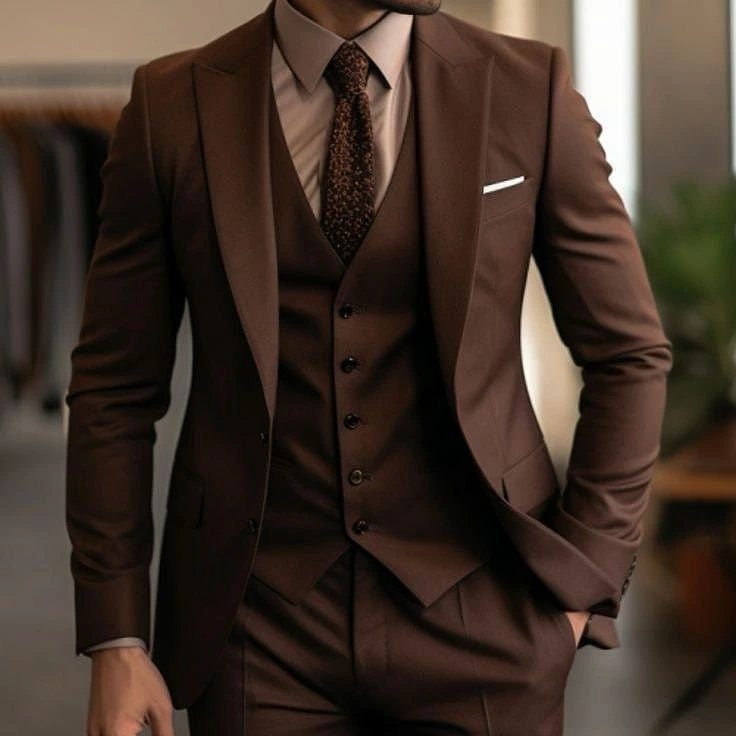
A tailored brown suit gives groomsmen the clean structure that photographs well without fighting the couple for attention.
A full brown three-piece, jacket, trousers and waistcoat in the same cloth, grounds itself with brown leather loafers and a white shirt that gives the eye somewhere to rest.
If your budget has room for one upgrade, put it into the tailoring.
An off-the-rack brown suit in a standard cut can look rental-grade; taking in the waist and shortening the sleeves at a tailor changes the whole presence for far less than the suit cost.
The matching waistcoat here is doing more than formality, it lets the groom lose the jacket later while the party stays coordinated.
White shirts keep the palette simple; patterned ones compete with brown in a way that reads busy in group shots.
2. Brown Three-piece Suits
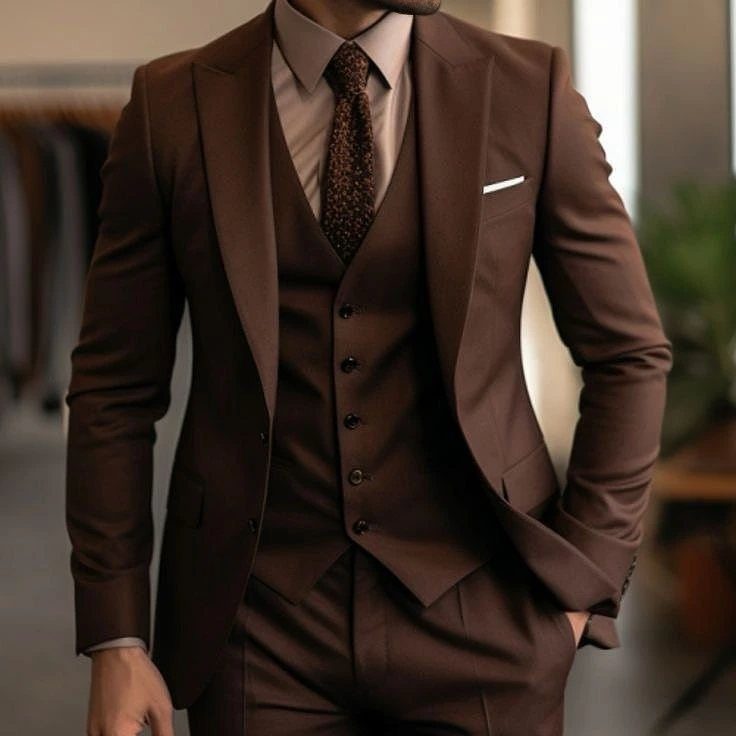
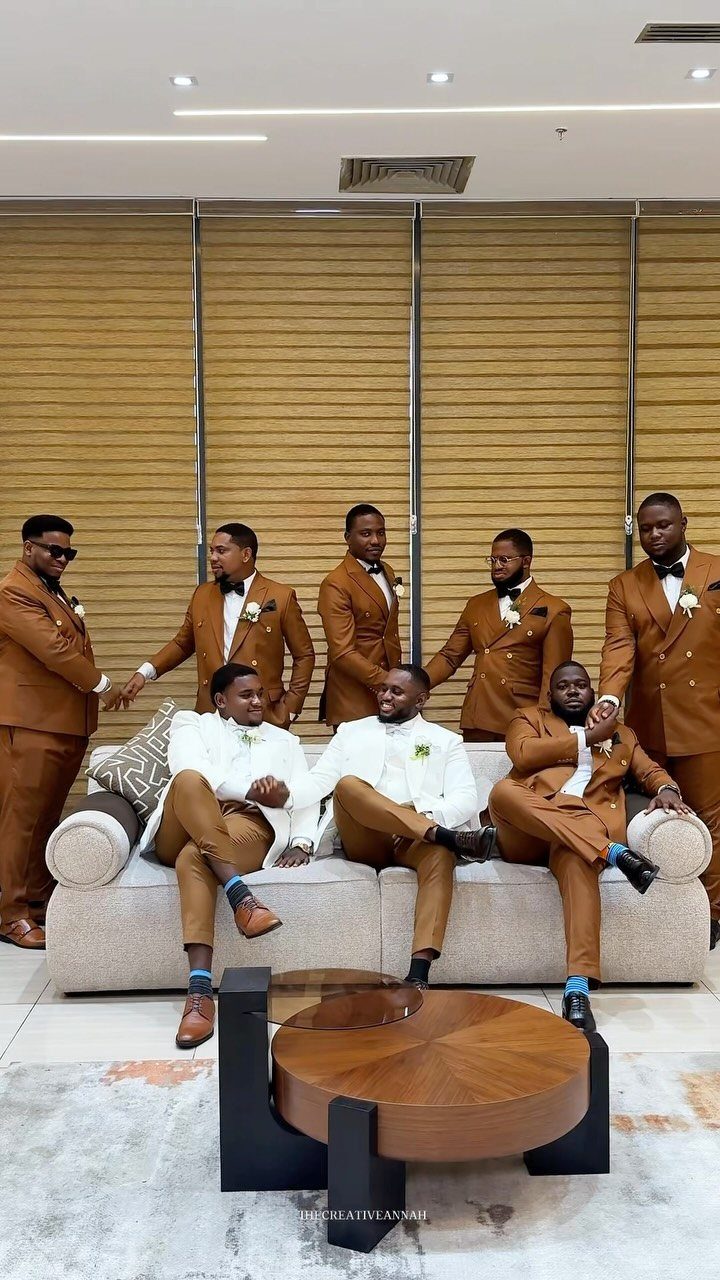
Three-piece construction adds a layer of visible intention that a standard suit does not carry on its own.
The waistcoat underneath means the jacket can come off during the reception and the look still holds together, which matters for outdoor summer weddings where groomsmen end up carrying their coats.
Cognac and taupe both sit in the brown family without demanding exact matching across the party; one groomsman in a deeper shade and another lighter reads as range rather than error if the cut stays consistent.
The cream patterned waistcoats in one of the reference sets show how to introduce contrast without leaving the palette: the vest becomes the accent instead of a pocket square or loud tie.
Fabric texture matters more here than in two-piece suits, since the waistcoat covers so much of the shirt. A subtle herringbone or birdseye catches light differently than flat weave and keeps the brown from reading as one solid block.
3. Dark Brown Suits
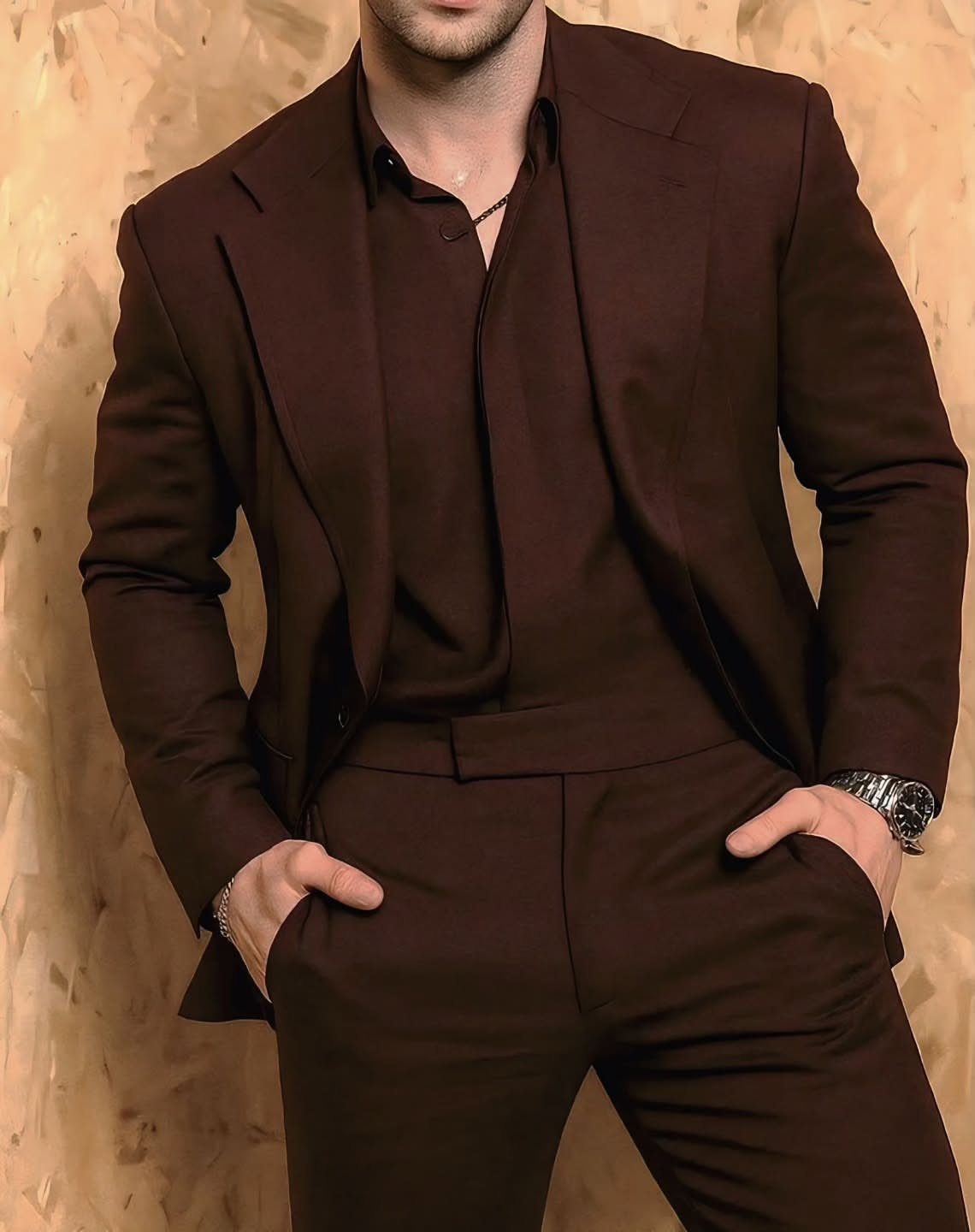
Dark brown carries more formal weight than mid-tone or tan versions, which makes it useful for evening ceremonies or venues with heavier architecture.
The depth of color does its own contrasting, so you need less help from accessories; a matching dark brown shirt completes it without extra layers.
The risk is funereal, especially under artificial light. I would avoid black shoes here, they can push the whole look toward somber.
Dark brown leather keeps the grounding but stays in conversation with the suit color, and a pocket square in cream or pale gold adds a point of warmth that the camera picks up.
This shade also shows lint and dust more readily than lighter browns, so assign someone a lint roller for pre-ceremony touch-ups.
For warm-weather weddings, the heat absorption is real; dark brown in direct sun gets uncomfortable faster than tan, so time the outdoor portions accordingly.
4. Tan Suits
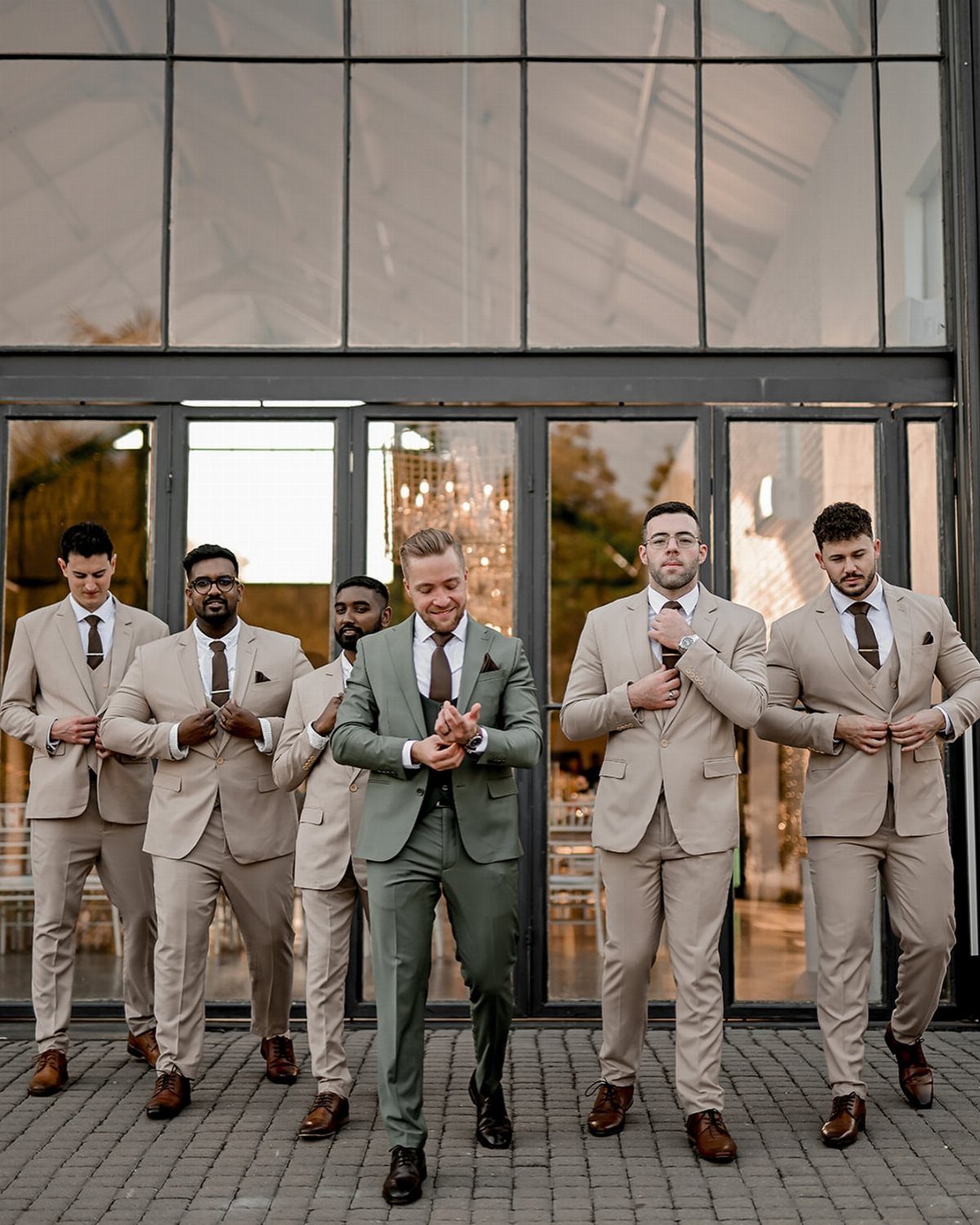
Tan sits at the light end of the brown range and reads as relaxed without slipping into casual.
Tan works for a daytime wedding with a glass-and-brick venue, where the color feels appropriate to that brightness; it would look washed out under dim chandeliers.
The pairing rules reverse here compared to dark brown.
Dark ties work better than light ones, they add definition against the pale fabric instead of washing out. Champagne silk or textured tan both stay in the family without matching exactly.
One caution: tan shows stains immediately, and groomsmen with coffee habits or small children in the party are higher risk. The fabric matters more at this shade, cheap tan polyester photographs with a yellow cast that tailoring cannot fix.
If budget forces a choice between better cloth and better cut in tan, choose the cloth; the color is doing so much of the work that inferior material has nowhere to hide.

Complete Elegant Look: Elevate your little man's style with our premium gentleman outfit. This coordinated set includes a short-sleeve button-down shirt, a tailored vest, matching shorts, and a fixed bow tie. A complete formal look that saves you time on styling

5-Piece Formal Suit Set: This set includes vest, dress shirt, pants, detachable suspenders and bowtie, designed for 18M-5Y, creating a stylish toddler boy wedding guest outfit as a lovely gift for little boys
5. Chocolate Brown Suits
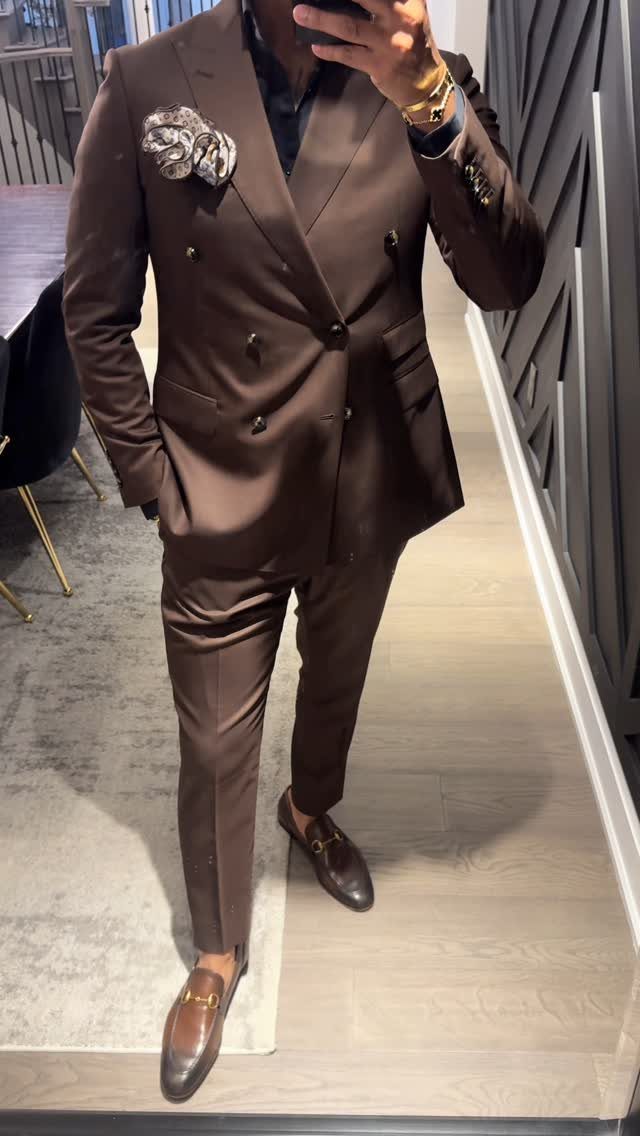
Chocolate brown carries enough saturation to register as special occasion without the formality of black or navy. A double-breasted cut pushes chocolate brown further toward statement; single-breasted would read more quietly for groomsmen who prefer not to feel costumed.
Texture is where this shade earns its keep. A flat chocolate suit can look like office wear in the wrong light; subtle weave variation, flannel weight, or a faint pattern keeps it occasion-appropriate.
Lighter accessories, pocket squares and ties in cream or champagne, work because they exploit the contrast against deep color rather than blending with it.
For a coordinated wedding party, chocolate brown groomsmen against a bride in white or ivory creates a warm frame that photographs more naturally than stark black-and-white.
The one tradeoff is versatility after the wedding; chocolate brown gets less reuse than navy or charcoal for job interviews or funerals, so groomsmen should know what they are buying into.

【COMFORT TODDLER DRESS SHOES】: Finished with soft leather upper vamp & pigskin footbed, these toddler dress shoes easy to clean. The material and edges felt soft enough to not cause any discomfort or digging Into toddler's ankles. The round toe doesn't squeeze your baby's toes. Lightweight allows children to walk or run effortlessly.

Classic single monk strap: one adjustable buckle for a secure, refined fit and easy slip-on wear.

Soft Full-Grain Leather: Crafted from selected cowhide, these dress shoes offer natural breathability and a sharp look. The supple leather naturally molds to your foot over time for custom, individual comfort.
6. Matching Waistcoats
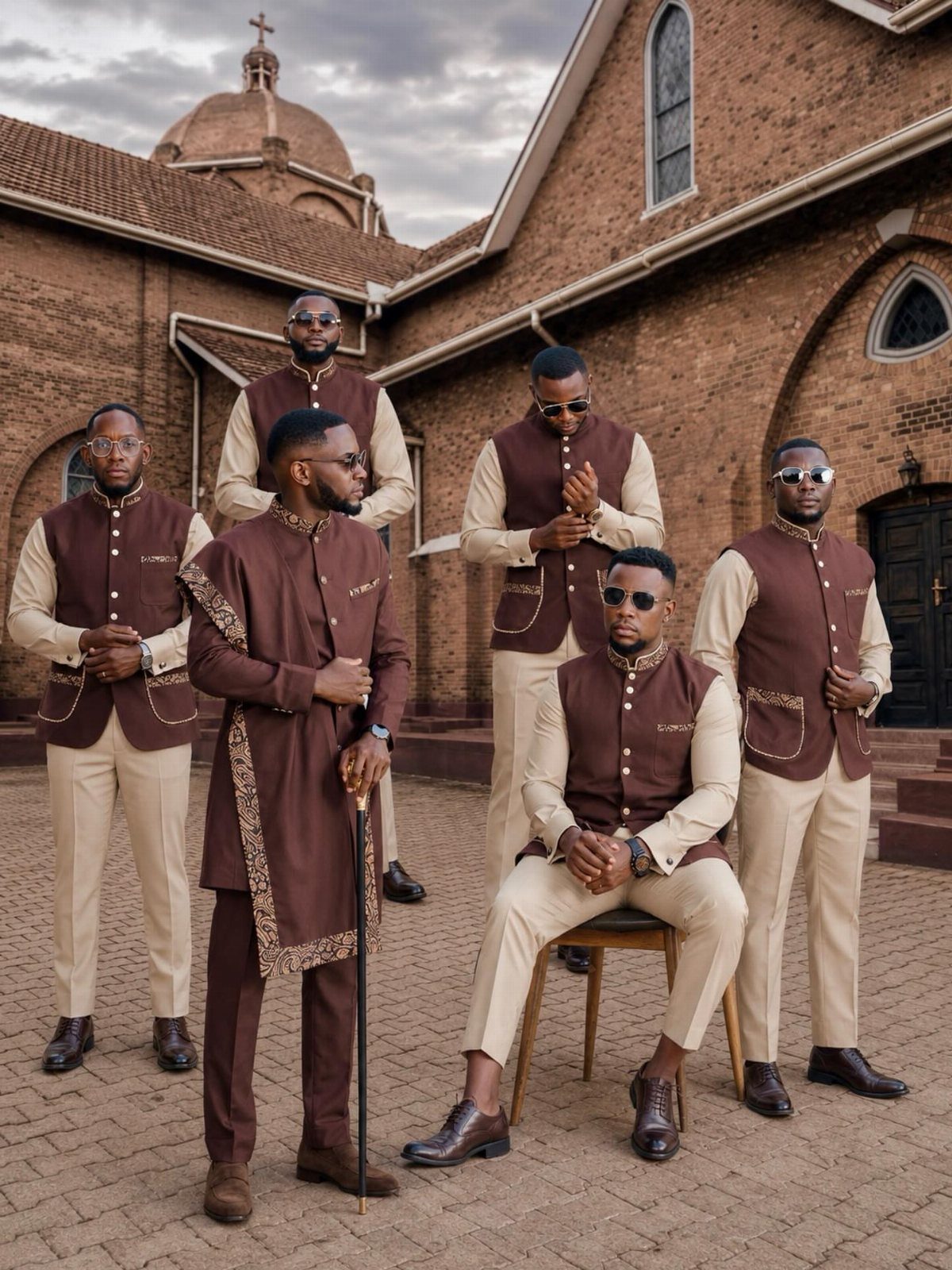
Matching waistcoats let you build formality without committing to full three-piece suits for every groomsman. Coordinating vests and trousers while varying the jacket keeps visual unity even if body types or budgets differ across the party.
The vest can match the suit exactly or sit one shade away as deliberate contrast.
Same-shade reads as traditional; complementary, like the tan trousers with darker vests in one reference set, adds depth and helps distinguish groom from groomsmen if the groom wears the full three-piece.
Fit is harder here than with jackets, a waistcoat that gaps at the buttons or pulls across the back ruins the effect entirely.
I would have each groomsman fitted individually rather than ordering by chest size alone, vests sit closer to the body and show errors more honestly.
For summer weddings, a waistcoat without jacket is a workable look, but the shirt underneath must be crisp; rumpled sleeves or a cheap collar destroy the formality the vest was supposed to provide.

Suits for Men 3 Piece Men's Wedding Tuxedo Set Jacket Blazer for Business

SLIM FIT -- This formal/wedding suit set is with slim fit cut from 3D draping. This will a little tighter than regular suits. But it will be easier to present your perfect figure. You will become the focus of the occasion throughout the day after you wearing it.

High-Quality Materials:The outer fabric of the jacket,vest and pants is 80% polyester and 20% viscose. And the lining of the jacket and vest is made of 100% polyester. These high-quality reathable fabric allow your skin to breathe naturally without feeling stuffy.
7. Brown Leather Shoes
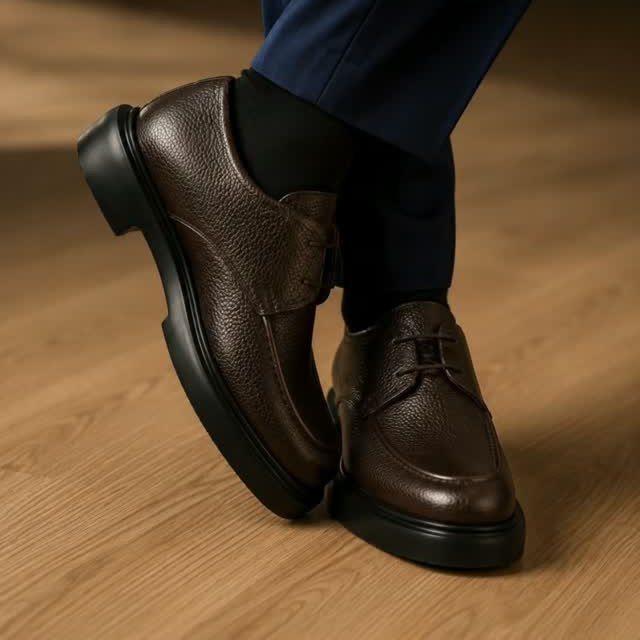
Brown leather shoes anchor the groomsmen’s look with more nuance than black ever could.
Dark brown derby or oxford styles keep the line continuous from trouser hem to floor, and the texture in the leather, pebbled or smooth, adds depth that photographs catch at ankle height in processionals.
The shade should sit at or slightly below the suit’s darkness; lighter tan leather against a chocolate suit creates a deliberate contrast that works in daytime but can look accidental under evening tent lighting.
One practical note: brown shoes scuff more visibly than black, so a polishing kit near the getting-ready space saves last-minute panic.
Black soles ground the shoe without drawing the eye; stacked leather heels read dressier but wear faster on gravel paths or cobblestone.

【High Quality Suit】: Men's linen suits are made of soft and lightweight fabric, breathable and comfortable. Upgrade your wardrobe with this casual linen suit outfit.

Drawstring closure and two side pockets

✿✿ Lightweight Airy Fitted Sheet: YASMENG Muslin fitted sheet tan is made of 100% cotton gauze fabric with a double-layer yarn textile process, breathable, fluffy and lightweight, Which preventing skin irritation for your sensitive skin and providing you a luxurious comfy feel, also perfect for co-sleeping with baby. Heat conduction and moisture-absorption properties allow our bottom sheet to be used all year round, cool in summer for hot sleepers, and warm in winter.
8. Floral Boutonnieres
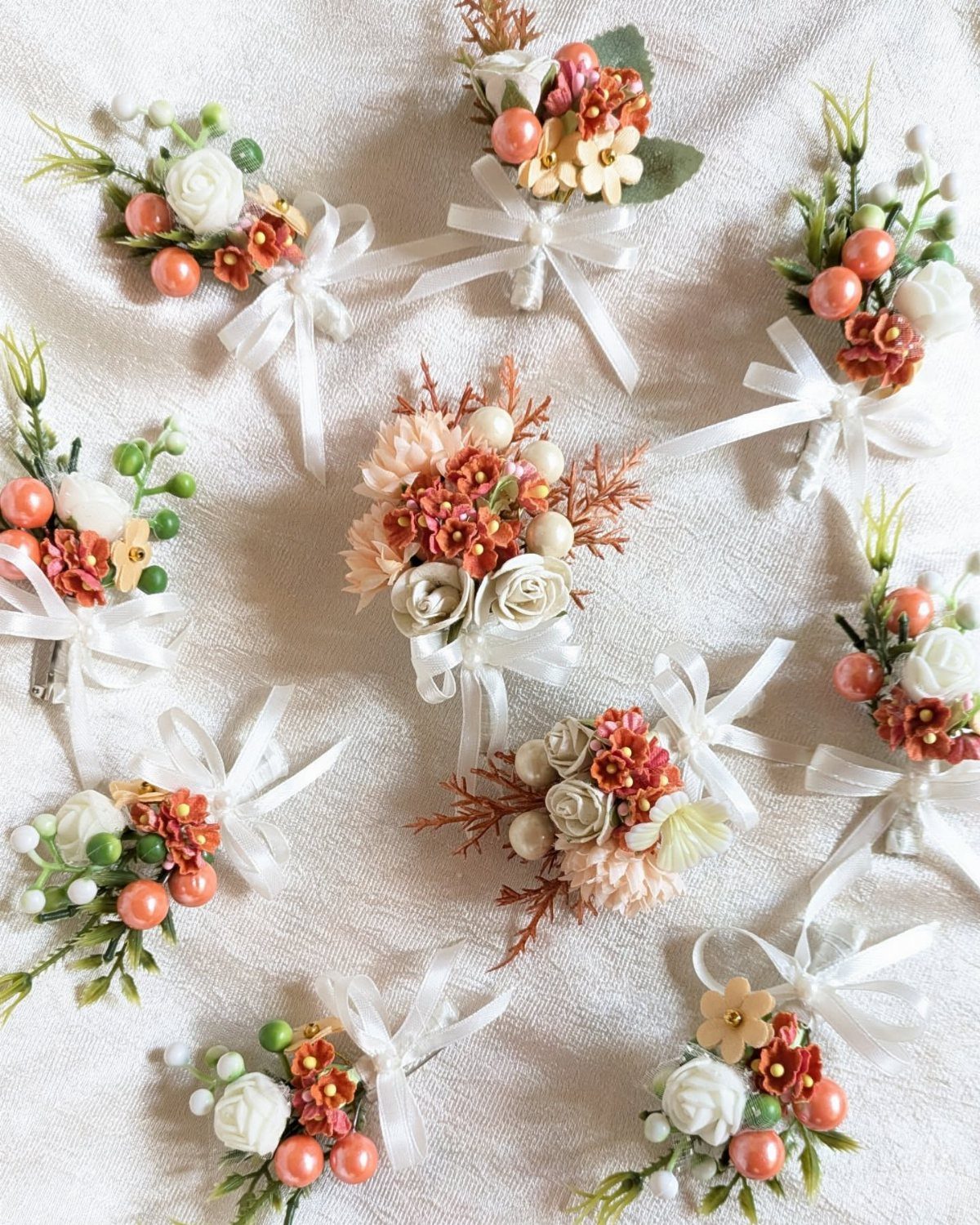
Floral boutonnieres soften the line of a brown suit where the lapel meets the shirt, and they give each groomsman something individual without breaking coordination.
White flowers or pale peach keep the palette warm against brown cloth; rust-orange accents pick up the undertone in chocolate or cognac suits especially well.
Artificial flowers, like the ones arranged here, solve the wilt problem for outdoor summer ceremonies and destination weddings where refrigeration is uncertain.
The ribbon finish on the stem hides the mechanics and gives a florist-made appearance; white or cream ribbon ties in with the shirt rather than competing.
One caution: scale matters on a lapel. A boutonniere wider than the lapel itself throws the shoulder line off; the ones in this set run small and sit right.
For groomsmen who will hug a lot of guests, a pin through the stem rather than a clip keeps it secure through the receiving line.

Comfortable Fabric: This flannel shirt for men is crafted from soft brushed cotton flannel, ensures warmth and breathability. The skin-friendly material will bring you the ultimate comfortable wearing experience.

Material: Cotton polyester blended, The Mens Suits Will Be Comfortable, Breathable, Softer, Smoother, Easier to Wash and Keep. The Shape Slim fit , simple style, basic suit suitable for everyday wear

Material:jacket,vest and pants are outer material of 80% polyester and 20% viscose.Blazer and vest lining of 100% polyester
9. Brown Textured Suits
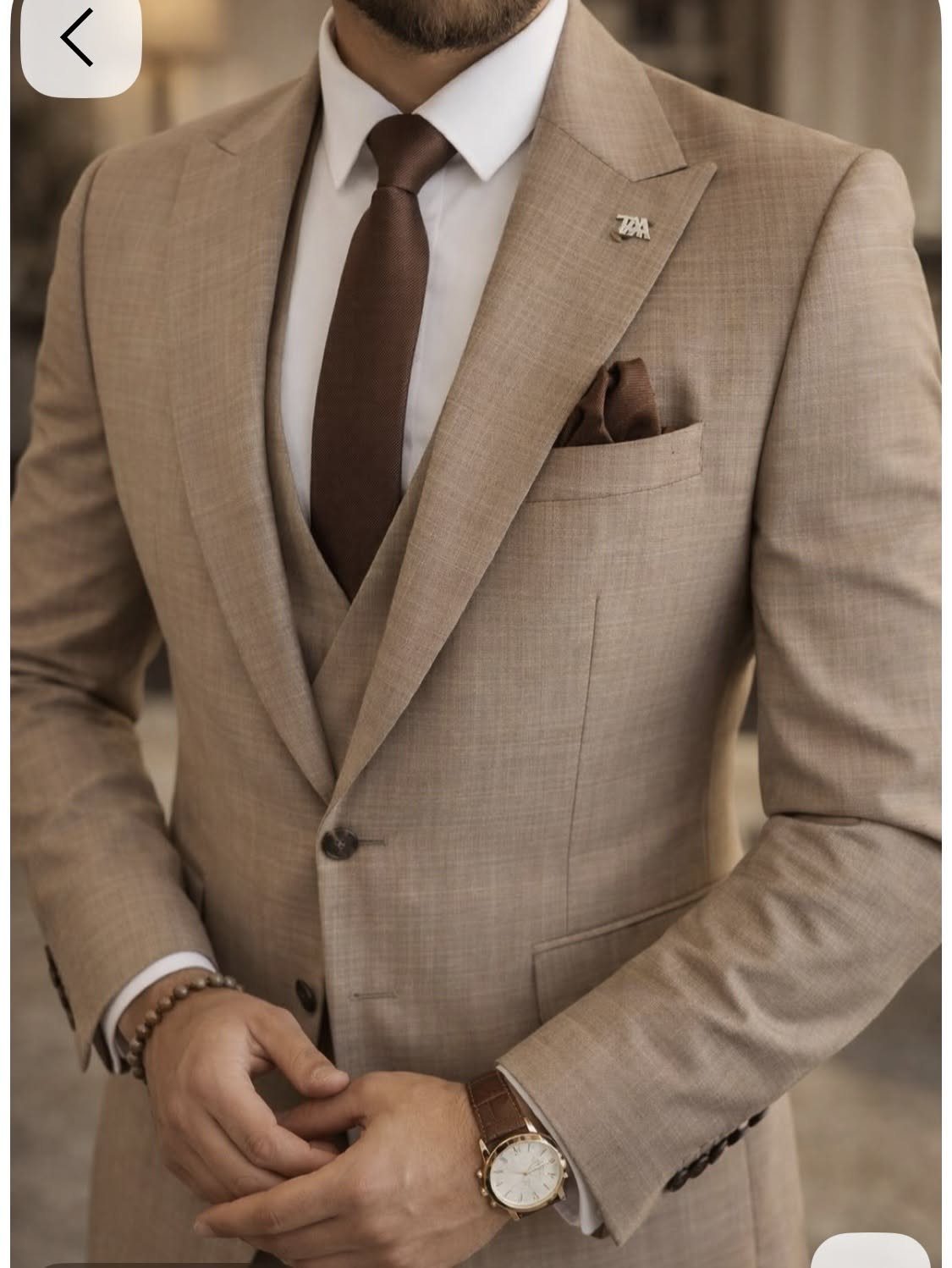
Texture in a brown suit does the work that pattern often fails at: it catches light and shadow without reading as busy from a distance.
A birdseye or subtle herringbone weave, visible in the cloth of this three-piece, keeps the brown from flattening into a single plane in group photographs.
The same texture running through jacket, waistcoat and trousers creates unity; mixing textures, say a flannel jacket with smoother trousers, reads as error unless the difference is pronounced enough to look intentional.
Texture and color interact in a lighter tan suit: the weave makes the tan less severe than flat cloth would be, and a brown tie picks up the deeper threads in the suiting.
For groomsmen, textured brown suits photograph better than smooth weaves in outdoor light, where the sun does the highlighting for you.
Textured cloth holds creases differently and can look rumpled faster, so steam or press the morning of, not the night before.

Two Piece Set: Formal Dog Tuxedo and Dog Wedding Bandana Set, can be used seprately. Bandana for comfortable wear featuring neck or bow tie along with decorative buttons to show off your best friend's personality
Two Piece Set: Formal Dog Tuxedo and Dog Wedding Bandana Set, can be used seprately. Bandana for comfortable wear featuring neck or bow tie along with decorative buttons to show off your best friend's personality

PERFECTLY MATCHED FORMAL SET: This brand new Vesuvio Napoli set includes a men’s solid color dress vest and a matching pre-tied bowtie. Both pieces are crafted from the same high-quality material and color to ensure a seamless, polished look for any formal occasion.
10. Light Beige Ties
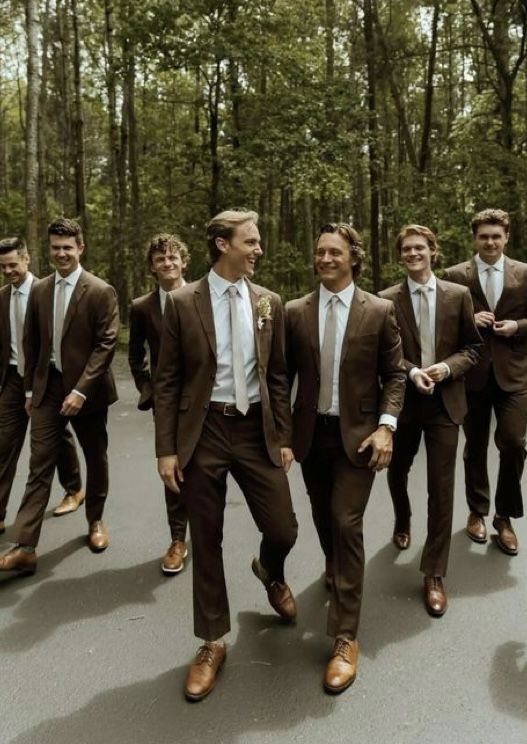
Light beige ties against darker brown suits create a vertical accent that lifts the whole look without departing from the palette.
The contrast is gentle enough that groomsmen do not read as separate from the groom, but clear enough that the tie registers in photographs from a distance.
The texture of the tie matters as much as its color; a flat satin in light beige can look like a rental default, while a knitted or lightly textured weave, like the ones in this group, keeps it intentional.
Width should match the lapel: slim lapels with slim ties, wider with wider. The white shirt underneath provides the real contrast; without it, beige on brown can muddy.
For budget-conscious parties, light beige ties are easier to source affordably than matching waistcoats, and groomsmen can keep them for later use. The one risk is staining; assign someone to check for splashback after the toast.

COMFORT AND FIT: Sophisticated slip-on loafer with cushioned footbed, easy on-and-off design, and comfortable fit for business casual or dressy occasions MATERIAL: Amazon...
Suit Color Combinations
Brown suits pair cleanly with ties in 3 directions that all work. Patterned ties, small-scale and tonal, add interest without competing for attention.
The shirt underneath does more work than people think. White is the safer ground; it gives the tie something to contrast against and keeps brown from reading too heavy on camera.
For shoes, tan leather dresses up a lighter brown suit, while dark brown loafers ground a deeper tone without the harshness of black.
One combination I would avoid: brown suit, brown shirt, brown tie.
The eye has nowhere to rest and photographs flatten into a single mass. Always give the outfit one point of difference in value, the shirt or the tie, to break the plane.
Groomsmen Attire Coordination
Coordinating groomsmen with bridesmaids works best when the colors talk to each other rather than matching exactly.
The reverse also works: groom in full three-piece, groomsmen in two-piece with matching vests only. Either way, the difference should read as intention, not accident, so make it visible from a distance.
For outdoor ceremonies, the background matters. Brown against green reads earthy and natural; against a white tent or city stone, the same brown shifts to formal.
Suit Rental Options
The rental risk is fit.
Brown in an off-the-rack cut can look exactly like what it is, borrowed and slightly wrong. A few rental houses will alter the jacket waist and sleeve length before you pick it up, though you pay extra for it.
That service is worth the extra cost for brown specifically, since the color already draws the eye and any fit flaw shows more clearly than in black.
For groomsmen flying in, rental also saves the suitcase space and the wrinkle risk of packing a suit.
Just confirm the pickup timing; a Friday wedding with Thursday arrival needs a local shop that holds the order, not a ship-to-home model that leaves no margin for error.
Seasonal Suit Choices
Fabric weight should follow the thermometer, not just the formality. Summer weddings in brown need open weaves, cotton-linen blends or lightweight wools that let air move; a heavy flannel in August turns groomsmen into reluctant sauna visitors.
The lighter tan shades already read as warm-weather, but the cloth underneath does the actual work.
Fall and winter allow more texture, flannel, tweed, heavier wool that catches low light and complements the season’s colors. Dark brown especially comes alive in autumn, where the saturated tone fits the landscape instead of fighting it.
Spring sits in between. A mid-weight brown suit with some texture, birdseye or subtle herringbone, handles variable temperatures and photographs well in the uncertain light of March or April.
The one constant: brown shows moisture differently than navy or gray, so have umbrellas on standby for outdoor portraits in any season.
Frequently Asked Questions
What does a brown suit signify?
Brown reads as warm and approachable rather than sharp or imposing, which is why it works well for weddings where the groomsmen are meant to frame the couple without looking like security detail.
In photographs, brown sits naturally against outdoor greens and autumn tones instead of fighting them the way black can.
The shade you choose carries its own signal: tan and cognac feel relaxed and daytime, while chocolate brown registers as more formal without crossing into corporate territory.
Is a brown suit ok for a wedding?
Yes, and it has become a common choice for both grooms and groomsmen. Brown works in most ceremonies if you read the room: summer-ready tan for a daytime garden wedding, formal dark brown for a candlelit evening service.
Light browns suit bright venues and daytime, deeper tones suit evening or heavier architecture. Black shoes are the one mistake that can push brown toward somber; dark brown leather keeps it appropriate.
What color suit do groomsmen usually wear?
Groomsmen typically wear suits that complement the wedding colors rather than matching them exactly. Brown groomsmen pair well with sage green bridesmaids, and the groom can step out in a lighter or darker shade from the same brown family.
Navy and charcoal remain safe defaults, but brown has joined them as a standard option, especially for outdoor and autumn weddings where it photographs more naturally against the landscape.