The list below covers everything from a simple gown you alter yourself to a fully beaded dress with a train that needs its own bustle and professional tailoring.
Start by matching your dress to your venue’s formality and to how much weight you are willing to wear for hours on your feet.
1. Choosing a Color Palette
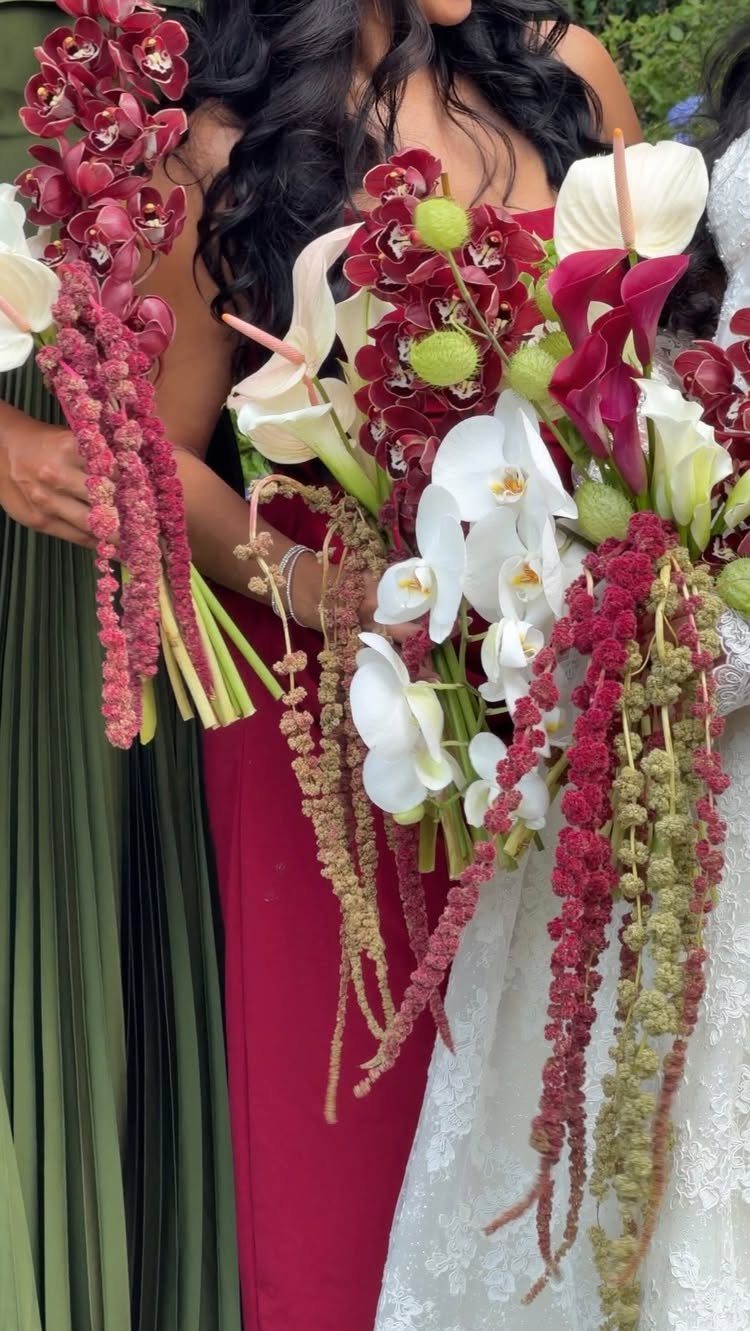
Handing guests a color palette instead of a dress code lets them choose something they already own in the right tone.
Bright pink, yellow, blue, or orange read celebratory; pine green, chocolate, navy, mahogany, or wine red suit an earthy wedding; blush, sage, dusty blue, or soft yellow keep things gentle. Black only if they asked for it.
Venue formality still matters. A cocktail dress in the right color works for most, but a Black Tie call means evening length regardless of shade.

ELEGANT DESIGN: Stunning A-line wedding dress featuring a sweetheart neckline and beautifully detailed bodice with intricate embellishments
2. Ball Gown Wedding Dress
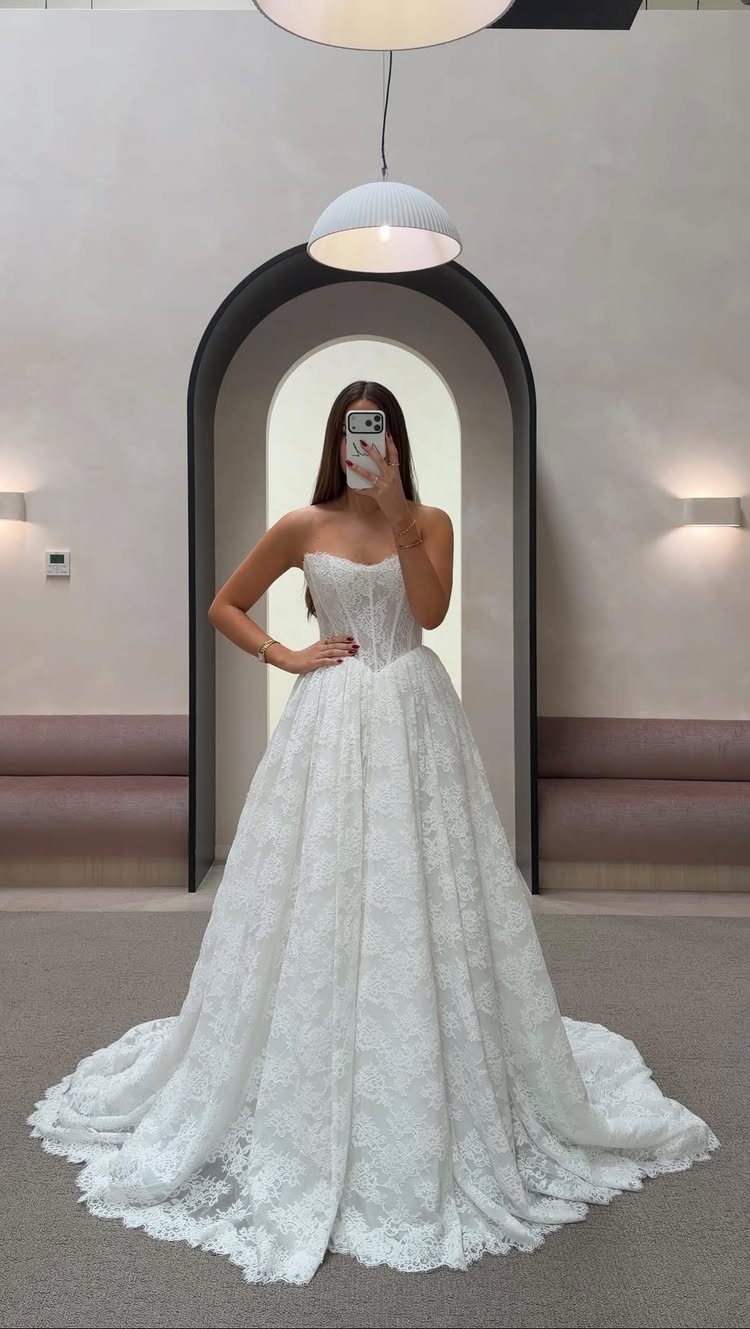
The ball gown builds volume from the waist down, not the hips, which is why it flatters pear and hourglass shapes without adding width where you already have it. The fitted bodice holds structure while the skirt does the drama.
A-line is the safer default if you are ordering without trying on; ball gown is the reach.
One maker describes theirs as moving "like a dream," which I take to mean the skirt has enough weight to swing rather than stick.
Sit down in the gown during the fitting; a ball skirt that pools standing can trap your legs once you’re seated.
3. Lace Wedding Dress
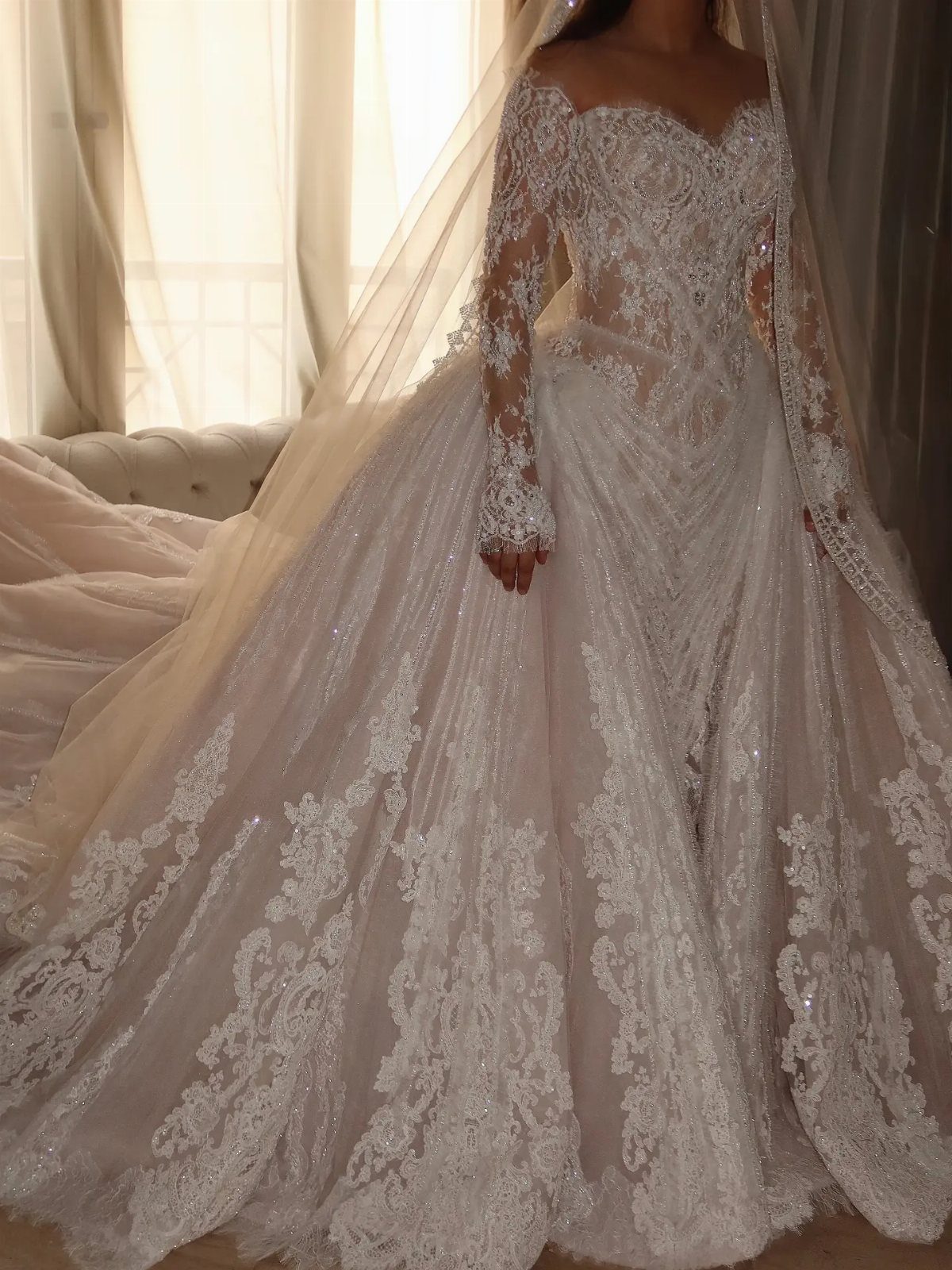
Lace carries formality without weight, which makes it workable across venues. Long lace sleeves read traditional, but swap them for a sleeveless bodice and the same fabric shifts toward bohemian.
Satin or mikado hold sharper lines for city weddings, tulle goes lighter and more romantic, chiffon solves outdoor heat. Fabric choice is where the budget shows, and lace sits mid-range: more than plain satin, less than hand-beaded anything.
Ceremonies can be held virtually anywhere, bridesmaids are often given the freedom to select their own gowns and some couples are even vetoing a traditional bridal party altogether. With all this change, it can be hard to know exactly what to wear to a wedding.
4. Illusion Necklines
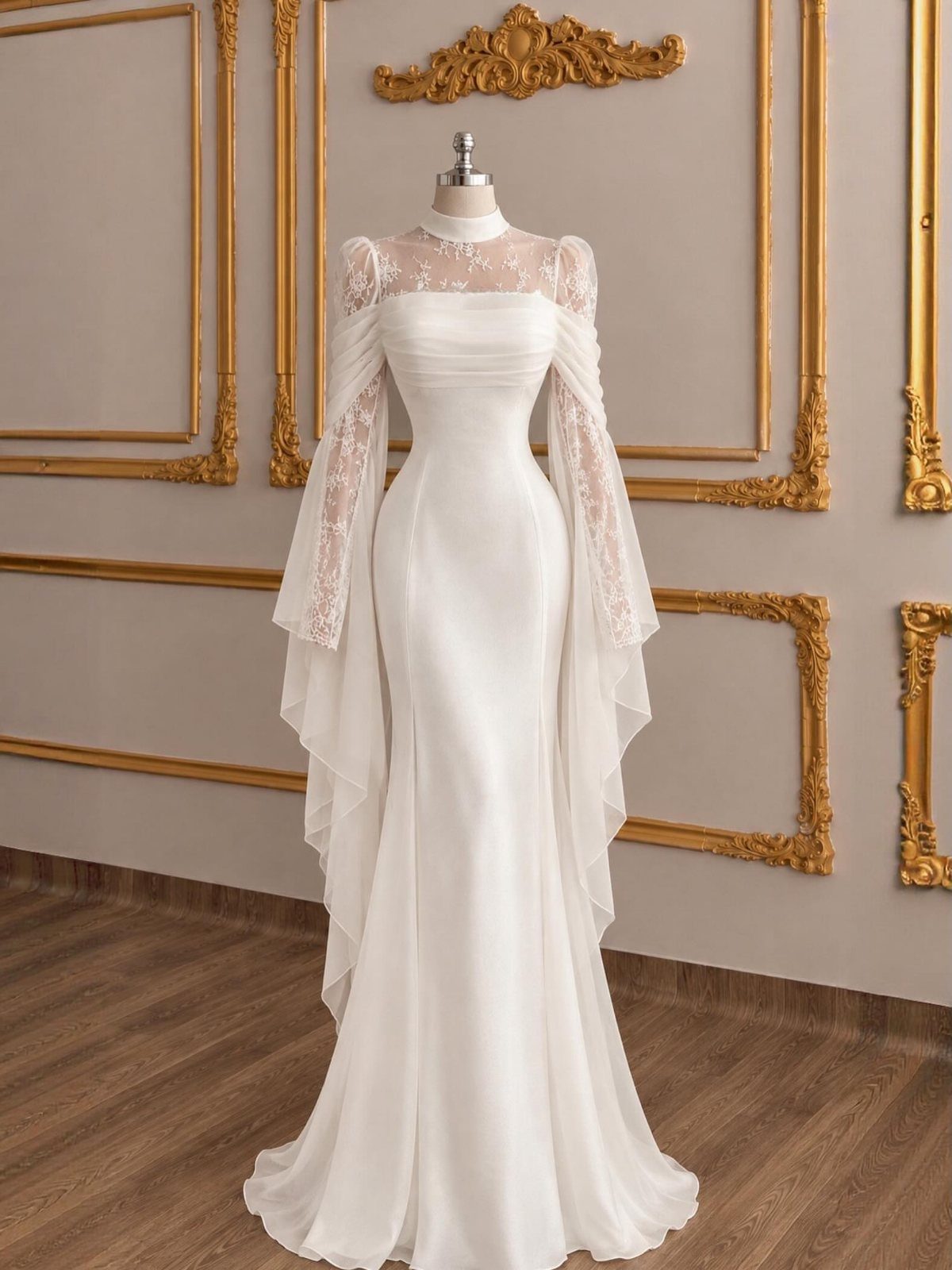
Illusion neckline means sheer fabric, usually tulle or lace, laid over skin or a solid base so the dress appears to float against you. The effect is coverage without heaviness.
Beading and sequins add sparkle for evening; appliques or embroidery build texture; buttons down the back read vintage. Lace layered over a sweetheart lining is the easier alteration; an all-illusion edge needs more exact finishing.

A-Line Voluminous Skirt: Flowy layered soft tulle ball gown skirt, chapel train creates romantic fairy-tale look.
5. Wedding Dress Accessories
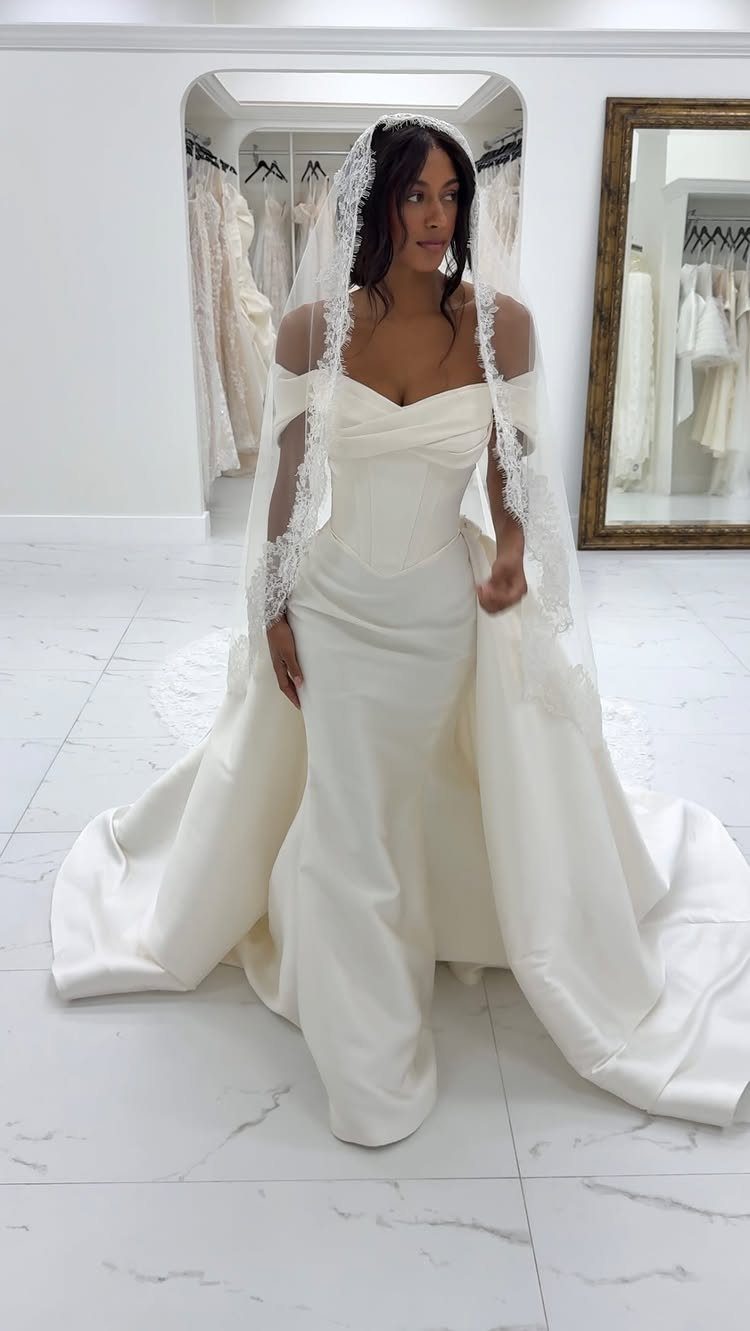
Match one detail between veil and dress, like a lace edge picking up the gown’s trim, and leave the rest alone. Shoes need breaking in; buy them early and wear them inside.
Undergarments should be settled before final fittings, shapewear included if you want it, since seams show through thin skirt layers. Jewelry stays minimal with a busy neckline, bolder with a clean one.

Tip: Please refer to the size chart and measure yourself before purchasing. Color may vary slightly due to different screen settings.

Fabric: Crafted from stretchy and lightweight lace, this cocktail dress offers superior comfort and a flattering fit. The back zipper ensures easy wear and removal, while the elegant design highlights your feminine charm

Fancy Wedding Guest Dress: Length: Mid Calf!!! XS=US 0-2; S=US 4-6; M=US 8-10; L=US 12-14; XL=US 14-16; 2XL=US 16-18; 3XL=US 20. This women's cocktail dress 2024 is perfect for daily work, which will help you balance your weekend fun and work dress needs. Tea length, aline shape, decorative belt - all these designs are for your semi formal needs
6. Off-the-Shoulder Wedding Dress
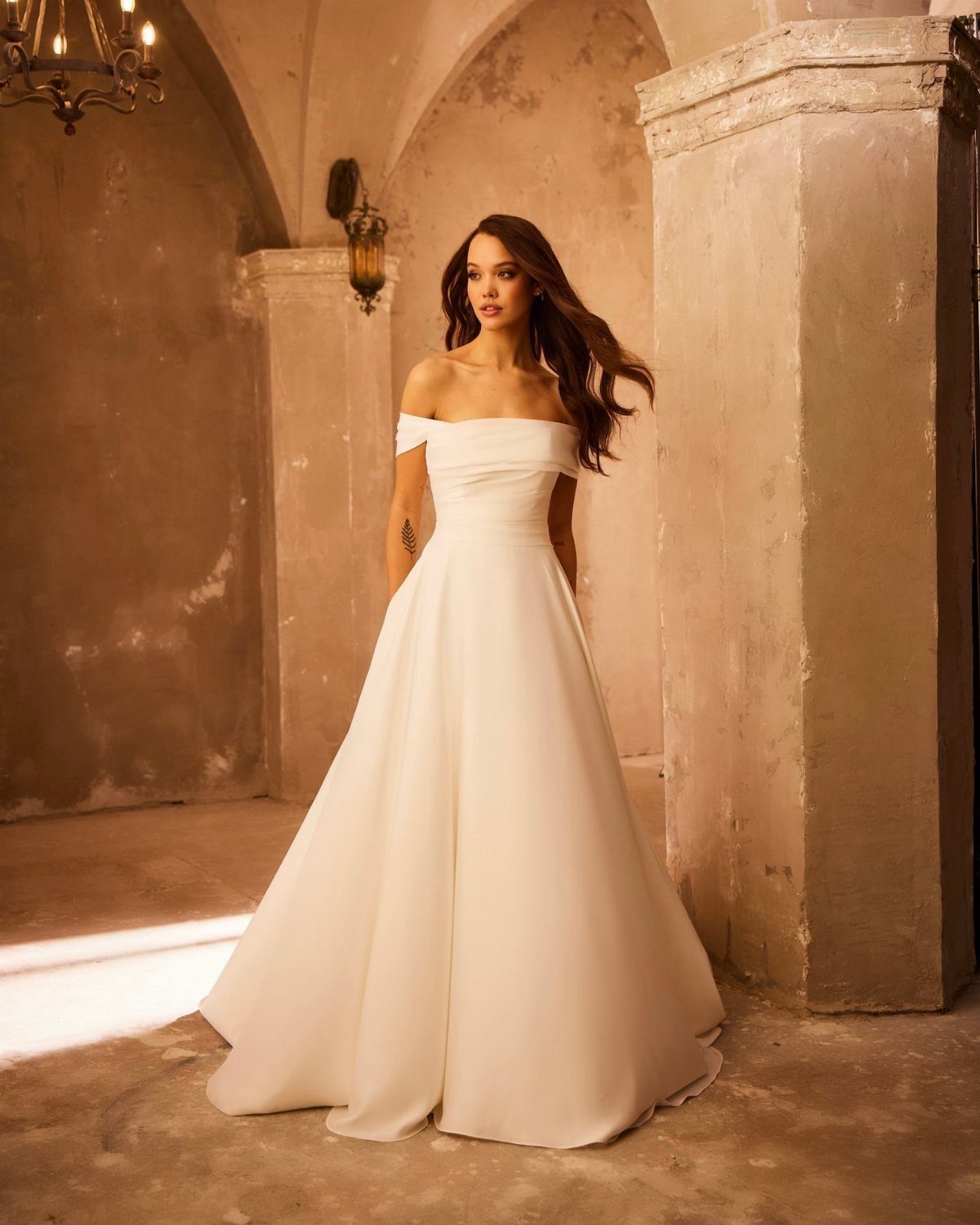
Off-the-shoulder exposes the collarbone and keeps the line horizontal, which broadens the shoulder visually. Good if you want balance against a full skirt; less so if you are already broad there.
Pockets change how a satin skirt hangs, so I would confirm they are included before ordering and check the drape in a photo of the actual gown.
Check the bodice stays put when you raise your arms; the worst fittings happen when you stand still.

1.Made in Tulle and Satin,Ball Gown Style,Sewn with Sequin and Beaded

ELEGANT A-LINE SILHOUETTE: This stunning A-line ball gown features a structured corset bodice and a dramatically full skirt with a sweeping cathedral train.

DESIGN: Elegant strapless ball gown silhouette featuring a romantic sweetheart neckline and voluminous tulle skirt perfect for a fairytale wedding
7. One-Shoulder Guest Dress
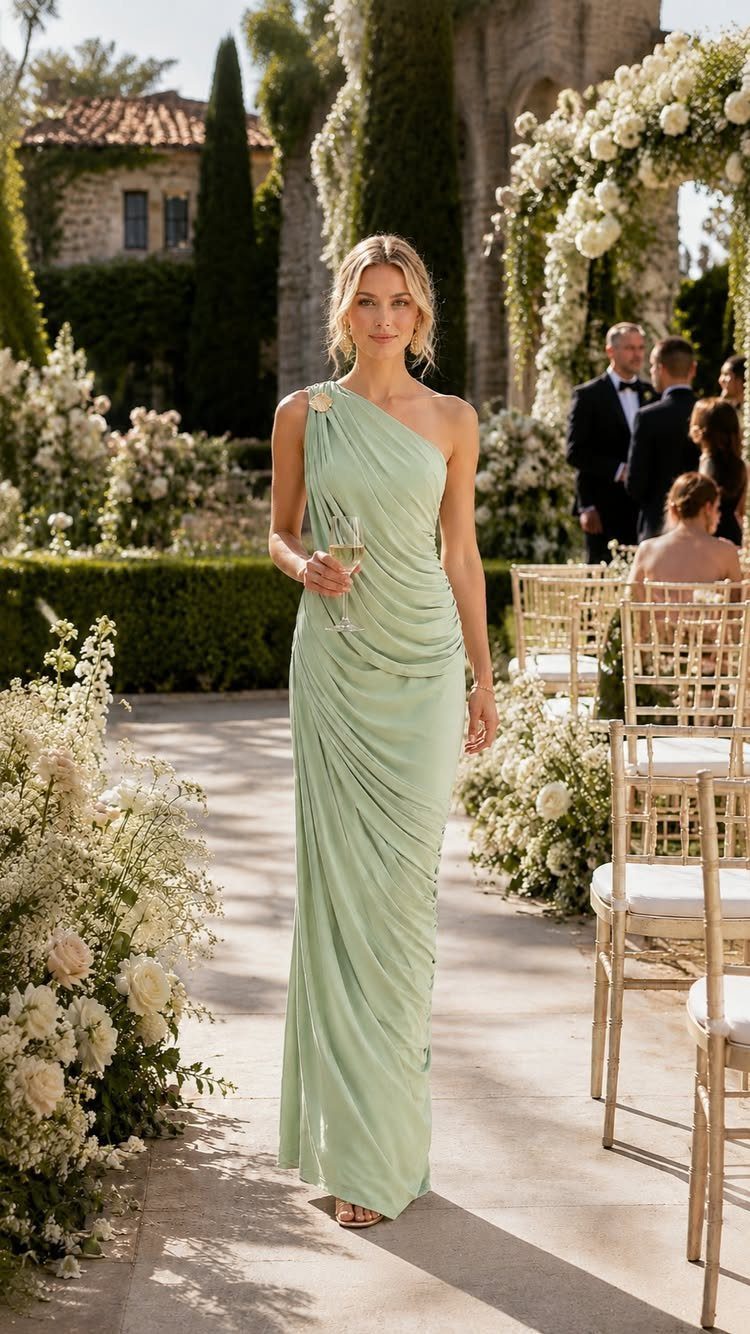
One-shoulder dresses carry formality without the structure of straps or sleeves, and the single bare shoulder reads celebratory rather than casual. The asymmetry draws the eye upward, which helps if you want presence without volume.
Draped jersey or satin skims rather than clings; a fit-and-flare one-shoulder in crepe holds sharper lines for city weddings.
The cut works for garden and cocktail venues alike, though a floor-length version in silk or a heavy chiffon reads evening where a knee-length cotton does not.
Check that the single strap is wide enough to stay put through dancing; a narrow band on a heavy skirt will tug.
Color matters more when the shape is simple. Light green suits spring and summer daytime; burgundy, navy, or black shift it toward fall and winter evening.

Material:Cotton Blend.100% brand new and top quality

Sexy Curves -- Mermaid dress is adorned with delicate lace shell, eyelash lace details and off shoulder design.
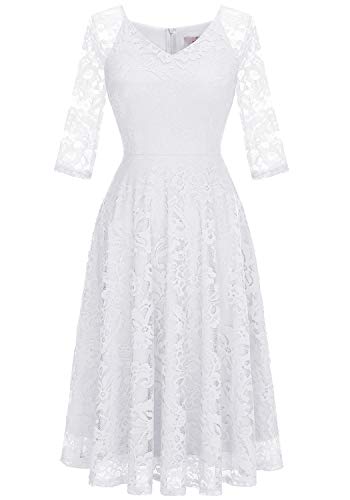
Selected materials: Made of quality lace with soft skin-friendly stretchy smooth lining, this lace dress with sleeves is super soft, breathable and comfortable to wear all day
8. Mermaid Silhouette Wedding Dress
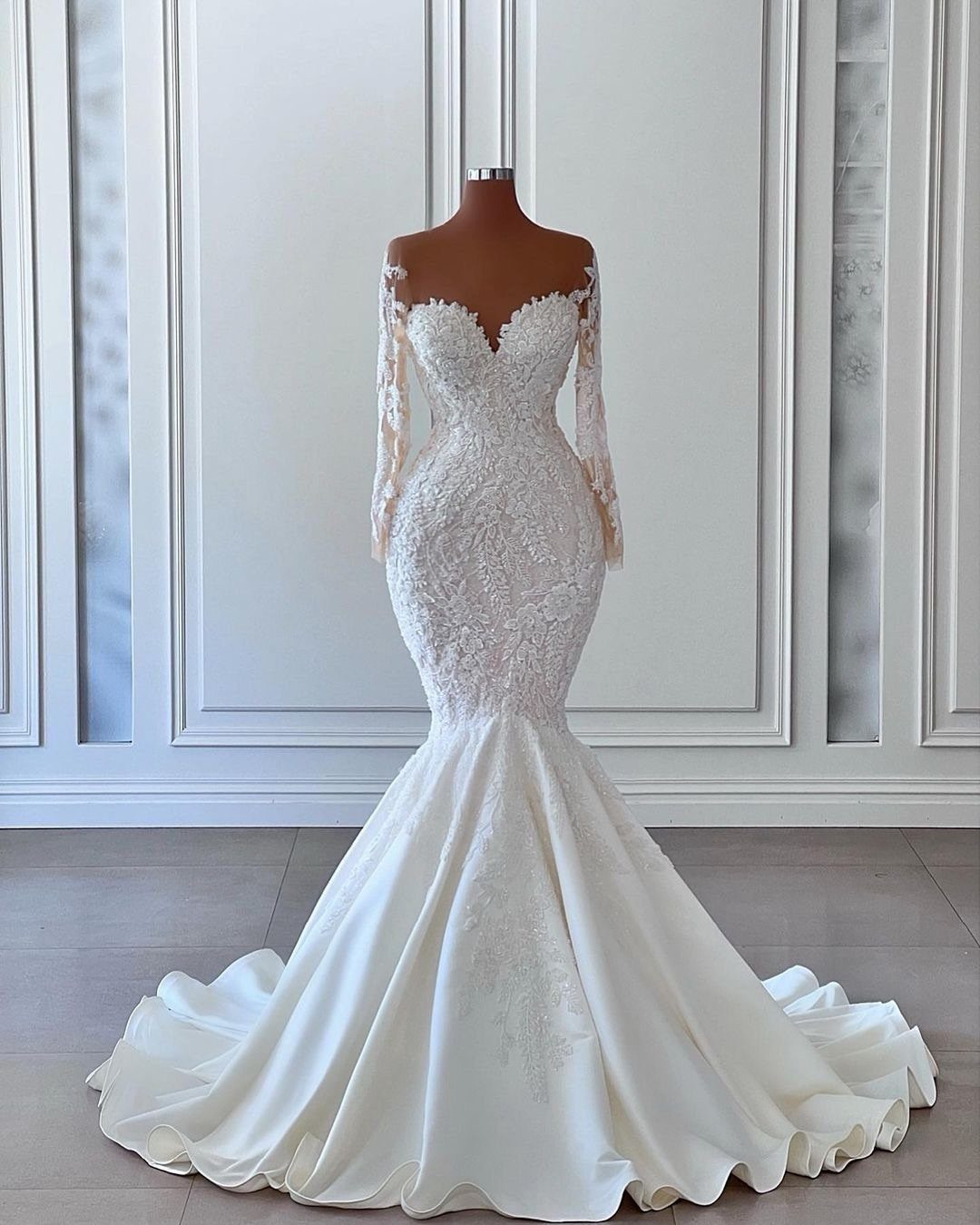
Mermaid silhouette means fitted through the bodice, hips, and thighs, flaring at or below the knee.
The shape demands confidence and a precise fit; there is no hiding in excess fabric. Lace over satin gives the structure visible here, with the lace adding texture while the satin base smooths the line.
Alterations run higher than on A-line or ball gown shapes because every seam follows the body. Budget for them, and start fittings earlier.
The flare point sits at different heights; lower reads more dramatic, higher more wearable for sitting and walking. A trumpet, often grouped with mermaid, flares higher and wider; the difference matters in how you move.
This is the reach silhouette, not the safe one. Try it after you know what A-line feels like, so you are choosing rather than guessing.


WHAT WILL YOU RECEIVE: 1 Yard Chiffon Fabric, Size: 36 x 60 Inch (L*W) (Pre-cut). Available Color: Black, Dusty Blue, Ivory, Light Blue, Hot Pink, Burgundy, Lilac, Dusty Rose, Light Pink, Sage Green, Champagne, White. You can give full play to your handicraft ability and creativity.
9. Floral Print Guest Dress
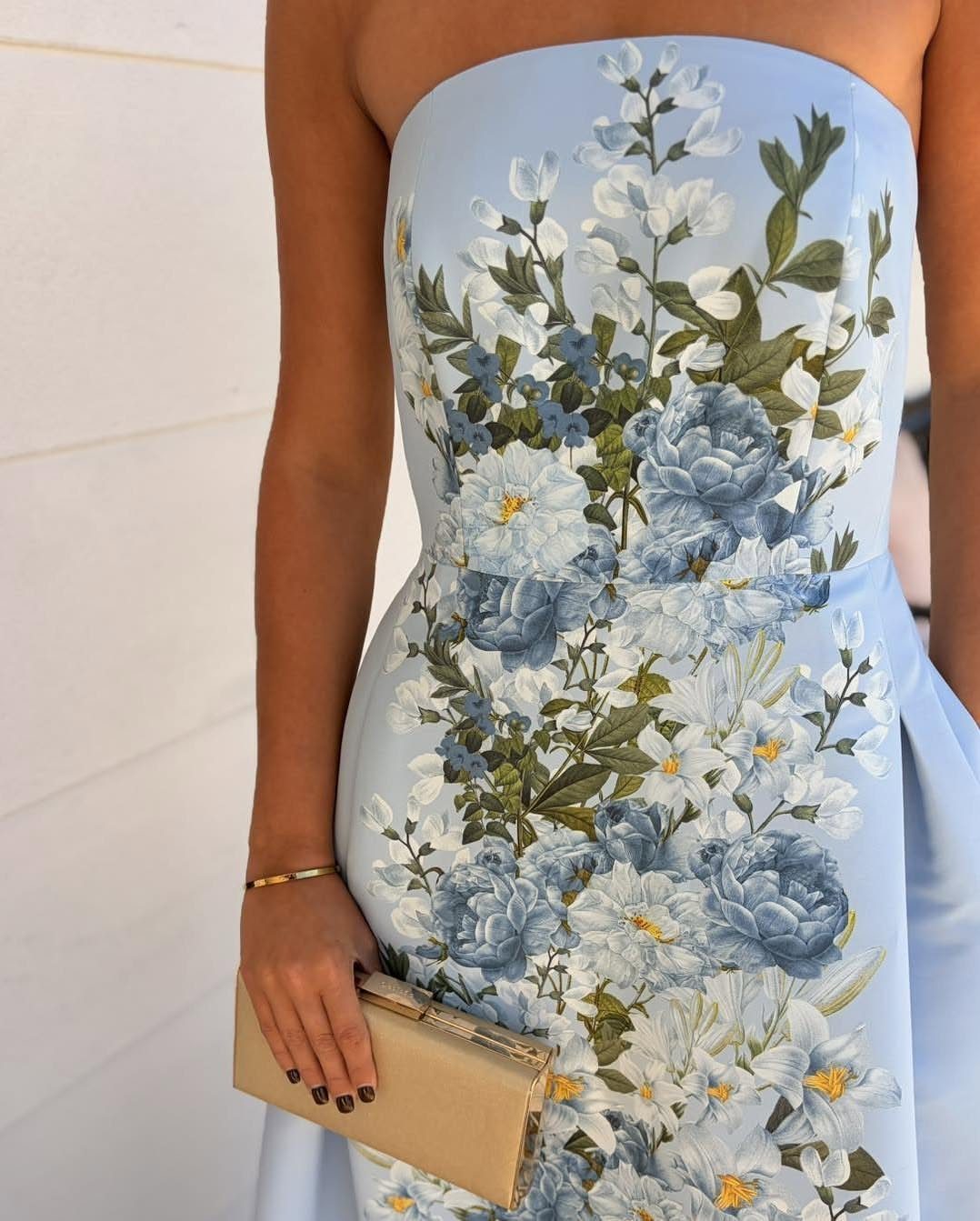
Floral print on a guest dress reads daytime and outdoor, though the scale of the print shifts the formality.
Large, scattered blooms like those visible here stay relaxed; small, dense patterns read more structured. Satin gives the print a sheen that lifts it toward evening; cotton or linen keeps it firmly daytime.
The background color does the work of matching the wedding’s tone. Light blue with white and blue flowers suits spring and summer; a black ground with red or gold florals shifts toward fall and winter evening.
Strapless needs a good fit in the bodice or you will spend the reception hiking it; consider a lightly boned version or one with grip tape inside the top edge.
Avoid white-based florals at a traditional wedding; the bride’s color, even in a print, risks reading as a choice rather than an oversight.

Sexy Curves -- Mermaid dress is adorned with delicate lace shell, eyelash lace details and off shoulder design.
10. Classic Strapless Wedding Gown
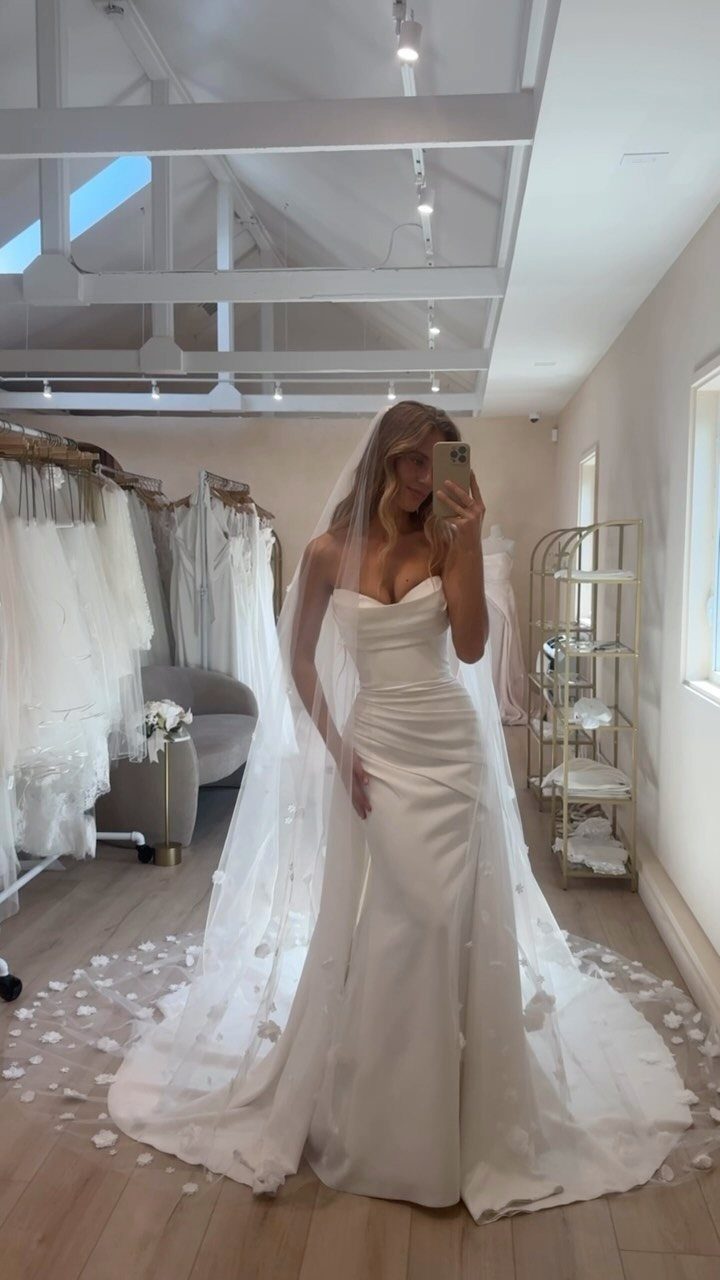
Strapless gowns live or die by the bodice construction. Boning, grip tape, and a snug waist seam keep the dress up without constant adjustment; a poorly fitted strapless bodice will slide or gape with every movement.
The clean neckline means jewelry and veil carry the detail, or the dress stands alone.
The fitted shape visible here, with the bodice following the torso before the skirt begins, is harder to fit than a looser strapless A-line because there is no forgiving volume below.
Expect 3 fittings minimum, and bring the undergarments you plan to wear.
A long veil with floral appliques adds back the detail the bare neckline removes; without it, the look is stark in a way some brides want and others do not.
This is the shape for showing shoulders and collarbones, and for keeping the line uninterrupted from neck to waist.
11. Traditional South Asian Wedding Attire
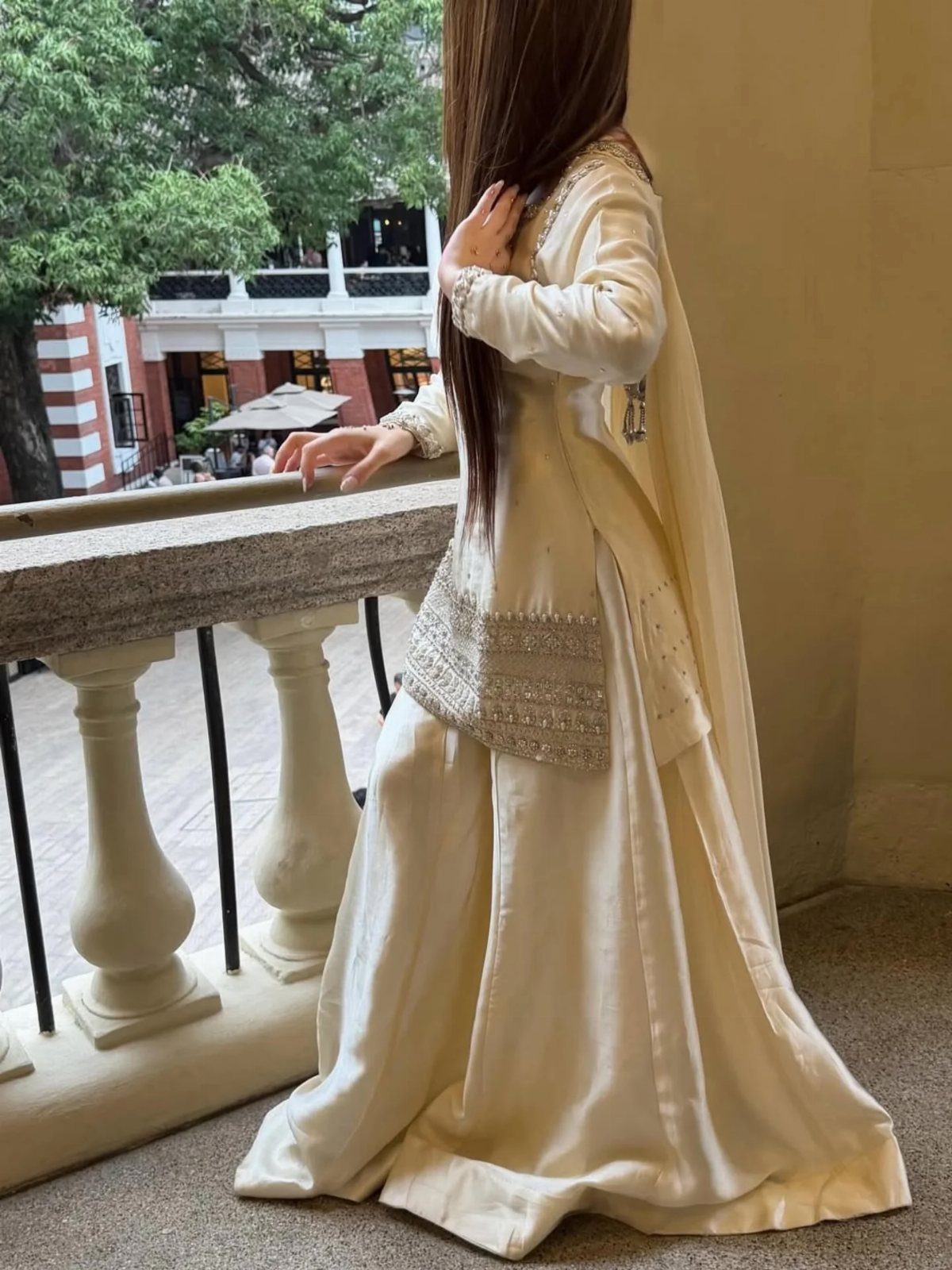
Traditional South Asian wedding attire, such as the silk ensemble with embroidered borders visible here, centers on the lehenga or saree with coordinated drape.
The embroidery density and fabric weight signal formality; this cream version with detailed borders reads bridal rather than guest.
Color carries meaning: red and maroon remain common for brides in many communities, while guests should confirm what the family prefers.
The dupatta, the draped scarf, is functional as well as decorative; how it is arranged, over the head or across the shoulders, varies by region and ceremony.
Jewelry is part of the outfit, not an afterthought, and is often heavy and coordinated.
If you are borrowing or buying, allow time for tailoring; the blouse and waistband need exact fit. Ask which ceremony each piece suits; some families change outfits between events.
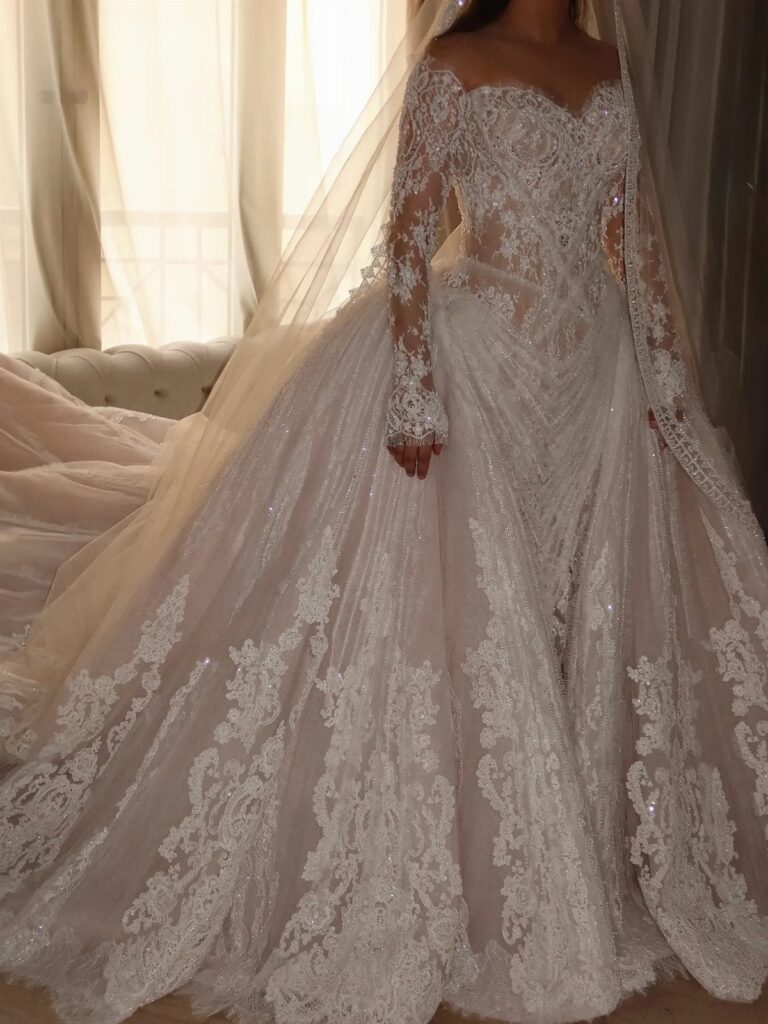
12. Sparkling Wedding Gown with Train
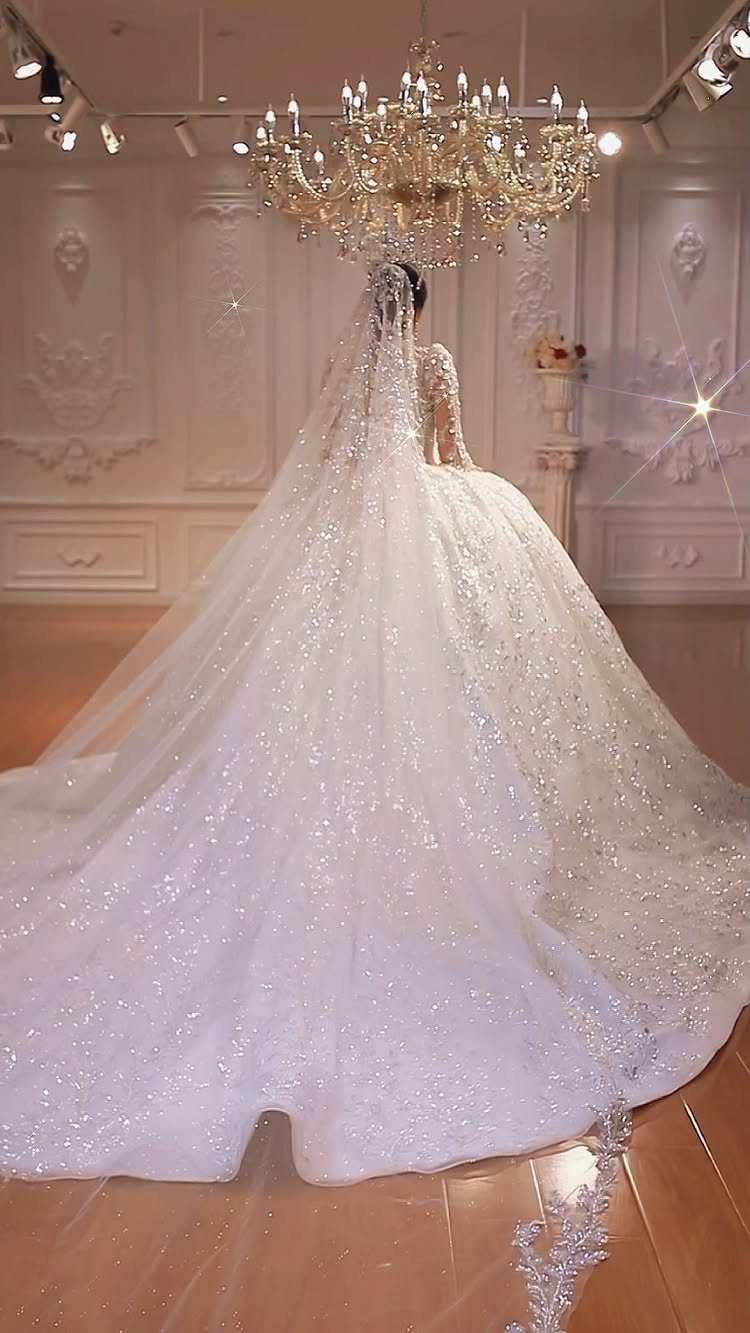
Heavy embellishment with a train is venue-specific. Crystals and sequins need light to perform; a dim ballroom with chandeliers gives them what they need, while outdoor afternoon light can flatten the effect or read as too much.
The train adds ceremony but requires managing; someone to arrange it for photos, a bustle for the reception, and a floor plan that accommodates the length.
Weight is the practical cost. A fully beaded gown with a sweeping train is heavy enough to change how you stand, walk, and dance.
Budget for the undergarments that support it; a heavily structured corset or crinoline is not optional. Alterations on beaded fabric are slow and expensive because each crystal must be removed and replaced along the seam.
This is the choice when the venue is grand enough to absorb it and the budget runs to the work of wearing it.
13. Velvet Wedding Couple Outfit
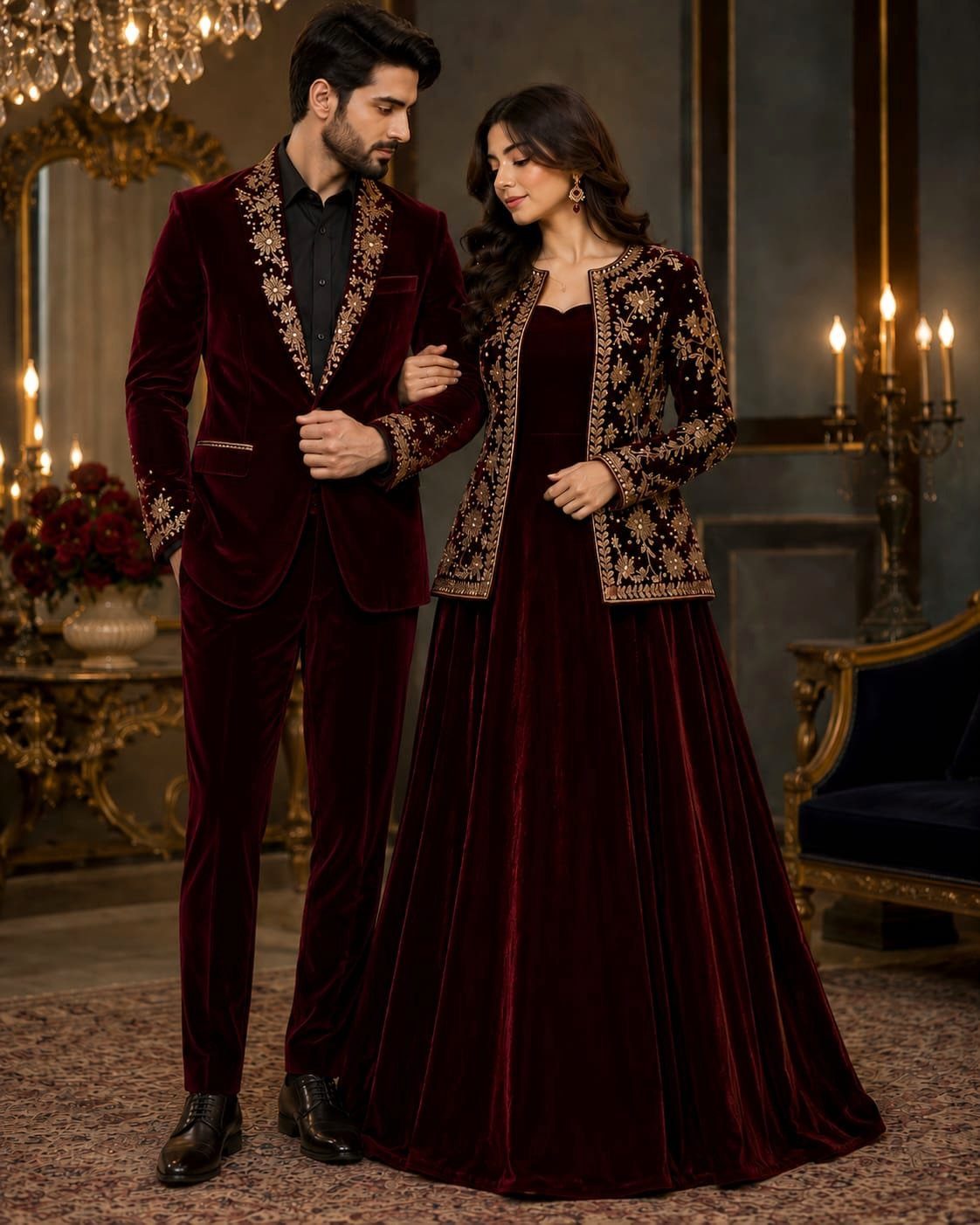
Coordinated velvet in deep burgundy with gold embroidery reads ceremonial without borrowing from Western white-dress tradition. The fabric photographs rich but runs warm; an outdoor summer wedding in the South will test it.
The embroidery placement matters more than density. On the jacket and lapels, as visible here, it frames the face and holds formality; scattered allover, it shifts toward costume.
Check that the weight of his suit and her gown match, or one partner looks underdressed. Velvet creases at pressure points; hang both pieces immediately on arrival and inspect before photos.
14. Wedding Dress with Sheer Cape
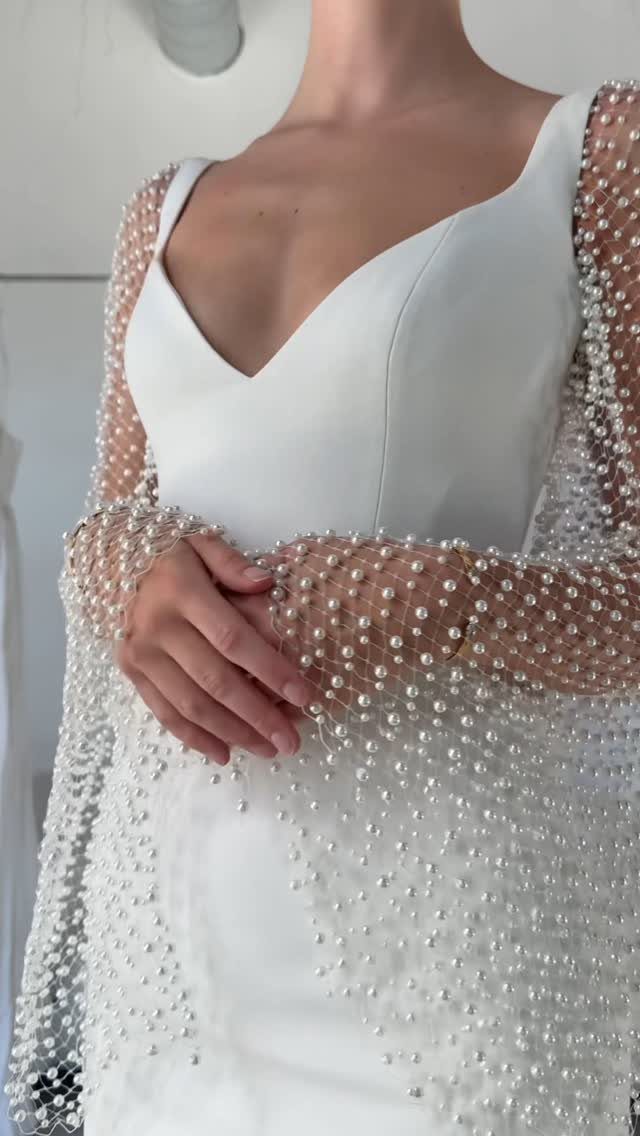
A sheer cape layered over a sleeveless gown gives coverage for ceremony without a second outfit for the reception.
The pearl density visible here, clustered at the shoulders and thinning toward the hem, keeps the eye upward; scattered evenly, it would read as a mistake in weight.
The cape attaches at the neckline or sits unsecured over the shoulders. Secured stays put through movement but limits how the dress can be altered later; unsecured needs checking before each entrance.
Tulle or netting snags on jewelry and fingernails; the version here with pearls already attached saves that risk. Remove the cape for dancing, or bustle it if the design allows.
15. Embroidered Silver Formal Trouser Set
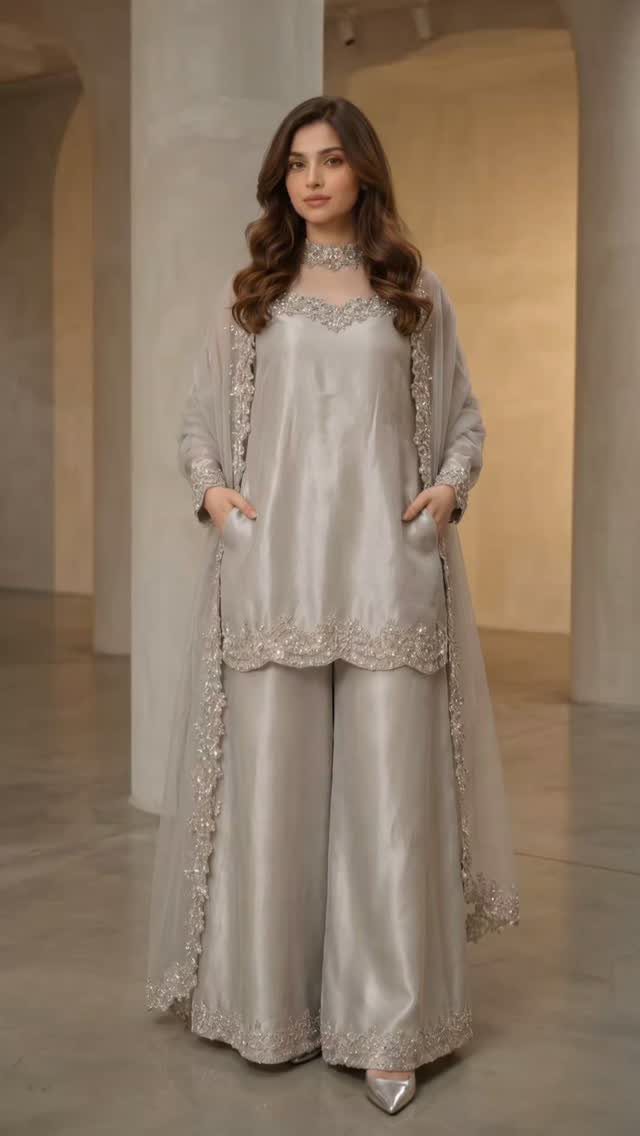
A three-piece set in silver with bead embroidery gives the structure of a gown without the skirt.
The wide-leg trousers, visible here with hands in pockets, need length exact to the shoe; too short looks accidental, too long drags and frays. The sheer cape adds movement but is the first piece lost at a crowded reception.
Check the tunic length against your torso; a cropped version reads modern, a long one traditional, and between the two can shorten the leg.
The embroidery in the visible version sits on the neckline and sleeve edges, which draws the eye up; allover beading adds cost and weight without adding formality.
This is the choice when you want to sit on the floor comfortably or move through a packed room.
16. Sleeveless Satin V-Neck Wedding Dress
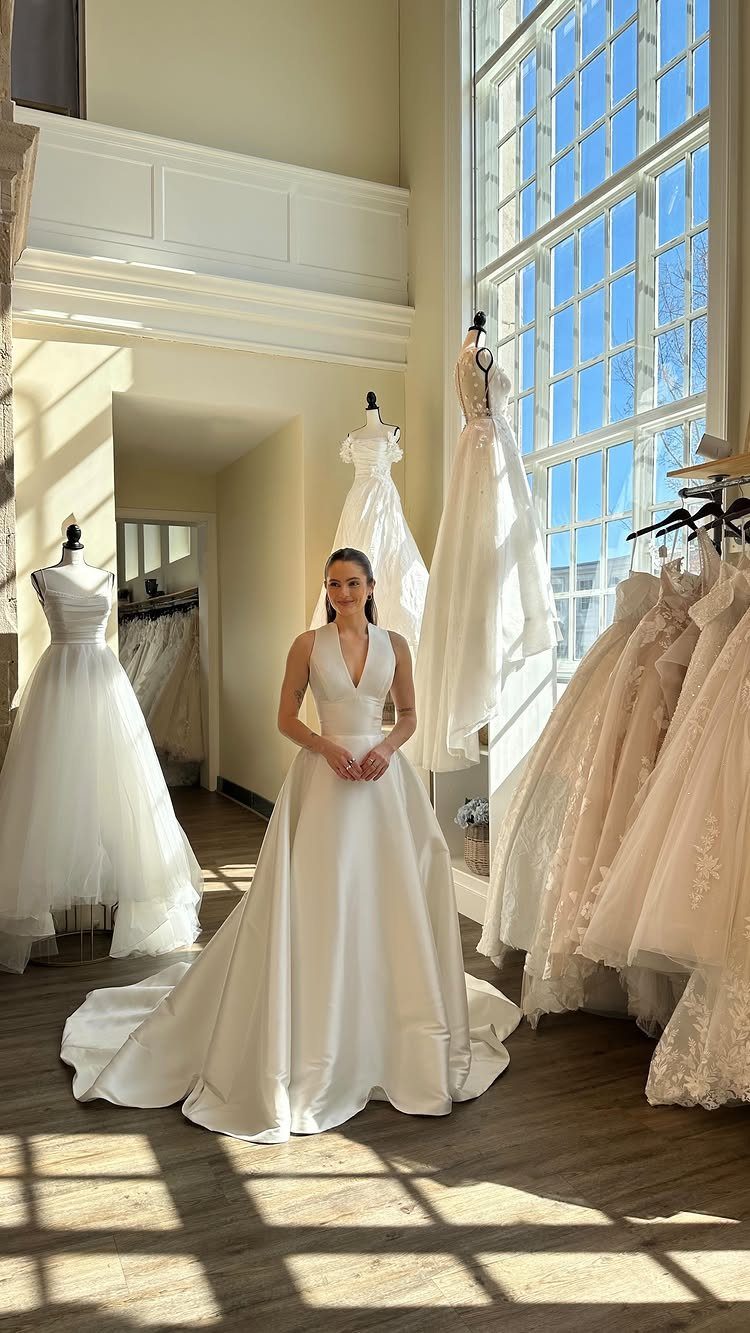
Deep V-neck in satin pulls the eye downward and widens the shoulder line, which balances a full skirt but needs confidence in the decolletage.
The sleeveless cut here shows the full arm; if that is not your preference, the neckline still works with a sheer overlay or a cropped jacket for ceremony.
Satin shows every wrinkle and water spot; steam before photos and keep water away. The skirt volume visible here is structured, not gathered, which means petticoats or a hoop; ask what is included and try sitting.
A deep V in satin requires construction at the neckline to stay flat; check for gapping when you lean forward. This is the shape for minimal jewelry and a clean veil, or none at all.
17. Pastel Gown for Wedding Guest
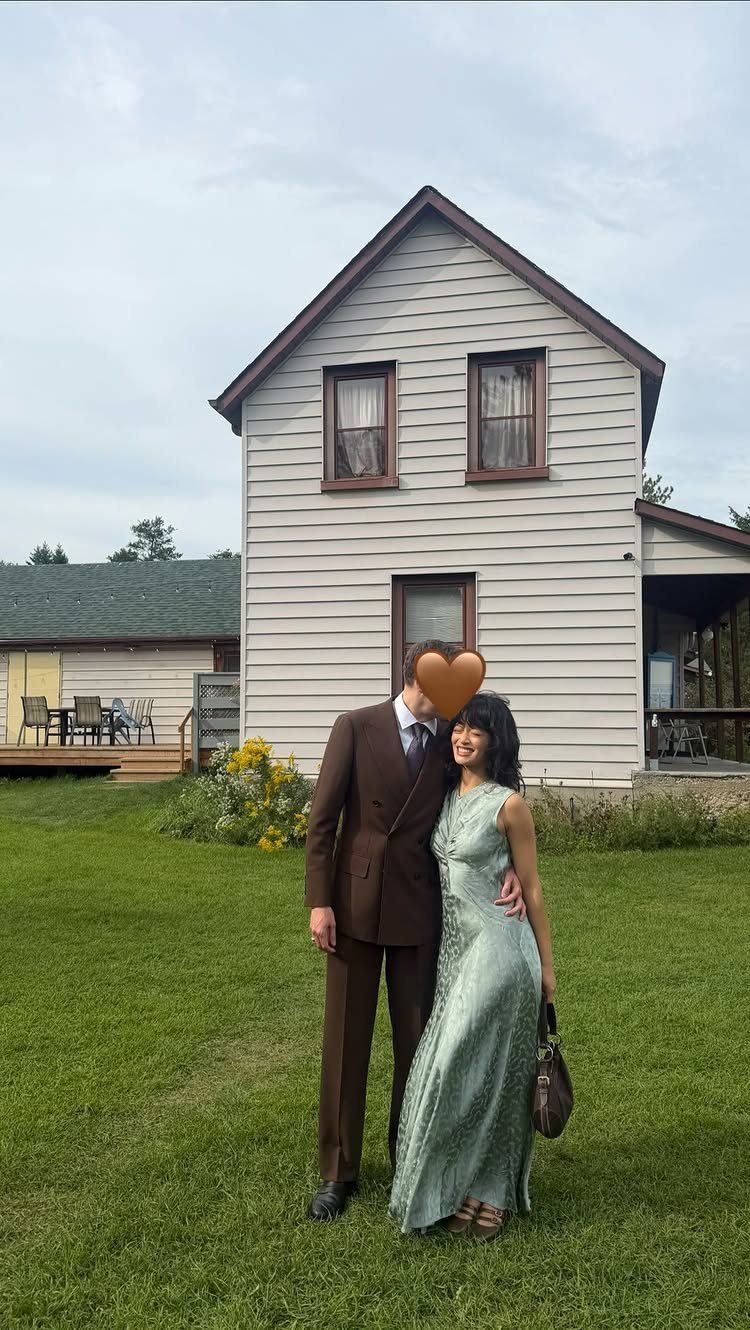
Sleeveless pastel in a light print reads garden and daytime, and the version visible here in sage green stays soft enough not to compete with the wedding party.
The partner in a tailored brown suit sets the formality; your dress should match that tone, not undercut it.
A defined waist, as here, separates the shape from a sheath that might read as too simple. The fabric looks like a light silk or printed crepe; cotton or linen shifts the same cut toward picnic.
Check the neckline for bra coverage before buying; a low armhole or wide neck limits undergarment choices. Floor length in pastel is safer than knee length for evening, which can look like you misread the call.
Advice on Dress Shopping
Start dress shopping as early as you can if you are ordering made-to-measure; off-the-rack needs less lead time but still more than you think.
Set the budget before you walk in, and include alterations, shoes, undergarments, and any accessories in that number. A gown that fits the dress budget alone can break the whole line item once tailoring runs into the hundreds or more.
Tell your stylist the hard ceiling upfront. Falling for a dress above it wastes everyone’s time and your emotional energy.
Sit in every gown, raise your arms, and walk the length of the fitting room. A dress that looks perfect in a three-way mirror can trap your legs at the table or ride up when you dance.
Understanding Dress Codes
Black Tie means floor length, full stop, even in a color the couple chose.
Cocktail attire gives you knee to tea length and more room in fabric. Garden Party or daytime outdoor calls for lighter material and lower formality; cotton or linen works where satin would read as too much.
The venue shapes the code more than the words do. City hall in a major metro expects sharper tailoring than the same wording would at a barn conversion.
Beach weddings introduce sand, wind, and uneven ground; a hem that drags on pavement will be ruined in minutes and a heel that sinks is useless.
When the invitation does not specify, the location and time of day tell you: evening in a hotel ballroom leans formal, afternoon in a park leans casual.
If you are still unsure, a midi dress in a mid-weight fabric with a jacket or wrap covers most gaps without overdressing.
Comfort and Fit
A dress that looks right but feels wrong will cost you the celebration. Check for itch at the seams, ride in the hemline, and whether the fabric shows sweat; these show up hours in, not in the fitting room mirror.
Lining matters for coverage and for how the skirt moves against you. Stretch or an adjustable waistband buys you room across a long day of sitting, standing, and dancing.
Breathable fabric beats impressive fabric in heat; chiffon and crepe stay cooler than layered satin or heavy lace. If you need a specific bra, bring it to the fitting, and test whether the dress works with or without one.
A dress that needs constant adjustment pulls you out of the moment; one you forget you are wearing lets you stay in it.
Frequently Asked Questions
What should I wear to a wedding?
Choose an outfit that matches the dress code and fits the venue. When the invitation gives you nothing to go on, a midi in a mid-weight fabric plus a jacket or wrap is the safest bet I have found.
Avoid white, skip jeans and sneakers, and make sure your shoes work on the actual ground you will walk on.
How do I choose a wedding guest dress?
Start with the dress code and venue, then pick a color and fabric that suit the season and time of day.
Garden afternoons call for light prints and pastels; shift into burgundy, navy, or black once the sun goes down. Make sure the neckline actually covers your undergarments and that sitting and dancing do not require constant adjustment.
What are common wedding dress codes?
Black Tie means floor length, even in a color the couple chose. When the invitation does not specify, the location and time of day tell you: evening in a hotel ballroom leans formal, afternoon in a park leans casual.