The necklaces below run from a lightweight silver crystal strand to heavy Kundan chokers with fabric ties and multiple clasp points, and the deciding factor is your neckline and how long you plan to wear the piece.
A choker sits high and needs strapless or thin spaghetti straps to avoid competing with fabric, while layered styles require advance fitting at the jeweler, not morning-of adjustments.
The heaviest piece, the Maharani Heavy Kundan Necklace, has south sea pearls and emerald-toned beads that need that extra inch of adjustment built in for heat or nerve swelling.
1. Polki and Emeralds Choker
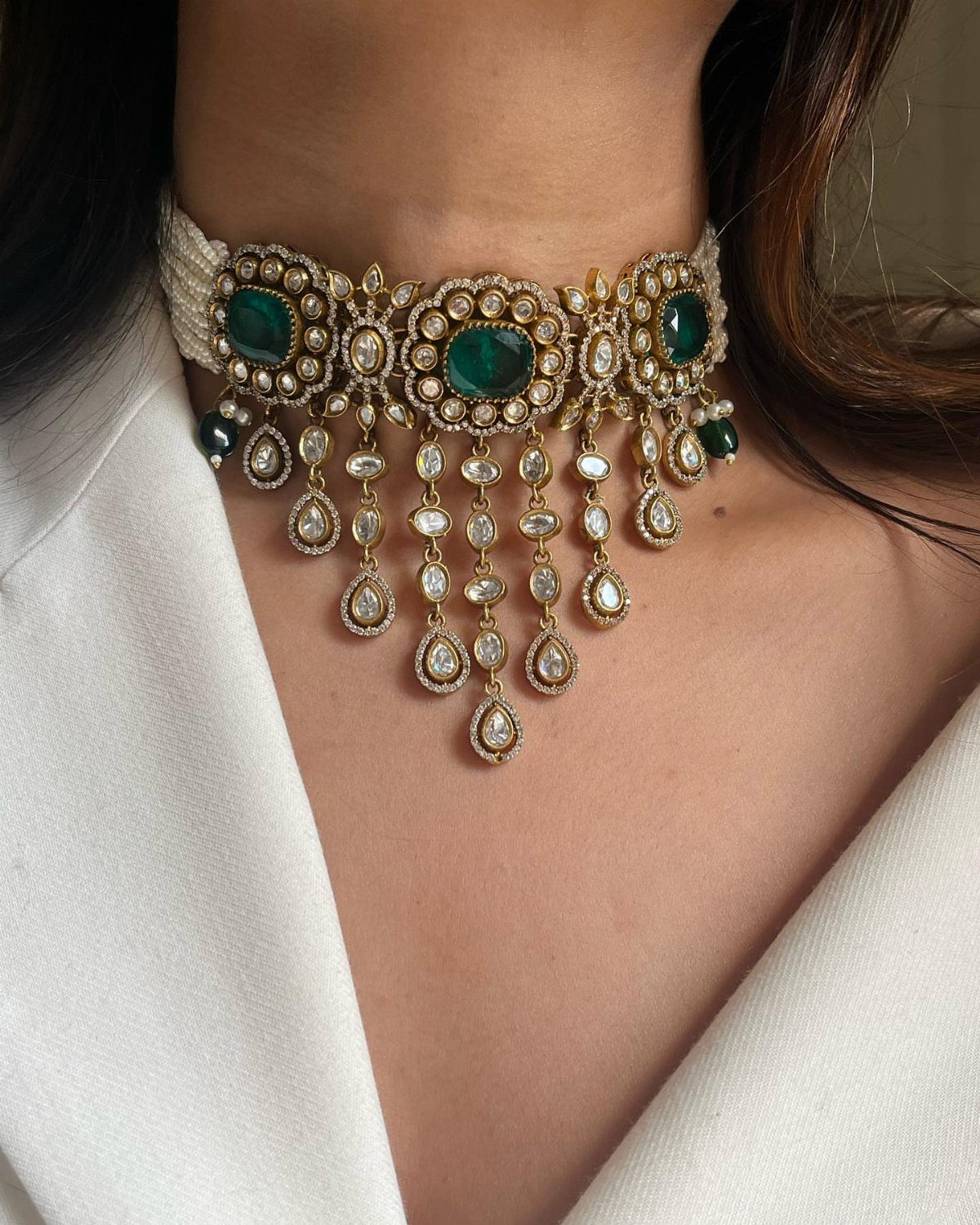
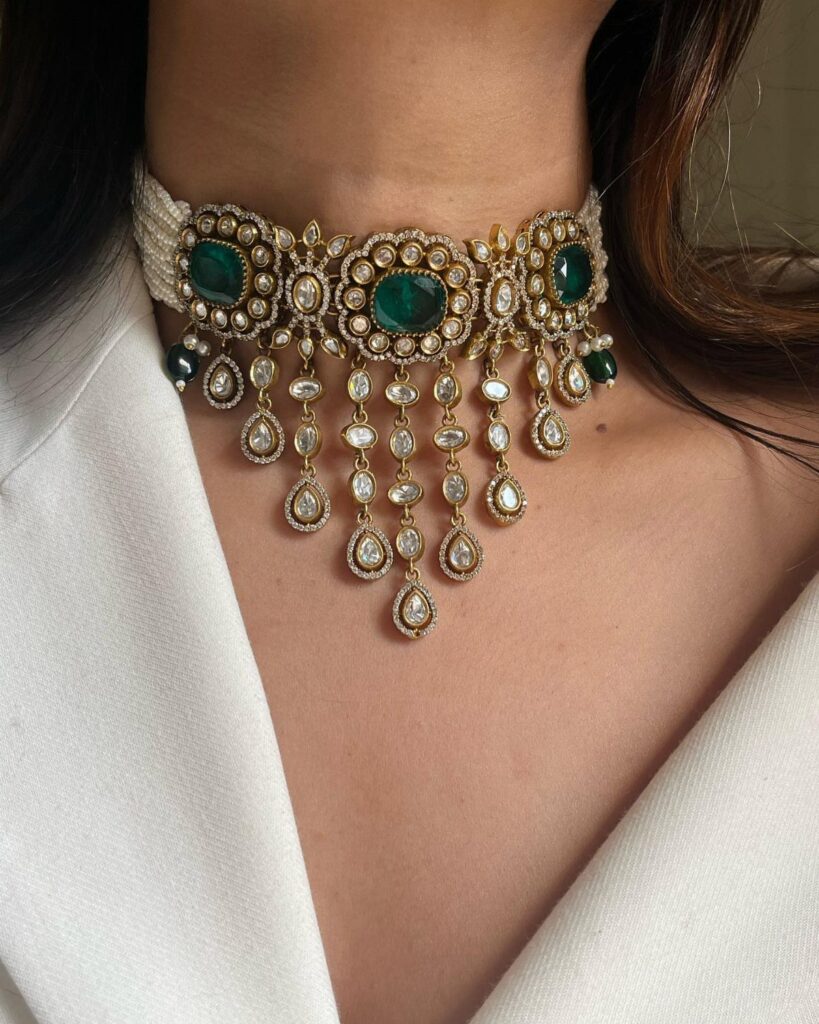
Polki diamonds keep their original rough cut, so the stones catch light differently than faceted ones.
That uneven surface next to clean emerald rectangles gives this choker its particular tension: old technique, modern placement. The emeralds are usually Colombian or Zambian, set in 22K gold that shows slightly yellow against a white dress.
A choker sits high, so it works best with strapless necklines or thin spaghetti straps that leave the collarbone open. Anything higher and the necklace competes with the fabric line.
The weight adds up. I have seen brides switch to a lighter piece for the reception after portraits are done.
2. Maharani Heavy Kundan Necklace
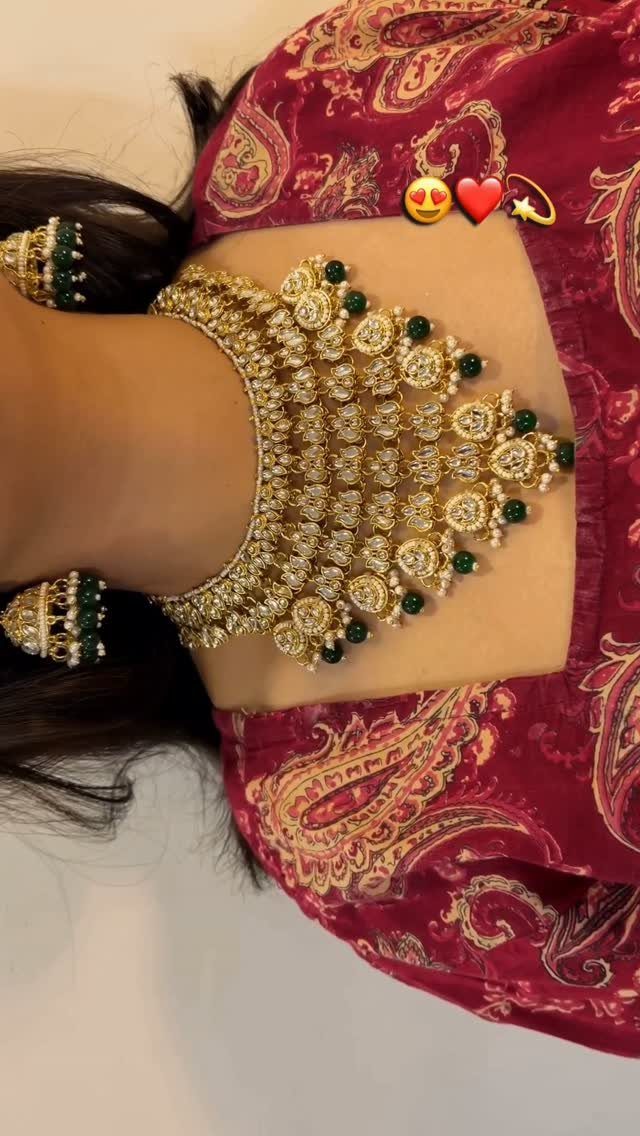
Pearl settings in Kundan work are not afterthoughts; they are part of the structure, holding the gold framework in place while adding their own glow.
This piece uses south sea pearls, larger and warmer than Japanese Akoya, spaced between the gold panels so the necklace reads as continuous texture from a distance.
The heaviest Kundan chokers need a fabric or cord tie at the back, not a clasp, to distribute weight across the neck.
Ask your jeweler to build in an extra inch of adjustment; swelling from heat or nerves is real, and tight jewelry photographs badly.
The matching earrings carry green beads that pick up the emerald tone without trying to match it exactly. That slight variation keeps the set from looking stamped out.

ADJUSTABLE SIZE & FIT — Approx. 16.1 in / 41 cm pearl strand with a 3 in / 7.7 cm extender lets you adjust the length for different necklines. A versatile choice among pearl necklaces for women for daily or dressier wear.

6-7MM Natural Baroque Pearl Necklace for Women - Each baroque pearl is unique, with its irregular shape and natural luster adding a touch of organic charm. Their uneven surfaces reflect light in a way that gives the pearl necklace a dynamic and ever-changing appearance. The real baroque pearls have a rich, warm glow that seems to capture the essence of the ocean. As a fashion beach necklace, especially perfect for summertime!

Round Pearl Choker Necklaces:A timeless single-strand necklace crafted with lustrous round pearls, available in multiple sizes to suit every style, delivering elegant, versatile charm for everyday and formal wear
3. Gold Necklace with Rubies
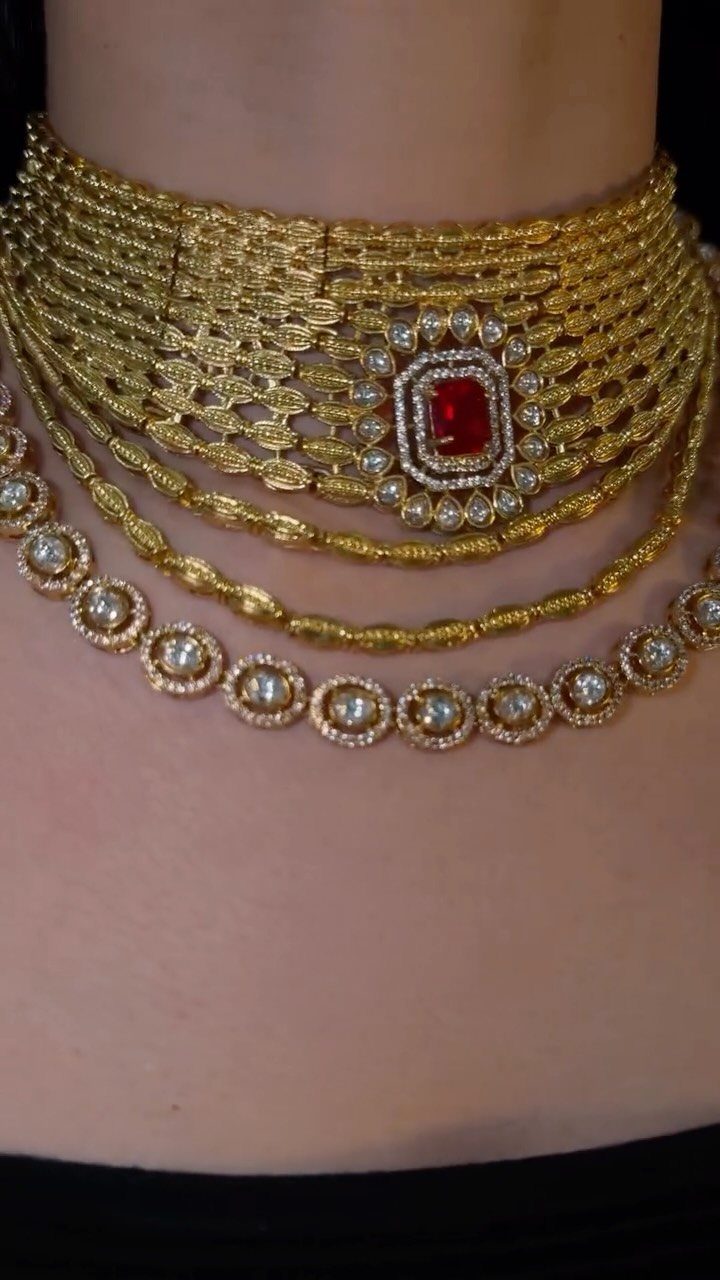
Rubies this deep in color are usually Burmese or Mozambique origin, heated to set the red permanently.
The polkis surrounding the central stone are uncut diamonds in their natural facets, set in gold kundan technique with visible edges. Ruby strands hang below in graduated drops, catching light when you turn your head.
Layered construction means multiple chains lie flat rather than stacking at odd angles. Each layer has its own clasp point, so fitting requires time at the jeweler; do not leave this to the morning of.
The red reads as regal against ivory or cream, but I would hesitate against stark white where the warmth can look accidental rather than chosen.

This Necklace set for women add some sparkle to your outfit with this stunning choker necklace set with stud earrings for women , featuring cubic zirconia gems that shine like diamonds. Perfect jewellery set for women for all special occasions. This designer piece of jewellery is ideal for every occasion, whether it’s a wedding, a party, or a casual day out. It can also make a great gift for someone special, as it comes in a beautiful box with a velvet pouch.

Touchstone "Contemporary Kundan Collection" Indian Hollywood elegant Kundan polki look light jewelry necklace set in gold tone for women SPECIFICATIONS : Single slim line Necklace 9 inches with beautiful adjustable flat chain/links up to 13 inches. Earring weight (single) 4 gms. Earring length 1.50 inches. Earring width 0.25 inch.

Please confirm the size using model image, videos or size dimensions. The color may slightly vary due to the photographic lighting sources.
4. Classic Kundan Necklace
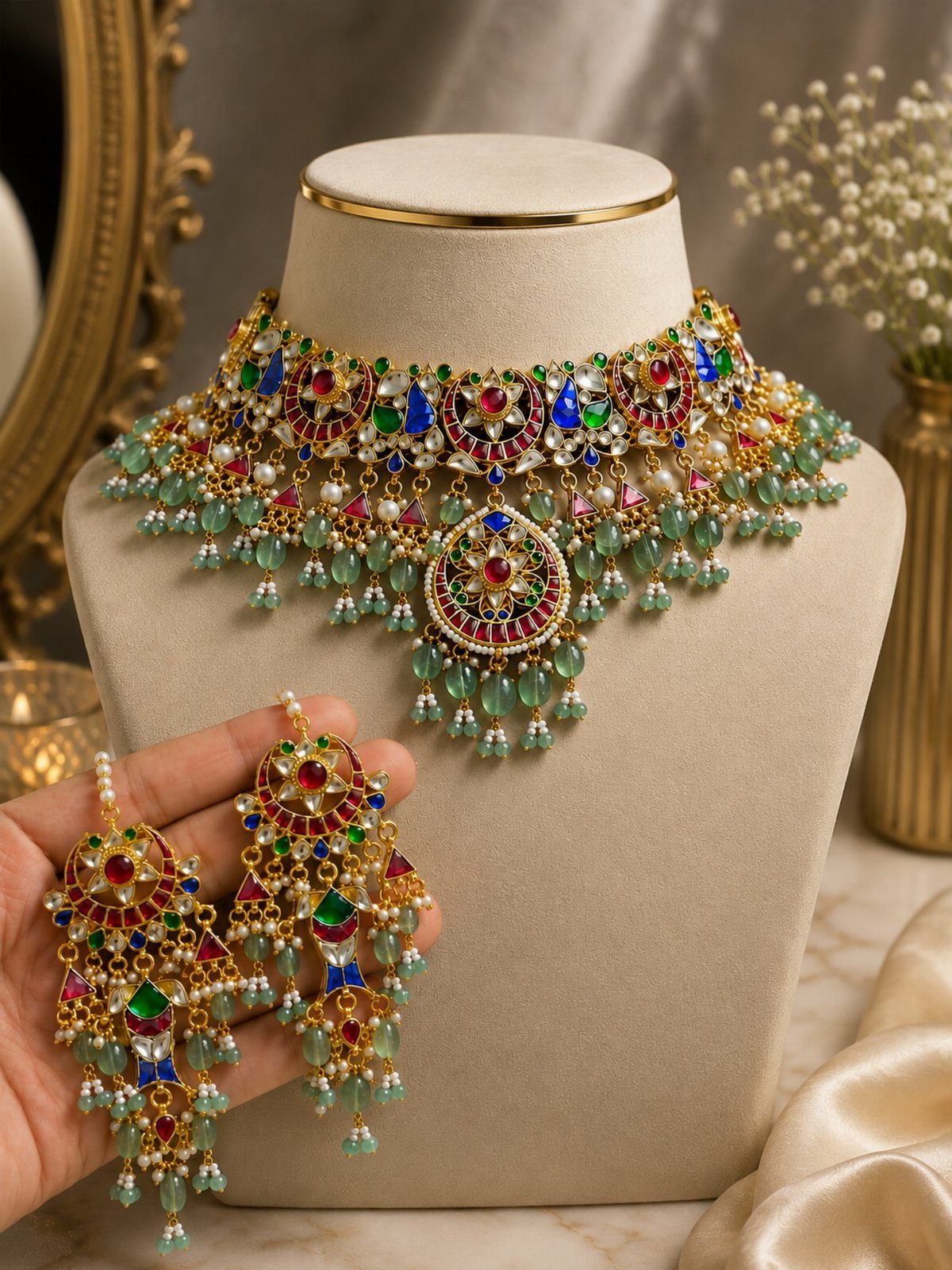
Green onyx drops at the choker’s lower edge give this piece its movement; they are lighter than emerald, less expensive, and the matte surface absorbs light where the Kundan gold reflects it.
That contrast of finish matters more than contrast of color.
The multicolor stones in the upper panels are typically tourmaline, coral, or sapphire slices held by gold foil backing, a Kundan signature. Each panel is individually hinged, so the choker follows the neck’s curve without gaps.
Because the palette is mixed rather than monochrome, this necklace shifts between wedding colors. It suits brides who have not settled on one accent color or who want the jewelry to work at future events.

STYLISH DESIGN - You'll effortlessly transform any look with this delicate multi-layer statement necklace. With sparkling strands of simulated diamond chains cascading over one another, this elegant yet trendy rhinestone long layering necklace perfectly compliments wedding, formal, and party looks.

18kt yellow gold over sterling silver, ruby necklace for women.

HIGHLIGHTS: This dainty choker necklace features a ruby crystal, the July birthstone. The necklace is 18 inches long with a 2-inch extender and is finely crafted to ensure a long-lasting, brilliant finish.
5. Chandbali Kundan Choker
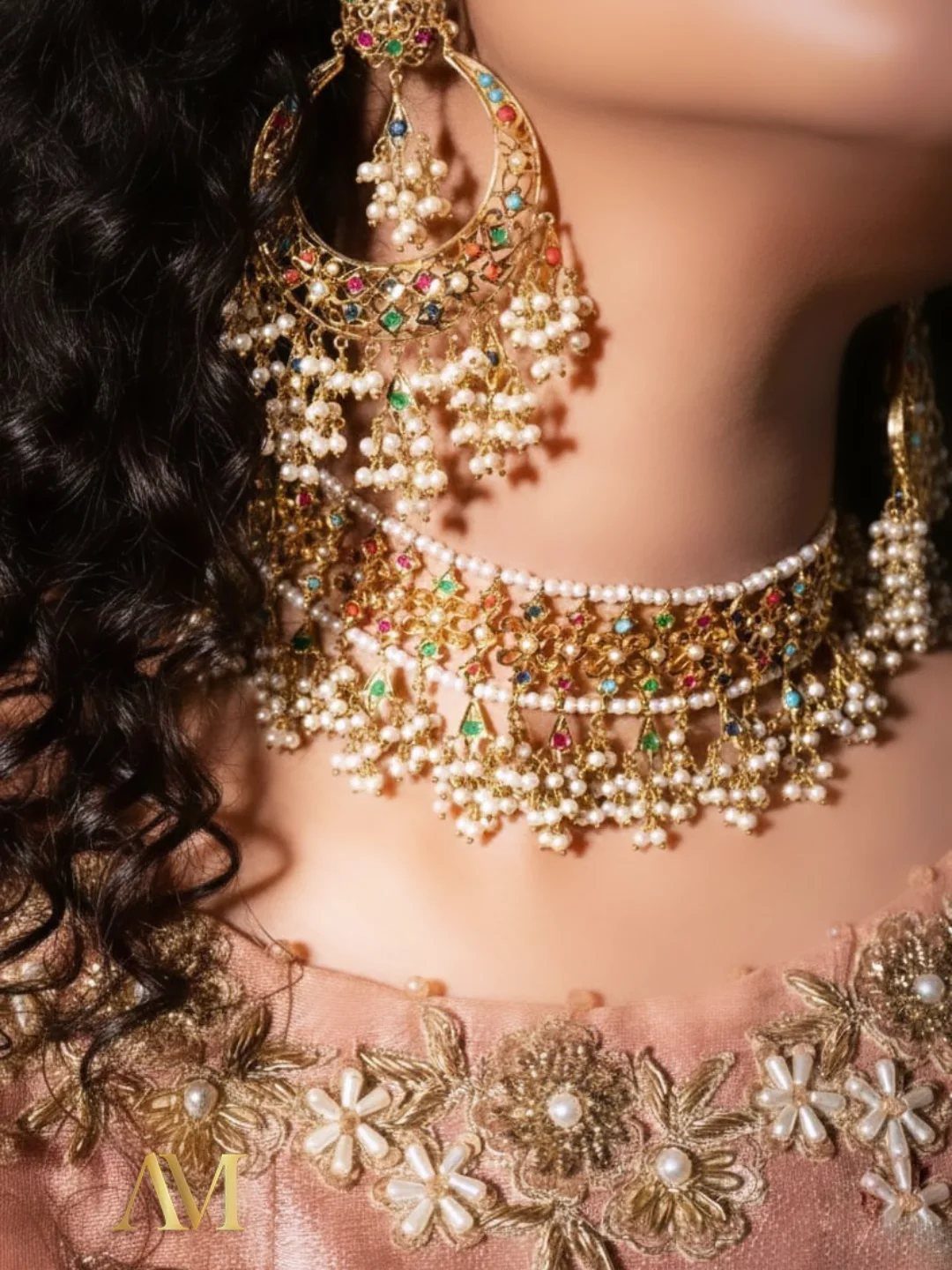
Chandbali earrings are crescent-shaped, wider at the base than the top, and this choker borrows that silhouette in miniature: the lower edge curves outward, then back, framing the throat.
Pearl drops hang at intervals along that curve, catching light when you move your head or turn toward a guest.
The technique is Kundan set with emeralds and uncut diamonds, same as the larger pieces, but the scale is more wearable for a long evening. Heavy necklaces fatigue neck muscles over hours; this sits in a middle weight class.
I would wear the earrings and choker together only for the ceremony, then keep one piece for the reception. Both at once photographs well but can feel like costume close up.

DIMENSIONS: Necklace Length - 27 cm x Width - 5 cm, Earring Height - 8.5 cm x Width - 4.3 cm, Mangtikka Length - 14.5 cm x Width - 4.3 cm, Weigth - 143.46 grms

Comes with the matching earrings. The look is stunning and preciously suitable for all kinds of dressy occasions. The kundan used are of high quality.

DIMENSION - Necklace length - 13 cm, width - 4.2 cm, Earring height - 6 cm, width - 2.2 cm, Maang Tikka Length - 16 cm, Width - 1.1 cm.
6. Blue and Gold Kundan Necklace
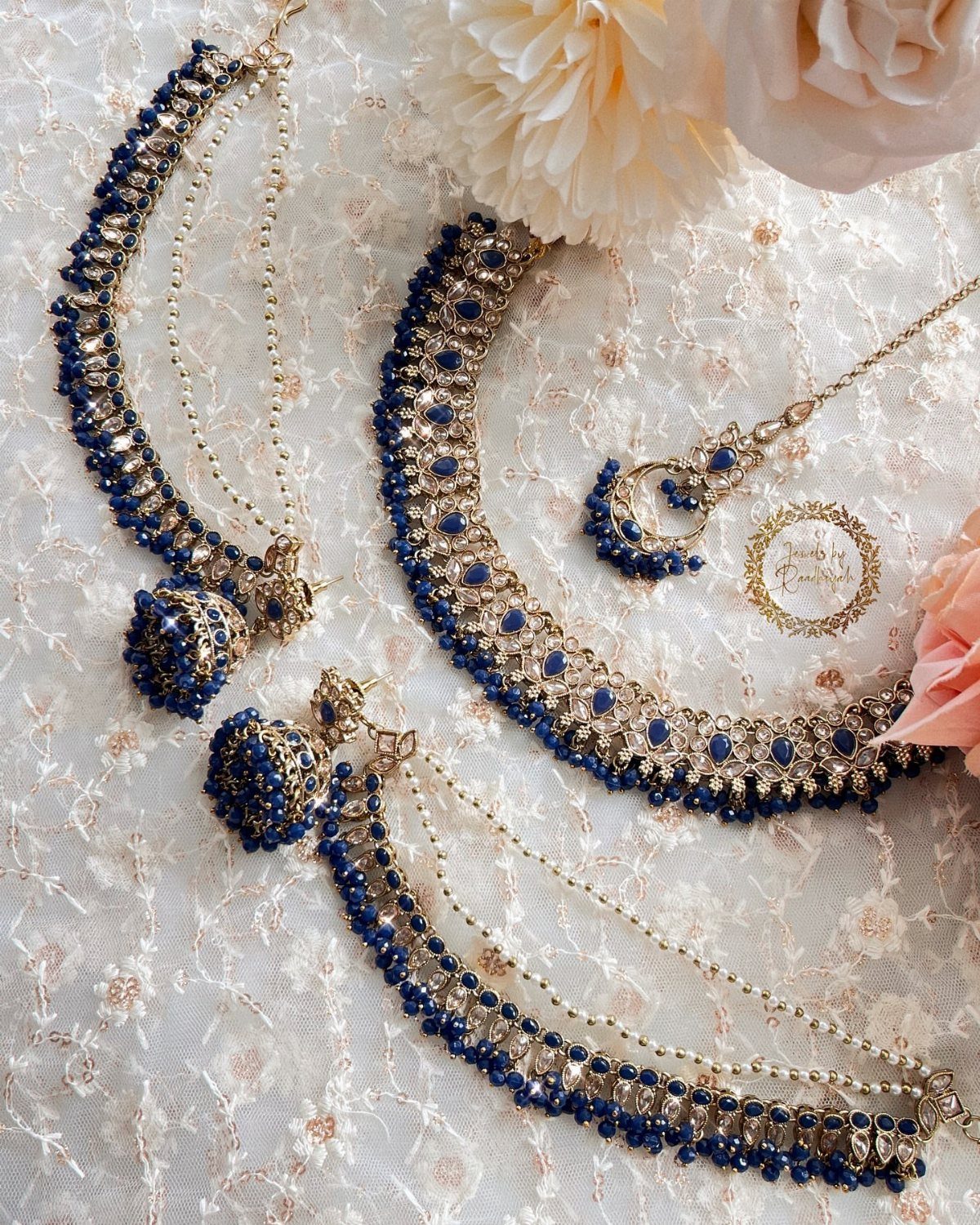
Blue stones in Kundan work are usually iolite, sapphire, or dyed quartz; the specific gem matters less than the saturation, which needs to hold its own against the gold’s yellowness.
Dark beads at the edges frame the face more directly than all-gold pieces, drawing the eye upward.
This set includes jhumka earrings with hair chains and a maang tikka, the forehead pendant.
Wearing all 3 is traditional for the ceremony; for a reception, the necklace alone often suffices, and the tikka can feel like too much once the veil is off.
The blue reads as cool against warm skin tones, which is the pairing I prefer, though it works against cool tones as deliberate contrast. Test in daylight, not just store lighting, before committing.

DAINTY GOLD NECKLACE: Trendy Gold Plated Necklace,Four Main Stones and A Teardrop Alongside Four Clear Zircon Stones with Satellite Bead Chain,Simple and Elegant.5 Different Colors:Sapphire Blue Necklace,Green Stone Emerald Necklace, Red CZ Necklace,Black and Clear Cubic Zirconia Necklace.

Rhinestone Necklace: This silver/Black choker necklace for women features dazzling rhinestones for a luxurious look, perfect for prom, parties, or everyday glam. A must-have crystal choker to elevate any outfit

❤Birthstone Diamond Necklaces Design❤ -Our diamond necklace represents purity, strength, and love. Crafted with clear, sparkling, high-quality diamonds, each piece is meticulously designed by professional artisans to uphold the highest standards of craftsmanship.The emerald necklace means lucky, and the diamond necklace means innocence and love. Adorning yourself with this exquisite necklace will not only add a touch of elegance and charm but also attract good luck and success your way.
7. Silver Crystal Bridal Necklace
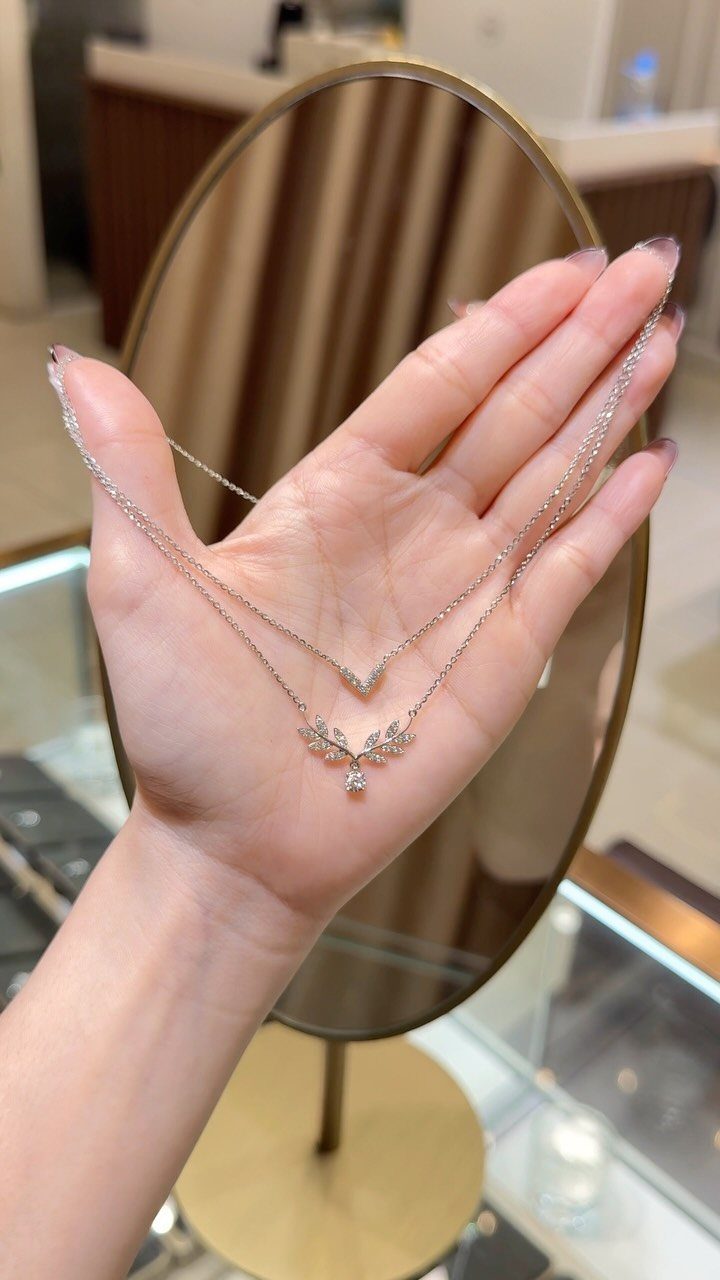
Silver catches light colder than gold, which suits brides who want the metal to disappear against white satin rather than warm it.
The double strand here sits at 2 different lengths, so the pendants do not collide; the upper chevron draws the eye to the collarbone while the lower leaf drops toward the neckline.
Crystal in this context means leaded glass with high refraction, not quartz.
It throws light in hard flashes, which photographs well but can read as theatrical in intimate daylight ceremonies. I would wear this for an evening reception or a winter wedding where the sparkle matches the season.
Layered necklaces tangle if the strands are too fine. Ask the jeweler to fit a small ring between them at the back, or wear them on a single clasp that holds spacing.

❤6MM Pearl Necklace Design❤: Our pearl necklace with 6mm diameter, length 14’’+2" extender adjustable. The pearls represent noble and classic elegance, never outdated, it will match all your outlook. Pearl necklace suitable for men and women can be worn on any occasion.

Pearl Necklace for Women: This classic pearl choker necklace are classic and versatile, and come in a variety of styles. This pearl necklace is perfect for any occasion, whether it's a wedding, a banquet, or any other event

Pearl Choker: Handmade knotted single white pearl choker necklace with genuine leather cord, we handpick cultured pearls in this one bead choker with good luster, quality, color, and cleanliness for this beaded choker necklace. This versatile freshwater pearl necklace is Subtle and Simple, it’s perfect for everyday wear or a night out.
8. Gold and Pink Gemstone Set
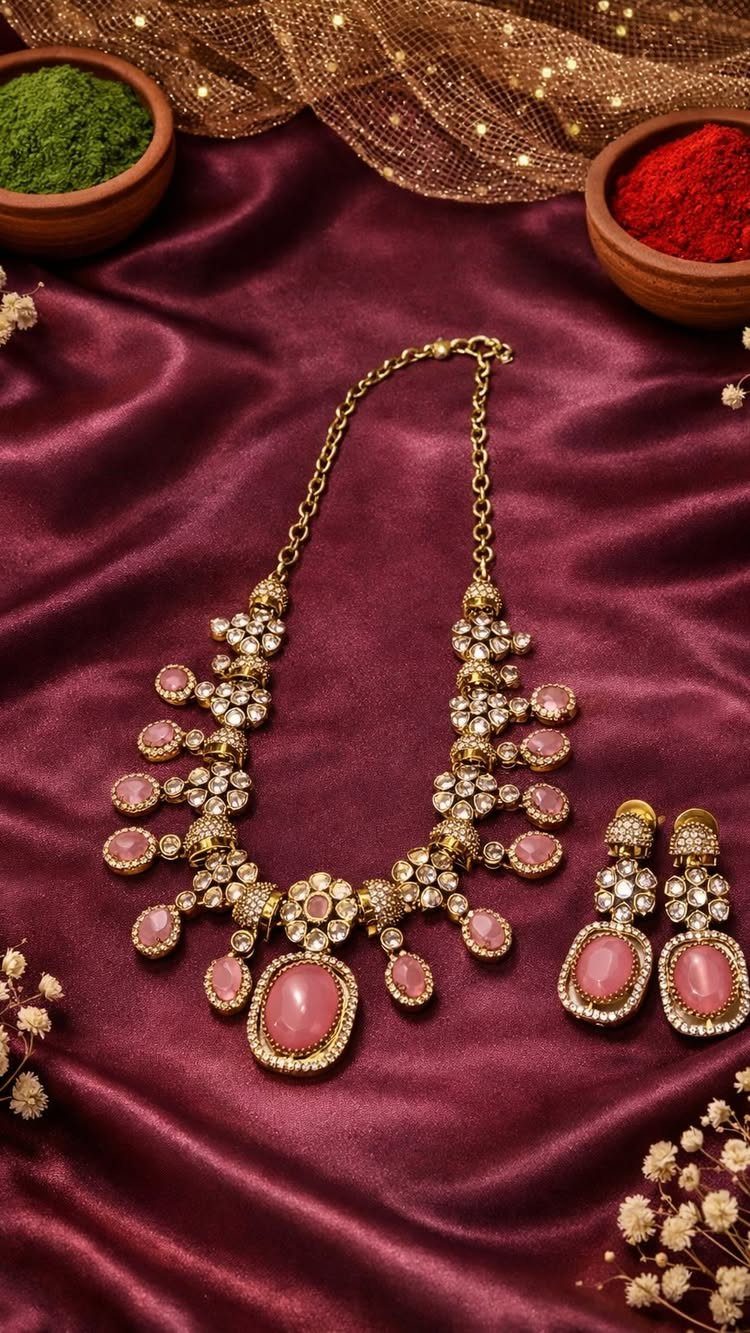
Pink stones in Indian bridal sets are typically tourmaline, morganite, or treated quartz; the exact gem matters less than the saturation against your skin tone.
This set keeps the pink in the necklace body and the earring centers, framed by gold scrollwork that reads as texture from a distance.
The matching earrings are substantial, which flatters long necks but can shorten a rounder face. I would try both pieces on together, then the necklace alone with simpler studs, before deciding on the day.
Pink stones set against deep red gain intensity; the contrast flatters warm skin tones under reception lighting.
If your lehenga or sari carries maroon, wine, or burgundy, this set harmonizes without matching exactly. Against pure red, the pink can look faded, so test in natural light before finalizing.
All-gold chokers with emerald drops, the style this set echoes, run heavier; the pink version here uses smaller stones and lighter settings.
That trade in weight matters for a long ceremony or a bride who plans to change once and keep the same jewelry through both events.

Product Dimension : Necklace Length - 19 cm x Width - 3 cm, Earring Height - 19.4 cm x Width - 5 cm, Maang Tikka Length - 15 cm x Width - 5 cm

Please confirm the size using model image, size dimensions, other reference images and videos. The color may slightly vary due to the photographic lighting sources.

DIMENSIONS(In Inches): Long Necklace Length - 26 inch, Choker Necklace Length - 10 Inch , Necklace Width - 3 Inch, Earring Height - 3 Inch, Earring Width - 2.25 Inch , Mang Tika Length - 7 Inch & Mang Tika Width - 2.25 Inch
Frequently Asked Questions
What type of necklace to wear with a wedding dress?
The neckline of your dress decides this. Multi-layered necklaces need separate clasp points for each layer so they hang flat instead of bunching at strange angles.
Some brides who wear heavy Kundan or Polki sets swap to a lighter necklace after portraits so they can move easier at the reception.
Do brides normally wear a necklace?
Yes, most brides in the weddings I have covered wear a necklace as part of their jewelry set. The choice is less whether to wear one and more which weight and style suits the ceremony length and neckline.