A minimal wedding dress can take a dozen different shapes, from a simple slip dress to a high-neck gown with long sleeves, and the one that works is the one that feels like you standing still.
1. Minimal Wedding Dress Slip Dress
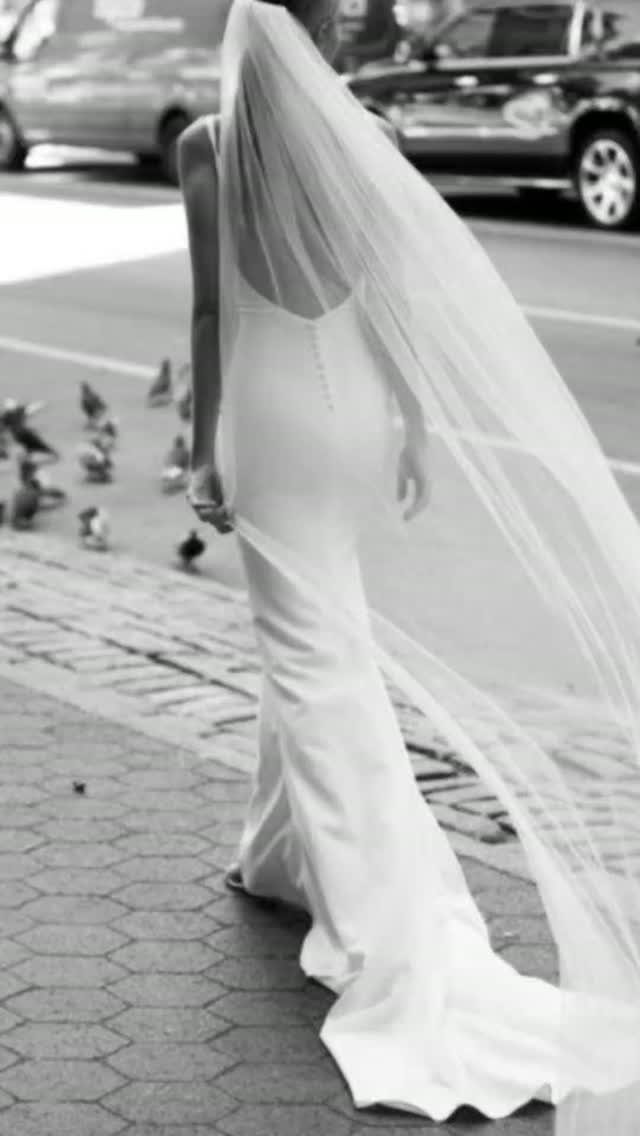
A slip dress in matte crepe or silk charmeuse lands exactly where minimalism lives: the fabric does the work, and the cut keeps it quiet.
The sheath version skims the body without clinging, while an A-line gives more room through the hips for a city hall ceremony or an evening reception.
I like the floor-length version with a slight sweep train for the way it moves in photographs without needing bustle hooks or a layer of tulle underneath. A cowl back adds interest without breaking the minimal rule.
This style suits brides who want one dress from ceremony to last dance, no change required. Budget-friendly versions start lower from online specialists, while designer crepe runs several times that.

Fitted mini tube slip dress. Those tube dresses are semi opaque. Lighter colors will show the undergarment lines.

ELEGANT VERSATILITY: This full slip dress features a timeless A-line silhouette, a scoop neckline, and scalloped trim. The 38-inch seam offers ample coverage and wide shoulder straps for a comfortable fit.

【SOFT & STRETCHY FABRIC FOR NIGHTDRESS】Women's soft nightgown made from 95% Modal (Cotton) & 5% Spandex, perfectly stretchy and smooth touch feeling, perfect also for slip dress, sleep or lounge wear dress.
2. Minimal Wedding Dress with Delicate Lace
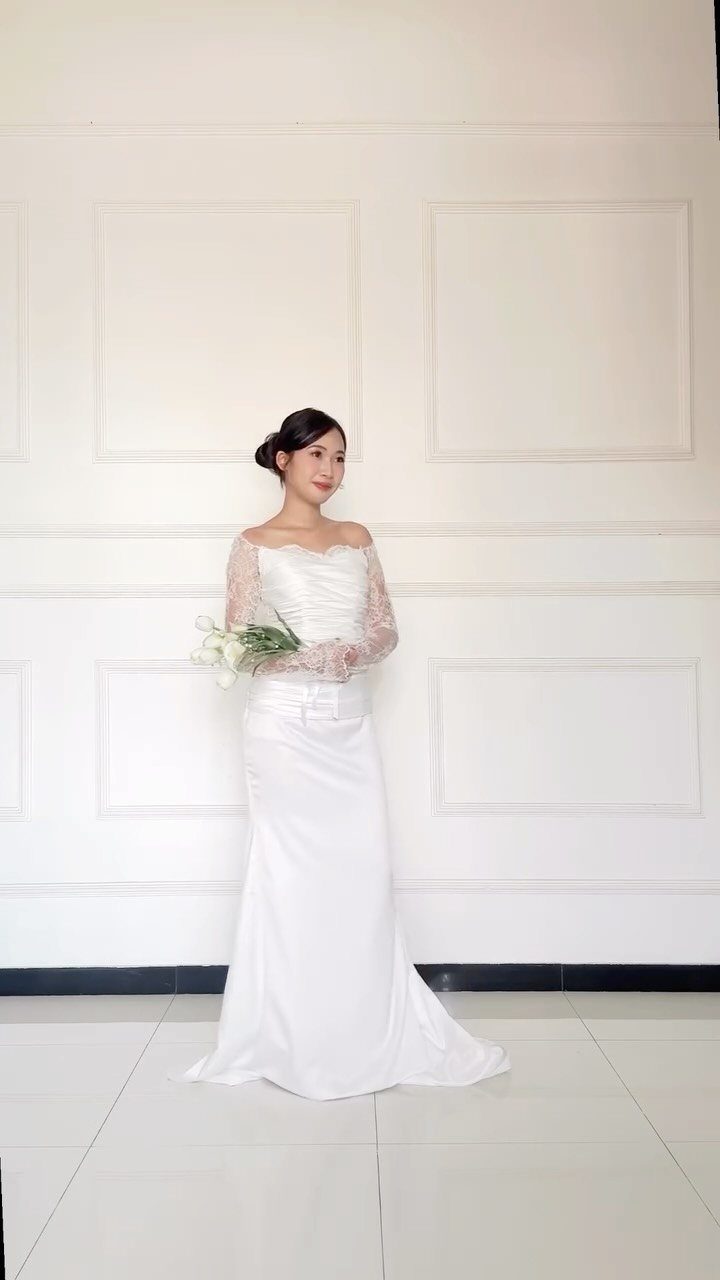
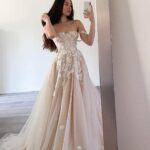
Delicate lace on a minimal dress works only when the lace itself is thin enough to read as texture from across the room.
Think Chantilly or a fine point de gaze, not the heavier Alençon that turns a simple gown into a traditional one.
Off-the-shoulder placement keeps the lace at the sleeve and upper arm, leaving the bodice plain. That ratio matters: keep lace to a small fraction of the dress, or the eye starts hunting for more ornament.
I would ask my seamstress to place the lace so the pattern aligns at the shoulder seam; misalignment reads as careless on an otherwise spare gown.
A bodice with no lace at all, lace only at the cuffs or back panel, is another way to keep the look restrained.

DESIGNED FOR TALL & LONG-TORSO FRAMES: This dress features a fixed, high-waist twist knot tailored for taller figures. CRITICAL FIT NOTE: Please measure your torso length before ordering. A shorter torso will cause the fixed waist to sit too low on the hips, resulting in an ill fit. The stretch is for comfort, not adjustability—kindly check our size chart based on your bust and hips.

Soft fabric and comfortable material with some stretch

MATERIAL: Women open back dress is made of 83% polyester and 17% elastane, stretchy, breathable, soft and very fitted to the body, comfortable to wear
3. Minimalist Wedding Dress
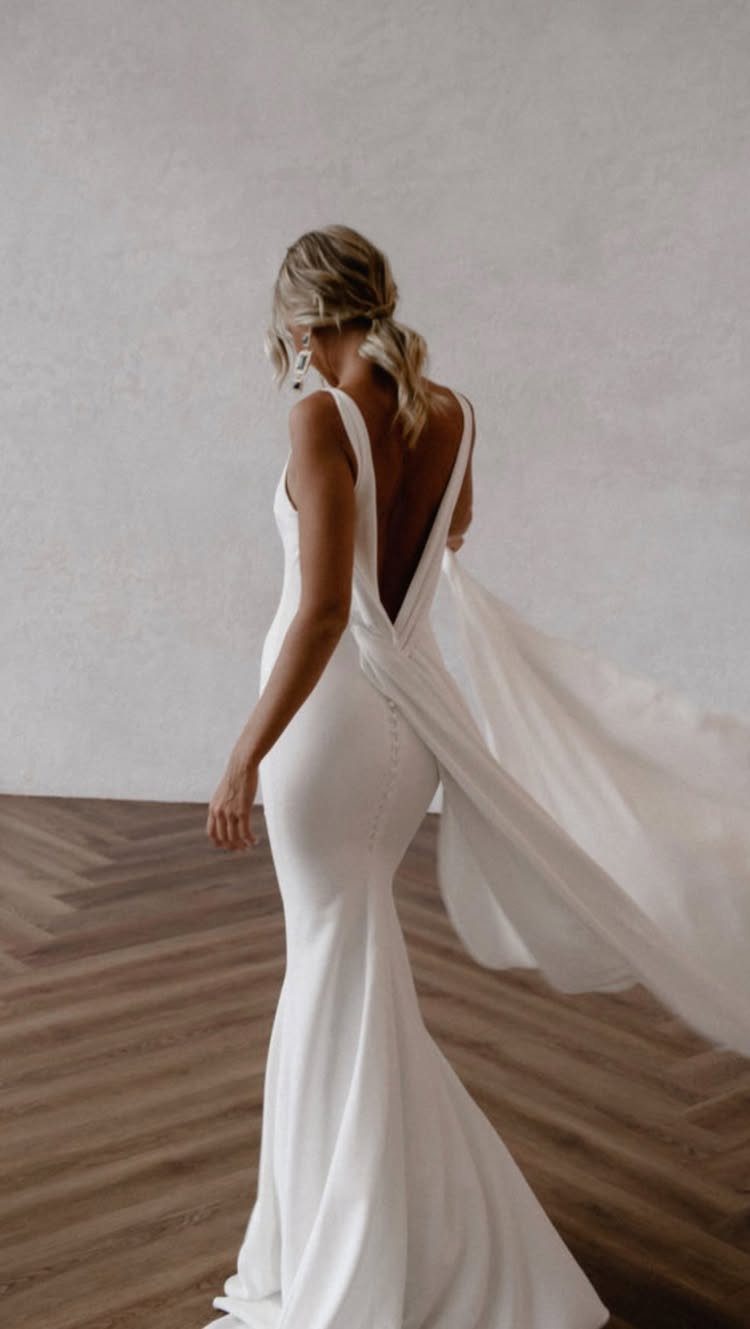
The minimalist wedding dress as a category grew out of necessity after World War II, when silk and trimmings were rationed and brides wore what they could make plain.
That history still shows in what works: clean lines, no buttons or cuffs or appliques, and fabric that costs enough to carry the look alone.
Crepe and heavy satin are the usual choices, though recent collections added more pencil skirts and fitted cuts with round or V-necklines than I remember seeing before.
A backless version takes confidence in undergarment planning; a deep-V back bra or sew-in cups are the practical choices, and you decide which before fittings start.
This style pairs with almost any accessory, which also means you can change the mood with earrings or a veil without changing the gown.
The aesthetic of a minimalist wedding gown will withstand the test of time; the hope is, when you review the photographs of your big day in years to come, the dress will still be as relevant as it was when you tried it on.
— Vogue

Sexy Curves -- Mermaid dress is adorned with delicate lace shell, eyelash lace details and off shoulder design.

Material: Lace dress is made of 90% Nylon & 10% Spandexl,lightweight, soft,elastic and breathable,easy to wash and quick drying,floral bodycon night dress will hug your curves and accentuate your figure perfectly.

Material: Premium polyester blend fabric, skin-friendly, warm, and stretchy. Featherlight yet warm and breathable, it offers flexible all‑day comfort and a flattering fit, ideal for fall and winter wear.
4. Minimal Wedding Dress Square Necklines
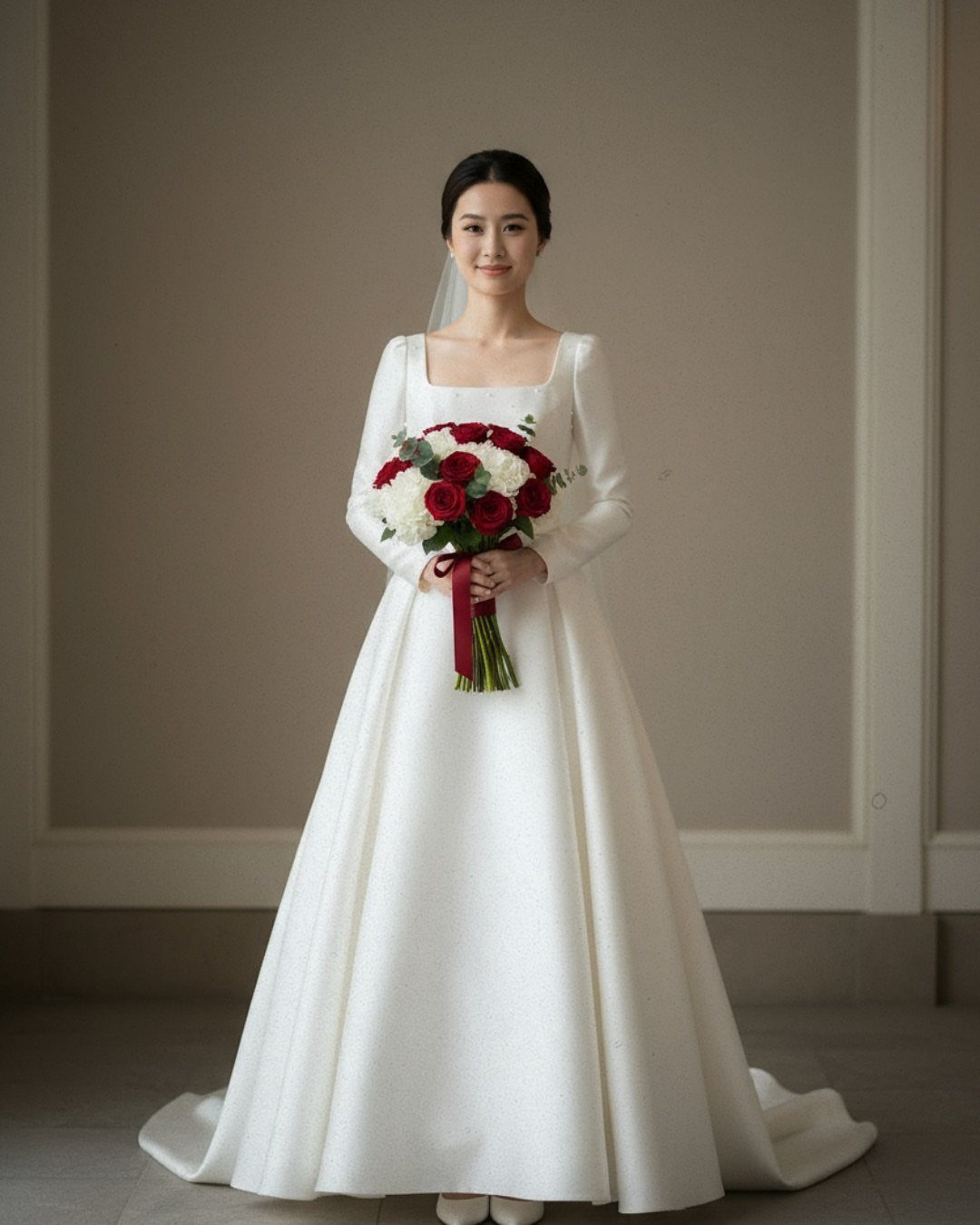
Square necklines read as contemporary where round ones read classic, and the difference is sharper than the geometry suggests.
A true square, with corners that hold their shape, needs boning in the bodice or a heavy fabric like crepe; a soft square that rounds slightly at the corners is more forgiving and easier to tailor.
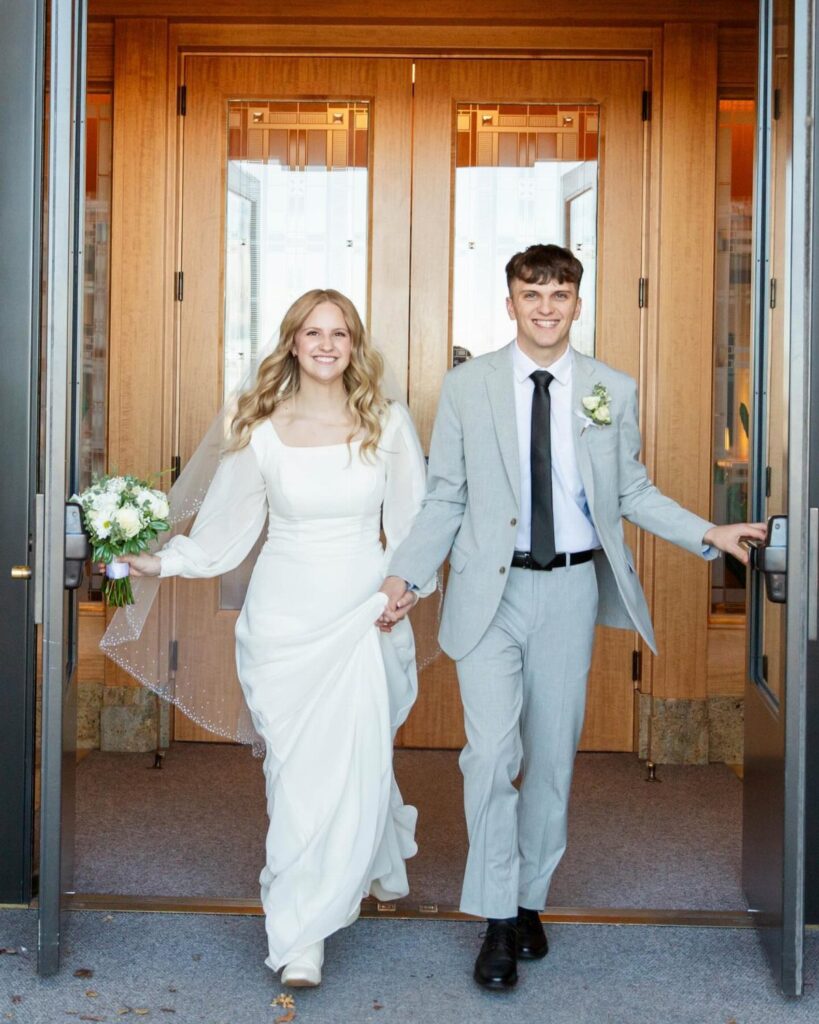
A long-sleeved version balances the open neckline with coverage elsewhere, which I prefer for a winter wedding or a church ceremony with family expectations.
Sleeveless square necklines exist but need precise strap placement; too wide and the dress slips forward, too narrow and the corners gape.
A-line skirts pair more naturally with this neckline than fitted sheaths, which can turn the whole look into a costume reference.

【Size】S=US(4-6), M=US(8-10), L=US(12-14), XL=US(16-18).This long sleeve dress for women is soft, and lightweight fabric provides comfort and lets you enjoy every moment. Your absolute favorite from our new collection the maxi dress offers!

【Size】S=US(4-6), M=US(8-10), L=US(12-14), XL=US(16-18).This long sleeve dress for women is soft, and lightweight fabric provides comfort, combining comfort and fashion to bring you a great wearing experience. Your absolute favorite from our new collection the Maxi Dress offers!

FEATURES: Formal Dresses For Women / Mock Neck Satin Dress / Long Sleeve With Elastic Cuffs / Pleated Detail At Front Chest / Back Keyhole Buttons / Elastic High Waist / For Spring, Summer, Fall, Winter
5. Minimal Wedding Dress Long Sleeves
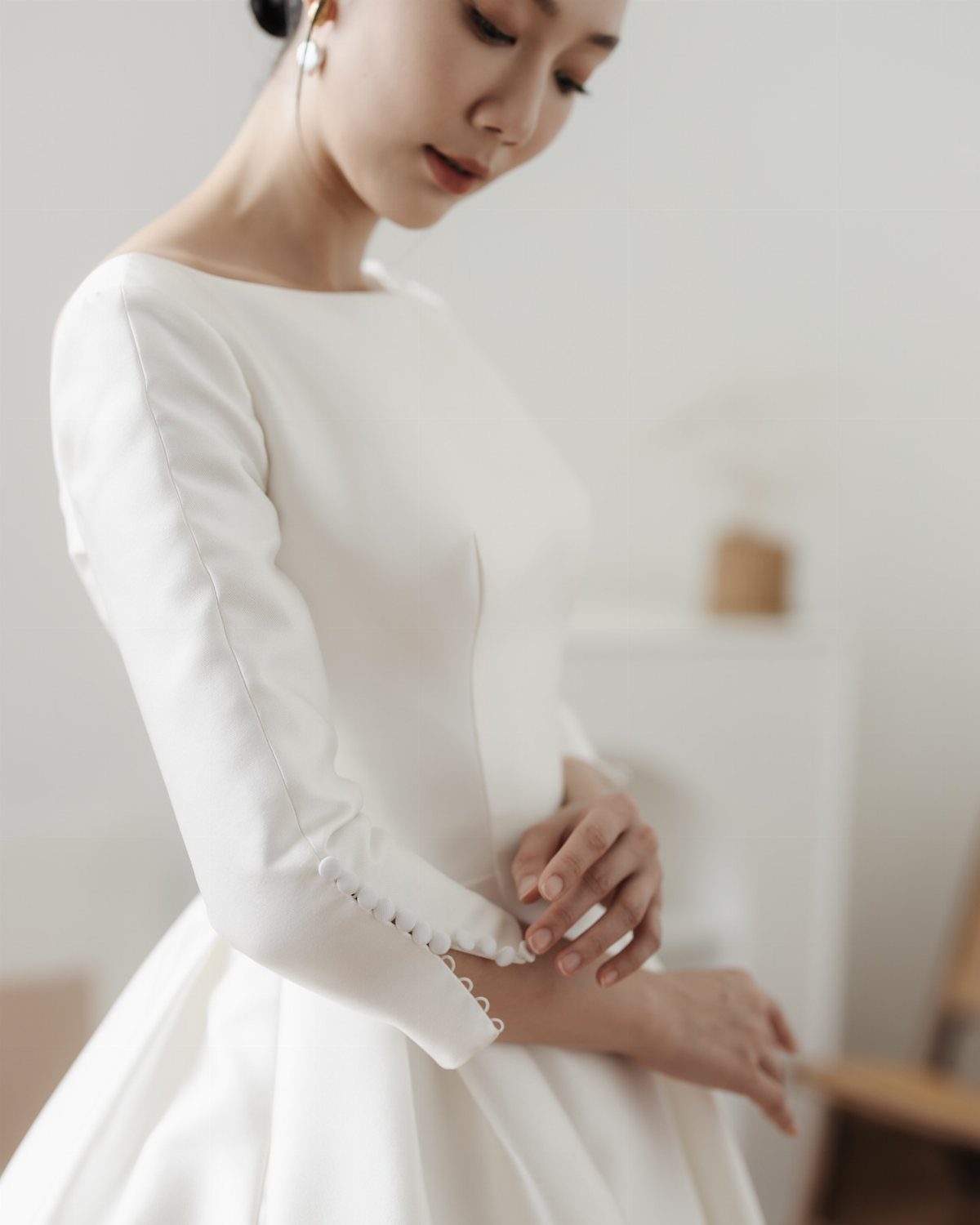
Long sleeves on a minimal dress trade some ease of movement for the formality they add without any embellishment.
Covered buttons at the cuff are the one detail I would keep; they give the eye somewhere to rest and make the sleeves feel finished rather than afterthought.
Silk or georgette sleeves drape differently than lace ones, and the weight matters more than you might expect.
Heavy crepe sleeves hold a line from shoulder to wrist; lighter fabrics bunch at the elbow when you bend your arm to hold a bouquet.
Heavier fabric suits a spring wedding, though a summer bride might want the airiness of something lighter.
A boat neckline with long sleeves needs careful underarm fit or the whole bodice shifts when you raise your arms.

★☆Material Type☆★ Satin, Midi Dress-Thin Meterial; Split Dress-Thick Meterial

MATERIAL: Satin maxi dress is made of lightweight and breathable polyester, the satin dress bring you smooth delicate silky touching experience, not see through

Crafted from 100% premium polyester fabric, this satin dress offers a luxuriously smooth, silky texture with a subtle sheen. Semi formal dresses is lightweight, breathable, and wrinkle-resistant, ensuring all-day comfort while maintaining an elegant drape that flatters every curve.
6. Silk Minimal Wedding Dress
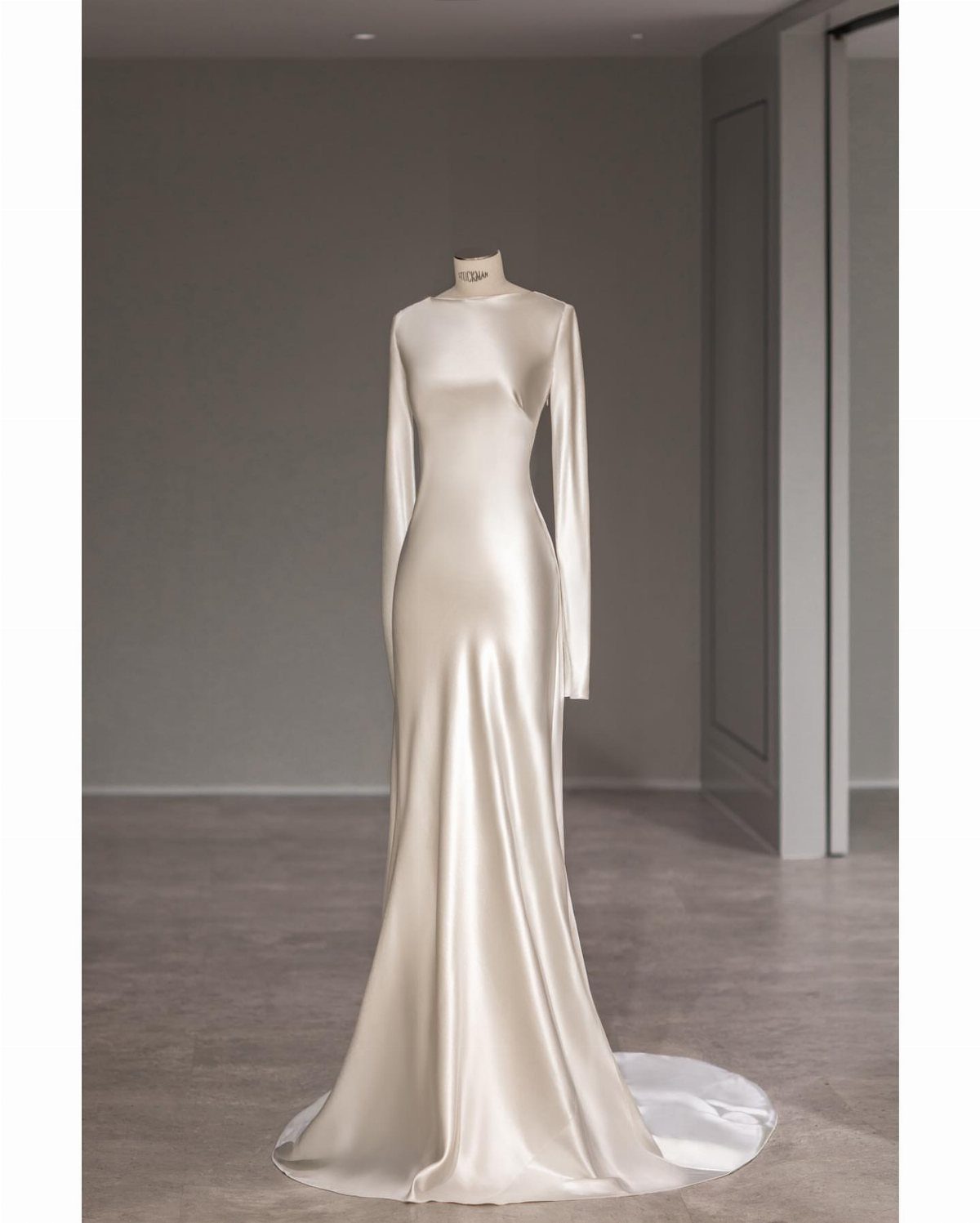
Silk for a wedding dress usually means silk crepe, silk satin, or a stretch silk blend, and each wears differently through a long day.
Crepe has a matte surface and a slight texture that photographs well without flashing highlights; satin catches light and shows every fold of fabric against the body.
A long-sleeved ivory version in heavy silk has enough body to hold the train’s shape off the mannequin.
That weight is necessary for structure, but it also means the dress does not breathe the way a chiffon or georgette would. I would plan accordingly for an outdoor summer ceremony, or choose a lighter weight silk for that setting.
Dry cleaning before the wedding and proper storage after are non-negotiable with silk; the fabric stains easily and the stains set.

Lightweight, stretchy breathable fabric with great touch. Super soft and comfortable

Fabric: 95% Rayon / 5% Spandex, breathable, soft and comfortable.

BUTTERY SOFT & HIGH STRETCH: Made of a premium Rayon and Spandex blend(Modal), this full slip for women under dress offers a cozy, snug fit with incredible 4-way stretch. Please note the material is highly elastic. If you are between sizes or prefer a bodycon, sculpting fit, we recommend sizing DOWN. If you prefer a loose, relaxed fit, size UP.
7. High-neck Minimal Wedding Dress
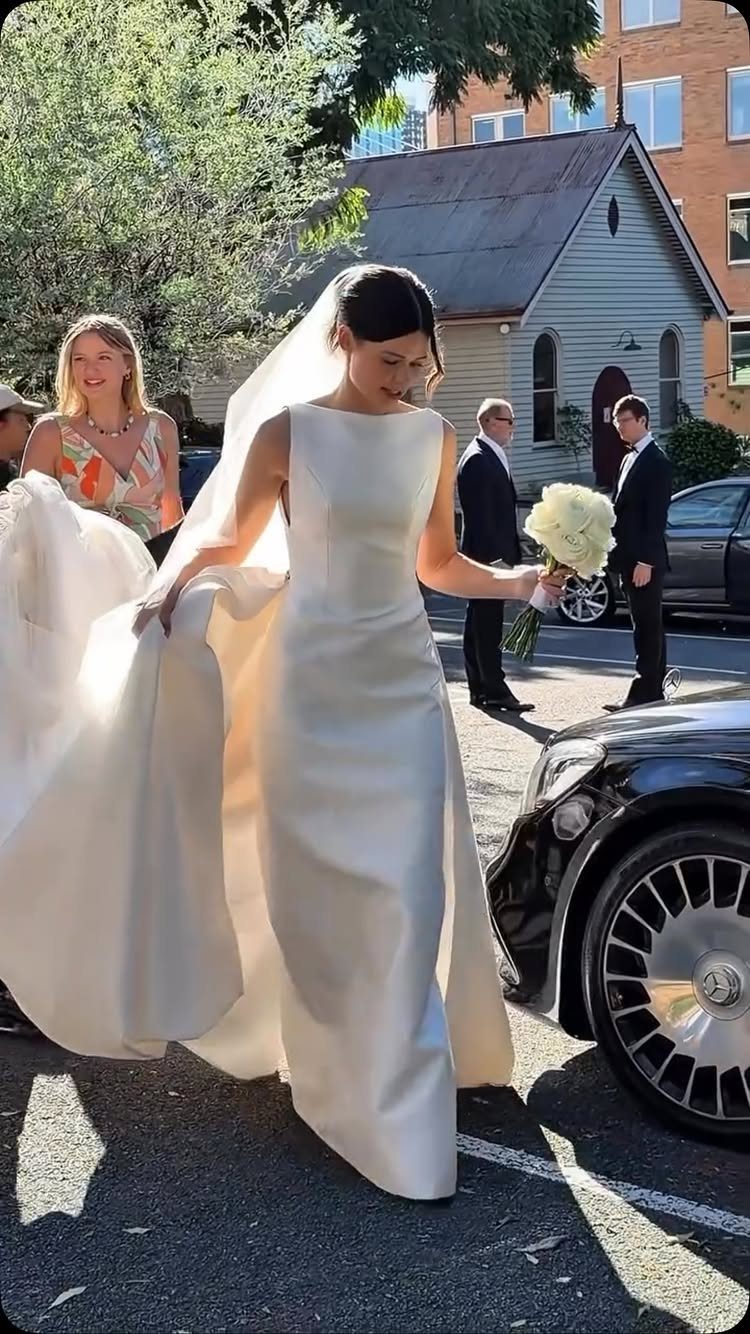
A high neck on a minimal dress needs the right throat to carry it; the line sits at or just above the collarbone, no fold of fabric, no jewel trim.
Sleeveless keeps the look from turning clerical, and the exposed back common to this style restores the balance.
Satin or crepe with body enough to stand at the neck without collapsing into soft folds.
A cowl version, like the ones I’ve seen from contemporary designers, relaxes the severity slightly; the draped front still reads as minimal because nothing else competes.
I would wear this for a daytime ceremony or a city wedding where the dress needs to hold its own against architecture rather than landscape.

1.FABRIC:Satin maxi dress is made of lightweight and breathable polyester, soft, skin-friendly and comfy to wear. This silk dress has a bit of stretch and it will shape your figure nicely.

Material: Bandage bodycon shape dress (95%Polyester, 5% Elastane). Thick, heavy ,shiny, tight and very stretchy. The pregnant also can wear this party dress.

Fabric: Made from soft material to keep both comfort and style, fabric has non-stretch
8. Off-the-shoulder Minimal Wedding Dress
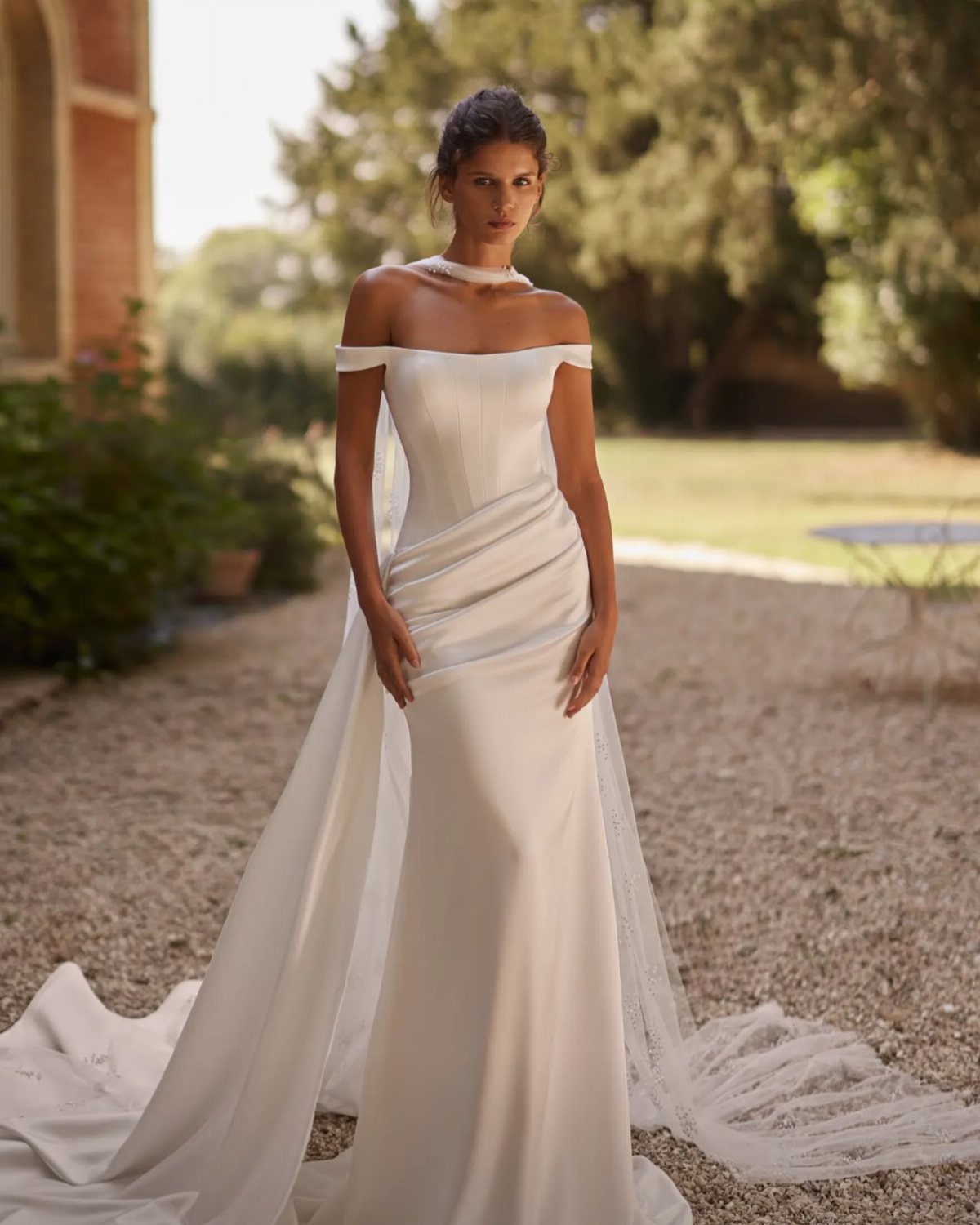
Off-the-shoulder on a minimal gown depends entirely on the engineering of that neckline.
The fold must sit flat against the upper arm without elastic, straps, or visible structure; that takes a fitted bodice and boning that transfers the dress’s weight to the torso, not the sleeves.
A draped bodice adds movement without breaking the spare mood. The train here is sheer, almost a cape, which keeps the volume from reading as traditional grandeur.
Satin holds this shape better than crepe; the fabric’s weight keeps the neckline from riding up when you raise your arms for photographs or to greet guests.
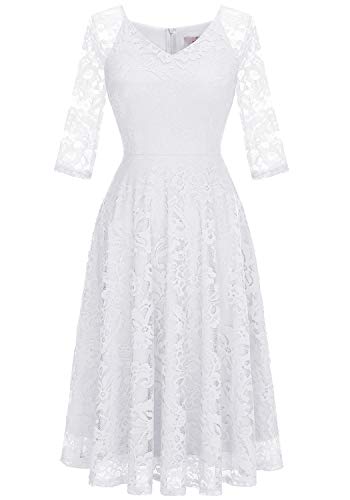
Selected materials: Made of quality lace with soft skin-friendly stretchy smooth lining, this lace dress with sleeves is super soft, breathable and comfortable to wear all day
9. V-back Minimal Wedding Dress
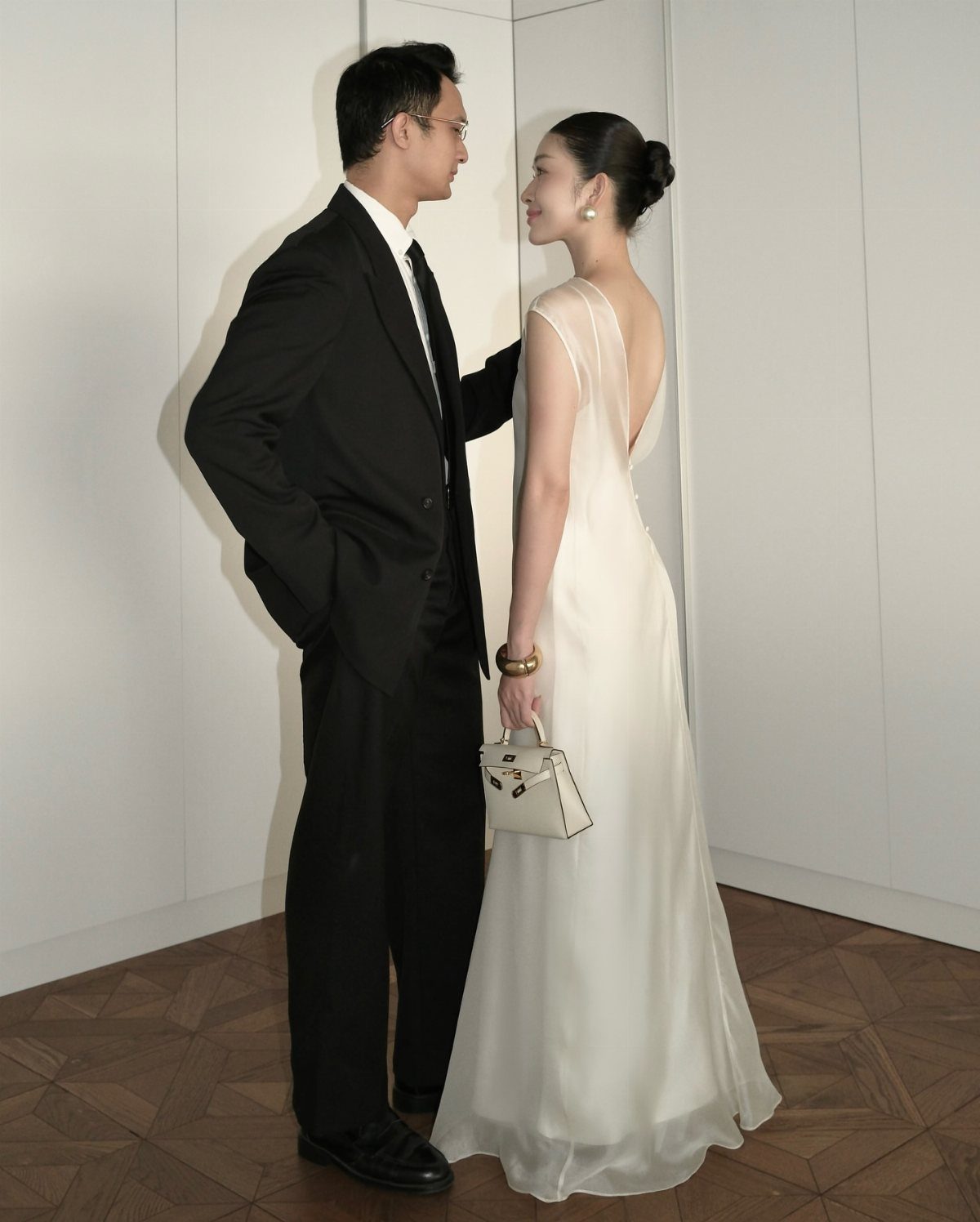
The V-back is the one dramatic gesture a minimal dress allows itself.
Depth varies: a shallow V reads as detail, a deep one as statement. The sleeveless version sits at the lower back, low enough to need planning but not so low that undergarments become impossible.
A draped back, like the Victoria Beckham version I have seen referenced, softens the geometry with gathered fabric; that works for an evening reception or a ceremony that runs late.
For a daytime wedding I would keep the V clean and unadorned.
Check the depth against your venue’s formality and your family’s tolerance before fittings begin.
10. Short-sleeve Minimal Wedding Dress

Short sleeves on a minimal gown are usually flutter or cap length, not the fitted sleeve that reads as office wear.
The movement matters: they lift in a breeze, catch light differently than bare arms, and frame the back when you turn.
The low back paired with short sleeves is a specific combination that trades some support for openness.
You will need a backless bra or cups sewn in, and the flutter sleeve does not hide strap marks the way a long sleeve might.
Chiffon or lightweight crepe for these sleeves; anything heavier loses the airiness that makes the detail worth including.
Choosing the Right Dress
The empire waist on a long-sleeved sheath adds even more vertical line if you need it.
Fabric choice matters more when there is no lace or beading to distract from how it falls. Crepe drapes differently than satin, and how it photographs under your venue’s lighting is worth checking at a fitting, not guessing.
Your skin tone against the fabric is part of this; ivory reads differently on different complexions, and the minimal dress leaves no room to hide a mismatch.
Neckline and hemline should agree with each other.
A square neck with a floor-length skirt reads formal; the same neckline above the knee turns mod. Decide the level of formality first, then let the pieces fall in line.
Creating a Minimalist Look
A minimal dress leaves the accessorizing to you, which is the point and the pressure.
A sheer veil works better than a heavy one here; the veil becomes a frame, not a competing layer.
Delicate jewelry, a single strand or small drops, keeps the spare mood intact. The dress is doing less, so what you add has to be deliberate.
The gown’s clean lines show your silhouette rather than the dress’s own architecture. That means posture matters, and undergarments that smooth without adding lines.
Add detail where you want it, leave the rest quiet. The restraint is the style.
Wedding Themes
A minimal gown suits more settings than most dresses because it carries so little predetermined mood.
For a beach wedding, lighter silk or chiffon sleeves catch the breeze without the weight of tulle or train.
An urban venue, concrete and glass, pairs with the severity of a high neck or square neckline; the dress holds its own against hard architecture.
A city hall ceremony wants a slip dress that moves from vows to dinner without looking out of place.
The boho setting is trickier. Classic and modern chic are the natural homes for this style, which is why they appear most often in collections.
The versatility is practical, not just aesthetic. One dress, multiple settings, no compromise in any of them.
Sustainability in Fashion
A minimal dress uses less fabric, less trim, less labor in construction, which aligns with choosing fewer resources consumed. That is the sustainability: not a label but a reduction.
The clean lines and simple silhouette also mean the dress ages better in photographs and in hand-me-down possibility. A gown without trend-dependent detail, without the beaded bodice that marks a specific year, stays wearable longer.
For the bride who wants authenticity over performance, the minimal dress reflects a value rather than declaring it. The fabric quality carries the message; heavy crepe or real silk, well sewn, lasts beyond the single day.
Versatility helps here too.
A blank canvas gown, accessorized simply, does not need a second dress for the reception. One purchase, full use, no waste in a garment worn barely long enough to cut the cake and stored away.